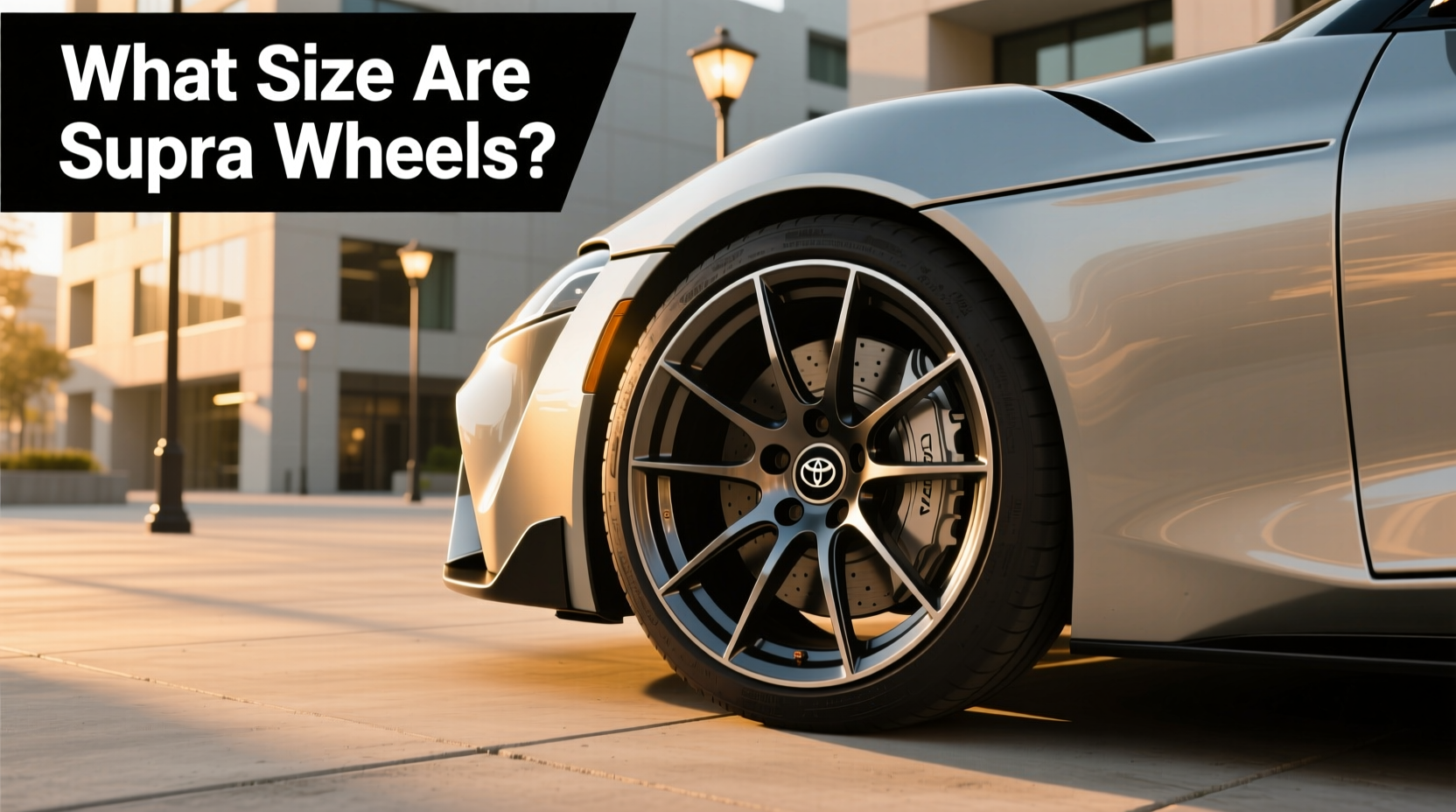
When choosing supra wheels, what size are Supra wheels? The answer depends on your model: 2019–present GR Supra trims use either 18-inch (2.0L) or 19-inch (3.0L) staggered setups, while the MK4 (1993–2002) came with 16" or 17" factory wheels. Key specs like bolt pattern (5x112 mm for GR, 5x114.3 for MK4), center bore, and offset must match your chassis. Aftermarket buyers should prioritize fitment over aesthetics—improper width or offset can cause rubbing or handling issues. This guide covers how to choose supra wheels, what size are Supra wheels?, and critical factors from tire compatibility to long-term durability.
📍 About Supra Wheels: What Size Are Supra Wheels?
The term "Supra wheels" refers to aftermarket or OEM replacement wheels designed specifically for Toyota Supra models, primarily the modern GR Supra (A90/A91, 2019–present) and the legendary MK4 (A80, 1993–2002). These vehicles have distinct platform requirements, so "what size are Supra wheels?" isn't a one-size-fits-all answer. Instead, it's about matching precise dimensions to your model’s suspension, fender clearance, and drivetrain layout. Understanding how to choose supra wheels, what size are Supra wheels? begins with recognizing that both generations use staggered setups—rear wheels wider than front—to optimize rear-wheel-drive performance and visual balance.
For the GR Supra, factory sizes range from 18x9" front / 18x10" rear on base 2.0L trims to 19x9" / 19x10" on 3.0L models 1. The MK4 typically shipped with 16" or 17" wheels in staggered configurations such as 225/50R16 front and 245/50R16 rear 2. When upgrading, you're not just replacing wheels—you're modifying stance, grip, ride quality, and even speedometer accuracy. That’s why knowing what to look for in supra wheels, what size are Supra wheels? is essential before purchasing.
📈 Why Supra Wheels Are Gaining Popularity
Aftermarket Supra wheels are increasingly popular due to rising ownership of the GR Supra and enduring enthusiasm for MK4 restomods. Enthusiasts seek improved aesthetics, better track performance, or enhanced daily drivability. Lightweight forged wheels reduce unsprung mass, improving acceleration and braking. Wider profiles allow larger tires for greater cornering grip—key for high-horsepower builds. Meanwhile, cosmetic upgrades like deep concave designs or custom finishes let owners personalize their cars without major modifications.
Another driver is tire availability. Some original equipment tires are discontinued or expensive; switching to common wheel sizes (e.g., 19x9.5") opens access to a broader tire market. Additionally, social media and car culture platforms amplify trends in flush-fit stances and aggressive offsets, fueling demand for aftermarket solutions. However, popularity doesn’t equal suitability—buyers must still verify compatibility rather than follow trends blindly.
🔧 Types and Variants of Supra Wheels
Three main types dominate the Supra aftermarket: cast aluminum, flow-formed, and forged wheels. Each offers different trade-offs in cost, weight, and strength.
- ✅ Cast Aluminum: Most affordable option. Made by pouring molten aluminum into molds. Heavier than other types but durable for street use. Ideal for budget-conscious buyers prioritizing appearance over performance.
- ⚙️ Flow-Formed (Semi-Forged): Rim area is compressed under heat and pressure, increasing strength and reducing weight by 15–20% vs. standard cast. Offers a sweet spot between price and performance. Suitable for spirited driving and mild track use.
- ⚡ Forged: Machined from a single aluminum billet. Lightest and strongest type, often 25–30% lighter than cast equivalents. Used in racing applications. High cost limits appeal to serious enthusiasts.
Design-wise, options include mesh, split-spoke, multi-piece, and deep-dish styles. Multi-piece wheels (e.g., CCW D110 for MK4) allow customization and easier repair but require more maintenance 3. One-piece wheels are simpler and more common for GR Supras.
📊 Key Features and Specifications to Evaluate
To properly evaluate how to choose supra wheels, what size are Supra wheels?, examine these five core specifications:
- Bolt Pattern: GR Supra uses 5x112 mm; MK4 uses 5x114.3 mm. Mismatched patterns won’t mount safely.
- Center Bore: Must match hub diameter (66.5 mm for GR, ~73 mm for MK4) or require hub-centric rings.
- Offset (ET): Affects wheel position within the fender. Too low (negative) risks rubbing; too high reduces stability. Factory GR offsets are +32 front / +40 rear.
- Wheel Width & Diameter: Aftermarket upgrades often go up 0.5–1 inch in width. Common GR upgrade: 19x9.5" front / 19x10.5" rear 4.
- Lug Thread: GR Supra uses M14x1.25 bolts. Verify thread pitch matches your lugs.
⚖️ Pros and Cons of Upgrading Supra Wheels
Pros:
- Improved handling and responsiveness with lighter wheels
- Better brake clearance for big brake kits
- Enhanced visual appeal and stance customization
- Access to higher-performance tire options
Cons:
- Potential fitment issues (rubbing at full lock or over bumps)
- Increased road noise and harsher ride with low-profile tires
- Higher cost, especially for forged or branded wheels
- Risk of damage from potholes on low-offset, wide setups
Upgrades suit drivers seeking performance or personalization. They’re less ideal for those prioritizing comfort, resale value, or minimal maintenance.
📋 How to Choose Supra Wheels: A Step-by-Step Buying Guide
Follow this checklist to avoid costly mistakes when selecting wheels:
- Identify Your Model Year and Trim: Confirm if you drive a GR Supra (2019+) or MK4 (1993–2002). Check door jamb or VIN for exact specs.
- Determine Current Wheel Specs: Note factory size, offset, and bolt pattern. Use this as a baseline.
- Define Your Goal: Street cruising? Track days? Show stance? This guides material, width, and profile choices.
- Select Compatible Dimensions: Stick to safe offset ranges: +25 to +45 for GR Supra. Avoid extreme drop-center designs unless fenders are modified.
- Verify Tire Compatibility: Use a tire size calculator to ensure new combo fits and maintains correct rolling radius.
- Check Load and Speed Ratings: Match or exceed OEM ratings for safety.
🚩 Red Flags to Avoid:
- Wheels labeled "fits Supra" without listing specific bolt pattern or offset
- No documentation of load testing or JWL/VIA certification
- Sellers refusing to provide return policies or fitment guarantees
- Dealerships or retailers not offering torque specs or installation guidance
💰 Price & Market Insights
Prices vary significantly based on type and brand:
- Cast Wheels: $200–$400 per wheel
- Flow-Formed: $400–$700 per wheel
- Forged: $800–$1,500+ per wheel
Complete sets (four wheels) often offer savings. Expect to pay more for custom finishes (brushed, two-tone) or limited editions. Regional availability affects pricing—U.S. buyers may find better selection than EU markets. Always factor in mounting, balancing, and alignment costs (~$150–$300). Consider whether the longevity and performance gains justify the premium, especially for forged wheels used only occasionally.
🏆 Top-Seller & Competitive Analysis
Popular aftermarket lines include BBS CH-R, Volk TE37, and Work Meister LSN. While no universal "best" exists, certain models stand out for reliability and fitment support.
| Model | Type | Avg. Price/Wheel | Weight (lbs) | Best For |
|---|---|---|---|---|
| BBS CH-R | Forged | $1,100 | 18.5 | Track-focused builds |
| Volk TE37 | Flow-Formed | $550 | 20.1 | All-around performance |
| Work Meister LSN | Cast | $320 | 23.0 | Street styling |
Note: Weights and prices are approximate and may vary by size and retailer. Always confirm compatibility even for well-known brands.
👥 Customer Feedback Synthesis
Analysis of buyer reviews reveals consistent themes:
Positive Feedback:
- "Dramatically improved cornering stability after switching to lightweight flow-formed wheels."
- "Perfect fitment with included hub rings—no vibrations at highway speeds."
- "Stunning finish held up well after two winters with minimal curb rash."
Common Complaints:
- "Front tires rub during sharp turns—even with recommended offset. Needed spacers."
- "Finish started chipping after six months despite hand washing."
- "No response from seller when fitment didn’t match advertised specs."
Fitment accuracy and coating durability are top concerns. Buyers value clear communication and pre-purchase technical support.
🛒 Sourcing & Supplier Tips
Purchase from specialized performance retailers (e.g., AMR, Kamin Performance) rather than generic marketplaces. Reputable suppliers provide detailed fitment charts, real-time inventory, and technical assistance. For bulk purchases (e.g., shops or resellers), inquire about dealer programs—but verify authenticity and warranty terms. Inspect wheels upon delivery: check for shipping damage, verify part numbers, and confirm finish consistency. Test-fit before mounting tires to catch mismatches early.
🧼 Maintenance, Safety & Legal Considerations
Maintain wheels with pH-neutral cleaners; avoid abrasive polishes that degrade protective coatings. Torque lug bolts to specification (103 ft-lbs for GR Supra) and recheck after first 50 miles 1. Unseated wheels can loosen and detach.
Safety note: Improperly fitted wheels may void insurance coverage in accidents. Legality varies—some regions regulate protruding wheels or require certification marks (e.g., JWL in Japan, VIA in North America). Always check local regulations before installing non-OEM wheels. If unsure, consult a certified mechanic or dealership technician.
✅ Conclusion: Making the Right Choice
Understanding how to choose supra wheels, what size are Supra wheels? starts with your specific model and goals. For GR Supra owners, 19-inch staggered setups (9" front / 10" rear) are common, but upgrades to 9.5"/10.5" work with proper offset. MK4 owners enjoy more flexibility, with 18–19" wheels being popular. Prioritize verified fitment data over style. Choose flow-formed wheels for balanced performance and value; reserve forged options for track use. Avoid unverified sellers and always double-check bolt pattern, center bore, and offset. If you need daily-driven reliability, stick close to OEM sizing. If you want an aggressive stance and track capability, invest in precision-fit, lightweight wheels with strong customer support.
❓ FAQs
- What size are Supra wheels for a 2022 GR Supra 3.0L?
- Factory size is 19x9" (+32 offset) front and 19x10" (+40) rear with 255/35R19 and 275/35R19 tires respectively.
- Can I put 18-inch wheels on a 19-inch GR Supra?
- Yes, as long as they have the correct 5x112 bolt pattern, 66.5mm center bore, and compatible offset. Some owners downsize for winter tires.
- Do I need hub-centric rings for aftermarket Supra wheels?
- If the wheel’s center bore is larger than 66.5mm (GR) or ~73mm (MK4), hub rings are required to ensure proper alignment and prevent vibration.
- Are staggered wheels necessary for a Supra?
- Not strictly necessary, but recommended. The Supra’s RWD layout benefits from wider rear tires for traction. Square setups are possible but may underutilize rear grip.
- How tight should I torque my Supra wheel bolts?
- Toyota specifies 103 ft-lbs (140 Nm) for the GR Supra. Always use a calibrated torque wrench and follow a star pattern.




 浙公网安备
33010002000092号
 浙B2-20120091-4