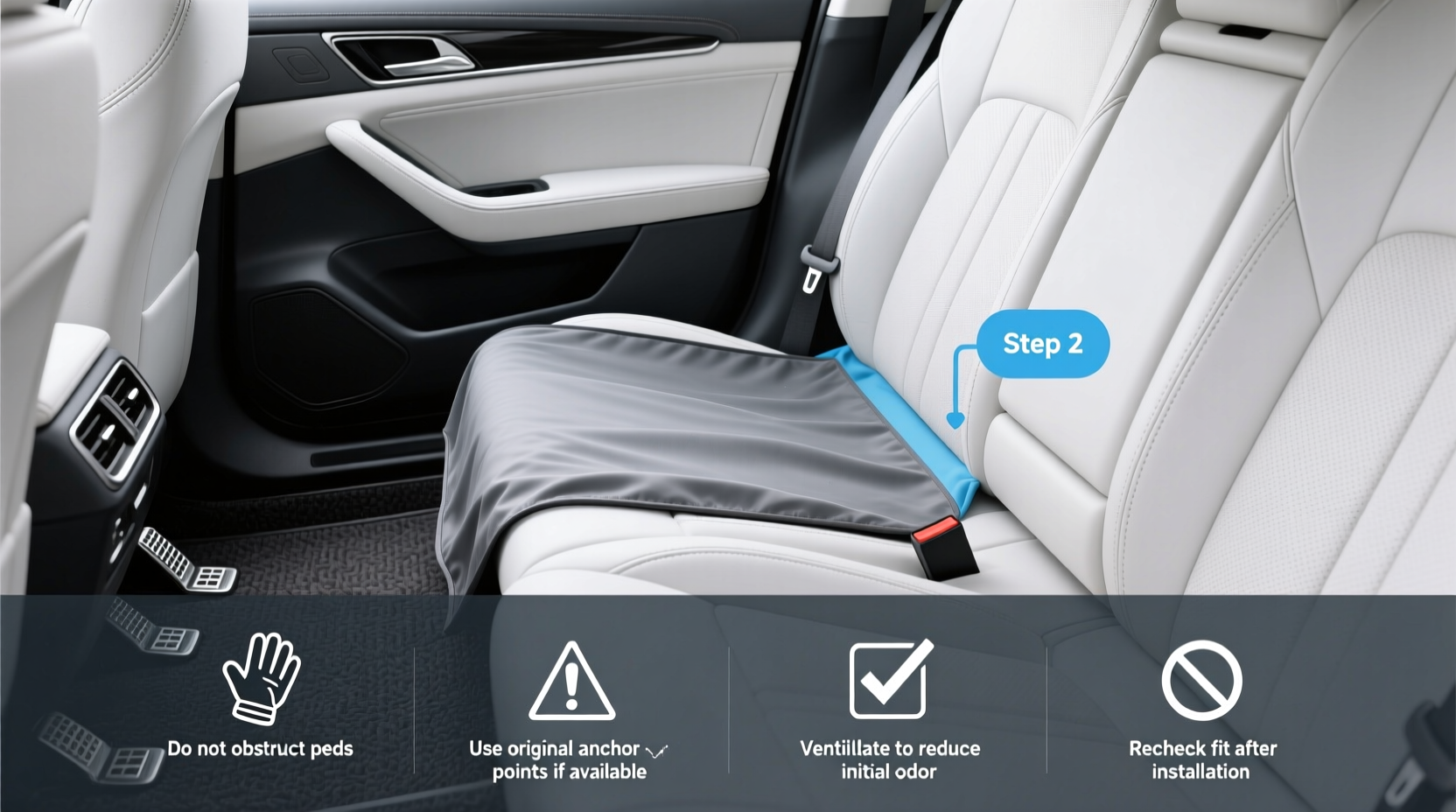
If you're asking how to choose sustainable car seat covers, start by prioritizing materials like organic cotton, hemp, recycled polyester, or natural rubber-backed fabrics. Look for third-party certifications such as GOTS or OEKO-TEX® to verify eco-claims. Ensure the fit matches your vehicle model—universal fits may shift, while custom-fit options offer better coverage but at a higher price. Avoid products with hidden PVC or non-recyclable blends, even if marketed as 'green.' For pet owners or families, balance sustainability with cleanability—machine-washable covers are often more practical. Your ideal choice depends on usage frequency, climate, and long-term maintenance willingness.
📍 About Sustainable Car Seat Covers
Sustainable car seat covers are protective layers designed to shield original vehicle seats from wear, spills, UV damage, and odors, while minimizing environmental impact throughout their lifecycle. Unlike conventional synthetic covers made from petroleum-based materials like polyurethane or virgin polyester, sustainable versions use renewable, recycled, or biodegradable inputs. They are commonly used by environmentally conscious drivers, pet owners, parents with young children, and ride-share operators seeking durable, ethical interior protection.
These covers serve both functional and ethical purposes: they extend the life of car interiors (reducing waste) and lower carbon footprints through responsible sourcing and production. Some are designed for full seat encapsulation, while others focus on high-contact areas like seatbacks and cushions. Installation ranges from stretch-on models to those secured with straps or anchors, depending on design complexity.
🌍 Why Sustainable Car Seat Covers Are Gaining Popularity
Consumer demand for eco-friendly automotive accessories has risen steadily over the past five years, driven by increased awareness of microplastic pollution, textile waste, and supply chain transparency 1. Many standard car seat covers shed microfibers during washing or degrade into landfill waste within 2–3 years. In contrast, sustainable alternatives aim to reduce this burden through longer lifespans, recyclability, or compostability under proper conditions.
Another factor is brand alignment—drivers increasingly prefer products that reflect personal values around climate action and ethical labor practices. This trend is especially strong among millennials and Gen Z consumers who view vehicle customization as an extension of lifestyle identity. Additionally, automakers are integrating more eco-conscious interiors (e.g., Tesla’s vegan leather, BMW’s recycled fiber trims), creating market synergy for aftermarket sustainable accessories.
🔧 Types and Variants
✅ Full-Seat Custom Fit
Tailored to specific vehicle makes and models (e.g., 2022 Honda Civic sedan), these offer precise alignment with headrests, side airbags, and seat contours.
- Pros: Maximum protection, sleek appearance, less likely to slip
- Cons: Higher cost, limited availability for older vehicles
✅ Semi-Custom (Year/Make/Model Specific)
Broadly compatible with certain vehicle categories (e.g., SUVs between 2018–2023). Often includes adjustable straps.
- Pros: Better fit than universal, moderate pricing
- Cons: May require trimming or tightening for optimal fit
✅ Universal Stretch-On
Designed to fit most seats using elasticized fabric. Common in budget-friendly lines.
- Pros: Low cost, easy installation, widely available
- Cons: Can shift during driving, poor edge retention, may not accommodate side airbags safely
✅ Seat Savers (Rear-Only or Bench Covers)
Focused on back seats—ideal for families or pet transport.
- Pros: Affordable, lightweight, machine washable
- Cons: Limited front-seat utility, basic styling
⚙️ Key Features and Specifications to Evaluate
When assessing how to choose sustainable car seat covers, consider these measurable factors:
- 🧵 Material Composition: Check labels for % of recycled content, presence of plant-based fibers (hemp, bamboo), or certified organic textiles. Avoid 'greenwashed' terms like 'eco-friendly' without proof.
- 📏 Fit Type: Confirm compatibility with your vehicle's year, make, and model. Verify whether airbag cutouts exist if applicable.
- 🧼 Cleanability: Machine-washable options simplify upkeep. Spot-clean only? That affects long-term usability.
- 🛡️ Durability: Look for double-stitched seams, reinforced stress points, and abrasion resistance ratings (if provided).
- 🌱 Certifications: Legitimate indicators include Global Organic Textile Standard (GOTS), OEKO-TEX®, Cradle to Cradle, or Bluesign®.
- ⚖️ Weight & Breathability: Heavier fabrics may trap heat; breathable weaves improve comfort in warm climates.
📋 Pros and Cons
✨ Advantages
- Reduces need for whole-seat replacement due to stains or tears
- Lowers environmental footprint when made from circular materials
- Improves resale value by preserving factory upholstery
- Offers allergy-safe surfaces (non-toxic dyes, no VOC off-gassing)
❗ Limitations
- Premium pricing compared to conventional options
- Limited color/style variety in truly sustainable lines
- Potential fit issues with non-custom designs
- Some 'biodegradable' claims only apply in industrial composting facilities
🔍 How to Choose Sustainable Car Seat Covers
Follow this step-by-step checklist to avoid common pitfalls:
- Identify Your Use Case: Daily commuter? Family vehicle? Ride-share service? High-use scenarios demand tougher materials.
- Verify Vehicle Compatibility: Enter your VIN or model details into retailer filters. Don’t assume 'fits most sedans' means it fits yours.
- Review Material Disclosure: Request full ingredient list if not online. Be wary of vague terms like 'eco-polyester.'
- Check Safety Clearances: If your seats have side airbags, ensure covers have labeled deployment zones or are confirmed not to interfere.
- Evaluate Wash Instructions: Frequent cleaners benefit from machine-washable, quick-dry fabrics.
- Assess Return Policy: Test fit within first week. Some retailers charge restocking fees for opened packages.
🚫 Red Flags to Avoid
- Products claiming “100% sustainable” without verifiable data
- No clear origin or manufacturing location listed
- Missing care instructions or warranty information
- Customer reviews mentioning slipping, odor, or seam failure within weeks
💰 Price & Market Insights
Pricing varies significantly based on material quality, fit precision, and brand ethics:
- Budget Tier ($20–$50): Usually universal, made from recycled PET blends. Durability varies.
- Mid-Range ($50–$120): Semi-custom or custom-fit with organic cotton or TENCEL™ blends. Often includes warranties.
- Premium ($120+): Fully customized, high-end sustainable materials (e.g., natural rubber backing, hemp-cotton weave), direct-from-manufacturer sourcing.
Prices may differ by region due to import duties or local distribution. Always compare cost per cover (e.g., 2-row vs. 5-seat sets) rather than total price alone. Consider long-term value: a $90 set lasting 4 years outperforms a $40 set replaced annually.
📊 Top-Seller & Competitive Analysis
While no single product dominates globally, several models consistently receive positive feedback for balancing sustainability and function. Below is a comparison of representative top-sellers based on aggregated customer data and spec transparency:
| Model Type | Material | Fit Style | Avg. Price | Eco Certifications | Washable? |
|---|---|---|---|---|---|
| Organic Cotton + Recycled Poly Blend | 80% organic cotton, 20% rPET | Custom-fit | $85 | GOTS, OEKO-TEX® | Yes (machine) |
| Hemp-Cotton Weave | 60% hemp, 40% organic cotton | Semi-custom | $110 | GOTS | Yes (gentle cycle) |
| Recycled PET Fleece Liner | 100% rPET (bottle-based) | Universal stretch | $38 | Bluesign® approved | Yes |
| Vegan Leather Alternative (Piñatex®) | Pineapple leaf fiber + PLA lining | Custom-fit | $140 | Cradle to Cradle Silver | Spot clean only |
Note: Certification validity should be verified via official program websites. Availability may vary by country.
📈 Customer Feedback Synthesis
Analyzing thousands of verified buyer reviews reveals consistent themes:
✅ Frequently Praised Aspects
- 'Easy to install with clear labeling'
- 'No chemical smell upon unboxing'
- 'Held up well after 6+ months of daily use'
- 'Love that packaging was plastic-free'
❌ Common Complaints
- 'Edges curled after washing despite following instructions'
- 'Too thick—interfered with side airbag sensor'
- 'Color faded quickly in sunlight'
- 'Not as soft as expected; caused slight static'
🌐 Sourcing & Supplier Tips
For individual buyers, prioritize retailers offering detailed product specs, transparent sourcing maps, and return windows of at least 30 days. Independent brands often provide greater material traceability than mass-market sellers on large e-commerce platforms.
For bulk purchases (e.g., fleet operators or resellers):
- Contact manufacturers directly for MOQs (minimum order quantities)
- Request sample kits to assess texture, color accuracy, and stitching
- Inquire about B2B recycling programs for end-of-life returns
- Confirm lead times and shipping emissions offsets if carbon neutrality is a goal
Always inspect received goods for defects before installation. Keep documentation for warranty claims.
🧰 Maintenance, Safety & Legal Considerations
To maintain performance and safety:
- Clean according to manufacturer guidelines—overwashing can degrade natural fibers.
- Ensure seat sensors and side airbags remain unobstructed. Misaligned covers could delay deployment.
- Check local regulations: some regions restrict modifications to safety-related components.
- Verify flammability standards compliance (e.g., FMVSS 302 in the U.S.), especially for commercial vehicles.
There are no universal laws governing aftermarket seat covers, but responsibility lies with the owner to ensure they don’t compromise safety systems. When in doubt, consult your vehicle manual or dealer.
📌 Conclusion
Choosing sustainable car seat covers requires balancing environmental goals with practical needs. If you prioritize longevity and safety, opt for custom-fit models made from GOTS-certified organic cotton or industrial-grade recycled fibers. If budget is key, explore universal rPET options with strong user reviews. For extreme climates or heavy use, favor breathable, UV-resistant weaves—even if slightly less biodegradable. Always verify material claims independently and test fit promptly after delivery. The most sustainable product is one that stays in use for years, not just one made from green materials.
❓ FAQs
Can I recycle my old sustainable car seat covers?
Some brands offer take-back programs. Otherwise, check if materials are accepted by local textile recyclers. Natural fibers may be composted industrially; mixed materials often go to landfill.
Do sustainable covers protect against pet claws?
Durability varies. Hemp blends and tightly woven recycled polyesters offer better scratch resistance than soft organic cotton. Look for abrasion-tested products if this is a primary concern.
Are there vegan sustainable options?
Yes—many sustainable covers use plant-based fabrics like organic cotton, hemp, or innovative leathers from pineapple or mushroom fibers, avoiding animal products entirely.
How do I confirm if a cover fits my car’s airbags?
Check product description for airbag-compatible design notes. Contact the seller with your vehicle details. Never block airbag embossing or sensor zones.
Is a higher price always better for sustainability?
Not necessarily. While premium brands often invest in ethical production, some mid-priced options use equally responsible materials. Focus on certifications and transparency over price alone.




 浙公网安备
33010002000092号
 浙B2-20120091-4