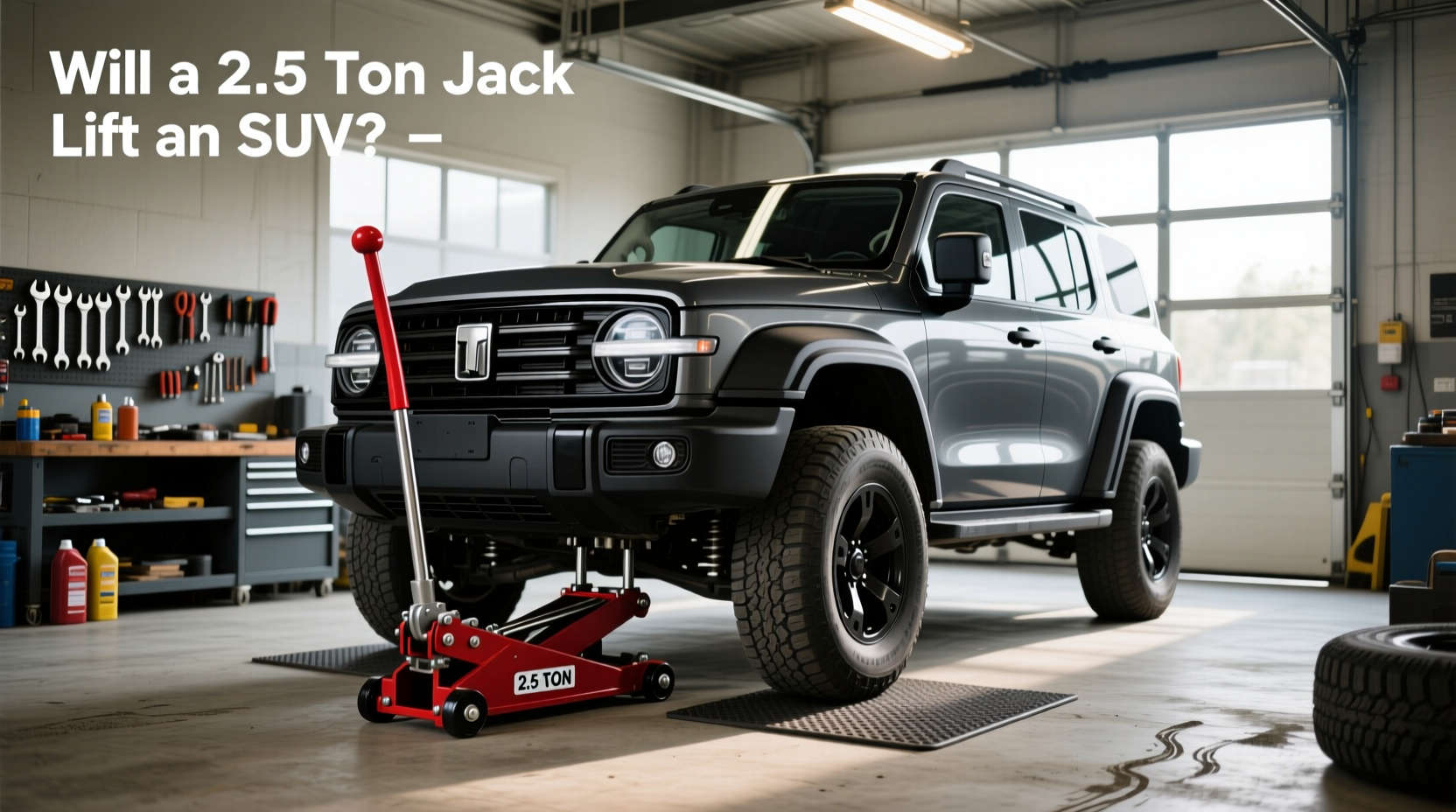
How to Choose an SUV Jack: Will a 2.5 Ton Jack Lift an SUV?
About SUV Jacks: Will a 2.5 Ton Jack Lift an SUV?
A SUV jack is a mechanical device used to lift sport utility vehicles off the ground for tire changes, maintenance, or repairs. Unlike passenger cars, SUVs vary widely in weight and ground clearance, making jack selection more complex. The core question—Will a 2.5 ton jack lift an SUV?—depends entirely on the vehicle's weight class. A 2.5-ton (5,000 lb) jack may work for smaller SUVs but falls short for larger models. Understanding your SUV’s specifications is essential before purchasing or using any jack.
Common use cases include roadside flat tire changes, seasonal tire swaps, brake inspections, and undercarriage cleaning. Because SUVs are taller and heavier than sedans, standard scissor jacks from car trunks are often inadequate. Floor jacks, bottle jacks, and hydraulic trolley jacks are preferred for their stability and lifting range.
Why SUV Jacks Are Gaining Popularity
📈 As SUV sales continue to rise globally, so does demand for specialized tools like high-capacity jacks. According to industry data, SUVs now dominate new vehicle registrations in North America and Europe 2. Owners are increasingly investing in home maintenance tools to avoid service fees and gain independence. A reliable jack supports DIY culture and emergency preparedness.
Moreover, factory-installed jacks are often low-profile and limited in durability. Aftermarket jacks offer better performance, longer lifespans, and higher safety margins. Enthusiasts modifying their SUVs with heavier tires or lifts also require stronger jacking equipment, further driving adoption of 3-ton and 5-ton models.
Types and Variants of SUV Jacks
Different jack types suit different needs. Here’s a breakdown of common options:
- 🔧Floor Jacks (Hydraulic Trolley Jacks): Most popular for garages. Offer smooth operation, high lift range (up to 20 inches), and easy maneuverability on wheels.
- ⚙️Bottle Jacks (Vertical Hydraulic Jacks): Compact and powerful. Ideal for tight spaces or lifted trucks. Require vertical orientation and less lateral stability.
- 🛒Scissor Jacks: Typically included with vehicles. Lightweight but slow and unstable. Not recommended for regular or heavy-duty use on SUVs.
- ✨Electric/Pneumatic Jacks: Motorized or air-powered. Fast and convenient but expensive and dependent on power sources.
Pros and Cons by Type
| Type | Advantages | Limitations |
|---|---|---|
| Floor Jack | High capacity, stable base, wide lift range | Larger footprint, requires flat surface |
| Bottle Jack | Strong force in small space, good for high-clearance SUVs | Less stable, must be vertical |
| Scissor Jack | Portable, included with vehicle | Low capacity, slow, unsafe for extended work |
| Electric Jack | Fast lifting, minimal effort | Costly, needs battery or compressor |
Key Features and Specifications to Evaluate
When evaluating a suv jack,Will a 2.5 ton jack lift a SUV?, consider these technical factors:
📍 Lifting Capacity
This is the maximum weight the jack can safely support. Never exceed this limit. As a rule of thumb, the jack should handle at least 75% of your SUV’s gross vehicle weight rating (GVWR) 1. For example, a 6,000-lb SUV needs a jack rated for at least 4.5 tons.
📏 Clearance and Reach
- Minimum Height: Must fit under your SUV’s lowest point. Standard floor jacks start at 5–6 inches; low-profile models go as low as 3.25 inches.
- Maximum Height: Determines how far the SUV can be lifted. Ensure it allows enough room for wheel removal or component access.
- Reach Extension: Some jacks include saddle adapters to contact frame points on lifted or modified SUVs.
🛠️ Build Quality & Materials
Look for steel construction, sealed hydraulics, and durable casters. Avoid plastic components in load-bearing areas. ALI (Automotive Lift Institute) certification indicates third-party safety testing 5.
⚖️ Stability & Base Design
A wider base improves balance. Floor jacks with dual-piston systems provide smoother lifts. Bottle jacks need extra caution due to narrow footprint.
Pros and Cons of Using a 2.5-Ton Jack on SUVs
While affordable and portable, a 2.5-ton jack has clear limitations:
- ✅Pros: Cost-effective, lightweight, sufficient for compact SUVs and crossovers.
- ❗Cons: Risky for mid-size and full-size SUVs; lacks safety margin; may fail under load or during temperature extremes.
Using an undersized jack increases the chance of hydraulic failure, tipping, or structural damage. It’s only suitable if your SUV weighs significantly below 5,000 lbs.
How to Choose an SUV Jack: Step-by-Step Buying Guide
Follow this checklist when deciding whether a 2.5-ton jack works for your SUV:
- 🔍Determine Your SUV’s Weight Class: Check owner’s manual or door jamb sticker for GVWR. Use the table below to match your model.
- 📊Select Appropriate Capacity: Refer to recommendations based on class.
- 📍Verify Ground Clearance: Measure the distance between the ground and the nearest frame rail or lift point.
- 📌Identify Lifting Points: Consult manufacturer guidelines—never lift by body panels.
- 🧰Plan for Safety Supports: Always pair the jack with jack stands rated for your SUV’s weight.
- ⚠️Avoid These Red Flags: Jumps in price with no specs, missing safety certifications, unclear capacity ratings, or poor customer reviews about leaks or instability.
Summary Table: Recommended Jack Capacities by SUV Class
| SUV Class | Average Weight (lbs) | Recommended Jack Size | Notes |
|---|---|---|---|
| Mini SUV | 2,000 – 3,000 | 1.5 – 2.5 Ton | A 2.5-ton jack is adequate |
| Compact SUV | 3,000 – 3,500 | 2 – 3 Ton | 2.5-ton acceptable with margin; 3-ton preferred |
| Mid-Size SUV | 3,500 – 6,000 | 3 – 3.5 Ton | 2.5-ton is marginal; not recommended for heavier models |
| Full-Size SUV | 5,300 – 6,000+ | 3.5 – 5 Ton | 2.5-ton jack is unsafe; use 3.5-ton minimum |
Price & Market Insights
Jack prices vary by type, capacity, and brand. Expect to pay:
- $40–$80: Basic 2.5-ton floor jacks (suitable for light SUVs)
- $80–$150: 3-ton to 3.5-ton ALI-certified models with better build
- $150–$300+: Heavy-duty 5-ton jacks, low-profile designs, or electric variants
Premium brands may cost more but often include better seals, warranties, and corrosion resistance. However, value isn’t always tied to price—read reviews carefully. Prices may vary by region and retailer.
Top-Seller & Competitive Analysis
Popular models include trusted names known for reliability. While we don’t endorse specific brands, here are common features found in top-rated units:
| Feature | Common in Top Models | Why It Matters |
|---|---|---|
| Lifting Capacity | 3–3.5 tons standard | Covers most mid-size SUVs safely |
| Min Height | 3.5–5 inches | Fits under most SUVs without modification |
| ALI Certification | Frequent | Indicates independent safety validation |
| Steel Construction | Universal | Ensures durability under heavy loads |
| Swivel Saddle | Common | Allows adjustment to uneven lift points |
Compare specs side-by-side and prioritize certified, well-reviewed models over flashy features.
Customer Feedback Synthesis
Analysis of user reviews reveals consistent patterns:
👍 Frequent Praise
- Smooth hydraulic action
- Durable steel frames
- Low-profile design fitting under SUVs
- Ease of assembly and use
👎 Common Complaints
- Hydraulic fluid leaks over time
- Plastic parts breaking (e.g., release valve caps)
- Wheels jamming on uneven surfaces
- Inaccurate advertised lift height or capacity
These highlight the importance of inspecting materials and verifying claims before purchase.
Sourcing & Supplier Tips
Jacks are available through auto parts stores, online marketplaces, and industrial suppliers. For bulk purchases (e.g., fleets or workshops), consider distributors offering volume discounts. If sourcing internationally, confirm voltage compatibility for electric models and check import regulations.
Always inspect delivered units for damage, test pump action, and verify capacity labels. Return policies should allow inspection within 30 days. For resale or distribution, ensure products meet regional safety standards (e.g., CE, ANSI, or ALI).
Maintenance, Safety & Legal Considerations
Proper care extends jack life and ensures safety:
- 🧼Clean regularly and store indoors to prevent rust.
- 🔧Check for fluid leaks, worn seals, or bent components before each use.
- ✅Use on level, hard surfaces only—never on gravel or slopes.
- 📌Always place jack stands under the frame once lifted. Never work under a vehicle supported only by a jack.
- ❗Follow manufacturer instructions for oil refills and load limits.
Legally, while personal use typically has no licensing requirements, commercial operations (e.g., repair shops) may need compliance with local occupational safety regulations. Verify rules in your jurisdiction.
Conclusion
If you own a mini or compact SUV under 4,000 pounds, a 2.5-ton jack may suffice—but a 3-ton model provides a safer margin. For mid-size and full-size SUVs, a 2.5-ton jack is not recommended due to insufficient capacity. Instead, opt for a 3.5-ton or higher-rated jack. Safe lifting also depends on correct technique, proper lifting points, and using jack stands. When choosing a suv jack,Will a 2.5 ton jack lift a SUV?, prioritize vehicle weight, clearance, and safety certifications over price alone.




 浙公网安备
33010002000092号
 浙B2-20120091-4