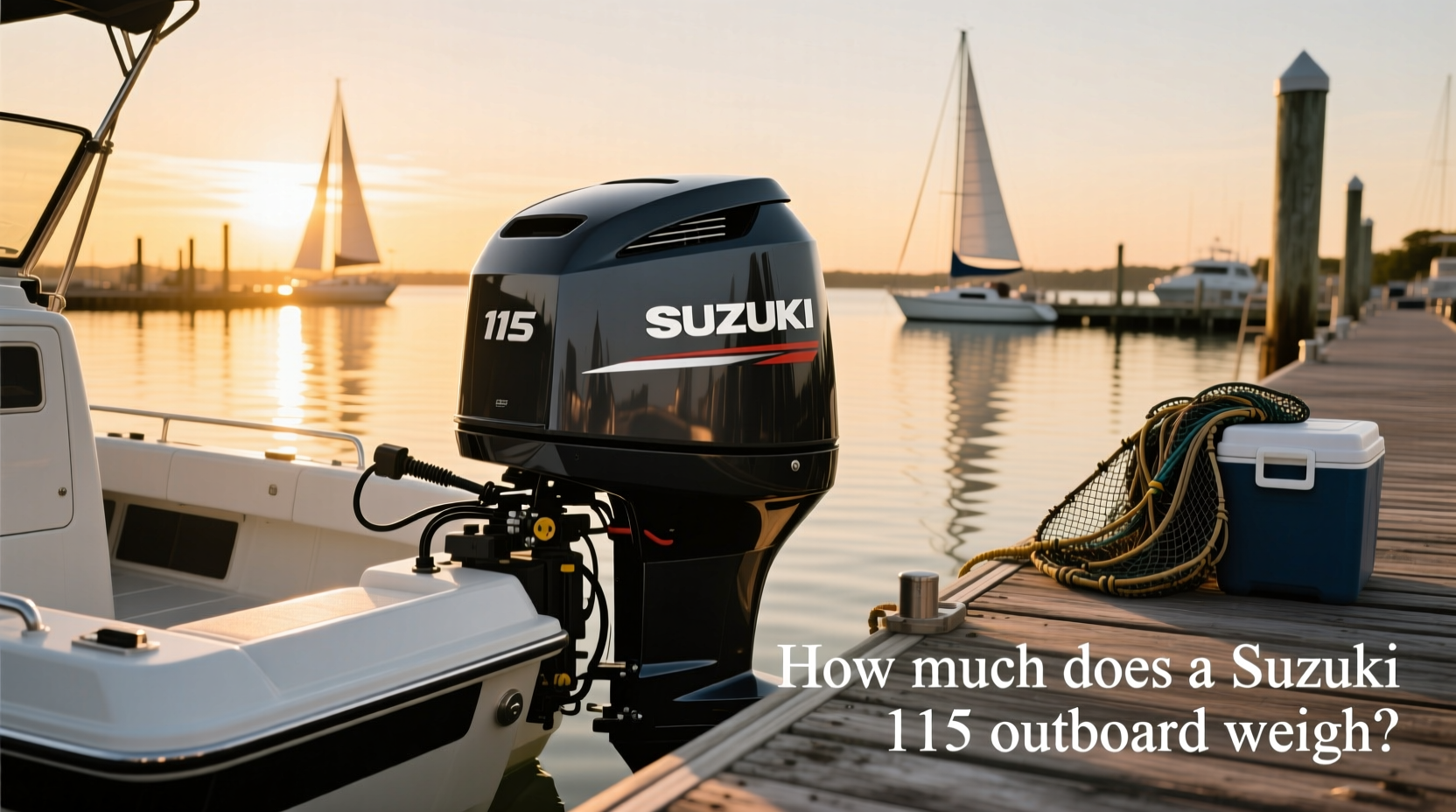
If you're asking how much does a Suzuki 115 outboard weigh?, the answer depends on the model and shaft length. Modern four-stroke models like the DF115B range from 394 lbs (long shaft) to 423 lbs (extra long). When choosing a Suzuki 115 outboard, prioritize matching the motor’s dry weight, shaft length, and control type (mechanical vs. digital) to your boat's transom rating and intended use—especially if you're comparing portability, fuel efficiency, or retrofitting an older vessel. Avoid assuming all 115 HP engines are equal; two-strokes like the DT115 are lighter (~370–385 lbs) but less efficient and harder to source today.
About Suzuki 115 Outboard Motors
The Suzuki 115 horsepower (HP) outboard motor is a mid-range marine engine designed for recreational boats, pontoons, and small fishing vessels. It strikes a balance between power and fuel economy, making it ideal for boats ranging from 16 to 22 feet in length. These motors are commonly used in freshwater lakes, coastal bays, and inland waterways where reliable starting, smooth operation, and moderate speed are priorities 🚤.
When researching how to choose a Suzuki 115 outboard, understand that "115 HP" refers to the engine's nominal output, not its physical size or weight. The actual performance and compatibility depend on additional specifications such as gear ratio, propeller options, and electronic features like fuel injection and idle control.
Why Suzuki 115 Outboards Are Gaining Popularity
Suzuki 115 HP outboards have gained favor among boaters due to their reputation for reliability, low maintenance needs, and strong resale value ✅. Their four-stroke design delivers quieter operation, lower emissions, and better fuel economy than older two-stroke models—a major factor for environmentally conscious users and those spending extended time on the water.
Additionally, advancements in Suzuki’s engineering, such as dual overhead camshafts (DOHC), multi-point fuel injection, and lean-burn technology, enhance throttle response and efficiency. This makes them competitive with offerings from Mercury, Yamaha, and Honda in the same horsepower class.
Types and Variants of Suzuki 115 Outboards
Suzuki offers several variants of the 115 HP outboard, each tailored to different steering systems, control methods, and aesthetic preferences.
🔧 DF115B – Standard Mechanical Model
This is the base model featuring remote mechanical controls and electric start. Available in both long (20") and extra-long (25") shaft versions, it weighs 394 lbs and 405 lbs respectively.
- Pros: Proven reliability, simpler wiring, easier troubleshooting
- Cons: Heavier than some competitors, no digital interface
✨ DF115BX Stealth – Matte Black Edition
A cosmetic variant of the DF115B with a stealthy matte black finish. Weighs 412 lbs with a 25" shaft, appealing to users who prefer a sleek, modern look.
- Pros: Distinctive appearance, corrosion-resistant coating
- Cons: Slightly heavier, premium pricing for aesthetics
⚙️ DF115BG – Digital Drive-by-Wire Model
Features Suzuki’s digital throttle and shift (DTSE) system, allowing smoother transitions and integration with multifunction displays. Dry weight ranges from 414 lbs (L) to 423 lbs (XL).
- Pros: Enhanced control precision, compatibility with modern helm systems
- Cons: More complex electronics, higher service cost potential
🏭 DT115 – Legacy Two-Stroke Model
An older two-stroke engine produced until the early 2000s. Lighter at approximately 370–385 lbs, but lacks modern emissions compliance and fuel efficiency.
- Pros: Lightweight, simple design, good initial acceleration
- Cons: Higher fuel/oil consumption, harder to find parts, not compliant in many regulated areas
Key Features and Specifications to Evaluate
When evaluating what to look for in a Suzuki 115 outboard, consider these critical specs:
📏 Shaft Length
Choose based on your boat’s transom height. Long (20") suits most 15–18 ft boats; Extra Long (25") is needed for 19+ ft vessels or center consoles. Using the wrong length affects ventilation and performance ⚠️.
⚖️ Dry Weight
All listed weights are “dry” — excluding oil, fuel, and propeller. Add ~10–15 lbs for full oil and accessories. Overloading the transom can cause instability or damage.
🔌 Control System
Decide between mechanical cable controls (DF115B) or digital drive-by-wire (DF115BG). The latter enables joystick docking and GPS integration but requires compatible electronics.
⛽ Fuel Efficiency
The DF115 series uses Suzuki’s Lean Burn technology, adjusting air-fuel mix for optimal economy. Real-world MPG varies by load and sea conditions, but expect 3–5 MPG at cruising speeds.
🔋 Starting System
All current models feature electric start. Ensure your battery meets the CCA (Cold Cranking Amps) requirements, especially in colder climates.
| Model | Shaft Length | Dry Weight (lbs) | Control Type |
|---|---|---|---|
| DF115B | 20" / 25" | 394 / 405 | Mechanical |
| DF115BX Stealth | 25" | 412 | Mechanical |
| DF115BG | 20" / 25" | 414 / 423 | Digital (DTSE) |
| DT115 (Older) | N/A | 370–385 | Mechanical |
Pros and Cons of the Suzuki 115 Outboard Line
• Reliable four-stroke performance with low vibration
• Good fuel economy thanks to lean-burn tech
• Strong warranty support through authorized dealers
• Quiet operation compared to two-strokes
• Multiple shaft and control options for customization
• Heavier than some competing 115 HP models
• Digital models require more technical knowledge
• Limited availability of two-stroke parts
• No integrated battery-less starting (unlike some newer Yamahas)
• Propeller selection may require dealer tuning
How to Choose a Suzuki 115 Outboard: Step-by-Step Guide
Follow this checklist when deciding how to choose a Suzuki 115 outboard:
- Assess Your Boat Size and Transom Rating: Confirm your transom can handle the motor’s dry weight plus fluids. Exceeding limits risks structural damage.
- Select the Correct Shaft Length: Measure from the top of the transom to the bottom of the hull. Use long (20") for standard transoms, XL (25") for raised or offshore platforms.
- Determine Control Compatibility: If upgrading from an older motor, verify whether your helm has room for digital harnesses or if mechanical cables are preferred.
- Evaluate Usage Patterns: For frequent trolling or shallow water, consider trim sensitivity and low-speed handling. For long cruises, prioritize fuel economy.
- Check Local Regulations: Some regions restrict two-stroke engines. Verify emissions compliance before purchasing a used DT115.
🚩 Red Flags to Avoid
- Buying a motor without verifying serial number history or service records
- Ignoring tilt/trim unit condition—stiff movement indicates internal wear
- Assuming weight includes oil—always confirm dry vs. wet specs
- Purchasing digital models without ensuring display compatibility
- Skipping a pre-purchase inspection by a certified technician
Price & Market Insights
New Suzuki 115 HP outboards typically range from $12,000 to $16,000 USD, depending on model and dealer location. The DF115B starts at the lower end, while the DF115BG commands a premium for digital controls. Prices may vary significantly in international markets—for example, Australian listings show similar MSRP in AUD.
Used models from 2010–2018 can be found between $6,000 and $9,500, depending on hours and condition. High-time motors (over 400 hours) should be priced accordingly and inspected thoroughly.
Consider total cost of ownership: include propeller, rigging kit, battery, and installation. Dealer-installed packages often offer better integration but come at higher markup.
Top-Seller & Competitive Analysis
The DF115B remains the top-selling variant due to its proven durability and broad compatibility. However, interest in the DF115BG is rising among tech-savvy boaters integrating smart navigation systems.
In comparison to competitors:
| Brand/Model | Horsepower | Weight (lbs) | Control Type |
|---|---|---|---|
| Suzuki DF115BG | 115 | 414–423 | Digital |
| Yamaha F115 V4 | 115 | 403 | Mechanical/Digital option |
| Mercury 115 FourStroke | 115 | 397 | Mechanical |
| Honda BF115 | 115 | 398 | Mechanical |
Suzuki motors are slightly heavier than rivals, which may matter for weight-sensitive applications like lightweight aluminum boats or sailboat auxiliaries.
Customer Feedback Synthesis
Based on aggregated owner reports and forum discussions:
- 👍 Frequently Praised: Reliability over 300+ hours, ease of cold starting, quiet operation, and dealer support.
- 👎 Common Complaints: Heavier than expected during transport, occasional ECU glitches in saltwater environments, limited trim adjustment range on certain mounts.
- ⚠️ Notable Observations: Users report better longevity when serviced annually; some note that original props are optimized for economy rather than hole-shot acceleration.
Sourcing & Supplier Tips
Purchase new units through authorized Suzuki Marine dealers to ensure warranty validity and proper registration. For used motors:
- Request service logs and title history
- Verify VIN and check for flood or salvage records
- Prefer motors stored indoors or under cover
- Ask for a running test and compression check
For bulk purchases (e.g., rental fleets), contact regional distributors directly. Avoid third-party importers unless they provide factory-backed warranties.
Maintenance, Safety & Legal Considerations
Routine maintenance extends life and ensures safety:
- Change engine oil and filter every 100 hours or annually
- Inspect gear lube for water contamination during each service
- Flush with fresh water after saltwater use
- Check anode corrosion monthly and replace as needed
Safety-wise, secure the motor properly during transport and ensure kill switch lanyard is used during operation.
Legally, confirm your motor meets EPA and CARB emissions standards if operating in U.S. waters. International buyers should consult local maritime authorities for noise and exhaust regulations.
Conclusion
If you need a dependable, fuel-efficient 115 HP outboard for regular recreational use, the Suzuki DF115B or DF115BG are solid choices. Choose the DF115B if you want simplicity and lower cost; opt for the DF115BG if you’re building a digitally integrated helm. Always match the shaft length to your boat, verify transom strength, and account for full operating weight—not just dry specs. And remember: when asking how much does a Suzuki 115 outboard weigh?, the answer isn’t one number—it depends on configuration, year, and model.




 浙公网安备
33010002000092号
 浙B2-20120091-4