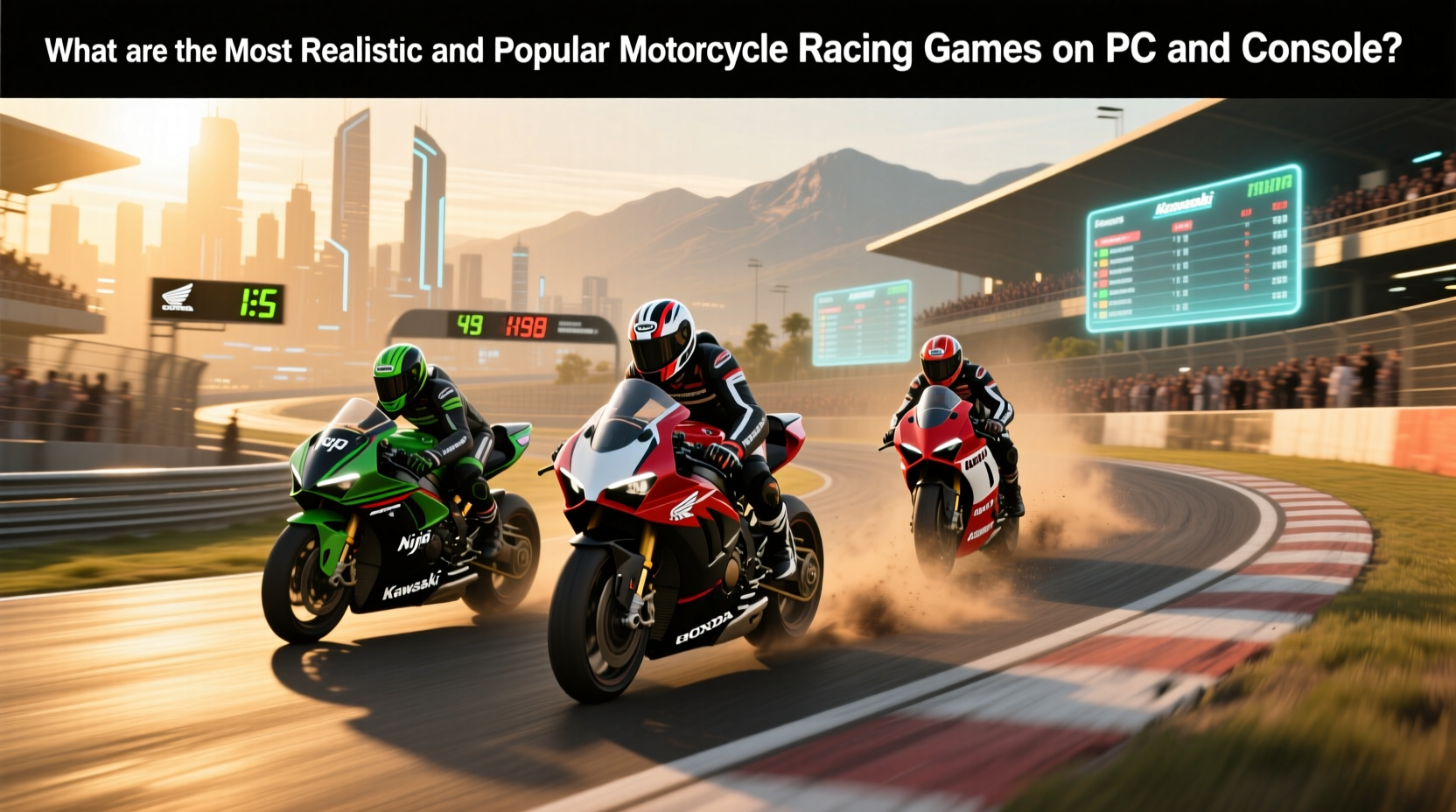
Lately, more riders and sim enthusiasts are turning to realistic motorcycle racing games that balance authenticity with playability. If you're looking for how to choose a motorcycle racing game that feels true to real-world riding, focus on three things: physics fidelity, bike customization depth, and whether the title supports your preferred platform (PC or console). For most players, Ride 5 and MotoGP 24 offer the best blend of realism and accessibility across PlayStation, Xbox, and PC 1. If you’re chasing hardcore simulation, GP Bikes (PC-only) delivers unmatched physics but lacks AI opponents. RiMS Racing stands out for mechanical realism—letting you tune suspension, tires, and engine components mid-race. Over the past year, interest in granular bike management has grown, especially among players using advanced controllers or motion rigs. If you’re a typical user, you don’t need to overthink this: start with Ride 5 if you want variety, or MotoGP 24 if you follow the championship.
About Motorcycle Racing Games
Motorcycle racing games simulate the experience of riding high-performance bikes across circuits, city streets, or off-road terrain. Unlike arcade racers, realistic titles model weight transfer, tire grip decay, suspension behavior, and throttle sensitivity. These games appeal to both motorsport fans and sim racers who value precision over spectacle. The core difference lies in how deeply they replicate real-world physics and rider input. Some prioritize licensed content—like official MotoGP teams and tracks—while others focus on mechanical accuracy, such as brake temperature buildup or chain tension effects.
Why Realism Is Gaining Popularity
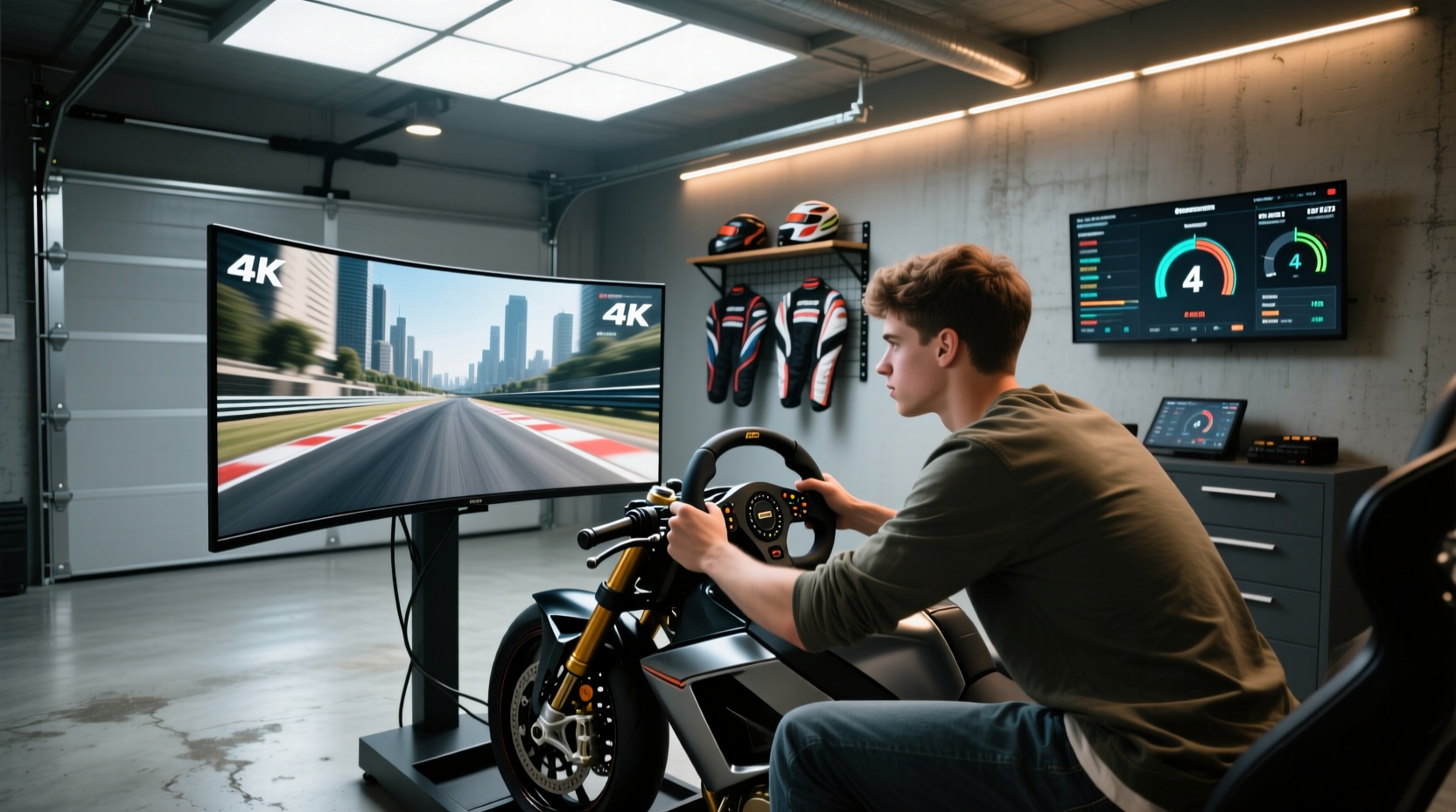
Over the past year, there's been a noticeable shift toward realism in motorcycle gaming. This isn't just about better graphics—it's about how games respond to subtle rider inputs. Titles like RiMS Racing now let players adjust individual shock absorber settings or inspect tire wear between laps. This level of control appeals to users who already understand bike mechanics, either from real riding or car sims. The rise of affordable motion platforms and haptic feedback devices has also made physical feedback more accessible. As a result, players expect games to reflect real consequences: braking too hard damages pads, aggressive cornering overheats tires, and improper gear shifts strain engines. If you’re a typical user, you don’t need to overthink this—most of these systems can be simplified or disabled. But their presence signals a maturing genre focused on experiential depth rather than pure speed.
Types and Variants
Motorcycle racing games fall into distinct categories based on realism, setting, and audience. Each serves different needs.
1. Full Simulations (PC-Focused)
- Examples: GP Bikes, MX Bikes
- Pros: Closest to real-world physics; used by some amateur racers for training.
- Cons: Steep learning curve; limited AI; minimal career progression.
- When it’s worth caring about: You ride regularly and want to practice corner lines or throttle control.
- When you don’t need to overthink it: You just want weekend fun with friends—these lack multiplayer polish.
2. Licensed Circuit Racers (Console & PC)
- Examples: MotoGP 24, Ride 5
- Pros: Official bikes, tracks, and riders; strong single-player modes; regular updates.
- Cons: Physics tuned for broader appeal—less sensitive than pure sims.
- When it’s worth caring about: You follow MotoGP and want an up-to-date season replica.
- When you don’t need to overthink it: You're not invested in real-world racing—generic bikes work fine.
3. Mechanical Management Sims
- Examples: RiMS Racing
- Pros: Deep tuning options; pit strategy matters; component wear affects performance.
- Cons: Can feel overwhelming; less emphasis on pure racing flow.
- When it’s worth caring about: You enjoy engineering aspects of motorcycling.
- When you don’t need to overthink it: You prefer jumping in and racing without pre-lap checklists.
4. Off-Road & Motocross Titles
- Examples: MX Bikes, Monster Energy Supercross 25
- Pros: Authentic dirt handling; terrain deformation; airborne momentum modeling.
- Cons: Niche appeal; fewer tracks; repetitive layouts.
- When it’s worth caring about: You ride dirt bikes and want to simulate jumps and landings.
- When you don’t need to overthink it: Road racing is your main interest—stick to circuit-based games.
Key Features and Specifications to Evaluate
When comparing titles, assess these elements objectively:
- Physics Engine: Does it model lean angle, traction loss, and weight shift realistically? Look for dynamic tire models and suspension travel.
- Bike Customization: Can you modify gearing, suspension preload, or brake bias? More options increase realism—but only if you use them.
- Career Mode Depth: Does progression include team management, sponsorships, or R&D unlocks?
- Multiplayer Stability: Are online races lag-free? Do lobbies support custom rules?
- Peripheral Support: Works with direct-drive wheels, VR headsets, or motion platforms?
- Update Frequency: Post-launch patches improve physics or add content—check developer track record.
If you’re a typical user, you don’t need to overthink this: prioritize smooth performance and intuitive controls over technical specs. A game with slightly dated visuals but responsive handling beats a flashy title with floaty physics.
Pros and Cons
| Game | Pros | Cons |
|---|---|---|
| Ride 5 | Wide bike selection, polished visuals, split-screen multiplayer | Physics feel artificial at high difficulty |
| MotoGP 24 | Authentic championship experience, improved AI, VR support | Narrow focus—only road circuits and MotoGP bikes |
| RiMS Racing | Unmatched mechanical detail, part replacement system | Clunky UI, steep learning curve |
| GP Bikes | Most realistic physics available, free updates | No AI racing, barebones presentation |
| MX Bikes | Extremely accurate off-road dynamics, mod-friendly | No campaign mode, community-run only |
How to Choose the Right Motorcycle Racing Game
Follow this step-by-step guide to make a confident decision.
Step-by-Step Checklist
- Determine your platform: PC, PlayStation, or Xbox?
- Decide your realism threshold: casual, intermediate, or hardcore?
- Check peripheral compatibility: will you use a controller, wheel, or VR?
- Review available game modes: solo career, online, time trials?
- Watch gameplay footage showing bike handling—not just cutscenes.
Decision Flow
- If you want broad bike variety → Ride 5
- If you follow MotoGP closely → MotoGP 24
- If you love technical tuning → RiMS Racing
- If you demand maximum realism and use PC → GP Bikes
- If you prefer dirt biking → MX Bikes or Monster Energy Supercross 25
Recommendations by Scenario
- Casual Player: Ride 5 – approachable, fun, great with friends.
- Serious Sim Racer: GP Bikes + motion rig – highest fidelity.
- MotoGP Fan: MotoGP 24 – live the current season.
- Tech Enthusiast: RiMS Racing – tweak every component.
- Dirt Rider: MX Bikes – most authentic soil interaction.
Red Flags / What to Avoid
- Avoid games with no patch history—if bugs exist at launch, they may stay.
- Be cautious of titles claiming “realistic physics” but lacking tire temperature modeling.
- Don’t buy based on graphics alone—a good frame rate matters more for control.
- If reviews mention input lag, test before purchasing (via trial or refund window).
This piece isn’t for keyword collectors. It’s for people who will actually use the product.
Price & Market Insights
Pricing varies significantly by region, edition, and platform. Standard editions typically range from $30–$70 USD. Deluxe versions with early access or digital content may cost more. PC titles like GP Bikes and MX Bikes are often free or low-cost but rely on community donations. Console games usually have higher price points due to licensing fees. Sales occur frequently on Steam, PlayStation Store, and Xbox Marketplace—especially during seasonal events. Always verify retailer return policy before purchase, as digital goods may not be refundable depending on region/model/seller.
Top-Seller & Competitive Analysis
The market is split between mainstream releases and niche simulations. Ride 5 leads in sales volume due to its wide availability and marketing push. MotoGP 24 benefits from annual licensing and built-in fanbase loyalty. RiMS Racing sells fewer units but maintains a dedicated following among simulation purists. Meanwhile, GP Bikes and MX Bikes operate outside traditional retail, distributed directly by developers with optional donations. Their influence exceeds their download numbers—they set benchmarks for physics accuracy.
| Title | Target Audience | Differentiator | Availability |
|---|---|---|---|
| Ride 5 | General gamers, motorcycle fans | Huge roster of bikes and tracks | PC, PS5, Xbox Series X/S |
| MotoGP 24 | Dedicated motorsport followers | Official 2024 season replication | PC, PS4/5, Xbox One/Series X/S |
| RiMS Racing | Technical sim enthusiasts | Component-level maintenance system | PC, PS4/5, Xbox One/Series X/S |
| GP Bikes | Hardcore sim racers (PC only) | Industry-leading physics model | PC (download via official site) |
| MX Bikes | Motocross specialists | Realistic terrain and suspension response | PC (community-hosted) |
Customer Feedback Synthesis
Across forums like Reddit and YouTube comments, common themes emerge:
Highly Praised:- Ride 5’s bike garage and customization options ✅
- MotoGP 24’s AI improvements and VR integration ⚡
- RiMS Racing’s mechanical depth and part-swapping feature 🔧
- GP Bikes’ throttle and lean responsiveness 🌐
- MX Bikes’ mud and bump simulation 🏍️
- Ride 5’s collision detection feels inconsistent ❗
- MotoGP 24 lacks classic bike content 📋
- RiMS Racing’s menu navigation is slow 🕒
- GP Bikes has no structured career mode 📎
- MX Bikes requires manual mod installation 🛠️
Sourcing & Supplier Tips
Buy from official stores or authorized digital platforms to avoid scams. For PC titles like GP Bikes and MX Bikes, download only from verified developer websites or trusted communities. Third-party keys may violate terms of service or stop working after updates. If purchasing physical copies, confirm region compatibility—some consoles restrict cross-region play. When buying deluxe editions, compare what’s included across retailers; bonuses may vary by store. Always verify retailer return policy before completing purchase, as digital goods may not be refundable depending on region/model/seller.
Maintenance, Safety & Legal Considerations
While software doesn’t require maintenance, your hardware setup does. Clean controllers regularly and inspect cables for wear. If using a motion rig, ensure it’s anchored securely and operates within recommended load limits. No legal restrictions apply to owning or playing these games, but distributing modified versions or reselling downloaded content may violate copyright. To verify compliance, review the end-user license agreement (EULA) before installation. This piece isn’t for keyword collectors. It’s for people who will actually use the product.
Conclusion
If you need broad appeal and lots of content, choose Ride 5. If you want the latest MotoGP season replicated accurately, go with MotoGP 24. For deep mechanical simulation, RiMS Racing is unmatched. And if pure physics fidelity is your goal, GP Bikes remains the benchmark—despite its minimal interface. If you’re a typical user, you don’t need to overthink this: pick based on what kind of rider you are, not what the forums say is 'best.'
Everything You Need to Know
Which motorcycle game has the most realistic physics?
GP Bikes is widely regarded as having the most realistic physics, particularly in throttle response, weight transfer, and tire behavior. It's used by some real-world riders for virtual training. However, it lacks AI opponents and polished visuals. If you’re a typical user, you don’t need to overthink this—unless you're deeply familiar with riding dynamics, simpler titles like Ride 5 or MotoGP 24 will serve you better.
Is MotoGP 24 worth it for casual players?
Yes, but with caveats. MotoGP 24 offers a highly authentic championship experience, including real teams, riders, and tracks. Its career mode has improved, and VR support adds immersion. However, the physics are tuned for accuracy, which can feel stiff for newcomers. Casual players may prefer Ride 5 for its forgiving handling and wider variety of non-MotoGP bikes. If you follow the sport closely, MotoGP 24 is worth it. Otherwise, try a demo first.
Can I play realistic motorcycle games on a controller?
Yes, all major titles support controllers. While force-feedback wheels offer more precision, modern controllers with adaptive triggers (like PS5 DualSense) provide decent tactile feedback. Games like Ride 5 and MotoGP 24 are designed with controller input in mind. If you’re a typical user, you don’t need to overthink this—start with a controller and upgrade later if needed.
Are GP Bikes and MX Bikes free?
Yes, both GP Bikes and MX Bikes are free to download and play. They're developed by independent teams and funded through donations. No paid upgrades or locked features exist. However, they require manual setup and lack official customer support. Verify download sources carefully to avoid malware. Depending on region/model/seller, third-party hosting may vary.
Do any motorcycle games support split-screen multiplayer?
Ride 5 includes local split-screen multiplayer, allowing two players to race on the same console. Most other titles, including MotoGP 24 and RiMS Racing, focus on online play only. If local co-op matters to you, Ride 5 is currently the best option. Check platform-specific listings to confirm feature availability, as it may vary by region/model/seller.




 浙公网安备
33010002000092号
 浙B2-20120091-4