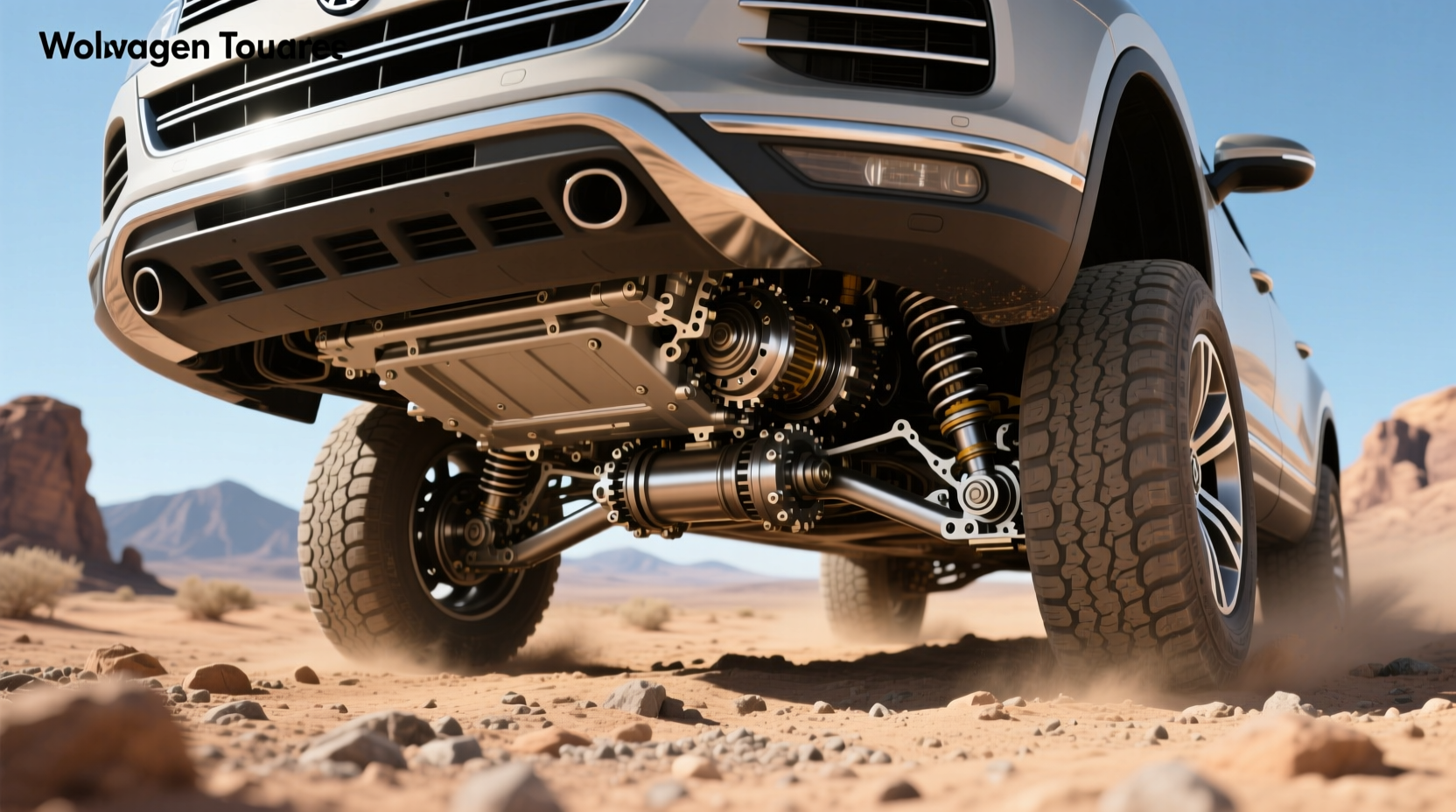
If you're asking how to choose a Touareg transfer case or wondering is the Touareg permanent 4WD?, the answer is yes — all generations of the Volkswagen Touareg come standard with a permanent all-wheel drive (AWD) system called 4MOTION 1. This means power is continuously delivered to all four wheels, enhancing traction and stability without driver intervention. When evaluating a used or new Touareg, understanding the evolution of its transfer case and 4MOTION system across generations (2002–present) is critical for off-road capability, long-term reliability, and maintenance costs. Avoid models with undocumented service history on the center differential or transmission, as these components are tightly integrated.
About the Touareg Transfer Case & Is the Touareg Permanent 4WD?
The term "transfer case" in the context of the Volkswagen Touareg refers to the central drivetrain component that distributes engine torque between the front and rear axles. Unlike traditional part-time 4WD SUVs that require manual engagement, the Touareg uses an advanced permanent AWD setup known as 4MOTION, which operates full-time without driver input 2.
This system relies on a multi-plate clutch and a lockable center differential housed within the transfer case assembly. It automatically adjusts torque distribution based on road conditions, wheel slip, and driving dynamics. For example, under normal driving, it may send more power to the rear axle for balanced handling, but can shift up to 70% forward or 80% rearward when grip is lost 2.
Common use cases include:
- 🚗 All-weather driving (rain, snow, ice)
- ⛰️ Light to moderate off-roading (gravel, mud, sand)
- 🛣️ Towing and highway cruising with improved stability
- 🏙️ Urban driving where responsive handling matters
The permanent nature of the 4MOTION system makes it ideal for drivers who want consistent grip without having to switch modes manually — a key differentiator from SUVs with selectable 4WD systems.
Why the Touareg’s Transfer Case & 4WD System Are Gaining Popularity
Interest in the Touareg’s drivetrain has grown due to several factors. First, its platform sharing with premium brands like Audi, Porsche, and Bentley (from 2018 onward) lends credibility to its engineering quality 3. Second, the integration of electronic controls into the transfer case allows for smoother torque management than older mechanical systems.
Buyers are increasingly looking beyond brand badges and focusing on underlying technology. The Touareg offers high-end AWD performance at a lower price point than its luxury siblings. Additionally, global demand for capable yet comfortable SUVs has boosted interest in vehicles with intelligent permanent AWD systems that balance fuel efficiency and performance.
Types and Variants Across Generations
The 4MOTION system has evolved significantly over three generations. While all feature a permanent AWD layout, the design and capabilities of the transfer case vary.
First Generation (2002–2010) ⚙️
Equipped with a Torsen-type automatic progressively locking center differential. Drivers could manually lock the center diff via a dashboard switch.
- Pros: Proven mechanical design; optional rear locker and air suspension enhance off-road ability.
- Cons: Older electronics; higher wear potential if not maintained; limited integration with modern driver aids.
Second Generation (2010–2018) ✨
Upgraded 4MOTION system paired with an 8-speed automatic transmission. Torque distribution became more dynamic using electronic sensors.
- Pros: Smoother shifting; better fuel economy; improved responsiveness.
- Cons: Increased complexity; reliance on software updates; some reports of hydraulic actuator issues.
Third Generation (2018–Present) 🌐
Built on the MLB Evo platform shared with Audi Q7 and Porsche Cayenne. Features fully electronic control of the transfer case with predictive torque vectoring.
- Pros: Seamless integration with driver assistance features; adaptive off-road settings; superior refinement.
- Cons: Higher repair costs; dependency on dealership-level diagnostics; expensive replacement parts.
| Generation | Transfer Case Type | Torque Split Range | Key Features | Best For |
|---|---|---|---|---|
| Gen 1 (2002–2010) | Mechanical + Manual Lock | 50:50 locked / Auto-variable | Dash lock switch, optional rear diff lock | DIY owners, light off-roaders |
| Gen 2 (2010–2018) | Electro-hydraulic Multi-Plate Clutch | 15–70% front / 30–85% rear | 8-speed auto, terrain response (optional) | Daily drivers needing all-weather grip |
| Gen 3 (2018–Present) | Fully Electronic w/ Predictive Control | Up to 70% front / 80% rear | Integrated with Park Assist, Trailer Assist | High-tech users, frequent travelers |
Key Features and Specifications to Evaluate
When assessing a Touareg’s transfer case and 4WD system, consider these technical and practical factors:
- Center Differential Type: Mechanical (Torsen) vs. electronically controlled multi-plate clutch. Mechanical units are simpler but less adaptive.
- Torque Distribution Range: Wider ranges offer better adaptability in slippery conditions.
- Locking Capability: Does the center diff lock? Manual override adds control in off-road scenarios.
- Integration with Suspension: Air suspension (available on higher trims) increases ground clearance and improves articulation.
- Transmission Pairing: 6-speed (older), 8-speed (newer). The latter improves efficiency and smoothness.
- Driver Modes: Modern models offer selectable profiles (e.g., Snow, Off-Road, Individual) that adjust throttle, transmission, and AWD behavior.
- OBD-II Diagnostics Support: Ensure the vehicle’s ECU logs transfer case health data accessible via scan tools.
Pros and Cons of the Touareg’s Permanent 4WD System
✅ Advantages
- Always-on traction improves safety in adverse weather
- No need to engage 4WD manually — ideal for untrained drivers
- Better handling balance compared to front-biased systems
- Enhanced resale value due to perceived capability
❌ Limitations
- Higher fuel consumption than FWD counterparts
- More complex and costly repairs than part-time 4WD
- Not designed for extreme rock crawling without modifications
- Potential for overheating during prolonged low-range use (if equipped)
How to Choose a Touareg Transfer Case: A Step-by-Step Buying Guide
Follow this checklist to make an informed decision:
- Determine Your Use Case: Will you drive mostly on paved roads, tackle snowy winters, or go off-grid occasionally?
- Select the Right Generation: Gen 1 for budget builds, Gen 2 for reliability, Gen 3 for tech integration.
- Verify Service History: Look for records of transfer case fluid changes every 60,000–80,000 miles.
- Test Drive in Varied Conditions: Check for clunking noises, delayed engagement, or warning lights.
- Scan for Error Codes: Use a professional OBD2 scanner to check for stored faults in the 4MOTION module.
- Inspect Undercarriage: Look for leaks around the transfer case, damaged skid plates, or worn driveshafts.
- Avoid These Red Flags:
- No service records for drivetrain components
- Intermittent AWD warnings on dashboard
- History of deep water fording or severe off-road abuse
- Aftermarket tuning that alters torque delivery
Price & Market Insights
Pricing varies widely by region, condition, and trim level. As of 2024:
- Used Gen 1 (2002–2010): $3,000–$8,000 — lowest cost entry, but higher risk of aged components.
- Used Gen 2 (2010–2018): $8,000–$18,000 — best value for reliable daily use.
- New/Used Gen 3 (2018–Present): $25,000–$55,000 — premium pricing reflects platform sophistication.
Value tip: Models with optional off-road packages (air suspension, rear locker) command higher prices but offer greater capability. Always compare local market listings and verify VIN-specific maintenance history.
Top-Seller & Competitive Analysis
The third-generation Touareg R-Line with off-road package is among the most sought-after variants. Key competitors include the BMW X5 xDrive, Mercedes GLE 4MATIC, and Land Rover Discovery.
| Model | AWD Type | Center Diff Lock? | Off-Road Tech | Maintenance Cost Estimate |
|---|---|---|---|---|
| VW Touareg (Gen 3) | Permanent (4MOTION) | Electronic Lock | Air Suspension, Terrain Mode | $$$ |
| BMW X5 xDrive | Permanent (xDrive) | No | Adaptive Suspension | $$$$ |
| Mercedes GLE 4MATIC | Permanent | Limited-slip | Active Curve Assist | $$$$ |
| Land Rover Discovery | Permanent (Terrain Response) | Yes (full locks) | Wade Sensing, Low Range | $$$$$ |
The Touareg stands out for offering near-luxury capability at a competitive price, though Land Rover leads in dedicated off-road hardware.
Customer Feedback Synthesis
Based on aggregated owner reviews and forum discussions:
👍 Common Praises
- "Superior snow performance compared to my previous Subaru."
- "The 4MOTION system feels invisible — just confident grip whenever needed."
- "Air suspension option makes a huge difference on rough trails."
👎 Frequent Complaints
- "Dealership charged $1,200 for a transfer case fluid change — felt excessive."
- "Had a sensor failure that disabled AWD until repaired."
- "No low-range gearing limits serious rock climbing ability."
Sourcing & Supplier Tips
For used vehicles:
- Purchase from dealerships or private sellers who provide full service documentation.
- Consider certified pre-owned (CPO) programs for extended warranty coverage.
- If importing, confirm compatibility of 4MOTION software with local emissions and diagnostic standards.
- For parts sourcing (e.g., replacement transfer case), prioritize OEM or reputable aftermarket suppliers like ZF or BorgWarner.
- Verify return policies and core exchange requirements when ordering online.
Maintenance, Safety & Legal Considerations
Maintain your Touareg’s 4WD system by:
- Changing transfer case fluid every 60,000–80,000 miles using manufacturer-specified lubricant.
- Inspecting driveshaft boots and u-joints annually.
- Using only compatible tires (same size, tread depth within 3/32") to prevent differential damage.
Safety note: Never tow the vehicle with all wheels on the ground if the transfer case is engaged — use dollies or flatbeds.
Legal reminder: Modifications to the AWD system may affect compliance with local vehicle inspection or emissions regulations. Always check regional rules before making changes.
Conclusion
If you need a dependable, permanently engaged AWD SUV for mixed conditions and occasional off-pavement travel, the Volkswagen Touareg’s 4MOTION system is a strong contender. For budget-conscious buyers, a well-maintained Gen 2 model offers excellent value. If you prioritize cutting-edge integration and comfort, the Gen 3 delivers premium-tier performance. Always inspect service history and test the 4WD functionality before purchase. Knowing what to look for in a Touareg transfer case and confirming is the Touareg permanent 4WD? ensures you select a vehicle aligned with your driving needs.
FAQs
Yes, all generations of the Volkswagen Touareg come standard with a permanent all-wheel drive system called 4MOTION, which continuously sends power to all four wheels.
No, the Touareg does not have a traditional low-range gear selector. However, it offers off-road driving modes that simulate low-range effects through throttle and transmission tuning.
Transfer case fluid should be replaced every 60,000 to 80,000 miles, depending on usage and manufacturer recommendations. Always use the specified lubricant type.
Yes, the Touareg can tow with 4WD engaged. The 4MOTION system automatically adjusts torque distribution to maintain stability while towing in various conditions.
Some owners report issues with electronic actuators, center differential wear, or sensor failures, especially in high-mileage or poorly maintained vehicles. Regular servicing helps prevent major failures.




 浙公网安备
33010002000092号
 浙B2-20120091-4