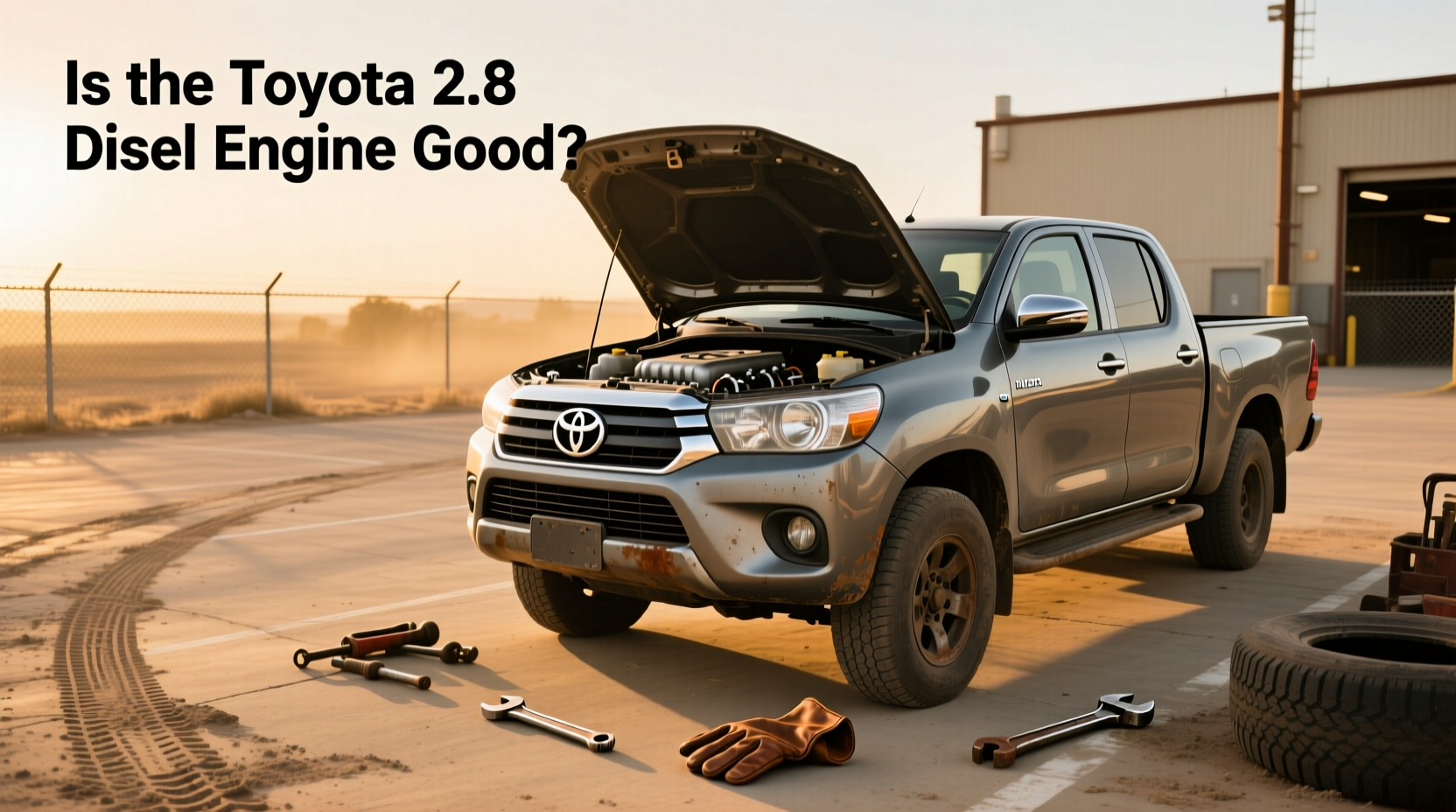
How to Choose a Toyota Hilux Diesel Engine for Sale: A Practical Guide
If you're considering a Toyota Hilux diesel engine for sale, particularly the 2.8L 1GD-FTV model, here’s what matters most: it delivers strong torque (369 lb-ft) and improved fuel efficiency over its predecessor, making it ideal for towing, off-roading, or heavy-duty work 1. However, potential buyers should be aware of known issues like the air-intake system fault that can cause limp mode in dusty environments 4. When evaluating how to choose a Toyota Hilux diesel engine for sale, focus on usage context—this engine suits demanding applications but requires attentive maintenance in harsh conditions.
About the Toyota Hilux 2.8L Diesel Engine
The ⚙️ Toyota 2.8L diesel engine, officially known as the 1GD-FTV, was introduced in 2015 to replace the older 3.0L 1KD-FTV unit. It powers several global models including the Hilux pickup truck, Land Cruiser Prado, and Fortuner SUV 1. Designed with durability in mind, this inline-four turbocharged diesel features a cast-iron block, aluminum head, and common rail direct injection for efficient combustion.
This engine is engineered for users who need reliable performance under load—whether hauling cargo, navigating rough terrain, or operating in remote areas. Its peak torque arrives early (between 1,600–2,800 rpm), providing responsive low-end power essential for off-road crawling or trailer towing. While often praised for robustness, prospective buyers must weigh these strengths against specific technical concerns identified since launch.
Why the 2.8L Diesel Engine Is Gaining Popularity
📈 The Toyota 2.8L diesel has become a preferred option among commercial operators and adventure drivers alike due to its balance of power and refinement compared to earlier models. With 201 horsepower and significant torque gains over the 3.0L engine, it offers better drivability without sacrificing Toyota's reputation for longevity 1.
Its growing presence in used markets reflects high retention rates and demand for capable midsize trucks. Additionally, factory-installed driving modes—Normal, Economy, and Power—allow customization of throttle response and transmission behavior, enhancing versatility across urban, highway, and off-road use cases.
Types and Variants
While the core 1GD-FTV engine remains consistent across applications, there are regional and model-specific variants affecting output and tuning:
- Hilux Standard Trim (2015–2020): Produces 174 hp in some markets; paired with 6-speed automatic or manual. Less aggressive tuning, suited for daily use.
- Hilux GR-Sport / High-Output Models (Post-2020): Delivers full 201 hp and 369 lb-ft torque. Includes upgraded suspension and enhanced ECU mapping for sportier response.
- Fortuner & Prado Applications: Same base engine, but calibrated differently for heavier SUV platforms, sometimes with revised gear ratios.
When searching for a toyota hilux diesel engine for sale, verify the exact specification based on VIN or service records, as power ratings vary by market due to emissions standards or fuel quality considerations.
Key Features and Specifications to Evaluate
To make an informed decision when exploring a toyota hilux diesel engine for sale,Is the Toyota 2.8 diesel engine good?, assess these critical parameters:
- 📊 Power Output: Confirm actual horsepower and torque. Some export models are detuned.
- 🔧 Transmission Compatibility: Ensure compatibility if replacing an engine—6-speed auto requires matching ECU and wiring harness.
- 🌍 Emissions Equipment: Check for DPF, SCR, and EGR systems. These affect long-term maintenance needs and regeneration cycles.
- 🧼 Air Intake Design: Look for updated intake manifolds or retrofit kits addressing the MAF sensor contamination issue 4.
- ⛽ Fuel System Health: Inspect injectors and high-pressure pump condition, especially on engines exceeding 100,000 km.
Always request service history and consider a pre-purchase inspection focusing on turbocharger function and oil consumption trends.
Pros and Cons
| Pros ✅ | Cons ❗ |
|---|---|
| High torque at low RPM for excellent off-road control | Potential MAF sensor contamination in dusty climates |
| Improved fuel efficiency vs. previous 3.0L engine | DPF and SCR systems add complexity and cost |
| Proven reliability when maintained properly | Limited top-end power; noticeable noise above 3,000 rpm |
| Widely supported globally with available parts | Heavy oil consumption reported in early production units |
How to Choose a Toyota Hilux Diesel Engine for Sale
Follow this checklist when evaluating whether the toyota hilux diesel engine for sale,Is the Toyota 2.8 diesel engine good? fits your needs:
- Determine Your Use Case: If you tow frequently or drive off-grid, the 2.8L excels. For city commuting only, smaller engines may offer better economy.
- Inspect Maintenance Records: Look for regular oil changes (every 10,000 km or 6 months) using 0W-30 grade oil 1.
- Verify Software Updates: Ask if DPF and ECU updates were applied to address early oil consumption issues.
- Check for Air Intake Modifications: Some owners install aftermarket filters or rerouted intakes to prevent dust ingress.
- Avoid Engines Without Documentation: Unverified mileage or unclear ownership history increases risk.
Red Flags to Avoid:
🚫 No service history
🚫 Evidence of limp mode incidents
🚫 Excessive blue smoke or oil loss (>1L per 5,000 km)
🚫 Tampered odometer or missing emission components
Price & Market Insights
Replacement 2.8L diesel engines typically range from $4,000 to $8,000 USD depending on condition, location, and whether they include transmission or accessories. Used long blocks start around $2,500, while complete crate engines from authorized suppliers reach $10,000+.
In regions like Australia, Southeast Asia, and Africa, prices are generally lower due to higher availability and local dismantlers. In Europe and North America, stricter emissions regulations may limit import eligibility or require costly adaptations.
Value assessment should factor in labor costs (~$1,000–$2,000 for installation) and potential need for supporting components (mounts, sensors, exhaust).
Top-Seller & Competitive Analysis
Among competitors, the Toyota 2.8L faces off against engines like the Isuzu 3.0L D-Max, Mitsubishi 4N15, and Ford 2.0L EcoBlue. Below is a comparison focused on real-world usability:
| Engine | Peak Torque | Fuel Economy (Est.) | Known Reliability Issues |
|---|---|---|---|
| Toyota 1GD-FTV 2.8L | 369 lb-ft | 25–30 mpg | Air intake design flaw, early DPF concerns |
| Isuzu 4JJ3 3.0L | 320 lb-ft | 28–32 mpg | Few major issues; simpler emissions system |
| Ford 2.0L Bi-Turbo | 325 lb-ft | 30–34 mpg | More complex turbo setup; higher repair cost |
While not always the most fuel-efficient, the Toyota holds value well and benefits from widespread dealer support.
Customer Feedback Synthesis
Based on owner forums and reviews, recurring themes include:
- ⭐ Positive Points: Strong low-end grunt, smooth power delivery, confidence-inspiring reliability on long trips.
- ❗ Common Complaints: Loud engine noise at highway speeds, unexpected limp mode activation after dusty drives, increased servicing costs due to advanced emissions tech.
- 🔧 Maintenance Notes: Many recommend upgrading air filtration and following strict oil change intervals to avoid premature wear.
Owners in desert or rural environments report more frequent MAF cleaning, while those in cities appreciate quieter idle behavior and smoother automatic shifts.
Sourcing & Supplier Tips
When purchasing a toyota hilux diesel engine for sale:
- Buy from reputable dismantlers or certified rebuilders with warranties (minimum 6 months).
- Request full engine documentation, including origin vehicle mileage and reason for removal.
- For bulk buyers or resellers, verify customs compliance and emission certification requirements in destination countries.
- Conduct a physical inspection: check for leaks, corrosion, and completeness of brackets, sensors, and wiring connectors.
- Consider rebuilt options—they often include updated parts addressing known flaws.
Maintenance, Safety & Legal Considerations
Routine care includes oil changes every 6,000 miles (10,000 km) using specified 0W-30 oil, air filter servicing in dirty conditions, and ensuring DPF regeneration completes regularly 1.
Safety-wise, disable the fuel system before working on high-pressure lines. Use proper lifting equipment during installation.
Legally, ensure any replacement engine meets local emissions standards. In some jurisdictions, tampering with DPF or SCR systems is prohibited and can result in fines. Always confirm regulatory alignment before import or installation.
Conclusion
The Toyota 2.8L diesel engine is a solid choice for those prioritizing rugged performance and proven durability in a Hilux platform. If you operate in tough environments and maintain the engine diligently—especially regarding air filtration and oil changes—it remains one of the best toyota hilux diesel engine for sale options for demanding tasks. However, if you prioritize quiet cruising or minimal maintenance, consider alternatives or ensure the unit has been retrofitted to address known intake issues.
FAQs
Yes, when properly maintained. Addressing the air-intake flaw and following service schedules helps prevent major issues.
Fine dust particles contaminating the MAF sensor can trigger incorrect air-fuel calculations, prompting the ECU to enter safety mode.
Toyota issued guidance for frequent cleaning, but a redesigned inlet system in later models and aftermarket upgrades offer more permanent solutions.
Real-world figures range from 25–30 mpg depending on driving style, load, and terrain. It's less efficient than smaller diesels but competitive for its class.
If it has full service history, no major repairs, and shows no signs of excessive oil use or limp mode, yes—it’s a capable workhorse worth considering.




 浙公网安备
33010002000092号
 浙B2-20120091-4