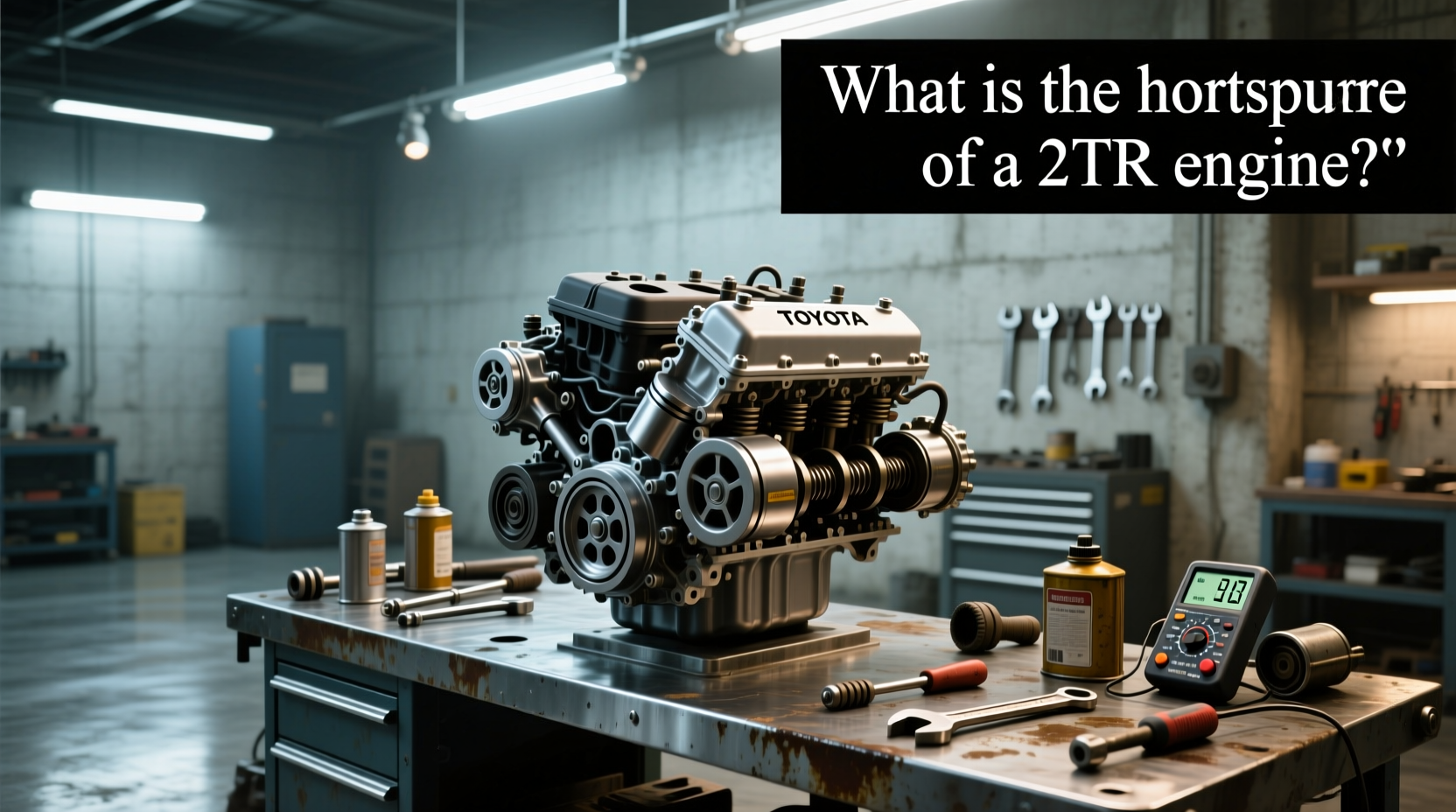
⚡ Short Introduction: What to Look for in a Toyota Hilux Engine 2TR
If you're asking what is the horsepower of a 2TR engine, the answer is critical for your decision: the Toyota 2TR-FE engine typically delivers between 159 hp and 163 hp, depending on model year and vehicle application 12. When considering how to choose a Toyota Hilux engine 2TR, focus on horsepower consistency, torque output (around 180 lb-ft), and whether the engine includes Dual VVT-i for improved efficiency. This inline-4, 2.7L gasoline engine is known for durability in off-road and commercial use, but verify specifications match your region’s emission standards and fuel quality. Avoid used engines with unclear service history or mismatched VINs.
🔧 About the Toyota Hilux Engine 2TR: Definition & Key Applications
The Toyota 2TR-FE is a 2.7-liter, four-cylinder gasoline engine from Toyota’s TR engine family, introduced as a successor to the 3RZ-FE. It features DOHC, 16 valves, and VVT-i technology, designed for balance between power, fuel economy, and long-term reliability. The engine is widely used in the Toyota Hilux, Tacoma, 4Runner, Land Cruiser Prado, and commercial models like the Hiace and Innova 3.
In the Hilux, the 2TR engine powers both rear-wheel and four-wheel drive configurations, making it ideal for rugged terrain, towing, and daily utility work. Its cast iron block and aluminum head provide strength and heat dissipation, while the timing chain eliminates the need for frequent belt replacements—a major advantage for users in remote or high-mileage environments.
📈 Why the Toyota Hilux 2TR Engine Is Gaining Popularity
The 2TR-FE has gained global recognition due to its proven reliability, especially in emerging markets where road conditions are harsh and maintenance access is limited. Fleet operators and individual buyers alike value its ability to exceed 300,000 km with basic servicing. Its modular design also makes it a popular choice for engine swaps and remanufactured replacements.
Additionally, the engine’s compatibility with multiple Toyota platforms simplifies parts sourcing and technical support. As emissions regulations evolve, some regions have adopted updated versions with Dual VVT-i, improving low-end torque and fuel efficiency—making it more attractive for urban delivery vehicles and light-duty transport.
📋 Types and Variants of the 2TR Engine
The 2TR engine comes in several variants, each suited to different performance and regulatory needs:
- ⚙️ 2TR-FE (Standard): Base version with single VVT-i. Output: ~159–161 hp. Found in earlier Hilux models (2005–2015).
Pros: Simple design, easy to repair.
Cons: Slightly lower torque at low RPM. - ⚙️ 2TR-FE (Dual VVT-i): Features variable timing on both intake and exhaust camshafts. Power: up to 163 hp, better throttle response.
Pros: Improved fuel economy, smoother operation.
Cons: More complex, slightly higher maintenance cost. - ⚙️ 2TR-FE (Compressed Natural Gas - CNG): Factory-equipped for alternative fuel in select markets.
Pros: Lower operating costs, reduced emissions.
Cons: Limited availability, requires fuel infrastructure.
When evaluating how to choose a Toyota Hilux engine 2TR, confirm which variant your vehicle originally had to ensure compatibility.
📊 Key Features and Specifications to Evaluate
To make an informed purchase, assess these technical parameters:
| Specification | Detail |
|---|---|
| Engine Type | Inline-4 (I4) |
| Displacement | 2.7L (2,693 cc) |
| Horsepower | 159–163 hp @ 5,200 rpm |
| Torque | 180–181 lb-ft @ 3,800 rpm |
| Valvetrain | DOHC, 16-valve, VVT-i |
| Fuel System | Sequential Multi-Point Injection |
| Compression Ratio | 9.6:1 (std), 10.2:1 (Dual VVT-i) |
| Timing Drive | Chain (lifetime component) |
| Block Material | Cast Iron |
| Head Material | Aluminum |
Always verify the exact specs for your market, as emissions tuning and fuel quality can affect real-world output.
✅ Pros and Cons of the Toyota 2TR-FE Engine
✔️ Advantages
- High durability and longevity
- Low maintenance due to timing chain
- Widely available parts and service knowledge
- Suitable for off-road and commercial use
- Good torque for light towing (up to 3,500 lbs)
✘ Disadvantages
- Not as powerful as V6 alternatives
- Fuel consumption higher than modern turbo-four engines
- May lack low-end grunt in heavy-load scenarios
- Variants differ by region—verify compatibility
- Used engines may have hidden wear if service history is missing
🛒 How to Choose a Toyota Hilux Engine 2TR: Step-by-Step Buying Guide
Follow this checklist when purchasing a new, remanufactured, or used 2TR engine:
- Confirm Compatibility: Match the engine code (e.g., 2TR-FE), year, and emissions standard (Euro 4, Euro 5, etc.) with your Hilux model.
- Check Horsepower & Variant: Prefer Dual VVT-i models for better efficiency if available.
- Inspect Service History: For used units, request oil change records, compression tests, and leak checks.
- Verify Physical Condition: Look for rust, oil leaks, damaged mounts, or corrosion on wiring harnesses.
- Test Compression & Leak-Down: Should be within factory specs (typically 170–210 psi).
- Avoid Red Flags: Steer clear of engines with mismatched serial numbers, rebuilt heads without documentation, or signs of overheating (warped components).
- Review Warranty: Rebuilt engines should offer at least 1-year or 20,000 km coverage.
For buyers searching “how to choose Toyota Hilux engine 2TR, what is the horsepower of a 2TR engine?”, prioritize verified performance data over seller claims.
💰 Price & Market Insights
Pricing varies significantly by region, condition, and supplier type:
- New OEM Engine: $3,000–$5,000 (rare, usually dealer-only)
- Remanufactured Unit: $2,200–$3,500 (with warranty)
- Used Engine (from Japan/UK): $1,200–$2,000 (mileage and origin matter)
- Local Rebuild Kit + Labor: $800–$1,500 (cost-effective for skilled owners)
While lower-cost used engines from export markets are popular, always factor in shipping, import duties, and inspection costs. In regions with high humidity or poor fuel quality, opt for engines with recent servicing or protective treatments.
🏆 Top-Seller & Competitive Analysis
Below is a comparison of common 2TR engine sources:
| Supplier Type | Avg. Price | Warranty | Reliability | Best For |
|---|---|---|---|---|
| Japanese Used Imports | $1,400 | Limited (30–90 days) | High (low mileage) | Budget-conscious buyers |
| Certified Remanufactured | $2,800 | 1–2 years | Very High | Fleet operators, long-term use |
| Local Rebuild | $1,200 | 6–12 months | Moderate (depends on shop) | DIY owners, partial repairs |
| OEM New (Dealer) | $4,500 | Full factory coverage | Excellent | Critical applications, resale value |
When comparing options, consider total cost of ownership—not just upfront price.
👥 Customer Feedback Synthesis
Based on user reports and mechanic forums:
- Common Praises:
- “Runs trouble-free for over 300k km with regular oil changes.”
- “Easy to work on—common tools suffice.”
- “Great for off-roading and hauling in rough conditions.”
- Frequent Complaints:
- “Struggles on steep inclines when fully loaded.”
- “Some imported engines arrived with damaged mounts or missing sensors.”
- “Fuel consumption rises noticeably after 200k km.”
Buyers appreciate reliability but note that performance expectations should align with the engine’s design purpose: durability over speed.
🏭 Sourcing & Supplier Tips
When sourcing a 2TR engine:
- Purchase from suppliers who provide detailed photos, videos, and VIN-matched documentation.
- Prefer sellers offering core exchange programs to reduce cost.
- For bulk buyers (fleets, workshops), negotiate testing protocols and batch inspections.
- Use third-party inspectors in export countries (e.g., Japan, UK) to verify engine condition before shipment.
- Ensure the engine includes essential components: ECU, sensors, manifolds, and brackets.
Always test-fit critical mounting points before final installation.
🛠️ Maintenance, Safety & Legal Considerations
The 2TR-FE requires routine maintenance every 10,000 km or 6 months:
- Change engine oil and filter (use 5W-30 or 10W-30 API SL/SM)
- Inspect air filter, spark plugs, and PCV system
- Flush coolant every 40,000 km
- Check timing chain tension (rarely needs replacement)
Safety-wise, ensure proper grounding and secure mounting to prevent vibration damage. Legally, engine swaps must comply with local emissions and safety regulations—check with transport authorities before installing a non-OEM unit. Modifications affecting emissions may void compliance.
📌 Conclusion: Who Should Buy the 2TR Engine?
The Toyota 2TR-FE is an excellent choice for users prioritizing reliability, ease of maintenance, and proven field performance. If you need a durable engine for off-road adventures, commercial hauling, or fleet operations, the 2TR delivers consistent results. However, if you require high horsepower or towing capacity beyond 3,500 lbs, consider upgrading to a V6 or diesel alternative.
In summary: If you need a dependable, mid-range gasoline engine for a Hilux in tough conditions, the 2TR-FE—with verified specs around 160 hp—is a solid pick. Always confirm variant, service history, and compatibility before purchase.
❓ Frequently Asked Questions
- What is the horsepower of a 2TR engine?
The Toyota 2TR-FE engine produces between 159 hp and 163 hp, depending on the model year and configuration. Torque is approximately 180 lb-ft at 3,800 rpm. - Is the 2TR-FE engine reliable?
Yes, the 2TR-FE is widely regarded as highly reliable, often lasting over 300,000 km with proper maintenance. Its timing chain and robust build contribute to long-term durability. - Can I upgrade the 2TR engine for more power?
Limited gains are possible via cold air intakes, exhaust upgrades, or ECU tuning. However, significant power increases require internal modifications, which may affect reliability. - How does the 2TR compare to the 1GR V6?
The 1GR-FE V6 offers more power (~236 hp) and torque, better for heavy towing. The 2TR is lighter, simpler, and more fuel-efficient under normal loads. - Are 2TR engines available in diesel versions?
No, the 2TR is a gasoline-only engine. Toyota uses other engines (like the 1GD-FTV) for diesel-powered Hilux models.




 浙公网安备
33010002000092号
 浙B2-20120091-4