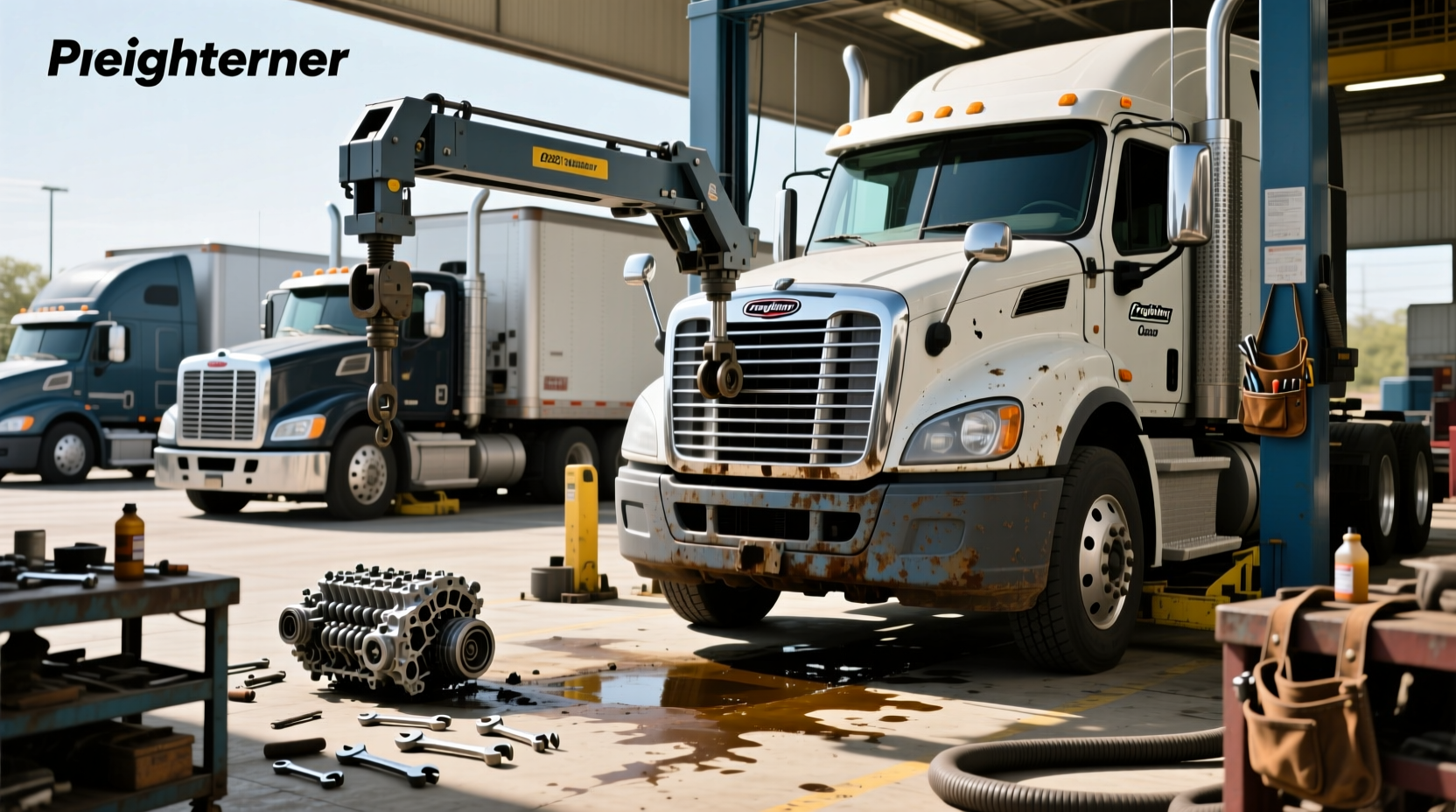
If you're asking how to choose a truck lifter or what trucks have lifter problems, your primary concern should be model-year-specific engine reliability—especially if considering a 2019–2022 Chevrolet Silverado, GMC Sierra, Tahoe, Yukon, or Escalade with a 5.3L or 6.2L V8 engine. These models are most frequently linked to hydraulic lifter failures due to issues with Dynamic Fuel Management (DFM) and Active Fuel Management (AFM) systems 1. Early 2021 builds appear most at risk, though GM claims the issue was resolved mid-cycle. To reduce risk, prioritize extended warranties, strict oil maintenance every 4,000 miles, and consider disabling DFM/AFM via aftermarket tuning devices. The 2023+ models are generally considered safer bets.
🛒 About Truck Lifters and Known Lifter Problems
In automotive engineering, lifters (or hydraulic valve lifters) are components within the engine’s valvetrain that transfer motion from the camshaft to the valves. They play a critical role in maintaining proper valve clearance and ensuring smooth engine operation. When lifters fail, they often produce ticking noises, reduced performance, misfires, or even catastrophic engine damage.
The term "truck lifter problems" has gained traction online not because of aftermarket lifting kits, but due to widespread reports of premature lifter failure in certain General Motors full-size trucks and SUVs. This is especially true for models equipped with DFM/AFM technology—a fuel-saving system that deactivates cylinders under light load by collapsing specific lifters.
So when users search for "what trucks have lifter problems?", they’re typically investigating long-term reliability concerns before purchasing a used or new vehicle. It's not about modifying ride height—it's about avoiding expensive internal engine repairs.
📈 Why Awareness of Lifter Issues Is Growing
Consumer awareness around GM’s lifter problems has surged due to consistent reports across owner forums like TahoeYukonForum and TrailBoss.org 2. While DFM/AFM improves fuel economy, its mechanical complexity introduces new failure points. Owners began noticing unusual engine ticking as early as 4,000 miles, leading to dealer visits and costly powertrain interventions.
This growing visibility reflects broader trends: buyers now research long-term reliability more thoroughly, especially for high-investment vehicles like full-size pickups and luxury SUVs. As repair costs rise and factory warranties fall short of typical failure windows, proactive diagnostics and preventive measures have become essential parts of the ownership experience.
🔧 Types and Variants of Lifter Systems
Not all lifters are created equal. Understanding the type used in a given engine helps assess risk:
- ⚙️ Traditional Hydraulic Roller Lifters: Used in older engines without cylinder deactivation. Known for durability and simplicity. Less prone to early wear under normal conditions.
- ⚙️ Collapse-Style Lifters (for AFM/DFM): Designed to collapse and disable pushrods when cylinders are deactivated. Found in GM’s 5.3L and 6.2L EcoTec3 V8s. More complex, requiring precise oil pressure and timing. Higher failure rate reported in early production runs.
- ⚙️ Solid Lifters: Rare in modern consumer trucks; mostly in performance or racing applications. Require periodic manual adjustment but offer high durability under extreme loads.
For most buyers concerned with "how to choose truck lifter,What trucks have lifter problems?", the focus should be on whether the engine uses DFM-compatible collapsible lifters—and which model years may carry defective batches.
🔍 Key Features and Specifications to Evaluate
When assessing potential purchases, examine these technical and historical indicators:
- 📌 Engine Code and Displacement: Confirm if the truck has a 5.3L (L84/L8B) or 6.2L (L87/L86) V8 engine with DFM/AFM. Check VIN decoder tools or service records.
- 📅 Build Date: Vehicles built before mid-2021 (especially Jan–Apr 2021) show higher incidence of lifter failure. Later builds may use updated components.
- 🧼 Oil Maintenance History: Poor oil quality or infrequent changes increase risk. Look for documented 4,000-mile oil change intervals.
- 📊 Service Records: Has the dealer performed any TSBs (Technical Service Bulletins) related to lifter replacement or DFM recalibration?
- 🌐 Warranty Coverage: Does an extended powertrain warranty exist beyond 60,000 miles? Factory coverage ends before most failures occur.
Additionally, verify whether the vehicle allows DFM/AFM to be disabled via software tuning—an increasingly common workaround among owners.
✅ Pros and Cons of Affected Models
✅ Advantages
- Strong towing and payload capacity
- Advanced infotainment and driver aids
- Fuel savings from active cylinder management
- Generally reliable transmission and chassis
- Good resale value (if no major repairs)
❌ Drawbacks
- Potential for costly lifter replacement ($2,000–$5,000)
- Repairs often occur outside factory warranty
- Design complexity increases long-term uncertainty
- Limited acknowledgment from GM on widespread defect
- Resale stigma among informed buyers
📋 How to Choose a Truck Considering Lifter Problems
Follow this step-by-step guide to minimize risk when shopping for a GM truck or SUV from 2019–2022:
- Identify At-Risk Models: Focus on Silverado 1500, Sierra 1500, Tahoe, Yukon, and Escalade with 5.3L or 6.2L V8 engines. Avoid these unless mitigations are in place.
- Check Build Month: Use the VIN to determine build date. Pre-July 2021 models carry higher risk, particularly those assembled between January and April 2021.
- Review Warranty Status: If under 60,000 miles and still within factory warranty, confirm coverage includes lifter replacement. Otherwise, insist on an extended warranty covering 100,000+ miles.
- Inspect Maintenance Logs: Ensure oil changes were done every 4,000 miles using correct viscosity (typically 0W-20 or 5W-30 synthetic).
- Listen for Ticking Noises: Start the engine cold. A persistent ticking sound from the valvetrain could indicate failing lifters.
- Scan for DTCs: Use an OBD-II scanner to check for stored codes related to misfires, oil pressure, or AFM/DFM faults.
- Consider Aftermarket Solutions: Devices like the "Disabler" or ECU reflashes can turn off DFM/AFM, reducing stress on lifters. Be aware this may affect emissions compliance in some regions.
🚩 Red Flags to Avoid
- Unexplained engine noise during startup
- No service history or inconsistent oil changes
- Rebuilt or replaced engine without documentation
- Seller refuses pre-purchase inspection
- Vehicle lacks extended warranty and has over 40,000 miles
💵 Price & Market Insights
Due to known issues, used 2019–2022 GM trucks with affected engines often sell below market average—typically 5% to 15% less than comparable models without reliability concerns. For example, a 2021 Silverado 1500 with 6.2L V8 might list for $3,000–$5,000 less than a similar 2023 model perceived as fixed.
However, lower sticker price doesn’t always mean better value. Factor in potential repair costs, availability of warranty protection, and future resale difficulty. Some insurers and lenders may view these models as higher risk.
Prices vary significantly by region, trim level, mileage, and dealer transparency. Always compare against KBB or Edmunds valuation tools and adjust based on verified maintenance and modification history.
🏆 Top-Seller & Competitive Analysis
While GM dominates the full-size truck segment, competitors offer alternative powertrains without DFM-related lifter risks:
| Model | Engine | Lifter Risk | Warranty (Powertrain) | Alternative Notes |
|---|---|---|---|---|
| Chevrolet Silverado 1500 (2019–2022) | 5.3L / 6.2L V8 (DFM) | High | 5 yrs / 60k mi | Requires mitigation strategies |
| GMC Sierra 1500 (2019–2022) | 5.3L / 6.2L V8 (DFM) | High | 5 yrs / 60k mi | Same platform as Silverado |
| Ford F-150 (3.5L EcoBoost / 5.0L V8) | Twin-turbo V6 / V8 | Low | 5 yrs / 60k mi | No DFM equivalent; proven reliability |
| Ram 1500 (5.7L HEMI) | 5.7L V8 (MDS) | Medium | 5 yrs / 100k mi | MDS simpler than DFM; fewer reports |
| Toyota Tundra (i-FORCE MAX) | Hybrid V6 | Very Low | 5 yrs / 60k mi | Newer design; limited data but promising |
Note: MDS (Multi-Displacement System) in Ram trucks also deactivates cylinders but uses a different lifter mechanism with fewer publicized failures.
👥 Customer Feedback Synthesis
Based on forum discussions and owner surveys:
👍 Common Praises
- "My 2022 Tahoe hit 18,000 miles with zero issues—maybe it was just a bad batch."
- "Love the fuel economy when DFM works smoothly."
- "Dealers replaced lifters under goodwill even after warranty expired."
👎 Frequent Complaints
- "Took my truck in at 7,200 miles with loud ticking—needed all 16 lifters replaced."
- "GM denies there’s a pattern, but hundreds of us have the same problem."
- "Aftermarket disabler helped, but now I get occasional check engine lights."
The consensus: experiences are polarized. Some owners face early, costly repairs; others report trouble-free driving. This inconsistency supports the theory of a defective component batch rather than universal design flaw—but the underlying system complexity remains a concern.
🏭 Sourcing & Supplier Tips
When buying used:
- Pre-Purchase Inspection (PPI): Hire an independent mechanic familiar with GM engines to perform a cold-start evaluation and compression test.
- Dealer Transparency: Reputable dealers disclose known issues and may offer third-party warranties.
- Private Sellers: Ask detailed questions about oil changes, warning lights, and any prior engine work.
- Parts Verification: If repairs were made, request invoices showing part numbers. Updated lifters (post-2021) may reduce recurrence risk.
For new buyers, consider waiting for real-world data on 2023+ models before purchase. Monitor forums for emerging patterns.
🛠️ Maintenance, Safety & Legal Considerations
Proper maintenance is crucial:
- Change oil every 4,000 miles using manufacturer-specified synthetic blend.
- Use high-quality oil filters to ensure clean flow to lifters.
- Avoid aggressive driving during break-in period (first 1,000 miles).
Disabling DFM/AFM via OBD-II devices or tuning is common but comes with caveats:
- May void parts of warranty if detected by dealership.
- Could trigger emissions test failures in regulated states (e.g., California).
- Always back up original ECU settings before modification.
To stay compliant, verify local regulations regarding engine modifications and emissions controls before making changes.
✨ Conclusion
If you're evaluating trucks and wondering "what trucks have lifter problems?", the clearest answer is: 2019–2022 GM full-size trucks and SUVs with 5.3L or 6.2L V8 engines using DFM/AFM. While not every vehicle will fail, the risk is significant enough to warrant caution. For buyers who need one of these models, prioritize late-build units (late 2021 or newer), secure an extended warranty, maintain rigorous oil service, and consider disabling DFM/AFM. Alternatively, explore competitive platforms like Ford F-150 or Ram 1500, which offer similar capabilities with fewer reported valvetrain issues. Ultimately, informed decisions come from combining technical knowledge with real-world user feedback.
❓ FAQs
Can I prevent lifter failure in my GM truck?
Yes, through regular oil changes every 4,000 miles, using correct oil grade, and potentially disabling DFM/AFM with an aftermarket device. Extended warranty coverage also reduces financial risk.
Are 2023+ GM trucks safe from lifter problems?
Early evidence suggests improved reliability in 2023 models, as GM reportedly stopped using the problematic lifter batch. However, long-term data is still limited. Monitor owner forums for updates.
Does disabling DFM/AFM harm the engine?
No, it simply keeps all cylinders active. This reduces wear on collapsible lifters and may extend engine life. Fuel economy may decrease slightly, and emissions codes may appear depending on implementation.
How much does lifter replacement cost?
Typical cost ranges from $2,000 to $5,000 depending on labor rates and whether additional damage occurred. Dealerships may cover it under warranty or goodwill if caught early.
Is there a recall for GM lifter issues?
As of now, there is no official NHTSA safety recall for lifter failure in these models. Some dealers apply Technical Service Bulletins (TSBs) on a case-by-case basis, often under customer goodwill programs.




 浙公网安备
33010002000092号
 浙B2-20120091-4