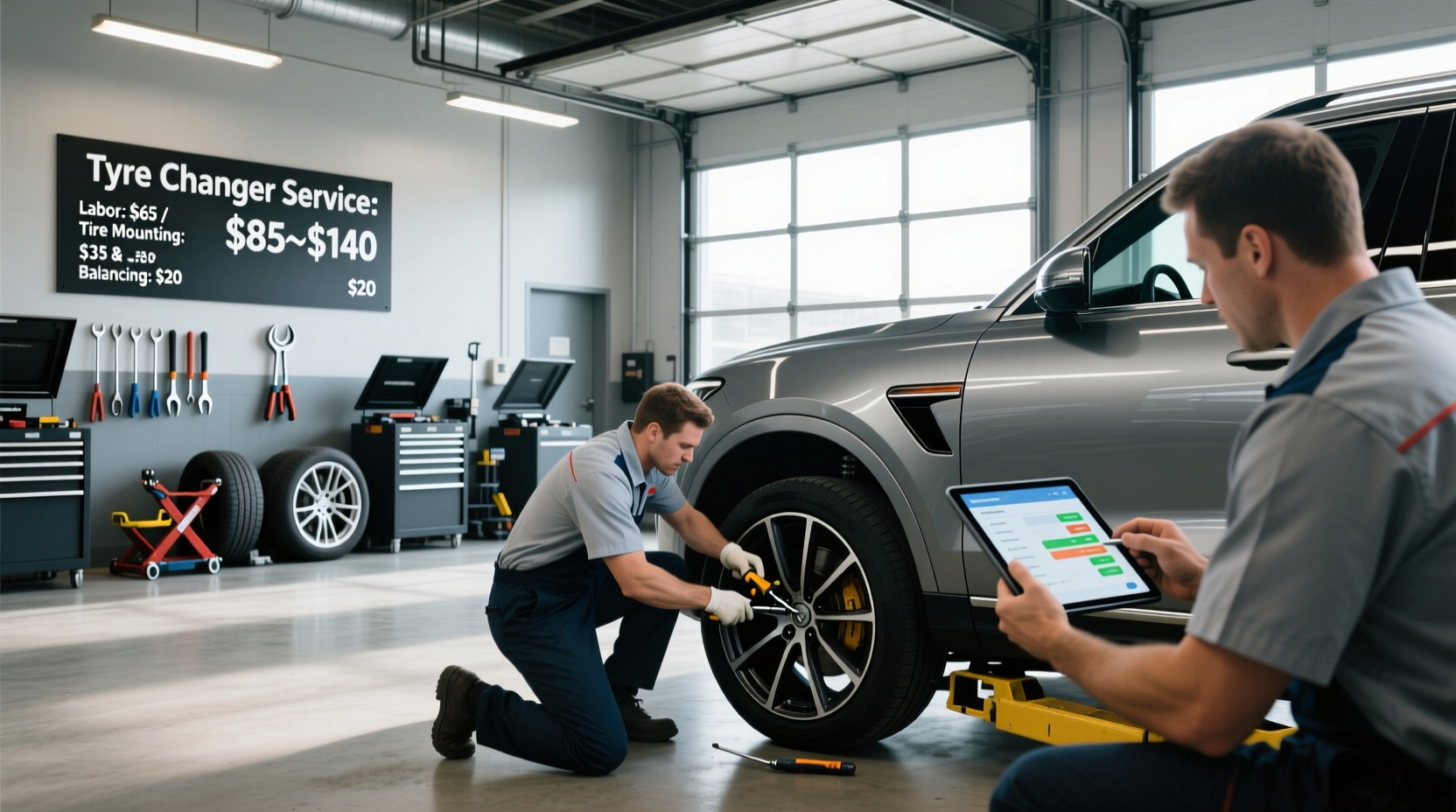
If you're wondering how much it usually costs to change a tyre or evaluating tyre changer prices for purchase, your choice depends on use case, volume, and vehicle type. For DIY or home garage use, manual or light-duty models start under $500 1. Professional workshops should consider power-assisted swing-arm or tilt-back changers from $2,200–$4,000 2. Heavy-duty commercial units for trucks exceed $10,000 3. When assessing what to look for in tyre changer prices, focus on durability, compatibility with rim sizes, ease of operation, and safety mechanisms. Avoid cheap models lacking bead loosening assist if handling stiff sidewalls.
About Tyre Changer Prices, How Much Does It Usually Cost to Change a Tyre?
The term tyre changer prices refers to the cost of purchasing a machine used to mount and demount tires from wheels. These range from basic hand tools to fully automated industrial systems. On the other hand, how much does it usually cost to change a tyre? addresses the service fee charged by repair shops for tire installation, balancing, and disposal. Understanding both aspects is crucial when deciding whether to buy equipment or outsource labor.
Typical users include automotive repair shops, fleet maintenance centers, agricultural or construction equipment operators, and serious DIY mechanics. Light-duty changers suit passenger cars and small SUVs, while heavy-duty variants handle commercial trucks, buses, and off-road machinery.
Why Tyre Changer Prices, How Much Does It Usually Cost to Change a Tyre? Is Gaining Popularity
Rising tire prices and increased vehicle ownership have made tire servicing more frequent and costly. Consumers and businesses alike are re-evaluating long-term value. Owning a tyre changer can reduce reliance on third-party services, especially for fleets managing multiple vehicles. Additionally, advancements in semi-automated designs have improved safety and reduced physical strain, making machines more accessible to smaller garages.
There’s also growing interest in mobile tire services, where portability and efficiency directly impact profitability. This trend increases demand for compact yet capable changers that balance performance with reasonable tyre changer prices.
Types and Variants
Different tyre changer types serve distinct operational needs. Choosing the right one affects both upfront investment and long-term usability.
🛒 Manual & Light-Duty Tire Changers
- Pros: Low cost, compact size, minimal maintenance
- Cons: Labor-intensive, limited to smaller rims (typically up to 18”), risk of rim damage without skill
- Best for: Occasional home use, budget-conscious buyers, small tire shops with low volume
🔧 Entry-Level Power-Assisted Models (Swing-Arm / Tilt-Back)
- Pros: Faster operation than manual, moderate learning curve, suitable for most passenger vehicles
- Cons: May struggle with run-flat or high-performance tires, requires stable floor mounting
- Best for: Independent repair shops, tire rotation services, light commercial use
🏭 Heavy-Duty Commercial Tire Changers
- Pros: Handles large rims (24”+), powerful motors, integrated safety locks, compatible with TPMS tools
- Cons: High initial cost, requires dedicated space and reinforced flooring, complex maintenance
- Best for: Trucking companies, bus depots, agricultural equipment dealers, high-volume tire centers
Key Features and Specifications to Evaluate
When comparing tyre changer prices, don’t just look at the sticker price—assess these critical factors:
- ⚙️ Max Rim Diameter & Width: Ensure compatibility with common vehicle types in your workflow (e.g., 26” for trucks).
- ⚡ Power Source: Electric models offer consistent torque; pneumatic versions need reliable air supply.
- ✨ Bead Breaking Mechanism: Automatic or foot-operated? Integrated bead loosener reduces effort and rim scratches.
- ⏱️ Change Time per Wheel: Ranges from 5–15 minutes depending on automation level.
- 🧰 Tool Integration: Some models include built-in lubrication systems or TPMS reset functions.
- ✅ Safety Clamps & Guards: Prevent wheel slippage during dismounting—essential for operator protection.
- 🌐 Mobility Options: Casters allow repositioning; fixed bases improve stability.
Pros and Cons
Understanding trade-offs helps avoid mismatched purchases.
👍 Advantages of Owning a Tyre Changer
- Saves money over time compared to outsourcing labor ($50–$100 per tire 4)
- Enables faster turnaround for recurring customers
- Supports additional revenue streams (e.g., mobile service, balancing packages)
- Improves control over quality and customer experience
👎 Limitations and Risks
- High initial investment may not pay off for low-volume users
- Poorly designed changers increase risk of wheel or tire damage
- Requires trained personnel to operate safely
- Maintenance adds ongoing cost (seals, motor checks, lubrication)
How to Choose Tyre Changer Prices (Buying Guide)
Follow this step-by-step checklist to make a confident decision:
- 🔍 Define Your Use Case: Are you serving passenger cars, trucks, or specialty vehicles?
- 📊 Estimate Volume: More than 10 tires/day? Consider mid-range or commercial models.
- 📍 Check Space & Power: Measure ceiling height, floor load capacity, and available voltage (110V vs. 220V).
- 📋 Compare Key Specs: Focus on max rim size, bead breaker force, and clamp type.
- 🔎 Review Build Quality: Look for steel frames, sealed bearings, and reputable component suppliers.
- 📎 Verify Warranty & Support: At least 1-year parts warranty; check availability of technical support.
- ❗ Avoid These Red Flags:
- No safety guard or emergency stop
- Vague specifications (e.g., "heavy-duty" without metrics)
- Missing CE or ANSI compliance markings
- Overly positive reviews with no negatives
Price & Market Insights
Tyre changer prices vary widely based on automation, brand, and build quality. Here's a breakdown:
| Type | Price Range | Value Tier |
|---|---|---|
| Manual / Adapter Kit | $49 – $500 | Entry DIY |
| Entry-Level Power-Assisted | $1,100 – $2,800 | Small Shop |
| Mid-Range Tilt-Back | $3,000 – $7,000 | Professional |
| Heavy-Duty Commercial | $8,000 – $25,000+ | Fleet & Industrial |
While premium brands like Snap-on and John Bean command higher prices, they often offer superior durability and service networks. However, some Chinese manufacturers (e.g., KATOOL) now provide competitive alternatives at lower price points 1. Always compare total cost of ownership—not just purchase price.
Top-Seller & Competitive Analysis
Below is a comparison of popular models across segments:
| Model | Type | Price | Key Feature |
|---|---|---|---|
| KATOOL KT-T800 | Entry-Level Swing-Arm | $1,199 | Affordable entry with tilt-back design |
| Weaver W-894XP | Swing-Arm | $2,249 | Proven reliability, US-based support |
| Ranger R76LT | Tilt-Back | $3,995 | Suitable for performance tires |
| Snap-on EEWH331A | Heavy-Duty Tilt-Back | $22,930 | Industrial-grade durability |
| KATOOL KT-TV910 | Hydraulic Truck Changer | $6,299 | Cost-effective for medium fleets |
When reviewing top-sellers, note that user satisfaction often correlates with ease of setup and consistency in bead breaking—not just raw power.
Customer Feedback Synthesis
Based on aggregated buyer reviews and industry reports:
✅ Frequently Praised Aspects
- Smooth operation after proper calibration
- Time savings in daily workflows
- Sturdy construction in mid-to-high-end models
- Clear instructional manuals and responsive support
❌ Common Complaints
- Difficulty mounting newer low-profile or run-flat tires
- Missing hardware upon delivery (especially online orders)
- Lack of local service technicians for repairs
- Inconsistent performance with damaged or corroded rims
Buyers often underestimate setup complexity—factor in time for leveling, anchoring, and testing before full deployment.
Sourcing & Supplier Tips
Where you buy matters as much as what you buy.
- 🛍️ Online Retailers: Offer competitive pricing but verify return policies and shipping damage coverage.
- 🏭 Distributors: Provide installation support and training—ideal for commercial buyers.
- 👥 Bulk Purchases: Inquire about discounts for multiple units; confirm lead times for international shipments.
- 🧼 Inspection Checklist: Upon delivery, inspect for dents, missing parts, and test all functions before final acceptance.
For global sourcing, be aware of voltage compatibility and adapter requirements. Confirm whether NEMA plug types match your facility standards.
Maintenance, Safety & Legal Considerations
To ensure longevity and safe operation:
- Perform weekly inspections of clamps, hoses, and moving parts.
- Lubricate pivot points monthly using manufacturer-recommended grease.
- Train all operators on proper centering and bead-breaking techniques to prevent accidents.
- Anchor the machine securely to concrete flooring—never operate on loose surfaces.
While there’s no universal certification required for tyre changers, many regions follow ANSI B93.1 or ISO 4366 safety standards. Check with local occupational health authorities to confirm compliance expectations. Never bypass safety interlocks or guards.
Conclusion
Choosing the right tyre changer involves balancing upfront cost against long-term utility. If you’re a DIYer or handle fewer than five tires per week, a manual or sub-$500 model suffices. For independent shops doing daily changes, invest in a $2,000–$4,000 power-assisted unit. High-volume or commercial operations should prioritize durability and speed, even if it means spending $10,000+. Always assess real-world compatibility with your typical tire types and verify support availability before purchasing. Remember, the cheapest option today might cost more tomorrow in downtime and repairs.
FAQs
- How much does it usually cost to change a tyre at a shop?
- Service fees typically range from $50 to $100 per tire, excluding the tire itself. This includes mounting, balancing, and disposal. Total cost for four new all-season tires averages $500–$1,000 4.
- Can I install run-flat tires with a standard tyre changer?
- Some can, but it’s challenging. Run-flats have stiffer sidewalls requiring extra force. Use a model with a powered bead loosener and proper mounting head to reduce damage risk.
- Do electric tyre changers require special wiring?
- Most entry-level models work on standard 110V outlets. Heavy-duty units may need 220V circuits. Always check nameplate requirements before installation.
- Are cheaper tyre changers worth it for small shops?
- Possibly, but only if volume is low and tire types are standard. Inexpensive models may lack durability or precise alignment, increasing long-term maintenance costs.
- What safety gear should operators wear?
- Always use safety glasses, cut-resistant gloves, and closed-toe shoes. Ensure the work area is clear of bystanders during operation.




 浙公网安备
33010002000092号
 浙B2-20120091-4