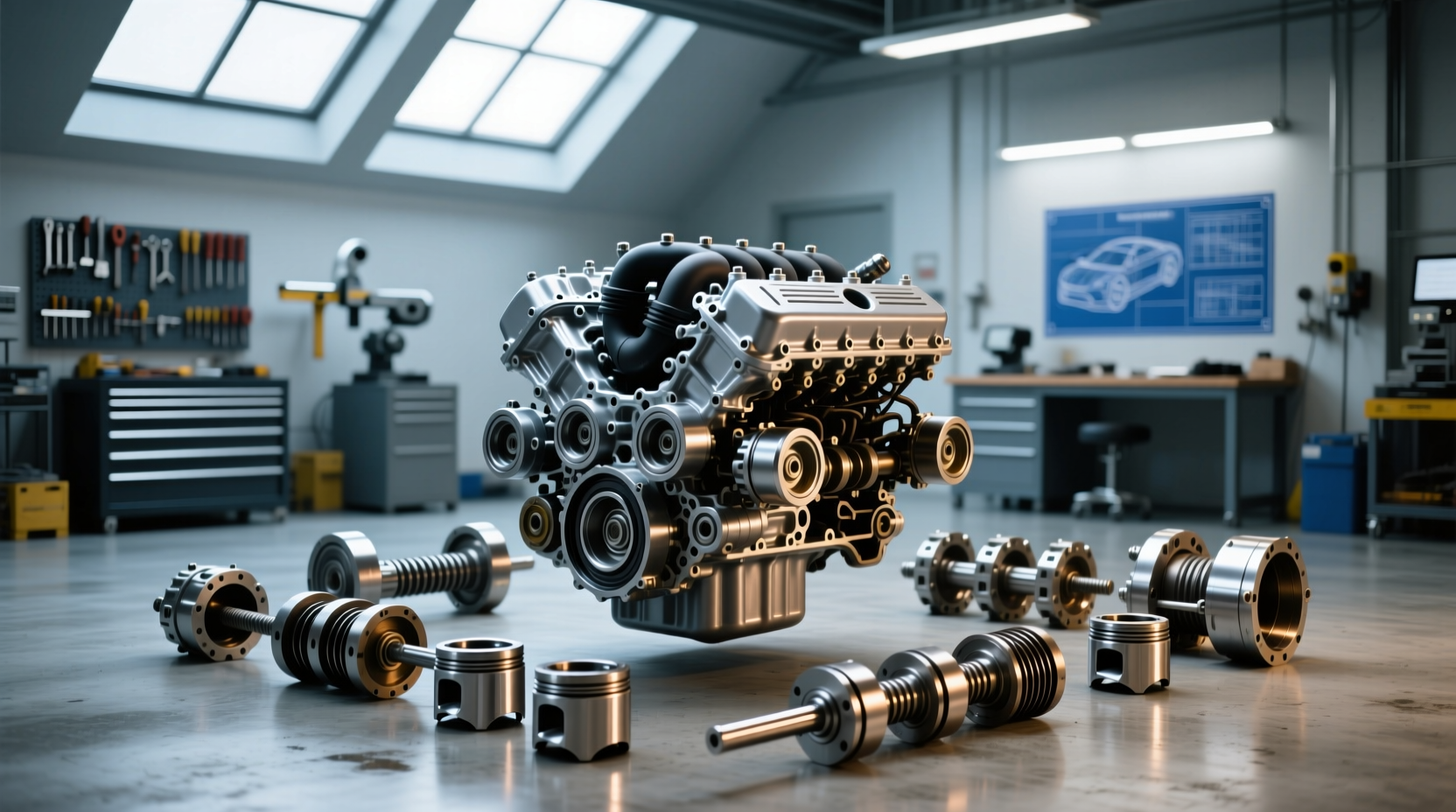
Short Introduction: What to Look for in V8 Engine Components
If you're asking how to choose V8 engine components, start by aligning your selection with the engine's intended use—performance, efficiency, or durability. The insights world of V8 engine components revolves around understanding core parts like the crankshaft, pistons, valves, camshaft, and ignition system, and how modern technologies such as direct fuel injection (DFI), variable valve timing (VVT), cylinder deactivation, and turbocharging impact performance and longevity 1. For high-torque applications like trucks or muscle cars, prioritize forged internals and robust cooling systems. In contrast, for daily-driven or hybrid setups, focus on components compatible with cylinder deactivation and electronic management systems. Avoid mismatched aftermarket parts that compromise OEM tolerances. Always verify material quality—aluminum blocks reduce weight, while steel crankshafts enhance strength. This guide breaks down every critical factor in the buying process for V8 engine components, helping you avoid costly compatibility errors.
About the Insights World of V8 Engine Components
The term "insights world of V8 engine components" refers to a comprehensive understanding of the mechanical, technological, and market dynamics behind the internal parts of a V8 engine. It encompasses not just the physical pieces—such as pistons, connecting rods, camshafts, and valve trains—but also the engineering principles, manufacturing advances, and performance data that inform their design and application 1.
A V8 engine features two banks of four cylinders arranged in a V-configuration, typically at a 60° to 90° angle, which allows for a compact design compared to inline engines while delivering balanced power output 1. This configuration is widely used in performance vehicles, luxury sedans, SUVs, and heavy-duty pickup trucks due to its ability to generate high horsepower and torque.
Understanding this ecosystem means evaluating how each component contributes to overall engine behavior. For example, the crankshaft converts linear piston motion into rotational force, while the camshaft controls valve timing, directly affecting airflow and combustion efficiency. Modern buyers must also consider integration with electronic control units (ECUs), sensor networks, and emission systems when selecting replacement or upgrade components.
Why the Insights World of V8 Engine Components Is Gaining Popularity
Interest in V8 engine components has grown due to several converging trends. Enthusiasts and mechanics are increasingly focused on performance tuning, restoration projects, and extending vehicle lifespan through targeted upgrades. At the same time, automakers continue refining V8 platforms with advanced technologies to meet emissions standards without sacrificing power 2.
Hybridization efforts, such as those seen in Ferrari’s and Lamborghini’s new V8 hybrids, have renewed interest in optimizing traditional components for electrified systems 1. Additionally, the rise of digital twin technology and predictive maintenance tools allows deeper insight into component wear and failure modes, making proactive part replacement more accessible.
Moreover, the global high-speed engine market—including V8s—is projected to grow from USD 27.61 billion in 2025 to USD 43.91 billion by 2032, indicating sustained industrial and consumer demand 3. This growth fuels innovation in key subsystems like gasoline direct injection and cylinder deactivation, both of which are now central to the V8 engine components buying guide for modern applications.
Types and Variants of V8 Engine Components
Different V8 configurations require specific component sets. Choosing the right variant depends on whether you're rebuilding an older OHV engine, upgrading a performance model, or maintaining a modern fuel-efficient unit.
🔧 Overhead Valve (OHV) Components
Found in classic American V8s (e.g., Chevrolet small-block, Ford Windsor), these use pushrods to actuate valves.
- Pros: Simple design, lower cost, durable under high load
- Cons: Limited RPM potential, less precise valve control
⚙️ Overhead Cam (OHC / DOHC) Components
Modern designs (e.g., Ford Coyote, GM LT) use one or two camshafts per cylinder bank.
- Pros: Higher RPM capability, better airflow, improved efficiency
- Cons: More complex, higher repair cost, sensitive to timing issues
⚡ Performance-Oriented Components
Includes forged pistons, billet crankshafts, upgraded rod bolts, and high-lift camshafts.
- Pros: Handle forced induction and high horsepower
- Cons: Expensive, may reduce daily drivability
🌱 Efficiency-Focused Components
Designed for engines with DFI, VVT, and cylinder deactivation (e.g., Dodge HEMI MDS).
- Pros: Better fuel economy, lower emissions, OEM compatibility
- Cons: Less suitable for high-stress modifications
Key Features and Specifications to Evaluate
When navigating the what to look for in V8 engine components decision matrix, assess these technical and practical factors:
- Material Composition: Aluminum heads reduce weight; forged steel crankshafts increase strength.
- Tolerance and Fitment: Ensure components match OEM specifications or aftermarket blueprinting standards.
- Compatibility with Engine Management Systems: Sensors, solenoids, and actuators must work with existing ECUs, especially in VVT and cylinder deactivation systems 4.
- Thermal Resistance: Components exposed to high heat (e.g., exhaust valves, pistons) should use heat-resistant alloys or coatings.
- Bearing Clearances: Critical for oil flow and longevity—improper clearances lead to premature failure.
- Balance and Harmonics: Internally balanced rotating assemblies reduce vibration and improve reliability.
For example, if considering a camshaft upgrade, verify lift, duration, lobe separation angle, and whether it supports sequential fuel injection or VVT phasing.
Pros and Cons of Investing in Advanced V8 Components
✅ Advantages
- Improved engine longevity with high-quality materials
- Enhanced performance and responsiveness
- Support for modern efficiency technologies like cylinder deactivation
- Greater resale value for restored or modified vehicles
❌ Limitations
- Higher upfront cost, especially for forged or CNC-machined parts
- Potential compatibility issues with older engine management systems
- Increased complexity in installation and tuning
- Diminishing returns if other engine systems aren’t upgraded simultaneously
Suitable for: Performance builds, fleet vehicles needing durability, restorations, hybrid retrofits.
Not ideal for: Budget repairs on low-mileage daily drivers, regions with strict emissions enforcement where modifications aren't grandfathered.
How to Choose V8 Engine Components: A Step-by-Step Buying Guide
Follow this checklist to ensure you select the right components for your needs:
- Define Your Use Case: Is the engine for towing, racing, daily driving, or restoration?
- Identify Engine Model and Year: Confirm compatibility—e.g., Gen III vs. Gen V LS engines have different mounting points and electronics.
- Check Material and Build Quality: Prefer forged over cast components for high-load applications.
- Verify Emissions Compliance: Some upgraded parts may void emissions certifications—check local regulations before purchase.
- Review Integration Needs: Will the part work with VVT, direct injection, or cylinder deactivation? Consult manufacturer documentation.
- Assess Supplier Reputation: Look for warranties, technical support, and traceable sourcing.
Red flags to avoid: Unbranded components with no spec sheets, prices significantly below market average, lack of fitment data, or claims of "universal" compatibility for precision parts like crankshafts or cam carriers.
Price & Market Insights
Pricing varies widely based on type, brand, and application:
- Basic Replacement Parts (gaskets, sensors): $10–$100
- Performance Pistons or Rods: $500–$2,000 for a full set
- Forged Crankshafts: $800–$2,500+
- Complete Long Blocks: $3,000–$8,000 depending on configuration
The gasoline direct injection market alone is expected to reach USD 7.3 billion by 2027, reflecting growing demand for precision fuel system components 5. While premium brands command higher prices, value-tier suppliers can offer reliable options for non-extreme applications. Always compare total cost of ownership, including labor and potential rework from poor fits.
Top-Seller & Competitive Analysis
Below is a comparison of commonly sought-after V8 component packages:
| Component Type | Common Use | Avg. Price Range | Key Brands | Buyer Considerations |
|---|---|---|---|---|
| Aftermarket Camshaft Kit | Performance tuning | $300–$900 | Comp Cams, Lunati, Crane | Ensure compatibility with VVT; may require ECU reprogramming |
| Forged Piston Set | High-horsepower builds | $600–$1,800 | Wiseco, Mahle, JE | Confirm bore size and compression ratio needs |
| Cylinder Deactivation Solenoid | OEM replacement (e.g., HEMI) | $80–$200 | Mopar, Delphi, AC Delco | Must match engine serial and model year |
| Aluminum Cylinder Heads | Weight reduction & airflow | $1,200–$3,000 (pair) | Edelbrock, Trick Flow, AFR | Port matching and valve spring compatibility required |
Customer Feedback Synthesis
Analysis of user reviews and forum discussions reveals consistent patterns:
- Positive Feedback: High praise for forged internal components' durability; satisfaction with OEM-replacement kits that restore cylinder deactivation functionality; appreciation for detailed manufacturer documentation.
- Common Complaints: Poorly labeled aftermarket parts leading to fitment errors; failure of budget-tier sensors within months; lack of technical support from some online vendors; unexpected ECU errors after installing performance cams without tuning.
Many buyers emphasize the importance of verifying part numbers against VIN or engine codes before ordering.
Sourcing & Supplier Tips
Consider these strategies when purchasing V8 engine components:
- Authorized Distributors: Offer genuine OEM parts with traceable warranties.
- Specialty Performance Retailers: Provide expert advice and bundled kits (e.g., rotating assembly packages).
- Online Marketplaces: Use cautiously—filter for sellers with high ratings and return policies.
- Batch Purchasing: For fleets or workshops, negotiate volume discounts but inspect sample units first.
- Verification Steps: Cross-check part numbers, request material certifications for critical components, and confirm return policies in case of incompatibility.
Always ask: "Does this component come with installation instructions or torque specs?"
Maintenance, Safety & Legal Considerations
Proper handling and installation are crucial:
- Maintenance: Follow break-in procedures for new components; monitor oil pressure and temperature during initial operation.
- Safety: Use proper lifting equipment when handling heavy parts like blocks or crankshafts; wear protective gear during disassembly.
- Legal Compliance: Modifications may affect emissions certification. In many regions, tampering with emission controls (e.g., disabling cylinder deactivation) is illegal for street-registered vehicles. Verify local laws before altering factory systems.
- Warranty Impact: Aftermarket components may void powertrain warranties—check terms before installation.
When in doubt, consult a certified mechanic or refer to the vehicle manufacturer’s service manual.
Conclusion
Choosing the right V8 engine components requires balancing performance goals, budget, and long-term reliability. If you're restoring a classic muscle car, prioritize authenticity and mechanical simplicity. For a modern truck needing towing power, invest in forged internals and thermal-resistant materials. If fuel efficiency and emissions compliance are key, stick with OEM-spec or enhanced efficiency-focused parts compatible with VVT and cylinder deactivation. Always validate compatibility, source from reputable suppliers, and consider the full system impact of any upgrade. This V8 engine components buying guide equips you with the insights needed to make confident, informed decisions in today’s evolving automotive landscape.
FAQs
❓ Can I mix aftermarket and OEM V8 engine components?
Yes, but only if they meet exact dimensional and material specifications. Mismatches in tolerances can cause premature wear or failure.
❓ Do performance camshafts affect fuel economy?
They can reduce low-RPM efficiency due to altered valve timing, though modern designs often balance performance with drivability.
❓ How do I know if a component supports cylinder deactivation?
Check the manufacturer’s datasheet or part number designation—systems like MDS (Multi-Displacement System) are explicitly labeled.
❓ Are forged components worth the extra cost?
For high-horsepower or forced-induction applications, yes. For stock replacements, OEM-grade parts are usually sufficient.
❓ What tools are essential for installing major V8 components?
You’ll need a torque wrench, dial indicator, micrometer, engine hoist, and potentially a scan tool for resetting adaptive ECU parameters.




 浙公网安备
33010002000092号
 浙B2-20120091-4