
Lately, the Volkswagen Passat has re-entered the conversation among midsize sedan buyers looking for European comfort without luxury pricing. If you’re trying to decide whether a used or recent Passat is worth it, here’s how to evaluate its reliability: focus on model years from 2018 onward, avoid known weak points like early DSG transmissions and diesel emissions systems, and prioritize service history over mileage. If you’re a typical user, you don’t need to overthink this—choose a well-maintained 2021 or 2022 model with documented oil changes and no major repair flags. Over the past year, rising interest in fuel-efficient family sedans has made the Passat a practical second look, especially in markets where ride quality and trunk space matter more than brand-new tech.
This piece isn’t for keyword collectors. It’s for people who will actually use the product.
About the VW Passat
The Volkswagen Passat has long served as VW’s mainstream midsize offering in global markets, balancing German engineering with everyday usability. While it shares platform roots with models like the Jetta and Arteon, the Passat stands out for its spacious interior, composed ride, and availability in both sedan and estate (wagon) configurations. In North America, production ended after the 2022 model year, but used availability remains strong. Elsewhere, particularly in China and Europe, updated versions continue to sell. The powertrain range includes turbocharged four-cylinder gasoline (TSI), diesel (TDI), and plug-in hybrid (GTE) variants, each carrying different reliability profiles and ownership costs.
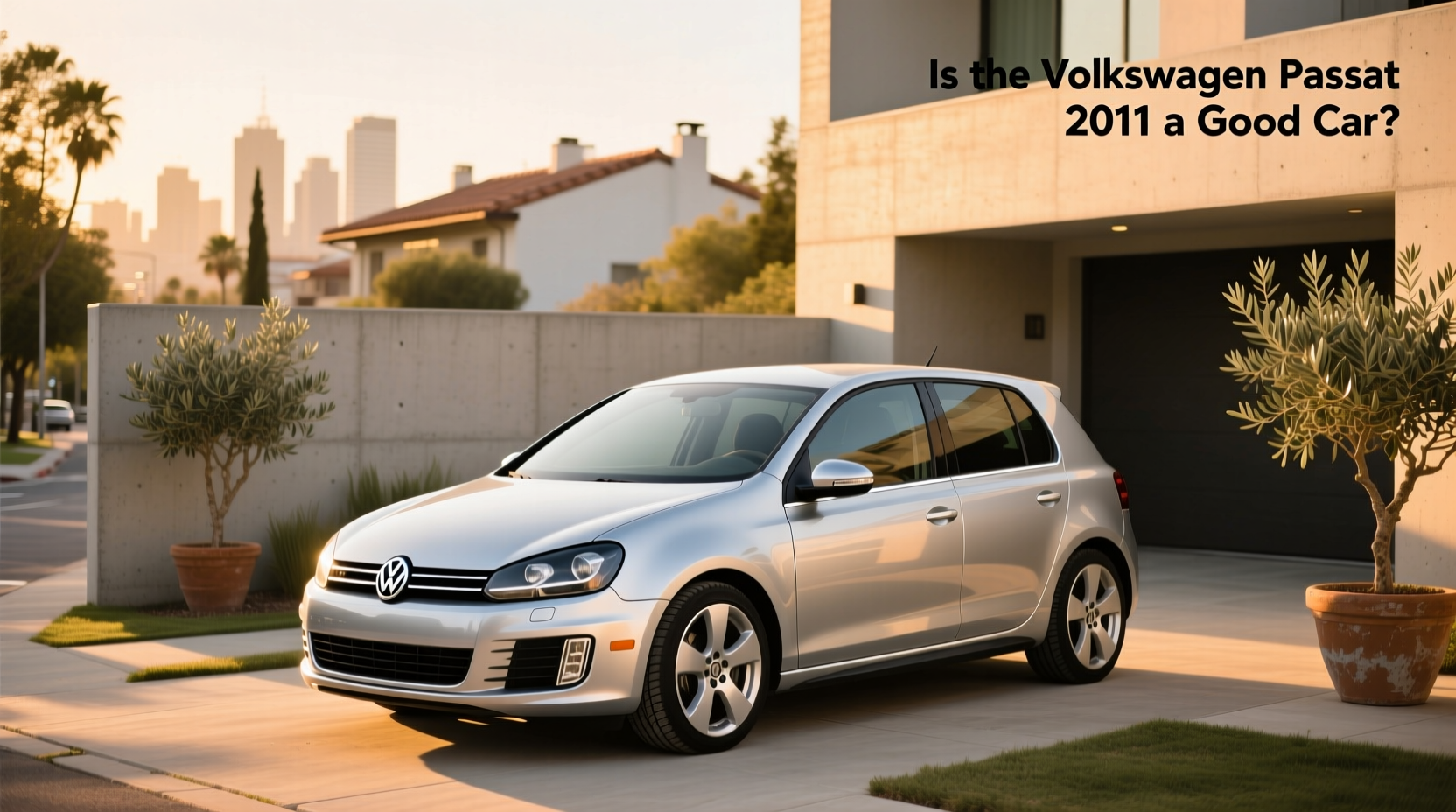
Why the VW Passat Is Gaining Popularity
Recently, the Passat has seen renewed attention not because of new releases—but because of shifting buyer priorities. As SUV prices remain high and compact cars shrink, many drivers are reconsidering midsize sedans that offer real backseat room and highway efficiency. The Passat delivers on both, with a quiet cabin and smooth suspension tuning that outperforms many rivals in ride comfort 1. Additionally, post-pandemic supply constraints pushed buyers toward reliable used options, and the Passat’s presence in rental fleets means plentiful inventory at varied price points. However, popularity doesn’t equal foolproof ownership—some years carry legacy issues that can turn a budget buy into a repair loop.
If you’re a typical user, you don’t need to overthink this: what matters most isn’t badge appeal or horsepower, but whether the car starts every morning and won’t drain your savings by 100,000 miles.
Types and Variants
The Passat comes in several configurations, each suited to different driving needs and geographic conditions. Understanding these helps isolate which models align with lower-risk ownership.
Passat Sedan (B7/B8)
- Pros: Spacious trunk, refined highway manners, available all-wheel drive (in certain trims)
- Cons: Discontinued in North America after 2022; parts may become harder to source over time
Passat Estate / Variant (B6/B7/B8)
- Pros: Practical cargo area, balanced weight distribution, popular in European markets
- Cons: Less common in U.S.; diesel versions require careful driving patterns to avoid DPF clogs
Passat GTE (Plug-in Hybrid)
- Pros: Electric-only short trips, improved fuel economy, modern infotainment
- Cons: Battery degradation concerns after 8 years; charging infrastructure dependency
Diesel (TDI) vs. Gasoline (TSI)
- TDI: Excellent highway efficiency, but sensitive to short trips and poor maintenance; EGR and DPF systems prone to failure if not driven properly
- TSI: More flexible daily use, but earlier models had timing chain and carbon buildup issues—later ones improved with revised maintenance schedules
Key Features and Specifications to Evaluate
When assessing a used Passat, prioritize these elements—they directly affect long-term cost and reliability.
- Model Year: 2018, 2021, and 2022 are consistently rated better than pre-2015 models 2. Avoid 2006–2009 and 2013 due to widespread electrical and transmission complaints.
- Transmission: Manual and conventional automatics are robust. DSG dual-clutch units (especially pre-2014) may need fluid changes every 40,000 miles or face shuddering/clutch wear.
- Engine Health: Check for misfire codes (common on TSI engines with worn coils). For TDI, verify AdBlue system status and regeneration history.
- Service Records: Full documentation beats low mileage with gaps. Look for regular oil changes (every 10,000 km recommended) and timing belt replacements around 80,000–100,000 miles.
- Electronics: Climate control modules, window regulators, and instrument clusters have failed in multiple generations—test all switches and displays during inspection.
If you’re a typical user, you don’t need to overthink this: spend extra to get a vehicle history report rather than assume “it drives fine now” means it will later.
Pros and Cons
| Aspect | Pros | Cons |
|---|---|---|
| Ride Quality | Smooth, quiet, excellent for long drives | Somewhat soft handling compared to sportier sedans |
| Cabin Space | Among the roomiest in class, especially rear legroom | Interior materials feel dated in older models |
| Fuel Efficiency | TDI offers 40+ mpg highway; GTE adds EV capability | Real-world city economy drops sharply on TSI models |
| Reliability | Newer models (2021–2022) show marked improvement | Older models burdened by turbo, sensor, and DSG issues |
| Maintenance Cost | Average for European brand according to RepairPal 3 | Dealership labor rates run high; independent specialists often needed |
How to Choose a Reliable VW Passat
Selecting the right Passat isn’t about chasing specs—it’s about avoiding preventable problems. Follow this step-by-step guide to reduce risk.
Step-by-Step Checklist
- Start with model year: Target 2018, 2021, or 2022. These scored higher in predicted reliability (J.D. Power gave 2022 a 76/100).
- Verify ownership history: Was it a rental? Fleet vehicle? High-idle time increases wear on turbos and AC compressors.
- Inspect for leaks: Oil near the timing cover or coolant under the water pump suggests upcoming costly repairs.
- Test drive with load: Drive at least 20 minutes including highway speeds. Listen for transmission hesitation or turbo lag.
- Scan for stored codes: Even if no check engine light, hidden faults in ABS, steering rack, or climate control may exist.
- Review maintenance logs: Missing records increase uncertainty. A full dealer or specialist stamp history adds value.
Decision Flow
- If budget allows → go for 2021–2022 with under 60k miles and full service history
- If buying older (2010–2015) → insist on pre-purchase inspection by VW-specialized mechanic
- If considering diesel → confirm owner drove regularly over 20 miles to allow DPF regeneration
- If price seems too good → dig deeper. Major component failures (turbo, DSG) are expensive to fix
Recommendations by Scenario
- First-time import buyer: Stick to gasoline automatic—fewer regulatory and emissions hurdles
- Family commuter: Prioritize B8 sedan with safety features like forward collision warning
- High-mileage driver: Diesel (TDI) makes sense only if you drive >15,000 miles/year and take frequent highway trips
- Budget-conscious: Older B7 models can work—but set aside $2,000 for potential repairs within two years
Red Flags / What to Avoid
- ❗ No service records: Especially dangerous for turbos and DSG gearboxes
- ❗ Check engine light recently cleared: May hide chronic misfires or oxygen sensor faults
- ❗ Frequent short trips (diesel): Leads to clogged DPF and limp mode
- ❗ Aftermarket software tune: Increases stress on engine internals; voids any remaining warranty
- ❗ Water damage signs: Under carpets or musty smell indicates possible electrical corrosion
This piece isn’t for keyword collectors. It’s for people who will actually use the product.
Price & Market Insights
Pricing varies significantly by region, trim, and drivetrain. In North America, used 2018–2020 sedans range from $12,000 to $19,000 depending on condition. European-market estates (Variants) often list lower but may lack local service support. Diesel models typically sell for less due to stigma around emissions systems, though they retain value better in regions with high fuel prices. GTE hybrids command premiums of $3,000–$5,000 over gas equivalents, but battery health must be verified. Always confirm local incentives or scrappage programs that may affect resale. Prices may vary by region/model/seller—check manufacturer specs and compare listings across platforms.

Top-Seller & Competitive Analysis
The Passat competes primarily with the Honda Accord, Toyota Camry, and Mazda6—all known for durability. Unlike those, the Passat emphasizes comfort over engagement, making it a niche pick in an increasingly SUV-dominated segment.
| Model | Strengths | Weaknesses | Ownership Cost (Est.) |
|---|---|---|---|
| VW Passat (2021) | Ride comfort, cabin quietness, trunk space | Fewer dealerships supporting discontinued model | $720/year 3 |
| Honda Accord | Top-tier reliability, strong residual value | Less premium feel despite high build quality | $550/year |
| Toyota Camry | Proven longevity, wide service network | Conservative design, average driving dynamics | $580/year |
| Mazda6 | Engaging handling, upscale interior | Discontinued; limited future parts availability | $650/year |
If you’re a typical user, you don’t need to overthink this: the Passat won’t beat a Camry in reliability rankings, but it offers a distinct driving character that some find worth the trade-off.
Customer Feedback Synthesis
Analysis of owner forums and reviews reveals consistent themes:
- High Praise: Long-distance comfort, smooth acceleration, intuitive climate controls (physical buttons), ease of loading cargo in wagon versions
- Common Complaints: Unexpected electronic failures (windows, sensors), expensive DSG repairs, turbo replacement around 90,000 miles, difficulty finding mechanics familiar with VCDS diagnostics
- Surprising Positives: Many owners report 200,000+ mile durability when maintenance is strict—particularly with TDI engines driven on highways
- Regrets: Buying a high-mileage diesel without verifying regeneration cycles, skipping pre-purchase inspections, assuming “European” means “low maintenance”
Reddit users note that initial skepticism often turns to appreciation once owners adapt to required service rhythms 4.
Sourcing & Supplier Tips
When sourcing a used Passat:
- Buy from private sellers who maintained the car themselves—fleet vehicles may have inconsistent care
- Use VIN checks to uncover past recalls or lemon titles
- Prefer cars serviced at authorized centers or reputable independents with VW experience
- Avoid imported models unless you can verify compliance with local emissions standards
- Confirm return policy if buying online—some platforms offer short trial periods
Parts availability may decrease over time, especially for North American-spec discontinuations. Verify local supplier access before committing.
Maintenance, Safety & Legal Considerations
Maintenance is non-negotiable with the Passat. Key requirements include:
- Timing belt replacement every 80,000–100,000 miles (interference engine—failure destroys motor)
- DSG transmission fluid every 40,000 miles (if equipped)
- Oil changes every 10,000 km or annually—extended intervals risk sludge buildup
- Annual brake fluid flush (hygroscopic fluid degrades performance)
Safety-wise, newer Passats include front assist, lane keep, and adaptive cruise. Earlier models lack advanced aids—verify features via VIN lookup. Legally, modified diesels (defeat devices) may fail inspections in regulated areas. Always check local regulations before purchase, especially for TDI models built before 2015.
Conclusion
If you need a comfortable, roomy sedan with a touch of European refinement and plan to maintain it diligently, the 2021 or 2022 VW Passat is a reasonable choice. If you expect hands-off ownership or prioritize maximum resale value, consider Japanese alternatives. Model year selection and service history outweigh nearly every other factor in long-term satisfaction.
Everything You Need to Know
Is the VW Passat reliable after 100,000 miles?
Yes, but condition depends heavily on maintenance. Well-serviced models, especially 2018 and newer, regularly reach 150,000–200,000 miles. Watch for turbo, DSG, and electrical issues as red flags beyond this point.
Which VW Passat model year is the most reliable?
Based on owner reports and reliability ratings, 2021, 2022, 2018, and 2016 are considered the strongest. Avoid 2013 and earlier diesel models due to emissions-related complexities and DSG transmission concerns.
Are VW Passat repair costs high compared to other brands?
They are above average for non-luxury brands. Labor rates at dealerships are steep, and certain components (like sensors or transmission modules) are costly. Independent specialists can reduce expenses, but expertise is essential.
Can I trust a used VW Passat diesel (TDI)?
You can, if it’s been driven correctly. TDI engines last longer when used on highways and allowed to regenerate the DPF. Short-trip city driving leads to failures. Verify driving history and service logs carefully.
What should I check before buying a used Passat?
Check service records, scan for hidden fault codes, inspect for oil/coolant leaks, test all electronics, and verify model year against known issue lists. A pre-purchase inspection by a VW-knowledgeable mechanic is strongly advised.




 浙公网安备
33010002000092号
 浙B2-20120091-4