🛒 Short Introduction
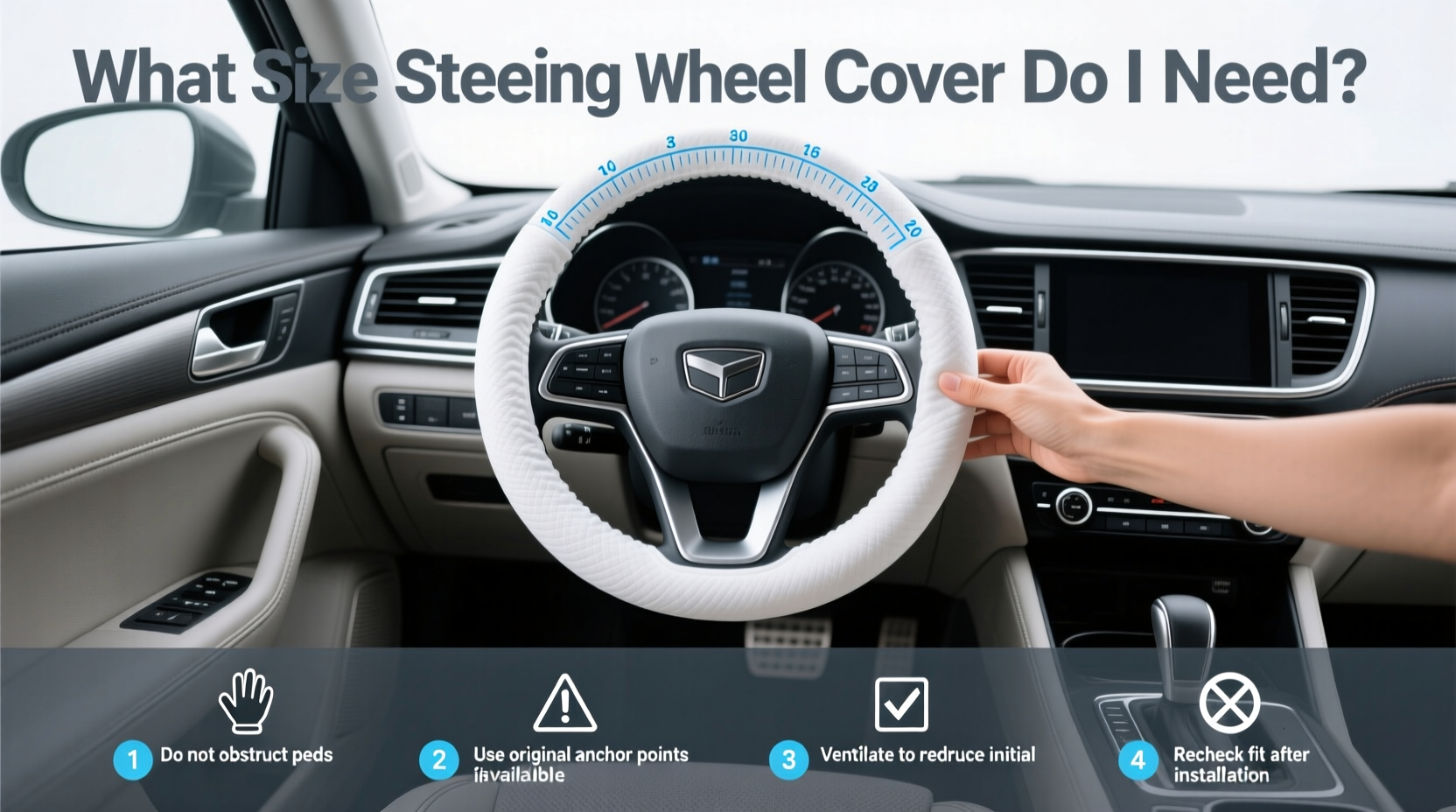
If you're asking what size steering wheel cover do I need, start by measuring your steering wheel’s outer diameter—from edge to edge across the center. Most standard cars require a cover between 14 to 17 inches (35–43 cm), with 15 inches being the most common. To ensure proper fit, always verify your vehicle’s make, model, and year or physically measure the wheel. Choosing the wrong size can lead to slippage, reduced grip, or interference with airbag deployment. When learning how to choose what size steering wheel cover do I need, prioritize accurate measurement, compatible materials, and secure fastening mechanisms like elastic backing or inner grip lining.
📍 About What Size Steering Wheel Cover Do I Need
A steering wheel cover is a protective sleeve made from materials like leather, neoprene, silicone, or knit fabric that fits over your vehicle’s steering wheel. Its primary purpose is to improve grip, reduce wear on the original rim, provide comfort in extreme temperatures, and enhance interior aesthetics. The key question—what size steering wheel cover do I need—arises because covers are not one-size-fits-all. They must align precisely with the steering wheel’s outer diameter and depth to remain secure during driving.
Common use cases include protecting OEM finishes in daily drivers, improving tactile control in older vehicles with worn rims, and adding insulation during winter or summer months. Some users also install covers for ergonomic reasons, such as reducing hand fatigue on long commutes. Ensuring correct sizing prevents safety risks, including misalignment during sudden maneuvers or compromised airbag function in collisions.
📈 Why What Size Steering Wheel Cover Do I Need Is Gaining Popularity
Interest in properly sized steering wheel covers has grown due to increased awareness of both comfort and safety. Modern drivers spend more time in their vehicles—whether commuting, ridesharing, or road-tripping—making ergonomics a higher priority. Additionally, rising temperatures and UV exposure accelerate wear on factory-installed plastic or leather-wrapped wheels, prompting owners to seek protective solutions.
Online marketplaces have expanded access to diverse styles and materials, but they’ve also introduced confusion around sizing standards. Many buyers now search for how to choose what size steering wheel cover do I need after receiving ill-fitting products. As a result, educational content addressing measurement techniques and compatibility checks has become essential for informed purchasing.
🔧 Types and Variants
Different types of steering wheel covers vary by design, material, and installation method. Each comes with trade-offs in fit, durability, and usability.
- 🧩Full-Cover Wraps: These encase the entire steering wheel, offering maximum protection and grip. Usually stitched or glued at the seam. Pros: Durable, aesthetic finish. Cons: Harder to install; improper sizing causes bunching or gaps.
- 🧵Knit or Stretchable Covers: Made from spandex-blend fabrics that stretch over the wheel. Common in budget options. Pros: Easy to install, flexible fit. Cons: May loosen over time; less precise than rigid fits.
- 🚘Premium Leather/PU Covers: Often marketed as semi-custom, these mimic OEM upgrades. Typically feature padding and stitching details. Pros: High comfort, luxury feel. Cons: Expensive; requires exact sizing.
- 🧤Glove-Style Inserts: Not full covers—these slip onto just the top half of the wheel for added warmth or grip. Pros: Ideal for cold climates. Cons: Limited coverage; not suitable for full protection.
- ⚙️Universal Adjustable Covers: Designed with elastic bands or drawstrings to fit multiple sizes. Pros: Cost-effective, widely available. Cons: Risk of shifting; may not suit performance driving.
📊 Key Features and Specifications to Evaluate
When evaluating what to look for in what size steering wheel cover do I need, consider these critical factors:
- 📏Diameter Compatibility: Match the cover’s specified range (e.g., 14–15.5”) to your measured wheel size. Even 0.5” mismatch can affect security.
- 🌀Material Type: Leather offers longevity and style; neoprene resists heat and moisture; silicone provides excellent grip. Choose based on climate and usage frequency.
- 🎯Inner Grip Technology: Look for non-slip backing (rubber dots, silicone strips) to prevent rotation during turns.
- ✂️Seam Construction: Double-stitched seams last longer than glued-only joints, especially under tension from frequent turning.
- 🌡️Temperature Resistance: In hot regions, avoid covers that trap heat; in cold areas, padded or insulated versions add comfort.
- 🛡️Airbag Clearance: Ensure the cover does not obstruct the airbag panel (usually marked on the wheel). Never use thick, rigid covers on airbag-equipped wheels without verifying compatibility.
📋 Pros and Cons
Understanding when a steering wheel cover makes sense—and when it doesn’t—is crucial.
✅ Advantages:
- Protects original steering wheel from cracking, fading, or sweat damage
- Improves grip in wet or cold conditions
- Adds personalization or luxury appearance
- Reduces vibration and hand fatigue on rough roads
❌ Limitations:
- Poorly fitted covers can rotate or slip mid-drive
- Thick materials may interfere with airbag deployment
- Low-quality adhesives or stitching degrade quickly
- May void warranty if installed on new vehicles (check manufacturer policy)
Steering wheel covers are best suited for older vehicles, rental cars, or seasonal use. They are generally not recommended for high-performance driving or vehicles with sensitive driver-assist systems.
🔍 How to Choose What Size Steering Wheel Cover Do I Need
Follow this step-by-step guide to ensure you select the correct size and type:
- Measure Your Steering Wheel: Use a flexible tape measure to determine the outer diameter. Place it across the widest part of the wheel, from one outer edge to the opposite. Record the measurement in inches or centimeters.
- Check Manufacturer Guidelines: Consult your car’s owner manual or contact the dealership to confirm OEM specifications. Some models (e.g., sport trims) come with smaller or thicker-rimmed wheels.
- Cross-Reference Sizing Charts: Compare your measurement to the brand’s size chart. Be cautious of “universal” labels—many only fit within a narrow range.
- Evaluate Fastening Mechanism: Choose covers with inner elastic, anti-slip coating, or adjustable straps for better hold.
- Avoid These Red Flags:
- Products without clear size ranges
- No information about airbag compatibility
- Vague material descriptions (e.g., “high-quality fabric” without specifics)
- Missing return policies or warranty terms
If modifying your vehicle (e.g., installing a smaller racing wheel), re-measure before buying a new cover. Always test the fit before extended use.
💰 Price & Market Insights
Prices for steering wheel covers vary significantly based on material, craftsmanship, and brand reputation.
- 💸Budget Tier ($5–$15): Typically stretch knit or thin PU leather. Suitable for short-term use. Quality control varies; check reviews carefully.
- 💵Mid-Range ($16–$30): Includes padded leather, neoprene, or silicone blends with better stitching and grip. Offers balanced value for regular drivers.
- 💳Premium ($31+): Hand-stitched leather, custom-fit designs, or branded accessories. Often sold through automotive specialty retailers.
Prices may differ by region due to import fees or local demand. While higher cost often correlates with better durability, it doesn’t guarantee proper fit. Always compare specs over price alone. Consider total cost of ownership—replacing a poorly fitting cover frequently may exceed the upfront cost of a quality one.
⭐ Top-Seller & Competitive Analysis
Below is a comparison of commonly purchased steering wheel covers based on customer volume and reported satisfaction.
| Model | Size Range | Material | Key Feature | Avg. Price |
|---|---|---|---|---|
| AutoSmart ComfortGrip | 14.5\"–15.5\" | Neoprene + Rubber Backing | Non-slip inner layer | $12.99 |
| Wooly Winter Knit Cover | One Size (Stretch) | Acrylic Wool Blend | Insulating, soft texture | $9.95 |
| LeatherTouch Pro Series | Custom by Vehicle | Synthetic Leather | Precise cut, OEM-like finish | $27.50 |
| SiliconeGrip Sport | 14\"–16\" Adjustable | Flexible Silicone | Waterproof, easy clean | $19.99 |
Note: Availability and pricing may vary by retailer and geographic location. Custom-fit models require entering your vehicle’s year, make, and model during purchase.
📝 Customer Feedback Synthesis
Analysis of thousands of verified buyer reviews reveals consistent patterns in satisfaction and complaints:
✅ Frequently Praised:
- Improved grip in rain or snow
- Easy installation on correctly sized wheels
- Effective protection against sun damage and wear
- Soft touch and improved driving comfort
❌ Common Complaints:
- “Cover stretched out after two weeks” — indicates low elasticity retention
- “Slipped during sharp turns” — suggests inadequate inner grip
- “Didn’t fit my Honda Civic 2022 despite ‘universal’ claim” — highlights inaccurate labeling
- “Smelled strongly of chemicals” — points to off-gassing in synthetic materials
Buyers who measured first and selected product-specific sizes reported higher satisfaction rates than those relying on generic fits.
🌐 Sourcing & Supplier Tips
Whether buying individually or in bulk, source from reputable suppliers with transparent policies.
- 🏪 Purchase from established auto parts stores or platforms with verified seller ratings.
- 📦 For bulk orders (e.g., fleet vehicles or resale), request samples before committing.
- 🔎 Verify return windows and restocking fees—some sellers exclude used or installed items.
- 🛡️ Inspect packaging upon delivery. Check for odors, tears, or incorrect dimensions immediately.
- 📄 If reselling, ensure compliance with labeling laws (e.g., material content disclosure).
Be cautious with third-party marketplace listings that reuse manufacturer photos without actual inventory verification.
🧼 Maintenance, Safety & Legal Considerations
Proper care extends lifespan and ensures safe operation.
- 🧽 Clean regularly with mild soap and water; avoid harsh solvents on synthetic materials.
- 🔥 Never use adhesive-backed heaters or DIY warming elements under the cover—they pose fire and airbag risks.
- ⚠️ Remove covers during vehicle servicing if sensors or diagnostics involve steering wheel input.
- ⚖️ While no federal law bans steering wheel covers in the U.S., some states may regulate modifications affecting control surfaces. Always check local regulations if using in commercial fleets or modified vehicles.
- 💥 Confirm that the cover does not cover or compress the airbag deployment zone. If unsure, consult a mechanic or refer to your vehicle’s service manual.
Regularly inspect for wear, especially along seams and gripping surfaces. Replace if material becomes loose or cracked.
📌 Conclusion
Choosing the right steering wheel cover starts with answering what size steering wheel cover do I need. Accurate measurement is non-negotiable—most issues stem from assuming universal fit. Prioritize products with clear sizing charts, reliable grip technology, and appropriate materials for your climate and driving habits. Mid-range priced covers with defined size ranges tend to offer the best balance of fit and durability. If you drive an older model or want seasonal comfort, a well-fitted cover adds value. However, if your vehicle has advanced safety systems or you engage in aggressive driving, evaluate whether a cover introduces unnecessary risk. Ultimately, how to choose what size steering wheel cover do I need boils down to precision, compatibility, and realistic expectations.
❓ FAQs
Q: How do I measure my steering wheel for a cover?
Use a flexible tape measure across the outer edges of the wheel, passing through the center. Record the diameter in inches or centimeters.
Q: Are universal steering wheel covers reliable?
Some work well if they include elastic or adjustable features, but many fail to stay secure. Measured fit is always safer.
Q: Can a steering wheel cover block airbag deployment?
Yes, if it's too thick or tightly secured over the airbag panel. Always ensure the cover allows unobstructed release.
Q: Do I need different sizes for sports cars?
Often yes—performance vehicles may have smaller (14\") or thicker-rimmed wheels. Always verify your specific model’s specs.
Q: How often should I replace a steering wheel cover?
Inspect annually. Replace if there’s visible wear, slipping, or loss of grip, typically every 1–3 years depending on use.




 浙公网安备
33010002000092号
 浙B2-20120091-4