Short introduction
If you're asking how to choose a Yamaha 60hp outboard 2 stroke or wondering does Yamaha still manufacture 2-stroke outboards?, here's the direct answer: Yes, Yamaha still produces 2-stroke outboards like the E60hmhdl model, but they are not available in the U.S. or EU due to emissions regulations 1. These engines are manufactured for international markets where regulatory standards allow them. If you're considering importing one, be aware of potential customs issues, lack of warranty, and compliance risks 2. For most buyers in North America or Europe, a 4-stroke Yamaha F60 is a more practical, legal, and supportable alternative. This guide covers everything you need to know before making a decision.
About Yamaha 60hp outboard 2 stroke, Does Yamaha still manufacture 2-stroke outboards?
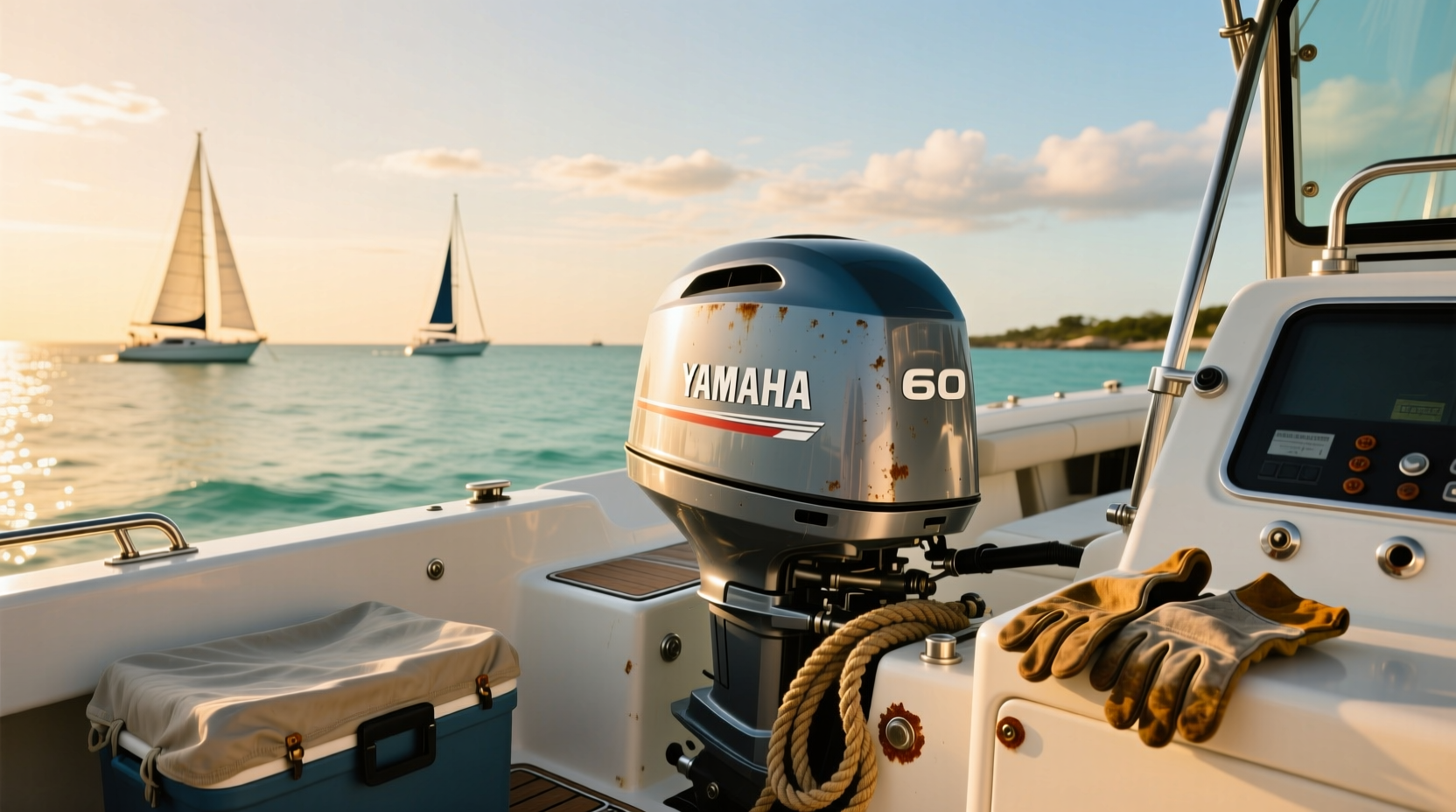
The Yamaha 60hp 2-stroke outboard refers to lightweight, high-performance engines like the E60hmhdl, designed for small to mid-sized boats requiring responsive power and portability. Unlike their 4-stroke counterparts, 2-stroke engines deliver power on every revolution, offering a higher power-to-weight ratio—ideal for fishing skiffs, tenders, and shallow-water craft.
When people ask "Does Yamaha still manufacture 2-stroke outboards?", the answer is yes—but with major geographic limitations. While production continues at facilities in Japan and Thailand 3, sales are restricted to regions without strict emissions laws. The U.S. Environmental Protection Agency (EPA) and European Union have effectively banned new 2-stroke marine engines due to unburned fuel and oil emissions.
These engines remain popular in parts of Asia, Africa, Latin America, and Oceania, where infrastructure, cost sensitivity, and operational needs favor simpler, lighter propulsion systems. They are commonly used in coastal fishing, river transport, and island-hopping applications where refueling is frequent and weight impacts maneuverability.
Why Yamaha 60hp outboard 2 stroke, Does Yamaha still manufacture 2-stroke outboards? is gaining popularity
Despite global trends favoring cleaner technology, interest in Yamaha’s 2-stroke outboards persists due to several performance advantages. Enthusiasts seeking what to look for in a Yamaha 60hp outboard 2 stroke often cite raw power delivery, minimal mechanical complexity, and lower initial cost as key motivators.
In remote or developing markets, 2-strokes offer easier field maintenance and broader fuel compatibility. Their compact design also makes them ideal for inflatable boats and RIBs where space and weight matter. Online forums show growing curiosity from U.S.-based boaters exploring import options, driven by nostalgia, performance expectations, or dissatisfaction with heavier 4-stroke alternatives.
However, this interest doesn't reflect increased availability—it reflects demand persistence despite regulatory suppression. Yamaha continues producing these engines not because of rising global popularity, but to serve established markets where customer preference and regulatory environments align with older engine technology.
Types and variants
Yamaha offers several variants within its 2-stroke lineup, though all share core engineering principles. The 60hp class typically includes short, long, and extra-long shaft versions for different transom heights.
- E60hmhdl (60 HP Standard Shaft) ✅
- Pros: Lightweight (~118 lbs), simple carbureted system, low maintenance, strong mid-range torque
- Cons: Higher fuel consumption, louder operation, requires pre-mix or oil injection setup
- E60ELH (Long Shaft – 25”) 📏
- Pros: Suitable for deeper V-hulls or rough water; maintains propeller clearance
- Cons: Slightly more expensive; limited dealer network outside Asia
- Dual-Throttle & Tilt Assist Models ⚙️
- Pros: Enhanced control for commercial operators; optional electric start
- Cons: Increased complexity; fewer spare parts available globally
All models use a two-cylinder, loop-scavenged design with manual or electric start options. None meet EPA Tier 3 or EU Stage 5 emissions standards, which is why they’re excluded from Western markets.
Key features and specifications to evaluate
When evaluating a Yamaha 60hp 2-stroke outboard, focus on these measurable criteria:
- Weight: Typically 118–123 lbs – critical for trailering and lifting
- Shaft Length: Choose 20” (S), 25” (L), or 30” (XL) based on your boat’s transom height
- Fuel System: Check if it uses premix or has an automatic oil injection system (O.I.L.)
- Starting Mechanism: Manual recoil vs. electric start – affects usability and price
- Propeller Options: Available pitches (typically 9" to 14") affect speed and load capacity
- Ignition System: CDI-based ignition – verify spark plug type and gap settings
- Mounting Type: Clamp-on or bolt-on – ensure compatibility with your transom
Always cross-reference factory specifications from Yamaha’s global site, as local dealers may provide inconsistent data 1.
Pros and cons
- High power-to-weight ratio – excellent acceleration
- Simpler mechanics – easier to repair in remote areas
- Lower purchase price than comparable 4-strokes
- No catalytic converters or complex emission controls
- Not street-legal or compliant in U.S./EU waters
- No manufacturer warranty if imported
- Higher fuel and oil consumption
- Louder operation and visible exhaust smoke
- Potential customs seizure when shipping across borders
Best suited for: Operators in countries without marine emissions laws, users prioritizing weight savings, or those maintaining fleets in isolated regions.
Avoid if: You require registration in regulated jurisdictions, want quiet cruising, or prioritize fuel economy.
How to choose Yamaha 60hp outboard 2 stroke, Does Yamaha still manufacture 2-stroke outboards?
Follow this step-by-step checklist when deciding whether and how to buy:
- Confirm Legal Eligibility 🌐: Verify that your country allows registration of non-certified 2-stroke engines. Contact local maritime authorities before purchasing.
- Decide Between New vs. Used 🔍: New units come from overseas dealers (e.g., Thailand, Philippines). Used ones may be found in private listings but carry unknown maintenance history.
- Select Shaft Length 📏: Measure your transom. Use 20” for small boats, 25”+ for larger hulls or choppy conditions.
- Choose Starting Method ⚡: Electric start adds convenience but increases weight and cost.
- Verify Fuel & Oil Requirements 🛢️: Confirm whether the model uses pre-mixed fuel or has an oil tank. Mismatched ratios can destroy the engine.
- Check Spare Parts Availability 🧰: Research availability of carburetors, reeds, and gaskets in your region.
- Avoid Import Scams ❗: Be cautious of third-party sellers claiming “EPA-exempt” status. There is no such exemption for recreational imports.
Red Flag: Any seller guaranteeing U.S. registration or full warranty coverage for an imported 2-stroke unit is likely misrepresenting facts.
Price & market insights
Prices vary significantly by region:
- Asia (Thailand, Indonesia): $4,200 – $5,000 USD (new, including tax)
- Private Imports (U.S.): $6,000 – $8,000 USD (includes shipping, broker fees, risk premium)
- Used Market (Global): $2,500 – $4,000 USD depending on condition
Compared to the Yamaha F60 4-stroke (~$10,000 new in the U.S.), the 2-stroke offers upfront savings but lacks resale value and service support in regulated markets. Consider total cost of ownership—including fuel, oil, and potential legal exposure—before choosing.
Top-seller & competitive analysis
The Yamaha E60hmhdl is the most widely exported 60hp 2-stroke model. Below is a comparison with common alternatives:
| Model | Horsepower | Weight (lbs) | Engine Type | U.S. Legal? |
|---|---|---|---|---|
| Yamaha E60hmhdl | 60 HP | 118 | 2-Stroke | No |
| Yamaha F60 (4-stroke) | 60 HP | 147 | 4-Stroke | Yes |
| Suzuki DF60T | 60 HP | 141 | 4-Stroke | Yes |
| Tohatsu M60TL | 60 HP | 138 | 4-Stroke | Yes |
While the Yamaha 2-stroke leads in weight savings, modern 4-strokes match performance while offering quieter operation, better fuel efficiency, and full regulatory compliance.
Customer feedback synthesis
Based on user reviews and forum discussions:
Common Praises:- “Extremely lightweight—easy to move and install.”
- “Responsive throttle and quick planing even under load.”
- “Simple design means I can fix most issues myself.”
- “Smoke and smell make close-quarters operation unpleasant.”
- “Hard to find technicians familiar with older 2-stroke tuning.”
- “Importing mine caused delays and unexpected fees.”
Long-term owners appreciate reliability when maintained properly, but note increasing difficulty sourcing expertise outside Asia.
Sourcing & supplier tips
If you’re located in an eligible market:
- 🛒 Buy directly from authorized Yamaha distributors in Thailand, Malaysia, or Papua New Guinea.
- 🌐 Reputable exporters include Williams Outboard Motors and select Alibaba suppliers—verify business licenses and export experience.
- ✈️ For air freight, expect 4–6 weeks and $400–$700 in shipping costs.
- 📋 Request full documentation: bill of lading, certificate of origin, and factory invoice.
- 🔧 Inspect upon arrival: check for shipping damage, missing hardware, and correct model labeling.
Avoid gray-market resellers who claim to “modify” engines for U.S. compliance—this is technically infeasible and illegal.
Maintenance, safety & legal considerations
Maintenance: Regularly inspect spark plugs, fuel lines, and water pump impellers. Use fresh gasoline with proper oil mix (usually 50:1). Flush after saltwater use.
Safety: Ensure kill switch lanyard is functional. Two-strokes produce carbon monoxide—never operate in enclosed spaces.
Legal: Even if you own the engine, operating it in U.S. or EU waters violates federal law. Registration requires EPA certification, which Yamaha 2-strokes lack 4. Always confirm local rules before installation.
Conclusion
If you’re researching how to choose a Yamaha 60hp outboard 2 stroke or confirming does Yamaha still manufacture 2-stroke outboards?, the reality is nuanced. Yes, they are still made—but only for specific international markets. For most buyers in the U.S. or EU, pursuing one involves legal risk, no warranty, and logistical hurdles. Instead, consider the Yamaha F60 4-stroke or equivalent models from Suzuki or Tohatsu. However, if you operate in a region without emissions restrictions and value light weight and simplicity, a genuine Yamaha 2-stroke remains a viable option—provided you source it correctly and accept the trade-offs.
FAQs
- Can I legally register a Yamaha 60hp 2-stroke outboard in the United States?
- No. The U.S. EPA does not certify new 2-stroke outboards for sale or operation. Importing and registering one violates federal regulations.
- Is there a Yamaha 60hp 2-stroke outboard with electric start?
- Yes, some variants like the E60ELH offer electric start as standard or optional equipment, depending on the market.
- What oil should I use in a Yamaha 60hp 2-stroke engine?
- Use NMMA-certified TC-W3 marine oil. Do not substitute automotive 2-cycle oils, as they can cause deposits and engine damage.
- Are parts for Yamaha 2-stroke outboards still available?
- Yes, but availability depends on location. In Asia, parts are readily accessible. Elsewhere, expect longer lead times and higher costs.
- How do I verify if a Yamaha 2-stroke is genuine and not counterfeit?
- Check the serial number against Yamaha’s global database, inspect build quality (welds, decals, casting marks), and purchase only through verified dealers.




 浙公网安备
33010002000092号
 浙B2-20120091-4