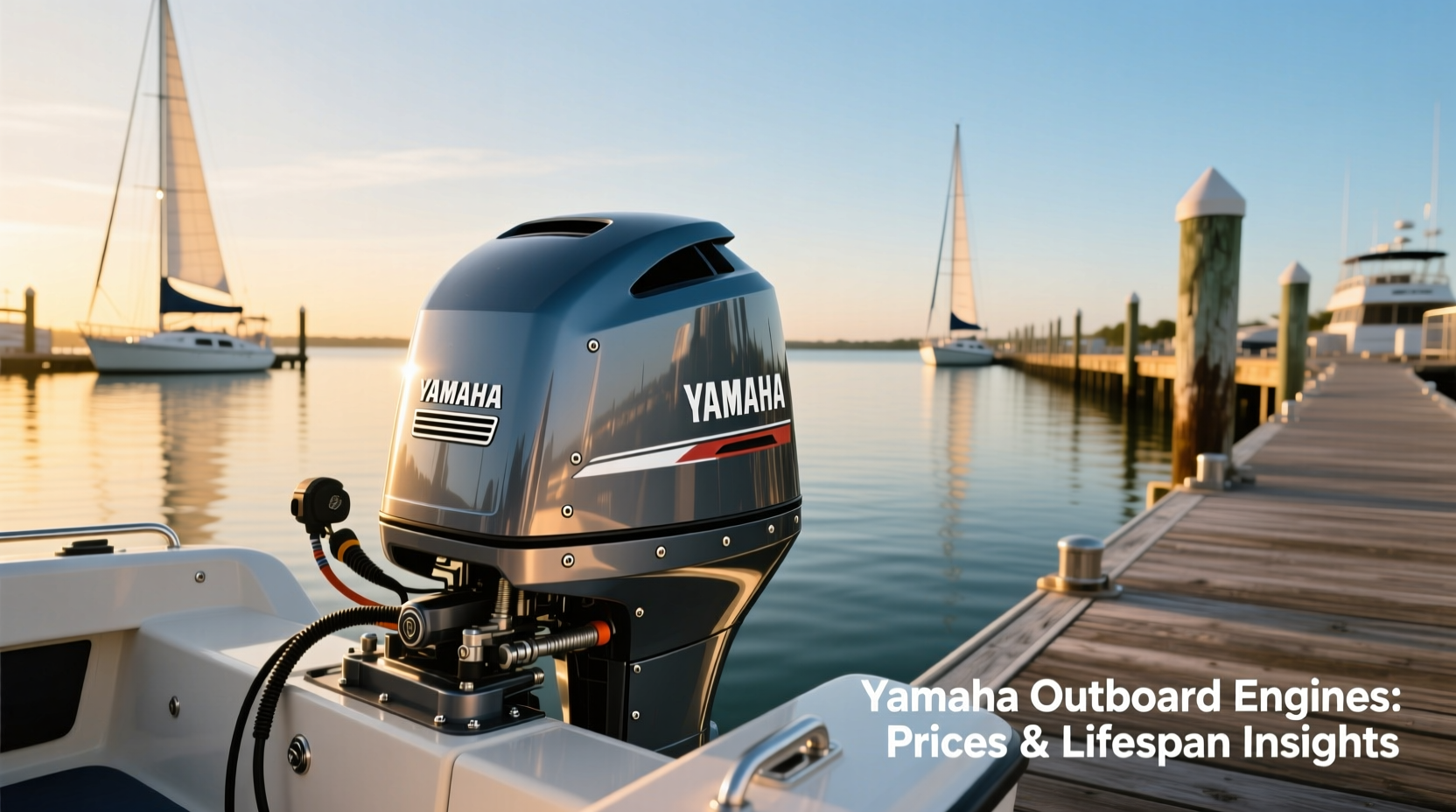
If you're evaluating Yamaha outboard engines prices and asking what is the average life of a Yamaha outboard motor?, your decision should balance upfront cost with long-term durability. Most modern Yamaha 4-stroke outboards last 1,500–3,500 hours with proper maintenance 12, aligning with industry standards. However, commercial users have reported over 8,000 hours with rigorous care 3. Prices range from $900 for small 2HP models to over $100,000 for high-horsepower offshore engines. When choosing, prioritize horsepower needs, usage environment, maintenance access, and total cost of ownership—not just sticker price.
About Yamaha Outboard Engine Lifespan and Pricing
When researching how to choose Yamaha outboard engines prices, what is the average life of a Yamaha outboard motor?, it's essential to understand that both variables are interconnected. The lifespan refers to operational hours before major repairs or replacement become necessary, while pricing reflects initial investment across different horsepower tiers and technological features.
Yamaha outboards are used in a wide range of applications—from small fishing skiffs and personal watercraft tenders (2–25 HP) to large offshore center consoles (250–400 HP). Their reliability makes them popular among recreational boaters, charter operators, and commercial fleets such as water taxis and patrol boats.
The question “What is the average life of a Yamaha outboard motor?” doesn't have a single answer—it depends on maintenance frequency, operating conditions (saltwater vs freshwater), fuel quality, and load management. Similarly, Yamaha outboard engines prices vary significantly based on model year, engine configuration (inline-4 vs V6), digital controls (such as Helm Master EX), and whether the unit is carbureted or fuel-injected.
Why Yamaha Outboards Are Gaining Popularity
Yamaha has maintained a strong presence in the marine propulsion market due to its reputation for reliability, consistent engineering, and long service life. Many buyers cite lower downtime and fewer unexpected repairs compared to some competitors.
One key reason for growing interest in Yamaha outboard engines prices, what is the average life of a Yamaha outboard motor? is the increasing focus on total cost of ownership. While initial purchase price matters, savvy buyers consider how long an engine will perform before requiring major service—especially when used frequently or commercially.
Additionally, Yamaha’s shift toward advanced 4-stroke technology—including lightweight designs, improved fuel efficiency, and integrated electronics—has made their engines more attractive than older 2-stroke models, which typically lasted only around 1,500 hours 4.
Types and Variants
Understanding the different types of Yamaha outboards helps clarify both pricing and longevity expectations.
⚡ Lightweight Portable (2–25 HP)
- Best for: Dinghies, canoes, small sailboats
- Lifespan: 1,500–2,500 hours with regular use
- Price Range: $900–$5,600
- Pros: Lightweight, easy to transport, low maintenance
- Cons: Limited power, not suitable for heavy loads
🔧 Mid-Range Inline-4 (25–150 HP)
- Best for: Bay boats, pontoons, day cruisers
- Lifespan: 2,000–3,000+ hours
- Price Range: $3,600–$12,000
- Pros: Balanced performance, good fuel economy, reliable
- Cons: Less torque than V6 at higher speeds
🏭 High-Performance V6 (175–425 HP)
- Best for: Offshore fishing, large center consoles, fast planing hulls
- Lifespan: 2,500–3,500+ hours with strict maintenance
- Price Range: $11,000–$60,000+
- Pros: High thrust, smooth operation, compatible with multi-engine setups
- Cons: Higher initial cost, more complex servicing
✅ SHO (Super High Output) Series
- Best for: Performance-oriented vessels needing extra low-end torque
- Lifespan: Similar to standard V6 but may see increased wear under constant high load
- Price Premium: Adds $2,000–$5,000 over comparable non-SHO models
- Pros: Faster acceleration, better hole shot
- Cons: Slightly reduced fuel efficiency
Key Features and Specifications to Evaluate
To make an informed choice when considering what to look for in Yamaha outboard engines prices, what is the average life of a Yamaha outboard motor?, assess these critical specifications:
- ⚙️ Horsepower: Match engine output to your boat’s weight and intended use. Overloading shortens lifespan.
- 🧼 Maintenance Requirements: Check oil change intervals (every 100 hours or annually), gear lube replacement, and fuel filter access.
- 🌍 Operating Environment: Saltwater use demands thorough flushing after each trip to prevent corrosion 2.
- ⛽ Fuel System: Use E10 or lower ethanol content. High ethanol attracts moisture and degrades fuel lines over time 1.
- ✨ Digital Integration: Models with Command Link displays or compatibility with Helm Master EX offer better diagnostics and control.
- 🔧 Propeller Shaft Length (Shaft Options): Ensure correct shaft length (S=Short, L=Long, X=Extra Long) fits your transom height.
Pros and Cons
| Aspect | Advantages | Limitations |
|---|---|---|
| Reliability | Proven track record across thousands of units; often exceeds 2,000-hour mark with care | Premium pricing compared to some regional brands |
| Maintenance | Clear service schedule; widely supported by dealers and mechanics | Dealer labor rates can be high; DIY requires tools and space |
| Lifespan | Can reach 8,000+ hours in commercial settings with disciplined upkeep 5 | Lifespan drops sharply if maintenance is neglected |
| Fuel Efficiency | Better than many 2-strokes and older 4-strokes | V6 engines consume more at wide-open throttle |
| Resale Value | Strong residual value due to brand trust | Newer technologies (e.g., electric) may impact long-term demand |
How to Choose a Yamaha Outboard Motor
Follow this step-by-step guide when deciding how to choose Yamaha outboard engines prices, what is the average life of a Yamaha outboard motor?:
- Define Your Use Case: Will you use it for weekend fishing, daily charters, or coastal cruising? This determines required horsepower and durability level.
- Calculate Total Boat Weight: Include passengers, gear, and fuel. Select an engine that provides adequate thrust without being oversized.
- Review Maintenance Capacity: Can you perform basic servicing (oil changes, impeller checks), or will you rely on a dealer?
- Check Compatibility: Verify engine fit with your boat’s transom, steering system, and electrical setup.
- Evaluate Warranty Terms: Yamaha typically offers 3-year factory warranty; extended coverage may be available.
🚩 Red Flags to Avoid
- Buying a high-hour used engine without a full service history
- Using E15 or higher ethanol fuel regularly
- Skipping winterization in cold climates
- Running the engine at wide-open throttle (WOT) for prolonged periods
- Ignoring corrosion signs in saltwater environments
Price & Market Insights
Understanding Yamaha outboard engines prices helps set realistic expectations. Below is a general overview:
| Horsepower Range | Approximate Price (USD) | Typical Use Case |
|---|---|---|
| 2–20 HP | $900 – $5,600 | Tenders, kayaks, small inflatables |
| 25–100 HP | $3,600 – $12,000 | Bay boats, pontoons, sailboat auxiliaries |
| 115–600 HP | $11,000 – $100,000+ | Offshore fishing, large dual/multi-engine setups |
Note: Dealer prices are often 10–15% below MSRP, especially during off-season promotions. Always request itemized quotes including rigging, controls, and installation fees, which can add $1,000–$3,000.
For example, the Yamaha F150XSA lists at $20,725 MSRP but may sell closer to $18,238 depending on region and incentives 6.
Top-Seller & Competitive Analysis
Popular models like the F150, F200, and LF300 series dominate sales due to their balance of power, efficiency, and reliability.
| Model | HP | MSRP (USD) | Dealer Price (Est.) | Lifespan Estimate |
|---|---|---|---|---|
| Yamaha F150XSA | 150 | $20,725 | $18,238 | 2,500–3,000 hrs |
| Yamaha F200XSA | 200 | $24,930 | $21,938 | 2,500–3,000 hrs |
| Yamaha F250XSB2 | 250 | $36,515 | $32,133 | 2,500–3,500 hrs |
| Yamaha LF300USB2 | 300 | $39,480 | $35,532 | 2,500–3,500 hrs |
Compared to Mercury and Suzuki equivalents, Yamaha engines often rank similarly in independent durability tests. Differences tend to emerge in digital integration and proprietary systems rather than core longevity.
Customer Feedback Synthesis
Analysis of owner forums and review platforms reveals recurring themes:
👍 Frequent Praises
- Long-term reliability with minimal issues past 2,000 hours
- Smooth idle and quiet operation, especially in 4-strokes
- Strong resale value and widespread parts availability
- Good customer support through authorized dealers
👎 Common Complaints
- Higher initial cost compared to some competitors
- Complexity of electronic systems requiring specialized diagnostics
- Inconsistent dealer service quality by region
- Saltwater corrosion if not flushed properly after use
Sourcing & Supplier Tips
When purchasing a Yamaha outboard, consider the following:
- 🛒 Authorized Dealers: Offer full warranty, factory training, and genuine parts. Locate one via Yamaha’s official website.
- 📍 Regional Pricing: Prices may vary by state or country due to taxes, shipping, and import duties. Get multiple quotes.
- 📋 Bundled Packages: Some dealers offer discounts when buying engine + propeller + rigging together.
- 🔍 Used Units: Inspect service records, check for corrosion, verify serial number against Yamaha’s database for recalls or warranty status.
- 📎 Financing: Many dealers provide financing options; compare APR rates and terms carefully.
Maintenance, Safety & Legal Considerations
To maximize the lifespan of your Yamaha outboard and ensure safe operation:
- 🧼 Service Schedule: Follow Yamaha’s recommended maintenance intervals (every 100 hours or annually).
- 🌊 Flushing: Flush with fresh water after every saltwater use using flush muffs.
- ⛽ Fuel Management: Use fuel stabilizer if storing longer than 30 days; avoid ethanol-blended fuels above E10.
- ❄️ Winterization: In freezing climates, drain water passages, fog the cylinders, and store in dry conditions.
- ⚖️ Legal Compliance: Verify local regulations regarding emissions, noise levels, and required safety equipment. Regulations vary by jurisdiction—check with your maritime authority.
Conclusion
Choosing the right Yamaha outboard involves balancing upfront cost with long-term durability. If you need a dependable engine for frequent recreational or light commercial use, models in the 150–300 HP range offer optimal value, lasting 2,500–3,500 hours with proper care. For smaller craft, compact 2–25 HP engines provide excellent portability and longevity at lower cost. Always factor in maintenance discipline, operating environment, and total ownership expenses—not just Yamaha outboard engines prices. And remember, while the average life of a Yamaha outboard motor is typically 1,500–3,500 hours, real-world results depend heavily on how well you maintain it.
FAQs
❓ What is the average life of a Yamaha outboard motor?
Most Yamaha 4-stroke outboards last between 1,500 and 3,500 hours with regular maintenance. With excellent care, some engines exceed 8,000 hours, particularly in commercial operations.
❓ How do Yamaha outboard prices compare to competitors?
Yamaha outboards are competitively priced within the premium segment. They often cost slightly more than base models from other brands but offer comparable longevity and resale value.
❓ What maintenance extends a Yamaha outboard’s lifespan?
Regular oil and gear lube changes, annual impeller replacement, post-trip freshwater flushing, proper winterization, and using low-ethanol fuel help extend engine life significantly.
❓ Can I install a Yamaha outboard myself?
While possible for experienced users, professional installation ensures correct rigging, alignment, and warranty compliance. Incorrect setup can lead to premature wear or failure.
❓ Are high-hour Yamaha outboards still reliable?
Engines with over 1,500 hours can remain reliable if they have a documented service history and show no signs of leaks, smoke, or starting issues. Always inspect thoroughly before purchase.




 浙公网安备
33010002000092号
 浙B2-20120091-4