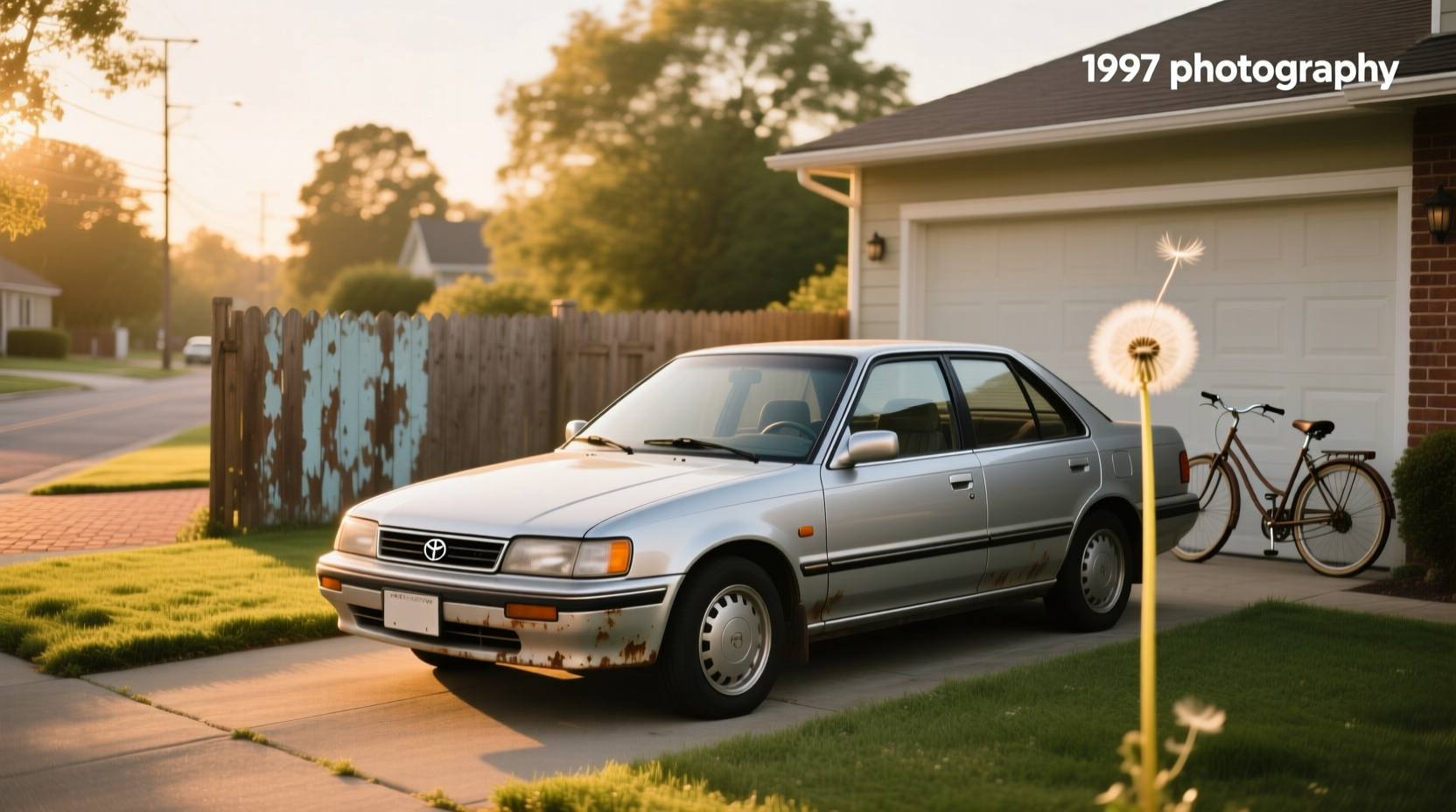
If you're researching a 1997 Toyota Corolla DX, one of the most important things to understand is its engine configuration and long-term reliability. The 1997 Toyota Corolla DX typically came equipped with a 1.6L 4A-FE inline-four gasoline engine, producing around 110–114 horsepower, paired with either a 5-speed manual or 4-speed automatic transmission. This model was part of the E100 generation Corolla lineup, known for durability, fuel efficiency, and low maintenance costs—hallmarks of what many consider Toyota’s golden era of engineering1. Whether you’re looking to buy, maintain, or restore a 1997 Corolla DX, understanding its specs, common mechanical issues, and parts availability is essential for making informed decisions.
Understanding the 1997 Toyota Corolla DX Trim and Features
The DX trim was a base-level model in the 1997 Corolla range, offering straightforward functionality without luxury extras. It was designed as an economical commuter car, prioritizing reliability over performance or comfort features. Standard equipment on the DX included manual windows, manual mirrors, basic cloth seating, AM/FM radio, and steel wheels with hubcaps. Air conditioning and power steering were often optional rather than standard, depending on the market and dealer packages.
🔍 Why this matters: Buyers today should verify exactly what features their specific vehicle has. Since the DX lacked many conveniences found in higher trims like the LE or CE, it's crucial to inspect whether desired upgrades (like A/C or power accessories) were factory-installed or added later. This affects both value and potential repair complexity.
🛒 Purchasing Tip: When shopping for a used 1997 Corolla DX, always request service records and conduct a thorough pre-purchase inspection. These cars are now over 25 years old, so rust, worn suspension components, and aging electrical systems are common concerns.
Engine Options: What Powers the 1997 Corolla DX?
⚙️ The primary engine in the 1997 Toyota Corolla DX was the 1.6L 4A-FE inline-four engine. This fuel-injected, dual overhead cam (DOHC), 16-valve four-cylinder unit delivered approximately 114 horsepower at 6,000 RPM and 100 lb-ft of torque at 4,400 RPM. It featured a cast-iron block and aluminum head, contributing to its durability under regular maintenance.
Some international markets also received the slightly larger 1.8L 7A-FE engine, particularly in higher trims such as the VE or station wagons. However, the DX sedan in North America almost exclusively used the 1.6L variant.
| Engine | Displacement | Horsepower | Torque | Fuel System | Common Applications |
|---|---|---|---|---|---|
| 4A-FE | 1.6L (1587 cc) | 114 hp @ 6,000 rpm | 100 lb-ft @ 4,400 rpm | Multi-point fuel injection | Corolla DX, CE (North America) |
| 7A-FE | 1.8L (1762 cc) | 110–115 hp | 110 lb-ft | Multi-point fuel injection | Corolla VE, Wagon, International models |
🔧 How to Identify Your Engine: To confirm which engine your 1997 Corolla DX has, locate the engine code stamped on the cylinder block near the exhaust manifold. Look for "4A-FE" or "7A-FE." You can also check the VIN decoder or consult the emissions label under the hood.
❗ Note: There is no 1ZZ-FE engine in the 1997 model year. That engine debuted in the 1998 Corolla (E110 series). Confusion sometimes arises because replacement engines sold online may list 1ZZ-FE units compatible with earlier chassis via swaps—but they are not original equipment.
Transmission and Drivetrain Overview
The 1997 Corolla DX came with two transmission choices:
- ✅ 5-speed manual (S51)
- ✅ 4-speed automatic (A245E)
Both transmissions are front-wheel drive and were widely used across Toyota models of that era. The S51 manual is praised for its crisp shifting and longevity when properly maintained. The A245E automatic is generally reliable but may exhibit soft shifts or delayed engagement if fluid hasn’t been changed regularly.
🧰 Maintenance Insight: Toyota recommends changing automatic transmission fluid every 30,000 miles under severe conditions. Many owners neglect this, leading to premature wear. If purchasing a high-mileage example, insist on proof of ATF changes—or budget for a flush immediately after purchase.
Reliability and Longevity: Is the 1997 Corolla DX Still Worth Buying?
⭐ The 1997 Toyota Corolla DX is legendary for reliability. Many examples still operate beyond 200,000 miles thanks to simple design, robust engineering, and widespread parts availability. However, age-related degradation is inevitable.
📌 Pros:
- Proven engine durability (4A-FE)
- Low fuel consumption (~28 mpg city / 35 mpg highway)
- Affordable parts and repairs
- Simple electronics reduce failure points
- Excellent platform for first-time car owners or learners
❗ Cons:
- No airbags in early 1997 models (driver-side became standard mid-year)
- Basic safety features by modern standards
- Rust susceptibility in northern climates due to minimal undercoating
- Outdated HVAC and audio systems
- Limited cargo space compared to newer hatchbacks
📍 Regional Differences: In colder regions, frame and floorpan rust can be a major issue. In dry climates (e.g., Southwest U.S.), these cars tend to last longer structurally. Always inspect wheel wells, rocker panels, and subframes during a test drive.
Common Issues and How to Spot Them
Even reliable cars develop problems over time. Here are frequent issues seen in 1997 Corolla DX models:
1. Timing Belt Failure Risk
The 4A-FE engine is an interference design—meaning if the timing belt breaks, internal damage (bent valves, piston contact) is likely. Toyota recommended replacement every 90,000 miles.
✅ Action Step: Ask for documentation of the last timing belt change. If unknown, assume it needs immediate replacement. Include water pump inspection, as it's driven by the same belt.
2. Suspension Wear
After 25+ years, control arm bushings, struts, ball joints, and tie rod ends commonly wear out. Symptoms include uneven tire wear, wandering steering, and clunking noises over bumps.
🔧 Inspection Tip: Jack up the front end and check for play in the wheels. Grab the tire at 9 and 3 o'clock; wiggle side-to-side. Any movement indicates worn tie rods or bearings.
3. Electrical Gremlins
While simpler than modern vehicles, older wiring harnesses degrade. Common issues include malfunctioning speedometers, dim dash lights, or intermittent blower motor operation.
🧼 Solution: Clean grounding points (especially near battery and firewall) and replace corroded connectors. Check fuse box for cracked solder joints—a known weak point.
4. Exhaust Manifold Cracks
The 4A-FE’s exhaust manifold is prone to cracking due to thermal cycling. Listen for ticking sounds during warm-up or reduced performance.
🛠️ Repair Note: Replacement manifolds are readily available new or used. Consider upgrading to a header-style manifold for better flow and durability.
Fuel Efficiency and Real-World Performance
⛽ The EPA-rated fuel economy for the 1997 Corolla DX with the 1.6L engine is 28 mpg city and 35 mpg highway. In real-world driving, most owners report 26–32 mpg combined, depending on driving style and condition.
⚡ Despite modest power output, the lightweight chassis (around 2,300 lbs) allows adequate acceleration for city and highway use. 0–60 mph takes roughly 10–11 seconds with the manual transmission.
🌐 Global Variants: Some export models (e.g., Japan Domestic Market) had lean-burn technology or different tuning for higher efficiency. These JDM versions may offer slightly better mileage but could require modifications to meet local emissions standards.
Parts Availability and Aftermarket Support
🛒 One of the biggest advantages of owning a 1997 Corolla DX is parts accessibility. Due to high production volume and global sales, nearly every component—from engines to trim pieces—is still available.
🔧 Where to Source Parts:
- Junkyards & Pull-A-Part Facilities: Great for OEM parts at low cost.
- eBay & Online Marketplaces: Offers both new-old-stock and refurbished items.
- Remanufactured Engines: Companies like S&J Engines or Powertrain Products sell rebuilt 4A-FE long blocks starting around $2,2002.
- Alibaba.com: International suppliers offer complete engine assemblies, though shipping and import fees apply3.
⚠️ Caveat: Be cautious with non-OEM sensors or aftermarket ECUs. Mismatches can cause drivability issues or trigger check engine lights.
Engine Swaps: Can You Upgrade the 1997 Corolla DX Powertrain?
Many enthusiasts consider engine swaps to improve performance or reliability. Popular options include:
- 1ZZ-FE (1.8L): From 1998–2002 Corollas; offers more power and VVT-i. Requires ECU and harness modifications.
- 4AGE (20V Blacktop): High-revving performance engine from AE92/AE111 models. Complex and expensive, but delivers sporty character.
- 1JZ-GTE (Inline-Six Turbo): Extreme swap requiring custom mounts, cooling, and drivetrain work.
📌 Reality Check: While technically feasible, most swaps exceed the value of the car. Unless building a showpiece or track toy, sticking with the stock 4A-FE is usually the most practical choice.
Buying Advice: What to Look For in a Used 1997 Corolla DX
If you're considering purchasing one today, follow this checklist:
- Verify Title Status: Ensure it’s clean, not salvage or flood-damaged.
- Check for Rust: Inspect floorboards, rocker panels, and suspension mounting points.
- Review Maintenance History: Look for timing belt, transmission fluid, and coolant service records.
- Test Drive Thoroughly: Listen for abnormal noises, test brakes, steering response, and HVAC function.
- Scan for Codes: Use an OBD-I scanner (pre-1996 uses different protocol; 1996+ uses OBD-II).
- Evaluate Interior Condition: Check for mold, odors, and functional gauges.
📍 Price Expectations: As of 2024, running 1997 Corolla DX models sell between $800 and $2,500 depending on location, condition, and mileage. Non-running projects go for $300–$600.
Maintenance Schedule Summary
To keep your 1997 Corolla DX running reliably, adhere to this simplified schedule:
| Component | Interval | Notes |
|---|---|---|
| Engine Oil & Filter | Every 3,000–5,000 mi | Synthetic blend recommended for longevity |
| Timing Belt | Every 90,000 mi | Include water pump, tensioner, and idler pulleys |
| Transmission Fluid | Every 30,000 mi (severe) | Use Type T-IV fluid for automatics |
| Coolant | Every 30,000 mi or 2 years | 50/50 mix of ethylene glycol and distilled water |
| Brake Fluid | Every 2 years | DOT 3 specification |
| Spark Plugs | Every 30,000 mi | Iridium-tipped for extended life |
Final Thoughts: Is the 1997 Toyota Corolla DX Still Relevant?
Despite being nearly three decades old, the 1997 Toyota Corolla DX remains a viable option for budget-conscious drivers, DIY mechanics, or collectors of reliable Japanese economy cars. Its simplicity, proven durability, and low operating costs make it ideal for secondary vehicles, learner drivers, or urban commuting.
However, it lacks modern safety features, crash protection, and convenience tech. It should not be considered a daily driver for families or long-distance travelers unless thoroughly inspected and maintained.
In summary, the 1997 Corolla DX earns its reputation as a 'forever car'—but only if cared for properly. With realistic expectations and proactive upkeep, it can continue serving reliably for years to come.
Frequently Asked Questions (FAQ)
- ❓ What engine does a 1997 Toyota Corolla DX have?
- The 1997 Toyota Corolla DX typically comes with a 1.6L 4A-FE inline-four gasoline engine, producing 114 horsepower and paired with a 5-speed manual or 4-speed automatic transmission.
- ❓ How many miles can a 1997 Toyota Corolla DX last?
- With proper maintenance, a 1997 Corolla DX can last well beyond 200,000 miles. Many examples have reached 250,000–300,000 miles with routine care and timely repairs.
- ❓ Was the 1997 Toyota Corolla DX equipped with airbags?
- Early 1997 models may lack airbags, but driver-side airbags became standard midway through the model year. Always verify presence and condition during inspection.
- ❓ Can I swap a 1ZZ-FE engine into a 1997 Corolla DX?
- Yes, the 1.8L 1ZZ-FE engine from 1998–2002 Corollas can be swapped in, but it requires ECU, wiring harness, and mount modifications. It’s a complex project best suited for experienced mechanics.
- ❓ Where can I find a replacement engine for a 1997 Toyota Corolla?
- Replacement engines are available through junkyards, eBay, remanufacturers like S&J Engines, and international suppliers on Alibaba.com. Prices range from $700 (used JDM) to $2,600+ (remanufactured).




 浙公网安备
33010002000092号
 浙B2-20120091-4