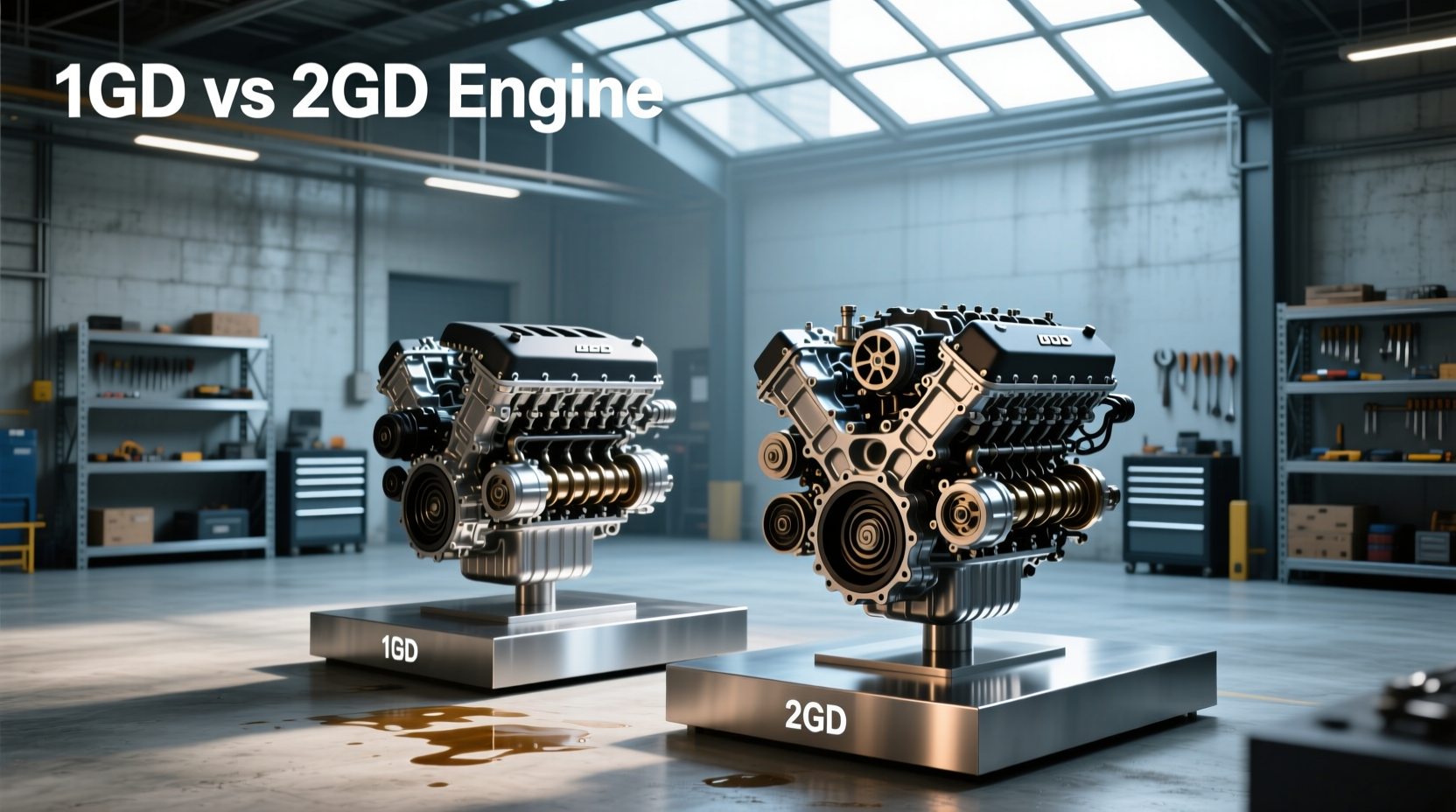
When comparing the 1GD vs 2GD engine, the primary differences lie in displacement, power output, torque, and intended vehicle applications. The 1GD-FTV is a 2.8L diesel engine producing up to 204 hp and 500 N·m of torque, commonly found in larger Toyota trucks like the Hilux, Fortuner, and Land Cruiser Prado. In contrast, the 2GD-FTV is a 2.4L engine with around 150 hp and 400–430 N·m, designed for mid-size SUVs and light-duty pickups where fuel economy and lower running costs are priorities. Understanding these distinctions helps buyers choose the right engine based on load requirements, driving conditions, and long-term reliability concerns.
Understanding Toyota’s GD Engine Series
The Toyota GD engine family was introduced in 2015 as a modern replacement for the aging KD series diesel engines 1. Designed with improved thermal efficiency, common rail direct injection, and variable geometry turbocharging (VGT), the GD series targets global markets that demand durable, fuel-efficient diesel powertrains. Two main variants emerged: the 1GD-FTV (2.8L) and the 2GD-FTV (2.4L). Both are inline-four, water-cooled, turbo-diesel units featuring intercoolers and advanced emissions control systems such as EGR and DPF in certain regions.
While both engines share core design principles—like high-pressure common rail fuel systems and DOHC 16-valve cylinder heads—they differ significantly in application scope and performance metrics. These differences directly impact vehicle dynamics, towing capacity, fuel consumption, and maintenance considerations. For owners of Toyota Hilux, Fortuner, Innova, or Revo models, understanding the 1GD vs 2GD engine comparison is essential when purchasing, maintaining, or upgrading their vehicles.
Displacement, Power, and Torque Compared
| Specification | 1GD-FTV (2.8L) | 2GD-FTV (2.4L) |
|---|---|---|
| Engine Code | 1GD-FTV | 2GD-FTV |
| Displacement | 2755 cc | 2393 cc |
| Bore × Stroke | 92 mm × 103.4 mm | 86 mm × 103 mm |
| Max Power Output | 150–204 hp (110–150 kW) | 148–150 hp (110–110 kW) |
| Peak Torque | 420–500 N·m (310–369 lb·ft) | 360–430 N·m (265–317 lb·ft) |
| Turbocharger Type | Variable Geometry Turbo (VGT) | Variable Geometry Turbo (VGT) |
| Fuel System | Common Rail Direct Injection | Common Rail Direct Injection |
| Cooling System | Water-cooled | Water-cooled |
The most apparent difference between the two engines is displacement: the 1GD displaces nearly 362 cc more than the 2GD. This additional volume allows for greater air and fuel intake, resulting in higher combustion energy and increased mechanical output. As a result, the 1GD delivers significantly more torque, especially at lower RPM ranges (typically peaking between 1600–2400 rpm), making it better suited for heavy loads, off-road climbing, and trailer towing.
In practical terms, this means a Hilux equipped with the 1GD engine will accelerate faster from a stop when carrying cargo and maintain momentum more effectively on steep inclines. The 2GD, while still capable, may require more gear shifting under load due to its narrower torque band and earlier peak torque delivery.
Fuel Efficiency and Real-World Economy
Fuel efficiency is one of the key reasons Toyota offers both engines across different trims and markets. While the 1GD produces more power, it also consumes more fuel—especially in urban environments or under frequent heavy loading. Independent tests and owner reports suggest the 2GD-FTV achieves approximately 8–10% better fuel economy compared to the 1GD in mixed driving conditions.
- 🔹 2GD-FTV Average Consumption: 7.5–8.5 L/100km (combined cycle)
- 🔹 1GD-FTV Average Consumption: 8.5–9.8 L/100km (combined cycle)
These figures vary depending on transmission type (manual vs automatic), tire size, payload, and terrain. However, the trend remains consistent: the smaller 2GD engine is more economical for daily commuting, city deliveries, or light-duty use. Fleets operating multiple Hilux or Innova vans often opt for the 2GD variant to reduce operational costs over time.
That said, if your usage involves regular highway hauling or mountainous routes, the 1GD’s superior low-end torque can actually improve efficiency by reducing engine strain and allowing higher gears at lower speeds—a phenomenon sometimes overlooked in official fuel ratings.
Reliability and Known Issues
Both engines inherit Toyota’s reputation for durability, but neither is immune to issues. Long-term ownership data and service center feedback highlight several recurring concerns.
Timing Chain Rattle (Both Engines)
One of the most frequently reported problems across forums and repair shops is timing chain noise, particularly during cold starts. This rattle usually subsides after a few seconds but can persist if tensioners wear prematurely. Some early-production GD engines (2015–2017) had weaker tensioner designs, leading to premature chain stretch and, in rare cases, valve damage.
🔧 Solution: Regular oil changes using OEM-specified low-SAPS (low ash) diesel engine oil help maintain hydraulic tensioner performance. Replacing chains and guides every 150,000–200,000 km is recommended for high-mileage users.
Fuel Injector Failures (More Common in 1GD)
The 1GD’s higher injection pressure and greater thermal load make its injectors more prone to clogging or failure, especially in areas with poor diesel quality. Symptoms include rough idle, misfires, and reduced power.
🛒 Mitigation Tip: Use fuel additives periodically and install aftermarket fuel filters if operating in regions with inconsistent fuel standards.
EGR and DPF Clogging (Region-Dependent)
In markets enforcing Euro 5 or stricter emissions (e.g., Europe, Australia, parts of Southeast Asia), both engines come equipped with EGR (Exhaust Gas Recirculation) and DPF (Diesel Particulate Filter) systems. Urban drivers doing short trips report faster soot buildup, leading to regeneration issues and warning lights.
📍 Recommendation: Drive at sustained highway speeds (above 60 km/h) for at least 20 minutes weekly to allow passive DPF regeneration.
Vehicle Applications and Market Availability
Toyota tailors engine availability based on regional needs and vehicle segmentation:
- ✅ 1GD-FTV Used In: Toyota Hilux (higher trims), Fortuner 2.8L, Land Cruiser Prado 150/250, HiAce 2.8L (certain configurations)
- ✅ 2GD-FTV Used In: Toyota Hilux (base/mid trims), Fortuner 2.4L, Innova Crysta, Revo, Kijang, Commuter vans
In Africa, the Middle East, and Latin America, the 1GD dominates due to rugged terrain and demand for towing capability. In contrast, Southeast Asian countries like Indonesia and Thailand favor the 2GD for its balance of performance and economy in congested cities.
Notably, some markets offer only one option. For example, South African Hilux models typically feature the 1GD, while Indian-market Fortuners are available exclusively with the 2GD unless upgraded to the GR-Sport trim.
Maintenance Costs and Service Intervals
Despite sharing many components, there are cost differences in upkeep:
| Maintenance Item | 1GD-FTV Estimate | 2GD-FTV Estimate |
|---|---|---|
| Oil Change (Labor + Filter) | $80–$110 | $70–$95 |
| Fuel Injector Replacement (per unit) | $220–$280 | $200–$250 |
| Timing Chain Kit Replacement | $600–$900 | $550–$800 |
| Diesel Particulate Filter Cleaning | $300–$500 | $300–$500 |
| Recommended Oil Change Interval | 10,000–15,000 km | 10,000–15,000 km |
Overall, the 2GD tends to have slightly lower maintenance expenses due to smaller fluid capacities and less stress on ancillary components. However, labor rates vary widely by country, so localized pricing should always be verified.
Performance in Off-Road and Towing Scenarios
For off-road enthusiasts and commercial operators, engine behavior under stress matters greatly.
Towing Capacity Comparison
- 🚚 1GD-FTV Max Trailer Weight: Up to 3,500 kg (braked), depending on model and drivetrain
- 🚚 2GD-FTV Max Trailer Weight: Typically capped at 2,500–3,000 kg
The 1GD’s extra 70–100 N·m of torque provides noticeable advantages when ascending grades with a trailer. It maintains cruising speed with less throttle input, reducing heat buildup and transmission strain.
Off-Road Throttle Response
In rock crawling or sand driving, precise throttle modulation is crucial. The 1GD’s broader torque curve allows smoother creep control at very low RPMs without frequent clutch engagement. The 2GD requires more careful pedal management in technical terrain, though modern traction control systems help compensate.
Resale Value and Longevity Outlook
Well-maintained GD engines regularly exceed 300,000 km without major repairs. However, resale value trends show a slight preference for 1GD-powered vehicles in secondary markets.
📈 Why? Buyers perceive the 1GD as more future-proof for demanding tasks. A 2023 survey of used Hilux listings in Kenya and UAE showed 1GD models retained 8–12% higher residual value after five years compared to equivalent 2GD trims.
That said, 2GD-equipped vehicles often sell faster due to lower initial price points and appeal to budget-conscious fleets.
Which Engine Should You Choose?
The decision between 1GD vs 2GD engine ultimately depends on your primary use case:
Choose the 1GD-FTV If:
- You regularly tow heavy trailers or carry full payloads
- You drive in hilly or off-road environments
- Long-term resale value is a priority
- You want maximum power for aftermarket modifications
Choose the 2GD-FTV If:
- Your driving is mostly urban or suburban
- Fuel economy and lower running costs are critical
- You operate a fleet of vehicles where total cost of ownership matters
- You don’t plan to modify or heavily load the vehicle
Common Misconceptions About GD Engines
Several myths persist among owners and buyers:
❌ "The 2GD is just a detuned 1GD"
False. While they share architecture, the 2GD has a smaller bore, different crankshaft stroke, revised piston design, and optimized turbo mapping. It's not simply a restricted version of the 1GD.
❌ "GD engines are worse than older KD motors"
This stems from isolated timing chain issues. Overall, GD engines offer better fuel economy, lower emissions, and comparable longevity when maintained properly. The KD series lacked modern emissions tech and was heavier on fuel.
❌ "You can easily swap a 2GD into a 1GD chassis"
Not advisable without extensive modifications. Mounting points, ECU tuning, cooling requirements, and transmission gearing differ enough to make direct swaps impractical and costly.
How to Verify Engine Specifications in Your Vehicle
To confirm whether your Toyota has a 1GD or 2GD engine:
- 🔍 Check the engine bay: Look for a metal plate near the firewall or valve cover labeled "1GD-FTV" or "2GD-FTV"
- 📋 Review the VIN decoder or registration documents—some list engine codes explicitly
- 📱 Use OBD2 diagnostic tools: Plug in a scanner to read the ECU ID and engine model
- 🌐 Consult Toyota’s official portal: Enter your VIN on regional Toyota websites (e.g., toyota.co.id, toyota-za.com)
Dealerships and certified mechanics can also pull factory build sheets using internal databases.
Final Thoughts: Balancing Performance and Practicality
The debate between 1GD vs 2GD engine isn't about which is universally better—it's about matching engine characteristics to your real-world needs. The 1GD excels in power, towing, and off-road resilience, making it ideal for adventurers and professionals who push their vehicles hard. The 2GD shines in efficiency, affordability, and urban usability, appealing to families, small businesses, and eco-conscious drivers.
Neither engine is inherently flawed, but both require proper maintenance to achieve their full lifespan. By understanding the technical distinctions, known weaknesses, and market-specific factors, you can make an informed decision that aligns with your lifestyle and driving demands.
Frequently Asked Questions (FAQs)
- ❓ What does GD stand for in Toyota engines?
- GD refers to the engine family designation within Toyota's naming convention. It doesn't stand for a specific phrase but identifies a generation of modern diesel engines replacing the older KD series.
- ❓ Is the Toyota 2GD engine reliable?
- Yes, the 2GD-FTV is generally reliable when maintained with timely oil changes and quality diesel fuel. Its main concern is timing chain noise in cold starts, which can be mitigated with proper maintenance.
- ❓ Can the 2GD engine tow a caravan or boat?
- The 2GD can tow up to 2,500–3,000 kg depending on the vehicle model and configuration. It’s suitable for medium-sized caravans or boats, but expect reduced acceleration and increased engine strain on hills.
- ❓ How long do 1GD and 2GD engines last?
- With regular maintenance, both engines can exceed 300,000 kilometers. The 1GD may endure heavier loads longer due to its robust internal components, but longevity largely depends on driving habits and service history.
- ❓ Are spare parts readily available for GD engines?
- Yes, due to widespread global adoption, OEM and aftermarket parts—including turbos, injectors, and gaskets—are widely available through dealers and online suppliers like Toyota parts specialists.




 浙公网安备
33010002000092号
 浙B2-20120091-4