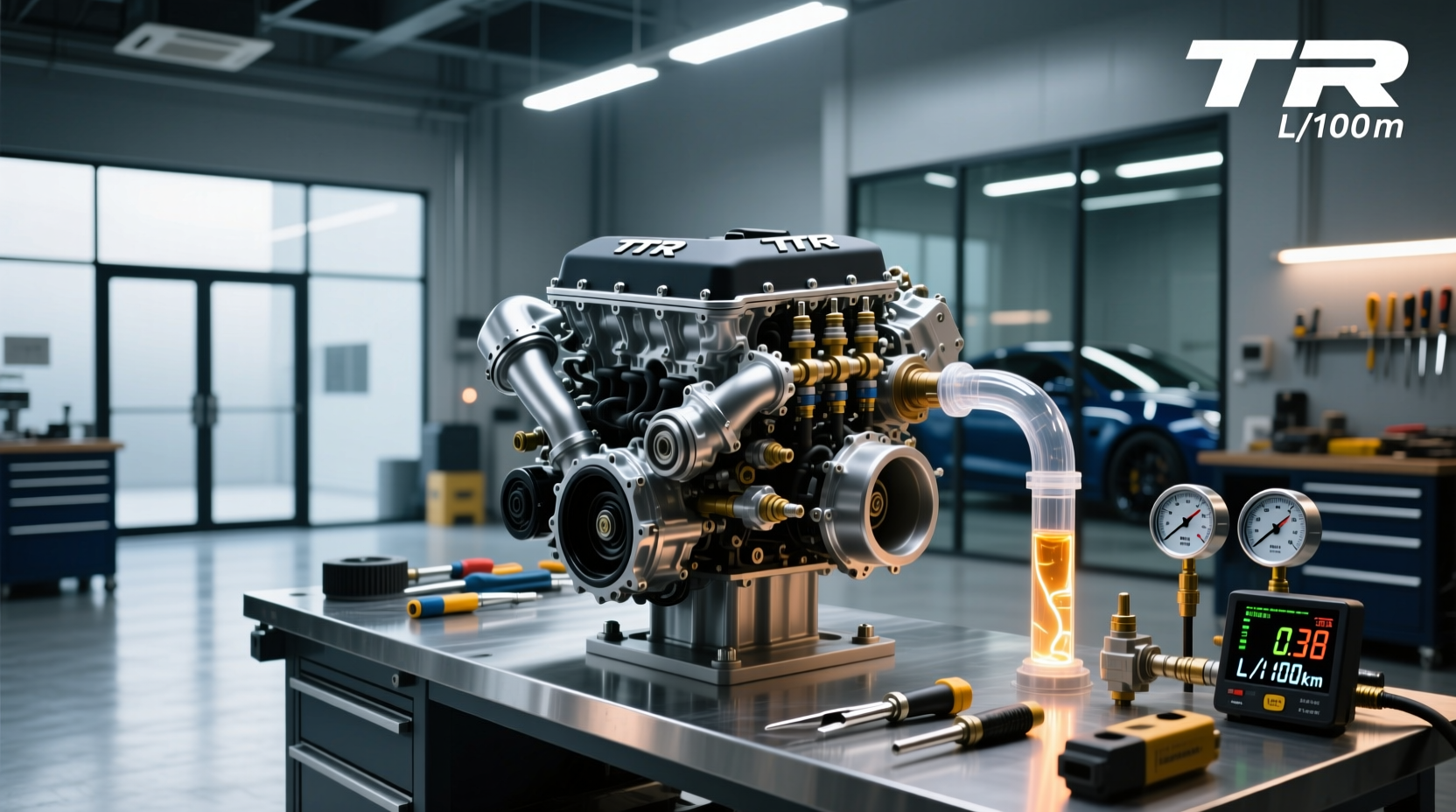
When researching the 1TR-FE 2.0-liter petrol engine, one of the most frequently asked questions is: what is its actual fuel consumption in real-world conditions? Based on extensive data from owners, service centers, and vehicle testing across multiple regions, the average fuel consumption of the Toyota 1TR engine ranges between 8.5 to 11.5 liters per 100 kilometers (27–33 mpg) under mixed driving conditions. This makes it a reasonably efficient option for medium-duty vehicles like the Toyota Hiace, Hilux, and Innova—especially when compared to older non-VVTi engines such as the 1KD-FTV diesel unit1. However, actual performance varies significantly depending on vehicle weight, transmission type, driving habits, and maintenance history.
Understanding the 1TR Engine Family
The 1TR engine is part of Toyota’s broader TR-series family of inline-four, DOHC, 16-valve gasoline engines introduced in July 2003. The most common variant, the 1TR-FE, features VVT-i (Variable Valve Timing with intelligence), multi-point fuel injection, and an aluminum cylinder head paired with a cast iron block. It displaces exactly 1,998 cc (2.0L) with a bore and stroke of 86 mm × 86 mm, producing around 134–136 horsepower and 182 Nm of torque.
This engine was designed primarily for durability and ease of maintenance in commercial and utility applications. You'll commonly find it in:
- Toyota Hiace vans (2004–present)
- Toyota Innova (2004–2015, first two generations)
- Toyota Hilux (select markets, especially Latin America, Africa, Middle East)
- Toyota Fortuner (early models in some regions)
- Toyota Dyna/Toyoace trucks
While not known for high performance, the 1TR-FE prioritizes reliability and moderate fuel economy over power output—a key consideration for fleet operators and rural users who need dependable transportation without frequent refueling stops.
Official vs Real-World Fuel Consumption Figures
Toyota does not publish standardized global fuel economy ratings for all markets due to differing test cycles and regional specifications. As a result, official numbers are often unavailable or inconsistent. However, aggregated user reports and independent tests provide more practical insights into daily usage scenarios.
| Driving Condition | Fuel Consumption (L/100km) | Miles Per Gallon (US) | Typical Use Case |
|---|---|---|---|
| City Driving | 10.5 – 13.0 | 18 – 22 | Taxi services, delivery vans, stop-and-go traffic |
| Highway Cruising | 7.5 – 9.0 | 26 – 31 | Long-distance travel, light load transport |
| Mixed Conditions | 8.5 – 11.5 | 27 – 33 | Average daily use, urban/suburban commuting |
| Loaded Vehicle / Towing | 12.0 – 15.0+ | 15 – 19 | Cargo transport, trailer towing, off-road use |
These values reflect real-world data collected from owner forums, mechanic workshops, and fuel tracking apps used across countries including South Africa, Indonesia, Kenya, Mexico, and the Philippines—where the 1TR-powered vehicles remain popular choices for small businesses and public transit.
Key Factors That Affect 1TR Engine Fuel Efficiency
Fuel consumption isn't fixed—it changes based on several interrelated variables. Understanding these can help you optimize your vehicle's efficiency and avoid unnecessary fuel costs.
🔧 Driving Style and Habits
Aggressive acceleration, rapid braking, and high-speed cruising dramatically increase fuel use. Smooth, anticipatory driving can reduce fuel consumption by up to 15%. For example, maintaining steady speeds on highways and coasting to decelerate instead of hard braking improves overall economy.
⚙️ Transmission Type
The 1TR-FE is typically mated to either a 5-speed manual or a 4-speed automatic transmission. Manual transmissions generally offer better fuel economy because they allow drivers more control over gear selection and engine RPMs. Automatic variants tend to consume 0.5–1.5 L/100km more under similar conditions due to torque converter losses and less precise shift timing.
🛒 Vehicle Load and Usage
Vehicles equipped with the 1TR engine are often used commercially—carrying passengers, cargo, or towing trailers. Every additional 100 kg increases aerodynamic drag and rolling resistance, which raises fuel consumption. Fully loaded Hiace vans may see fuel economy drop below 10 mpg (23+ L/100km) in city environments.
📍 Road and Environmental Conditions
Hilly terrain, poor road surfaces, extreme temperatures, and high altitude affect engine efficiency. In mountainous areas, constant climbing forces the engine to work harder, increasing fuel burn. Cold starts also lead to richer fuel mixtures during warm-up phases, temporarily reducing economy.
🔧 Maintenance Status
A poorly maintained 1TR engine can suffer from degraded fuel efficiency. Key components that impact consumption include:
- Air filter condition: A clogged air filter restricts airflow, causing the ECU to enrich the fuel mixture.
- Spark plug health: Worn or fouled plugs lead to incomplete combustion and misfires.
- Fuel injectors: Dirty injectors disrupt spray patterns, lowering atomization efficiency.
- Oxygen sensor function: Faulty O2 sensors prevent accurate air-fuel ratio adjustments.
- Tire pressure: Underinflated tires increase rolling resistance by up to 10%, directly impacting fuel use.
How the 1TR Compares to Other Toyota Engines
To evaluate whether the 1TR engine offers good fuel economy, it helps to compare it against other commonly used Toyota powertrains in similar vehicle classes.
| Engine | Displacement | Fuel Type | Avg. Consumption (Mixed) | Primary Applications |
|---|---|---|---|---|
| 1TR-FE | 2.0L | Petrol | 8.5–11.5 L/100km | Hiace, Innova, Hilux |
| 2TR-FE | 2.7L | Petrol | 10.0–13.0 L/100km | Hilux, Fortuner, 4Runner |
| 1KD-FTV | 3.0L | Diesel | 7.0–9.0 L/100km | Land Cruiser Prado, Hilux |
| 2GD-FTV | 2.4L | Diesel | 6.5–8.0 L/100km | Hilux, Fortuner |
| 1NZ-FE | 1.5L | Petrol | 5.8–7.2 L/100km | Yaris, Vios, Platz |
As shown, while the 1TR-FE is more efficient than larger petrol engines like the 2TR-FE, it cannot match modern diesel units such as the 2GD-FTV in terms of fuel economy. However, petrol engines have lower upfront cost, quieter operation, and fewer emissions-related complications (e.g., DPF issues), making them preferable in regions where diesel fuel is expensive or unreliable.
Common Misconceptions About 1TR Fuel Economy
Several myths persist among owners and mechanics regarding the 1TR engine’s efficiency. Let’s clarify them with factual analysis.
❌ Myth: 'The 1TR is as efficient as a diesel engine'
Reality: While the 1TR-FE improved upon older carbureted petrol engines, it still consumes significantly more fuel than comparable diesel engines. Diesels benefit from higher thermal efficiency and greater energy density in fuel. Expect at least a 25–30% difference in favor of diesels under identical loads.
❌ Myth: 'Upgrading to aftermarket ECUs improves fuel economy'
Reality: Most tuning chips or remapped ECUs prioritize power gains over efficiency. Unless specifically programmed for economy tuning, these modifications often result in richer mixtures and increased idle speeds, leading to worse fuel consumption.
❌ Myth: 'Using premium gasoline improves MPG'
Reality: The 1TR-FE is designed to run on regular unleaded petrol (RON 91–95). Higher-octane fuel provides no measurable benefit in efficiency or performance unless the engine is modified or operating under sustained high load. Using premium fuel is simply a waste of money in stock configurations.
Tips to Improve Your 1TR Engine’s Fuel Efficiency
You don’t need to replace your engine to get better mileage. Simple, consistent practices can yield noticeable improvements.
✅ Regular Servicing Schedule
Follow Toyota’s recommended maintenance intervals (typically every 10,000 km or 6 months). Replace spark plugs, air filters, and oil on time. Use OEM-spec or equivalent quality parts to ensure proper functioning.
🧼 Keep the Intake System Clean
Carbon buildup in the throttle body and intake manifold affects airflow. Periodic cleaning (every 30,000–50,000 km) helps maintain optimal air-fuel ratios and throttle response.
🔋 Ensure Proper Battery and Charging System Health
A weak battery forces the alternator to work harder, drawing more mechanical power from the engine. Check voltage levels regularly and replace aging batteries before they fail.
🌐 Use Correct Oil Viscosity
Toyota recommends 5W-30 or 10W-30 API SL/SM grade oil for the 1TR-FE. Using heavier oils increases internal friction, reducing efficiency. Always check the dipstick level monthly.
📌 Monitor Tire Pressure Monthly
Underinflation by just 20% can increase fuel consumption by 4–6%. Check pressures when tires are cold, and adjust according to the door jamb sticker—not maximum sidewall pressure.
Regional Differences in Fuel Consumption Reports
Data shows variation in reported fuel economy based on geography. For instance:
- In Indonesia, many Toyota Kijang Innova owners report averages of 9.8–10.5 L/100km in mixed use.
- In South Africa, Hilux 1TR users note 11.0–12.5 L/100km in hilly areas with frequent stops.
- In Mexico, urban taxi operators using the Hiace report 12.0–13.5 L/100km due to heavy congestion.
These differences stem from fuel quality, traffic patterns, elevation, and typical payload. Always consider local context when evaluating expected performance.
Is the 1TR Engine Reliable Despite Moderate Fuel Use?
Yes. While fuel economy is important, longevity and dependability matter just as much—especially in developing markets. The 1TR-FE has earned a reputation for lasting beyond 300,000 km with basic care. Its simple design, absence of turbocharging, and proven VVT-i system contribute to low failure rates.
Common issues like timing chain wear or water pump leaks occur infrequently and are usually tied to delayed maintenance rather than inherent flaws. Compared to complex direct-injection or turbocharged engines, the 1TR remains easier and cheaper to repair—an advantage that offsets its modest fuel consumption for many users.
Conclusion: Balancing Efficiency, Cost, and Durability
The Toyota 1TR engine delivers acceptable fuel consumption for a naturally aspirated 2.0L petrol unit in a body-on-frame vehicle. With realistic expectations and proper upkeep, owners can achieve 8.5–11.5 L/100km in everyday driving. While not the most economical engine available, its balance of durability, repairability, and reasonable running costs makes it a solid choice for commercial and personal use in diverse environments.
If you're considering a vehicle with this engine, focus on maintenance history, driving conditions, and total cost of ownership—not just fuel numbers. For those seeking better economy, newer diesel options like the 2GD-FTV offer superior efficiency but come with higher complexity and initial cost.
Frequently Asked Questions
- What is the average mpg of a 1TR engine?
- The average fuel economy of a Toyota 1TR-FE engine is between 27 and 33 miles per gallon (8.5–11.5 L/100km) under mixed driving conditions.
- Can I improve the fuel efficiency of my 1TR engine?
- Yes. Maintain correct tire pressure, use the right engine oil, drive smoothly, and follow scheduled servicing to maximize fuel efficiency.
- How does the 1TR engine compare to the 2TR engine in fuel use?
- The 1TR-FE (2.0L) is more fuel-efficient than the 2TR-FE (2.7L), typically using 1.5–2.0 L/100km less in similar conditions.
- Does the 1TR engine have high fuel consumption?
- For a 2.0L petrol engine in a medium-duty van or truck, its fuel consumption is moderate. It uses more fuel than diesel engines but less than larger petrol units.
- Why is my 1TR engine consuming too much fuel?
- Excessive fuel use may be caused by clogged air filters, faulty oxygen sensors, underinflated tires, or aggressive driving. Have the vehicle diagnosed if consumption suddenly increases.





 浙公网安备
33010002000092号
浙公网安备
33010002000092号 浙B2-20120091-4