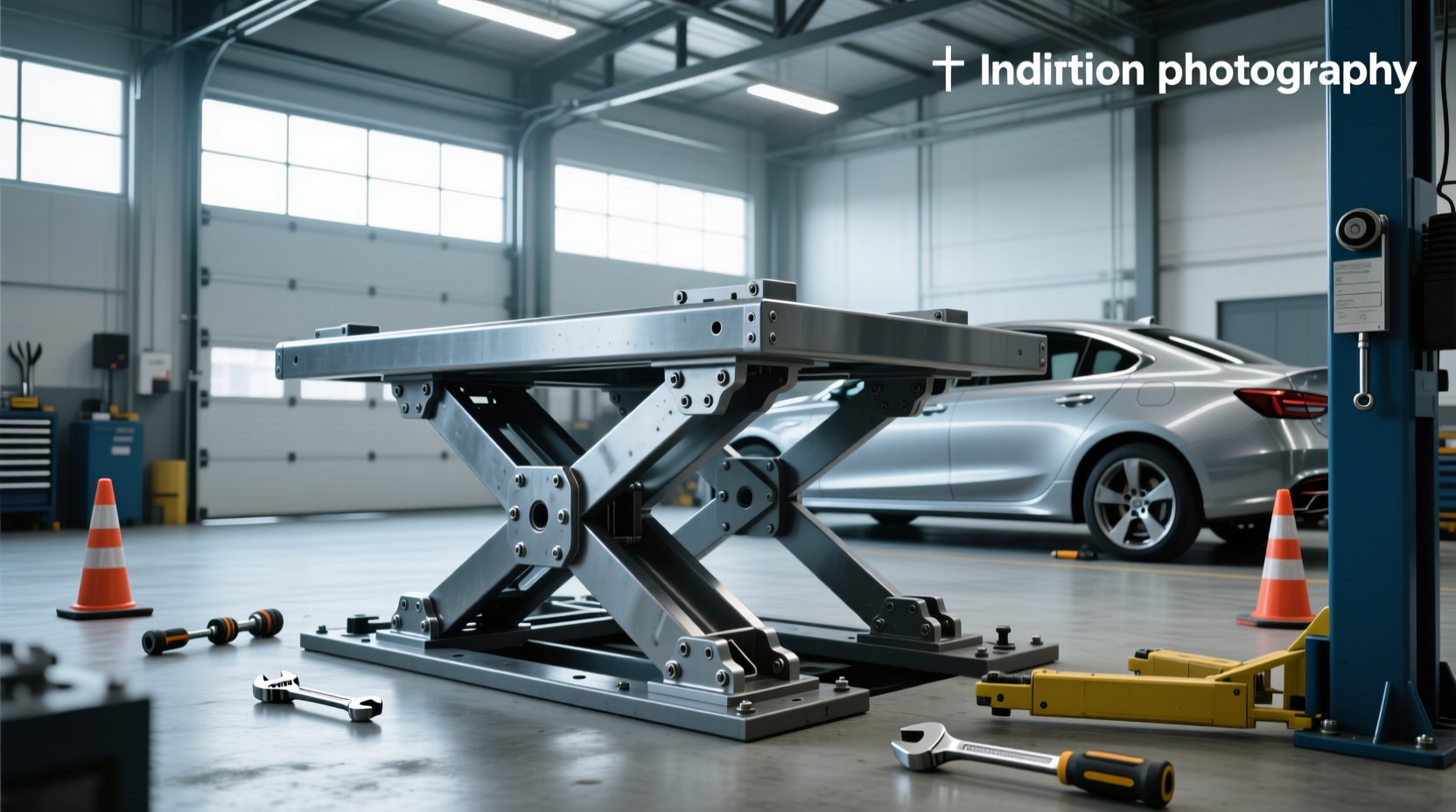
When installing a 2 post lift with base plates, one common challenge arises: floor space limitations or structural incompatibility between the lift\u2019s footprint and your garage\u2019s concrete layout. A 2 post lift base plate extension can be a practical solution for aligning anchor bolts, improving weight distribution, or adapting to uneven flooring. These extensions are metal brackets or reinforced plates that connect to the original base plates of a two-post car lift, effectively shifting or reinforcing the mounting point on the concrete floor 1. While not standard equipment, they are increasingly discussed among DIY mechanics and small auto shops dealing with non-ideal garage conditions.
Understanding Base Plate Two-Post Lifts
Before diving into extensions, it\u2019s essential to understand how base plate lifts differ from overhead models. In a base plate two-post lift, each vertical column rests on a large steel plate anchored directly into the concrete floor. This design transfers the load downward through the base rather than relying on ceiling-mounted support arms 2. The advantage? Lower headroom requirements, making them ideal for garages with ceilings under 10 feet. However, this also means the integrity of the floor and precision of bolt placement are critical.
Most manufacturers like BendPak, Atlas Automotive Equipment, and Quick Lift USA specify exact dimensions for anchor bolt patterns. For example, an Atlas BP10000X requires a precise 75-inch spacing between front and rear anchors per column. If your garage slab has existing cracks, rebar locations, or utility conduits interfering with these positions, a base plate extension kit may allow you to shift the effective bolt location without compromising safety.
Why Consider a Base Plate Extension?
There are several scenarios where a 2 post car lift base plate extension becomes necessary or beneficial:
- Non-standard floor layouts: Garages built before standardized lift installations became common may lack the ideal flat, unobstructed surface required for direct mounting.
- Reinforced concrete obstacles: Rebar clusters or control joints can prevent proper anchor embedment at factory-specified points.
- Expansion over time: Some users install lifts initially in one configuration but later want to adjust positioning for better workflow or add additional equipment nearby.
- Used lift relocation: When moving a secondhand base plate lift to a new facility, the new floor\u2019s anchor pattern might not match the original setup.
In such cases, a properly engineered extension maintains structural continuity by transferring shear and tensile forces from the lift column to the concrete foundation via extended arms or adapter plates.
Types of Base Plate Extensions
Not all extensions are created equal. There are three primary types available, each serving different purposes:
1. Bolt Pattern Adapters (Fixed Offset)
These are rigid steel plates welded or bolted beneath the original base plate. They feature pre-drilled holes offset by a fixed distance—commonly 6", 12", or 18"—to avoid obstructions. They work best when the misalignment is consistent and predictable. Because they don\u2019t introduce moving parts, their reliability depends only on weld quality and material thickness.
2. Modular Extension Kits
Sold under names like \u201cAPlusLift HW-10KBP Extension Package\u201d or \u201cWeaver W-9KFP Add-On Plate,\u201d these kits include adjustable beams and secondary plates that attach using high-strength fasteners. They offer flexibility in both direction and length of extension. However, because they rely on bolted connections instead of welding, regular inspection for loosening is crucial 3.
3. Custom Fabricated Extensions
For unique situations, some workshops opt for custom-fabricated extensions made from A36 or A572 structural steel. These must be designed by a qualified engineer familiar with lifting equipment standards (such as ALI/ANSI A9.1). Improper fabrication can lead to catastrophic failure under load.
| Type | Mobility | Installation Complexity | Ideal Use Case |
|---|---|---|---|
| Bolt Pattern Adapters | Fixed | Low | Minor alignment issues |
| Modular Kits | Adjustable | Medium | Relocating used lifts |
| Custom Fabrications | Variable | High (requires engineering) | Unique floor constraints |
Safety and Structural Integrity Concerns
The most important consideration with any two post lift floor plate extension is whether it compromises the system\u2019s engineered load path. All certified lifts undergo rigorous testing under ALI (Automotive Lift Institute) standards, which assume factory-original configurations. Modifying the base changes stress distribution, potentially increasing bending moments at connection points.
Key risks include:
- Increased leverage on anchors: Extending the base outward increases torque during lifting, especially if a vehicle is slightly off-center.
- Vibration-induced fatigue: Unsecured or poorly fitted extensions can develop micro-movements over time, leading to metal fatigue.
- Uneven load transfer: If the extension isn\u2019t perfectly level or fully supported by the slab, pressure concentrates on edges, risking concrete spalling.
To mitigate these risks, always ensure that:
- The extension is made from equivalent or higher-grade steel than the original base.
- All welds (if applicable) are full-penetration and inspected visually or via dye test.
- Bolts used are Grade 8 or higher, torqued to manufacturer specifications.
- The underlying concrete is at least 4 inches thick with a compressive strength of 3,000 psi or more 4.
Manufacturer Policies on Modifications
Most major brands—including BendPak, Atlas, and Eagle Equipment—explicitly state that modifying the base plate voids the warranty. According to ASE Deals\u2019 technical documentation, \u201cAny alteration to the lift\u2019s anchoring system not approved in writing by the engineering department invalidates certification.\u201d This doesn\u2019t mean extensions are unsafe, but it does mean you assume full liability.
If you proceed, consider having a professional lift inspector certify the modified installation. Some third-party inspectors will issue a field evaluation report compliant with ANSI/ALI A9.1, which can help maintain insurance coverage.
Installation Best Practices
Installing a 2 post auto lift base plate extension requires careful planning. Follow these steps:
Step 1: Measure Twice, Cut Once
Use a laser level and tape measure to map out the desired position of the lift columns. Mark anchor points and check for interference with plumbing, electrical lines, or structural elements in the slab.
Step 2: Verify Concrete Condition
Core drill a small test hole at one proposed anchor site. Look for excessive moisture, loose aggregate, or shallow rebar. If the slab is less than 4 inches thick or shows signs of deterioration, consult a structural engineer before proceeding.
Step 3: Attach Extension Securely
Whether bolting or welding, ensure full contact between surfaces. Use shims if necessary to eliminate gaps. Torque all fasteners progressively in a star pattern to avoid warping.
Step 4: Anchor Installation
Use chemical anchors or wedge-type expansion bolts rated for dynamic loads. Never use plastic sleeves or toggle bolts. Allow epoxy-based anchors to cure fully (typically 24–72 hours) before loading.
Step 5: Test Under Load
Perform a dry run with no vehicle. Then lift a known-weight truck or SUV slowly, checking for movement, noise, or deflection at the extension joints. Repeat after 10 cycles.
Alternatives to Base Plate Extensions
Before opting for an extension, consider alternatives that may be safer or more cost-effective:
- Overhead two-post lifts: These transfer load to ceiling joists or trusses, eliminating floor anchor concerns altogether.
- Four-post lifts: Offer greater stability and larger footprints, often fitting better in irregular spaces.
- Floor reinforcement: Pouring a new concrete pad in the correct location may be cheaper and safer than modifying an existing lift.
- Relocating utilities: Sometimes rerouting a conduit or drain pipe is easier than altering mechanical systems.
Common Misconceptions About Lift Extensions
Several myths persist about base plate two post car lift extensions:
Misconception 1: \u201cExtensions are just for height adjustment.\u201d
Reality: They primarily address horizontal displacement, not vertical clearance.
Misconception 2: \u201cAny steel plate will do.\u201d
Reality: Material grade, thickness, and connection method matter significantly. Using mild steel instead of structural steel reduces safety margins.
Misconception 3: \u201cOnce installed, they never need maintenance.\u201d
Reality: Like all mechanical joints, extended bases require periodic inspection for wear, corrosion, or loosening.
Cost Considerations
Pricing for 2 post lift base plate extension kits varies widely:
- Basic bolt adapters: $80\u2013$150
- Modular kits: $200\u2013$400
- Custom fabrication: $500\u2013$1,200+ (including engineering fees)
Compare this to the cost of a full replacement lift ($2,500\u2013$7,000), and extensions appear economical. But remember to factor in labor, potential downtime, and risk exposure.
Regional Differences and Regulations
In the U.S., OSHA does not regulate private garage lifts, but commercial shops must comply with ANSI/ALI A9.1. Canada\u2019s CSA B149.1 and EU\u2019s EN 1493 have similar requirements. None explicitly ban base plate extensions, but all emphasize adherence to manufacturer specifications. In jurisdictions with strict building codes (e.g., California, Ontario), local inspectors may require stamped drawings for modified installations.
How to Source Reliable Extension Components
While some vendors sell generic floor plate two post car lift extensions, verify compatibility before purchase. Check:
- Brand and model specificity (e.g., \u201cAtlas BP9000 compatible\u201d)
- Material certification (mill test reports)
- Thread size and bolt pattern match
- Customer reviews mentioning long-term durability
Avoid cheap imports with vague descriptions like \u201cuniversal fit.\u201d Precision matters in load-bearing applications.
Final Recommendations
A 2 post lift base plate extension can solve real-world installation challenges, but it should never be a first-choice solution. Prioritize maintaining the lift in its factory configuration whenever possible. If modifications are unavoidable, use professionally designed components, follow strict installation protocols, and document every step for liability protection. Whenever feasible, consult a certified lift technician or structural engineer before finalizing the design.
Frequently Asked Questions
- Can I install a base plate extension myself?
- Yes, if you have experience with heavy equipment and concrete anchoring. However, improper installation can lead to dangerous failures. For commercial use, professional installation is strongly advised.
- Do base plate extensions affect lift capacity?
- They can reduce effective capacity due to increased leverage. Always derate the lift (e.g., from 10,000 lbs to 8,000 lbs) unless the extension is certified for full load.
- Are there universal base plate extensions available?
- No true universal fit exists due to variations in bolt patterns and plate geometries across brands. Always confirm compatibility with your specific lift model.
- How often should I inspect an extended base plate?
- Inspect monthly for visible cracks, loose bolts, or movement. Perform a detailed check annually or after any incident involving impact or overload.
- Will insurance cover accidents involving modified lifts?
- Only if the modification was performed according to code and documented. Many policies exclude damage from unauthorized alterations.




 浙公网安备
33010002000092号
 浙B2-20120091-4