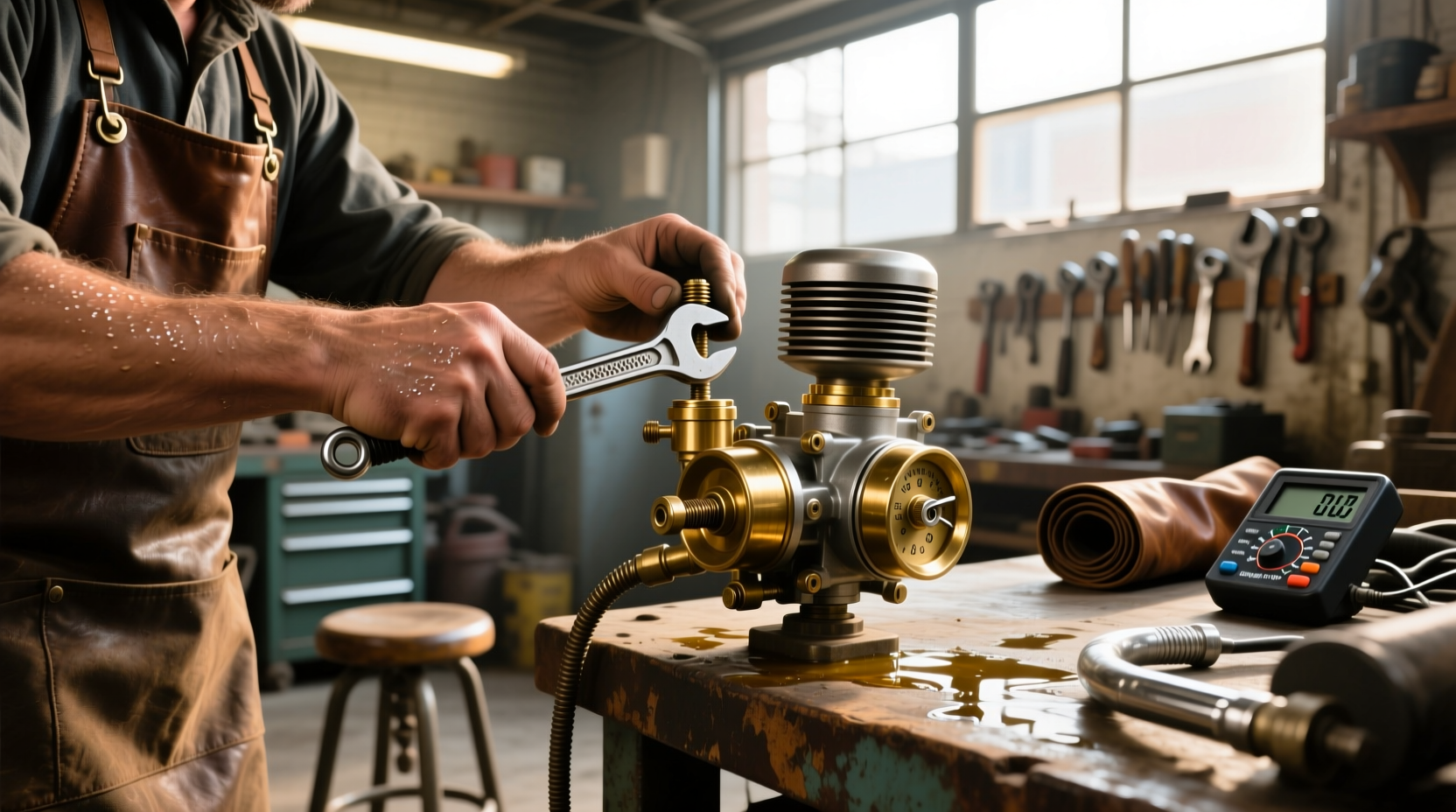
Properly adjusting a 2 stroke carburetor is essential for achieving smooth engine operation, maximizing power, and preventing damage from running too lean or too rich. 🔧 Whether you're maintaining a chainsaw, dirt bike, or small utility engine, understanding how to tune a 2 stroke carburetor can save time, fuel, and costly repairs. This guide walks through the mechanics of diaphragm-style carburetors, identifies symptoms of incorrect mixture settings, and provides a clear, step-by-step adjustment process applicable to most Walbro, Zama, and OEM-equivalent models.
Understanding How a 2 Stroke Carburetor Works
A 2 stroke carburetor functions differently than its 4 stroke counterpart due to the unique way intake and compression cycles operate in a two-cycle engine. ⚙️ Unlike 4 stroke engines that rely on atmospheric pressure and piston vacuum, many small 2 stroke engines use a pulse port system—where crankcase pressure pulses drive a fuel pump diaphragm inside the carburetor.
Fuel enters the carburetor via a feed line connected to the tank. The pulse signal from the engine’s crankcase flexes a diaphragm, creating suction that draws fuel into a metering chamber. From there, it's delivered through jets and passages based on throttle position. Most modern 2 stroke carburetors are diaphragm-type units with three primary adjustment screws:
- Low-speed jet (L-screw): Controls fuel mixture at idle and low RPM
- High-speed jet (H-screw): Regulates mixture at full throttle
- Idle speed screw: Sets throttle plate opening to maintain idle RPM
This design allows precise control over air-fuel ratios across the operating range, but improper tuning leads to poor starts, hesitation, overheating, or excessive smoke.
Signs Your 2 Stroke Engine Is Running Lean or Rich
Before making adjustments, it's critical to diagnose whether your engine is running too lean (not enough fuel) or too rich (too much fuel). Misdiagnosing this can lead to engine damage. ✅ Here’s how to tell:
Running Too Lean: Symptoms and Risks
An overly lean condition means insufficient fuel is being mixed with air, leading to higher combustion temperatures. ❗ Common signs include:
- Engine starts but stalls shortly after
- Popping or backfiring through the carburetor
- Difficulty accelerating or 'flat spot' under load
- Overheating quickly, especially around the cylinder head
- White or light gray spark plug color
Running lean even briefly can cause piston scuffing, seizure, or melted components—especially in high-performance applications like motocross or string trimmers under continuous load.
Running Too Rich: What to Look For
A rich mixture delivers excess fuel, which fails to burn completely. While less immediately destructive than lean conditions, prolonged rich running reduces efficiency and harms engine longevity. 🌫️ Indicators include:
- Excessive smoke from the exhaust (often black or blue-gray)
- Fouled spark plug (wet, black, sooty appearance)
- Strong smell of unburned fuel
- Bogging down during acceleration
- Carbon buildup in exhaust port or muffler
In some cases, an engine may appear to run well despite being rich—but fuel economy suffers, and carbon deposits can interfere with reed valves or exhaust flow over time.
Tools Needed for Carburetor Adjustment
You don't need specialized equipment for basic tuning, but having the right tools ensures accuracy and safety. 🧰 Recommended items:
- Screwdrivers that precisely fit adjustment screw heads (to prevent stripping)
- Tachometer (optional but helpful for setting ideal idle speed)
- Fresh fuel mix (correct oil-to-gas ratio, typically 50:1)
- Clean rags and carb cleaner spray
- Safety gloves and eye protection
Ensure the engine is warm before tuning—cold engines behave differently due to thermal expansion and fuel vaporization rates.
Step-by-Step Guide to Adjusting a 2 Stroke Carburetor
Follow these steps carefully to achieve proper carburetor tuning. This method applies to most diaphragm carburetors used in outdoor power equipment and off-road vehicles.
Step 1: Locate the Adjustment Screws
Identify the three key screws on the carburetor body:
- L (low-speed): Usually marked with “L” or located closer to the engine
- H (high-speed): Marked “H,” often near the air filter side
- Idle speed: Typically a spring-loaded screw pressing against the throttle arm
Note: Some older or simpler carbs may only have L and idle screws; H-jet is fixed.
Step 2: Set Initial Baseline Positions
Start with factory-recommended starting points. Most manufacturers suggest:
- Turn both L and H screws clockwise until lightly seated (do not force!)
- Then back them out counterclockwise:
- L-screw: 1 to 1.5 turns
- H-scre: 1.5 to 2 turns
These values vary by model—consult your equipment manual if available. If not, starting at 1.5 turns each is a safe baseline.
Step 3: Warm Up the Engine
Run the engine for 5–10 minutes under light load to reach normal operating temperature. A cold engine gives false readings during tuning.
Step 4: Adjust the Low-Speed (L) Jet
The L-jet affects idle quality and transition to mid-range throttle. 🔍 To adjust:
- Let the engine idle.
- Slowly turn the L-screw clockwise (in) to lean the mixture.
- Listen for the point where RPM increases slightly then begins to drop or sputter.
- Back the screw out counterclockwise until the engine runs smoothly again.
- Find the richest position where the engine still idles cleanly and snaps promptly when throttle is blipped.
Ideal idle should be stable without hunting or surging. Use a tachometer if possible—target idle speed is usually between 1,800 and 2,500 RPM depending on application.
Step 5: Adjust the High-Speed (H) Jet
This controls full-throttle performance and cooling. ⚡ Incorrect H-jet tuning is a common cause of engine failure.
- Run the engine at wide-open throttle for 5–10 seconds.
- Shut off the engine immediately using the kill switch (not choke).
- Remove and inspect the spark plug.
Evaluate plug color:
- Tan to brown: Ideal mixture
- White or blistered: Too lean – increase fuel by turning H-screw counterclockwise
- Black and sooty: Too rich – reduce fuel by turning H-screw clockwise
Make small adjustments (⅛ to ¼ turn), retest, and recheck plug color. Never run more than 10 seconds at full throttle when lean.
Step 6: Fine-Tune Idle Speed
After mixture screws are set, adjust idle speed so the engine runs steadily without engaging the clutch (on vehicles) or spinning the cutting tool (on trimmers). Turn the idle speed screw until the throttle plate opens just enough to maintain target RPM.
Test throttle response: quickly open and close the throttle. The engine should snap up and return to idle without hesitation or stalling.
Common Mistakes When Adjusting 2 Stroke Carburetors
Even experienced users make errors during tuning. Avoid these pitfalls:
- Adjusting a cold engine: Thermal dynamics change fuel delivery—always warm up first.
- Over-tightening adjustment screws: Can damage needle seats, causing leaks or erratic fuel flow.
- Ignoring air filter condition: A clogged filter restricts airflow, mimicking a rich condition.
- Assuming all carburetors are identical: Design differences exist between OEM and aftermarket units in jet sizing and internal passage geometry.
- Skipping plug checks: Visual feedback from the spark plug is one of the most reliable diagnostics.
OEM vs Aftermarket 2 Stroke Carburetors: What You Should Know
Many replacement carburetors sold today are clones of original designs (e.g., Walbro or Zama). While functionally similar, there are notable differences:
| Factor | OEM Carburetor | Aftermarket/Clone |
|---|---|---|
| Precision Machining | Consistent tolerances, tight QC | Can vary between batches |
| Jetting Accuracy | Matched to engine specs | May require re-jetting |
| Durability | Higher-grade materials | Mixed quality; some prone to cracking |
| Adjustment Range | Optimized for intended use | May need tuning beyond standard settings |
If using a clone carburetor, expect to spend extra time fine-tuning and possibly replacing stock jets to match your engine’s requirements.
When to Rebuild or Replace the Carburetor
Adjustments won’t fix mechanical issues. Consider servicing or replacing the carburetor if you experience:
- Leaking fuel from the bowl or primer
- Stuck or corroded float (in float-type carbs)
- Inability to hold idle despite correct settings
- Visible cracks in plastic housing
- Contamination from old fuel residue (varnish)
A carburetor rebuild kit typically includes new gaskets, diaphragms, and check valves. Rebuilding restores performance but requires careful disassembly and cleaning.
Environmental and Operational Factors That Affect Tuning
Carburetor settings aren’t permanent. Changes in environment impact air density and fuel atomization:
- Altitude: Higher elevations = thinner air → leaner mixture. May require richer jetting.
- Temperature: Cold air is denser → richer effective mixture; hot days may require leaning out.
- Humidity: Moist air contains less oxygen → slightly richer conditions.
- Fuel age: Old gasoline loses volatility and can gum up jets.
Re-tune after moving more than 1,000 feet in elevation or changing climate zones significantly.
FAQs About 2 Stroke Carburetor Adjustment
- How do I know if my 2 stroke carburetor needs adjustment?
- Signs include hard starting, poor idle, lack of power at full throttle, excessive smoke, or rapid overheating. If the engine ran well previously but now performs poorly, tuning is likely needed.
- Can I use a 4 stroke carburetor on a 2 stroke engine?
- No. 4 stroke carburetors are designed for constant vacuum from the intake stroke, while 2 stroke engines often rely on pulse pressure to pump fuel. Using the wrong type results in no fuel delivery or flooding.
- Why does my 2 stroke engine pop when decelerating?
- Backfiring on decel is often caused by a lean low-speed circuit. Too little fuel at idle transition causes incomplete combustion; unburned fuel ignites in the exhaust. Adjust the L-screw richer slightly.
- How often should I adjust my 2 stroke carburetor?
- Only when symptoms arise or after maintenance (like air filter cleaning). Well-maintained engines may go years without needing adjustment unless altitude or fuel formulation changes.
- What happens if I turn the carburetor screws too far in?
- Over-tightening can damage the needle seat, leading to fuel leakage or inability to regulate flow. Always start from a known baseline and use gentle, incremental turns.




 浙公网安备
33010002000092号
 浙B2-20120091-4