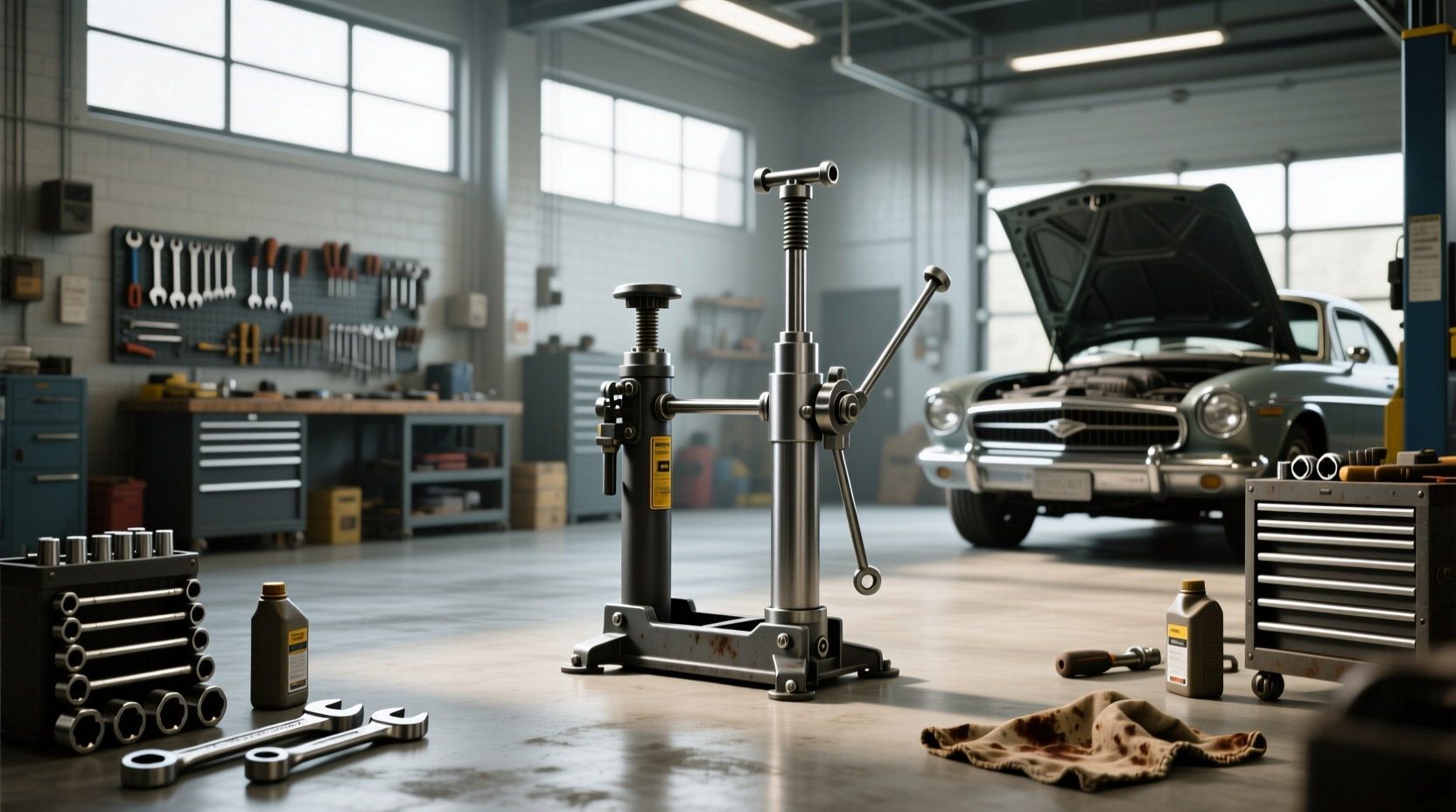
When lifting a vehicle for maintenance or repair, using the right support equipment is critical. A 2 ton jack stand is designed to safely hold up to 4,000 pounds—making it suitable for most passenger cars, small SUVs, and light trucks. Unlike floor jacks that lift the vehicle, jack stands provide stable, secondary support once the car is raised, preventing accidental drops that could cause serious injury 1. Choosing the correct capacity, understanding load limits, and pairing jack stands with proper lifting tools are essential steps in any DIY automotive project.
Understanding Jack Stands vs. Floor Jacks
One of the most common misunderstandings among first-time users is confusing a jack stand with a floor jack. While both are used during vehicle lifting, their roles are fundamentally different:
- Floor Jacks: These hydraulic tools (like a 2 ton hydraulic trolley jack) are used to lift the vehicle off the ground. They feature wheels and a pump mechanism to raise the car quickly.
- Jack Stands: These are passive supports placed under the vehicle’s frame or axle after lifting. They do not raise the car but instead hold it securely in place while work is performed underneath.
Using only a floor jack without jack stands is extremely dangerous. If the hydraulic seal fails or pressure is lost, the vehicle can collapse suddenly. Always use jack stands as a backup support whenever you're working beneath a lifted car ⚠️.
Why Choose a 2 Ton Jack Stand?
A 2 ton (4,000 lb) jack stand strikes a balance between strength, portability, and affordability. It's ideal for:
- Compact and midsize sedans (e.g., Honda Civic, Toyota Camry)
- Coupes and hatchbacks
- Smaller SUVs like the Ford Escape or Subaru Outback
- Light-duty pickup trucks when lifting individual corners
However, this capacity has limitations. Larger vehicles such as full-size trucks (e.g., Ford F-150), heavy-duty SUVs (e.g., Chevrolet Suburban), or performance vehicles with reinforced frames may exceed safe loading limits when weight distribution is uneven. In those cases, upgrading to 3-ton or 6-ton stands is recommended ✅.
How Weight Distribution Affects Load Capacity
It’s important to understand that a vehicle’s total weight doesn’t need to be supported by a single jack stand—but the point where the stand is placed must handle its share of the load. For example:
- A 3,500-pound sedan might have about 1,750–2,000 pounds on each front corner when lifted at the subframe.
- Due to engine placement, front corners often carry more weight than rear ones.
Since two jack stands typically support one end of the vehicle, each should be rated for at least half the expected load per side. That means even if your car weighs less than 4,000 lbs, using 2-ton stands on the front axle may still operate near maximum capacity. To stay within safety margins, many mechanics recommend using stands rated for at least double the expected load per position ⚖️.
Safety Standards and Certification
Not all jack stands are created equal. Look for models certified by the American National Standards Institute (ANSI) or tested under ANSI/ASME PALD-2009, which sets performance and design requirements for automotive lift supports 2. Key features of compliant stands include:
- Positive locking mechanisms (not reliant solely on friction)
- Minimum of three load positions per screw thread
- Ability to withstand 200% of rated capacity during testing
- Clear labeling of weight rating and manufacturer information
Always inspect stands before use—check for bent legs, worn teeth, cracks, or damaged screw shafts. Never tap or force the adjustment pin into place; this indicates misalignment or wear ❗.
Types of Jack Stands and Their Applications
There are several designs available, each suited to specific scenarios:
Adjustable Ratchet-Type Jack Stands
These use a spring-loaded pawl system to lock into pre-set height levels. They’re fast to deploy but offer limited height increments. Best for home garages where speed matters more than fine adjustments.
Screw-Pin Jack Stands (Traditional Style)
The most common type, featuring a threaded rod turned by a handle to raise/lower the saddle. Offers precise height control and high reliability. Widely used in professional shops and preferred for heavy loads.
Foldable / Compact Jack Stands
Designed for roadside emergencies or storage-limited spaces. Often made from lighter materials. While convenient, they may lack the rigidity of full-size models. Only suitable for temporary use and lighter vehicles 🚗.
Swivel-Saddle Models
Feature a rotating top pad to better align with curved frame rails. Useful when working on unlevel surfaces or complex chassis geometries.
| Type | Pros | Cons | Best For |
|---|---|---|---|
| Screw-Pin | High stability, durable, precise | Slower setup | Home & pro workshops |
| Ratchet | Quick deployment | Limited positions, less secure | Fast tire changes |
| Foldable | Portable, compact | Lower strength, less stable | Roadside kits |
| Swivel-Saddle | Better contact alignment | Higher cost | Irregular frame shapes |
Proper Usage Techniques and Common Mistakes
Even high-quality jack stands can fail if used incorrectly. Follow these best practices:
- Use on Solid, Level Ground: Never place stands on dirt, gravel, or sloped surfaces. Concrete garage floors are ideal.
- Lift with a Floor Jack First: Raise the vehicle using a hydraulic trolley jack, then position the stand underneath the correct lift point.
- Identify Manufacturer Lift Points: Consult your owner’s manual. Improper placement (e.g., on plastic panels or suspension parts) can damage the vehicle or cause slippage.
- Double Up When Needed: For heavier vehicles or uncertain conditions, place two stands per side for redundancy.
- Test Stability Before Working: Gently shake the vehicle after setting stands. If there’s movement or noise, reposition them.
- Never Exceed Rated Capacity: This includes dynamic loads (e.g., pushing on suspension while working).
Common errors include stacking stands, modifying pins, or using worn equipment—all of which void safety guarantees ❌.
Pairing Jack Stands with Other Tools
A complete lifting setup includes more than just stands. Consider integrating these components:
- Hydraulic Floor Jack: Needed to initially lift the vehicle. A low-profile model helps with sports cars or lowered suspensions.
- Lifting Pads or Adapters: Protect pinch welds on modern unibody vehicles that can crack under direct pressure.
- Wheel Chocks: Prevent rolling when the car is elevated.
- Work Lights: Improve visibility under the vehicle.
- Gloves and Eye Protection: Essential personal safety gear.
Some kits combine a 2 ton floor jack and matching jack stands, offering coordinated performance and easier storage ✨.
Storage and Maintenance Tips
To extend lifespan and ensure reliability:
- Wipe down metal surfaces after use to prevent rust.
- Store in a dry location, preferably vertically to avoid bending legs.
- Periodically lubricate the screw threads with light machine oil.
- Inspect locking pins and springs for wear every few uses.
- Replace immediately if any structural defect is found.
Keep stands away from moisture and road salts, especially if stored in open sheds or trailers 🌧️.
Myths and Misconceptions About 2 Ton Jack Stands
Several myths persist that compromise safety:
- Myth: 'If the car fits, it’s safe.' Reality: Weight distribution matters more than size. A small SUV can overload a 2-ton stand depending on lift point.
- Myth: 'All jack stands meet the same standards.' Reality: Many imported models lack ANSI certification. Always verify compliance.
- Myth: 'You can reuse a dropped stand.' Reality: Impact can weaken internal structures. Discard any stand that falls from height.
- Myth: 'Jack stands last forever.' Reality: Metal fatigue occurs over time. Replace older units (>10 years) even if they appear functional.
Alternatives and When to Upgrade
If you frequently service larger vehicles or perform extensive undercarriage work, consider upgrading:
- 3-Ton Stands: Offer greater margin for error and compatibility with heavier SUVs and trucks.
- 6-Ton Stands: Used in commercial settings for full-frame vehicles.
- Parking Ramps: Allow access to brakes and suspension without full lifting—ideal for oil changes or inspections.
- In-Ground Lifts: Permanent installations for frequent repairs, though costly and space-intensive.
For occasional users, a reliable pair of 2-ton ANSI-rated stands remains the most practical choice 🔧.
Regional Differences and Availability
In North America, jack stands are widely available at auto parts stores, hardware retailers, and industrial suppliers. European markets often emphasize CE marking, though it doesn't guarantee equivalent safety testing to ANSI. Users importing tools should confirm local regulatory acceptance, especially for professional use. In some countries, workplace safety laws require certified equipment for commercial repairs—using non-compliant stands could result in liability issues 🌍.
Final Recommendations
Selecting the right 2 ton jack stand involves balancing capacity, build quality, and intended use. Prioritize ANSI-certified models with robust construction and clear load ratings. Avoid ultra-cheap options lacking independent testing. Always pair them with a compatible floor jack and follow proper lifting procedures. Remember: no job under a vehicle is worth risking injury. Your safety depends on using the right tools correctly—and that starts with choosing dependable jack stands.
Frequently Asked Questions
- Can I use 2 ton jack stands on an SUV?
- Yes, for smaller SUVs like the Toyota RAV4 or Honda CR-V, provided the weight at the lift point stays below 2,000 lbs per stand. Larger models may require higher-capacity supports.
- How often should I replace my jack stands?
- Inspect them regularly for damage. Replace if cracked, bent, or worn. Even well-maintained stands should be retired after 10 years due to potential metal fatigue.
- Do I need jack stands if I’m only changing tires?
- Yes. If you're removing a wheel, the vehicle must be fully supported by jack stands—not just resting on a floor jack—for safety.
- What happens if I overload a jack stand?
- Overloading can cause sudden collapse, shearing of the support teeth, or deformation of the structure. Always stay within the rated limit.
- Are folding jack stands safe?
- Folding models can be safe for light-duty, temporary use if they’re ANSI-rated and used within capacity. However, traditional screw-pin types are generally more stable for regular maintenance.




 浙公网安备
33010002000092号
 浙B2-20120091-4