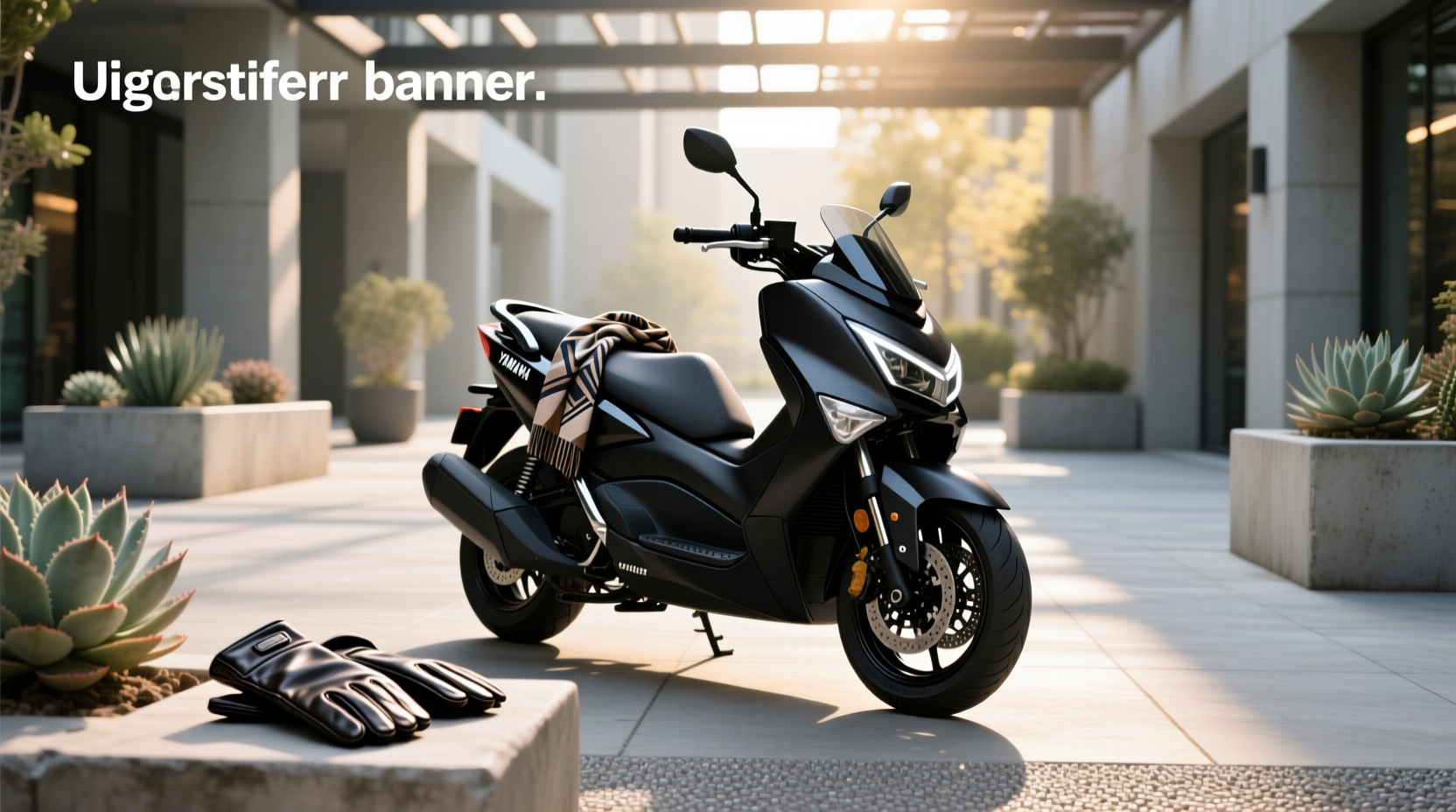
For riders searching for a high-performance maxi-scooter with sporty design and advanced tech, the 2025 Yamaha Aerox 155 has emerged as a top contender in Southeast Asia and India ✅. This new model brings meaningful upgrades over its predecessor, including enhanced suspension, refined ergonomics, and updated styling across multiple variants like the Aerox Version S and SP trim. As one of Yamaha’s most powerful 155cc scooters, it competes directly with models like the Honda PCX160 and Yamaha NMAX 155, offering liquid-cooled engine performance, VVA technology, Bluetooth connectivity ⚙️, and ABS braking safety. But is the 2025 update worth the premium price? And how do regional versions differ in features and cost? This guide breaks down everything you need to know before considering a purchase.
When Was the 2025 Yamaha Aerox Released?
The 2025 Yamaha Aerox 155 was officially launched in the Philippines in May 2025, followed by rollouts in Indonesia and India shortly after 📅. Unlike major generational redesigns, this update focuses on refinement rather than revolution. Key changes include visual tweaks, improved rider comfort, and minor mechanical enhancements—particularly in suspension tuning and electronics integration. The launch coincided with Yamaha’s broader push toward connected mobility and premium urban transport solutions in emerging markets.
In the Philippines, the Aerox SP variant debuted at P163,900 (approximately $2,950 USD), positioning it as a high-end option in the local scooter segment 🔧. In India, the updated model starts at ₹1,38,796 (~$1,670 USD) for the base version, with prices rising to ₹1,41,851 for fully loaded trims (source: BikeWale). These figures reflect slight increases from previous years, attributed to added features and inflation adjustments.
Key Features of the New Yamaha Aerox 155
The 2025 Aerox retains the core engineering strengths of earlier models while refining user experience through targeted improvements. Below are the standout features that define this year’s release:
- Liquid-Cooled 155cc Engine with VVA: Delivers smooth power delivery across RPM ranges, optimizing both low-end torque and high-speed responsiveness ⚡.
- Bluetooth Connectivity (Y-Connect): Allows smartphone pairing via Yamaha’s app for trip data, fuel consumption tracking, and phone alerts 🌐.
- LED Lighting Throughout: Includes LED headlight, tail light, and position lamps for better visibility and modern aesthetics ✨. \li> Keyless Ignition System: Enables push-button start without inserting a physical key, enhancing convenience and security 🔑.
- ABS as Standard: Anti-lock braking system improves stopping control on wet or slippery surfaces, especially important in monsoon-prone regions 🛑.
- Upsized Rear Brake: A 230mm rear disc (up from 220mm in some older trims) offers stronger braking consistency under repeated use 🏎️.
- New Suspension Setup: Revised rear shock absorbers improve ride quality and reduce fatigue during long commutes or uneven road conditions 💼.
These features collectively position the Aerox 155 as more than just a commuter—it's designed for enthusiasts who value agility, digital integration, and sport-inspired styling.
Trim Levels and Regional Variants
One critical aspect users should understand is that the Yamaha Aerox 155 is not sold uniformly worldwide. Trim names, feature sets, and even engine tuning vary significantly between countries due to market demands, emission standards, and regulatory requirements.
| Region | Variants Available | Starting Price | Notable Differences |
|---|---|---|---|
| Philippines | Aerox Standard, SP | ₱125,900 – ₱163,900 | SP trim includes premium paint, upgraded suspension, and exclusive badging |
| India | Aerox 155, Version S | ₹138,796 – ₹141,851 | First-time introduction of keyless ignition and improved seat comfort |
| Indonesia | NMAX-based Aerox platform | IDR ~37 million | Shares chassis and engine with NMAX; fewer cosmetic updates |
| Europe | Not available in 155cc form | N/A | Only 50cc and 125cc versions offered due to licensing regulations |
For example, European buyers cannot access the 155cc version due to A2 license restrictions and emissions norms. Instead, they receive smaller-displacement models such as the 125cc variant, which lacks VVA and produces less peak power. Meanwhile, Southeast Asian markets benefit from full-spec versions with all available tech and performance upgrades.
Performance and Real-World Riding Experience
At the heart of the Aerox 155 is Yamaha’s proven 155cc, four-valve, SOHC, liquid-cooled single-cylinder engine equipped with Variable Valve Actuation (VVA). This system adjusts valve timing based on engine speed, broadening the usable powerband and reducing the flat spots common in non-VVA engines.
Official figures list maximum output at around 15 horsepower and 13.9 Nm of torque, with a top speed exceeding 110 km/h (68 mph) depending on load and terrain ⚡. While not built for highway cruising, the Aerox handles city traffic and suburban routes with confidence. Its lightweight frame and 14-inch front wheel contribute to sharp handling, making it ideal for weaving through congestion.
Riders have noted improvements in throttle response and mid-range acceleration compared to the 2024 model, likely due to ECU remapping and exhaust tuning. However, real-world fuel efficiency remains consistent at approximately 35–40 km/L (about 82–94 mpg), slightly lower than the Honda PCX160 but competitive within its class 1.
Design and Styling Updates for 2025
The 2025 model introduces subtle but noticeable design evolutions. The most prominent change is the adoption of a sharper ‘X’ motif in bodywork and lighting signatures, reinforcing Yamaha’s sport-scooter identity. New color options such as Vivid Black and Matte Blue Gray have been introduced in select markets, often reserved for higher trims like the Version S or SP.
Additional aesthetic touches include:\p>
- Redesigned side panels with gloss-black inserts
- Updated instrument cluster graphics with enhanced readability
- Bolder decals and branding placement
- Alloy wheel finish upgrades (on SP models)
While these changes may seem minor, they help maintain freshness in a competitive segment where visual appeal influences purchasing decisions. Notably, the overall dimensions remain unchanged—wheelbase at 1350 mm, seat height at 790 mm—ensuring compatibility with existing accessories and aftermarket parts.
Common User Questions and Concerns
Despite its strong feature set, potential buyers often raise concerns about value, reliability, and ownership costs. Let’s address the most frequently asked questions:
Why Is the Yamaha Aerox So Expensive?
Compared to budget scooters like the TVS NTorq 125 or Honda Dio, the Aerox commands a significant price premium. This stems from several factors:
- Use of liquid cooling instead of air/oil cooling
- Inclusion of ABS, keyless ignition, and Bluetooth connectivity as standard
- Higher-grade materials and build quality
- Imported components in certain markets (e.g., India)
How Does It Compare to the Yamaha NMAX 155?
This is one of the most common comparisons. Both share the same engine platform and many electronic features. However, the Aerox 155 emphasizes sportiness with stiffer suspension, sharper styling, and lighter weight, whereas the NMAX prioritizes comfort and storage capacity. If you prioritize agility and style, the Aerox wins. For longer rides and practicality, the NMAX may be preferable.
Is Maintenance Costly?
Service intervals are set at every 6,000 km or 6 months, whichever comes first. Typical service costs range from ₹1,800–₹3,500 in India depending on component replacement needs. Major services (at 18,000 km) may exceed ₹6,000 if valves are adjusted or coolant replaced. Parts availability is generally good in urban centers, though rural areas may face delays.
Potential Drawbacks and Who Should Avoid It
Despite its strengths, the 2025 Yamaha Aerox 155 isn’t suited for everyone. Consider the following limitations:
- High Seat Height: At 790 mm, it can be challenging for riders under 5'4" (163 cm) to flat-foot comfortably 🚫.
- Limited Underseat Storage: Accommodates only a full-face helmet or two¾ helmets—not ideal for dual riders needing full protection.
- Premium Pricing: Significantly more expensive than entry-level scooters, potentially stretching budgets in price-sensitive markets.
- No Fast Charging USB Port: Some competitors now offer quick-charging ports; the Aerox still uses standard USB-A.
If your primary need is economical daily commuting without advanced tech, alternatives like the Suzuki Access 125 or Honda Grazia might offer better value. Similarly, if you require large cargo space or plan frequent two-up touring, a larger maxi-scooter or motorcycle may serve you better.
How to Verify Local Availability and Specifications
Because specifications and pricing vary widely by country, it’s essential to verify details through official channels. Here’s how:
- Visit Your Country’s Official Yamaha Website: Search for “Yamaha Motor [Your Country]” and navigate to the scooter lineup section 📍.
- Contact Authorized Dealers: Request a brochure or test ride to confirm equipment levels and pricing.
- Check Government Certification Databases: In some countries (e.g., India’s AIS-138 portal), you can look up certified vehicle specs including emission compliance and fuel efficiency.
- Join Owner Forums or Facebook Groups: Communities like “Yamaha Aerox Owners India” provide real-world insights and modification tips.
Always cross-reference information, especially when relying on third-party review sites or social media content that may reflect imported or modified units not representative of local stock models.
Future Outlook and Expected Changes
Looking ahead, Yamaha is expected to focus on electrification and further digital integration. Rumors suggest a hybrid or fully electric version of the Aerox could debut by 2027, aligning with global trends toward zero-emission urban mobility. Additionally, future models may adopt TFT displays, radar-assisted braking, or adaptive lighting systems seen in premium motorcycles.
However, for now, the 2025 Aerox 155 remains an internal combustion-powered machine focused on delivering engaging riding dynamics and reliable performance in dense urban environments. It represents the current peak of Yamaha’s sport-scooter engineering before a potential shift toward EV platforms.
Frequently Asked Questions (FAQ)
- What is the top speed of the 2025 Yamaha Aerox 155?
- The estimated top speed is around 110–115 km/h (68–71 mph), depending on rider weight, wind resistance, and road conditions.
- Does the Yamaha Aerox 155 have CBS or ABS?
- All 2025 Aerox 155 models come with standard dual-channel ABS for improved braking safety.
- How much does the Aerox 155 cost in the Philippines?
- The base model starts at ₱125,900, while the top-spec SP variant is priced at ₱163,900 as of mid-2025.
- Is the Aerox 155 suitable for long-distance riding?
- It can handle moderate distances (up to 100 km), but the firm seat and upright posture may cause discomfort on extended trips beyond 150 km.
- Can I connect my phone to the Yamaha Aerox 155?
- Yes, via Yamaha’s Y-Connect Bluetooth system, which allows trip monitoring, phone notifications, and maintenance reminders.




 浙公网安备
33010002000092号
 浙B2-20120091-4