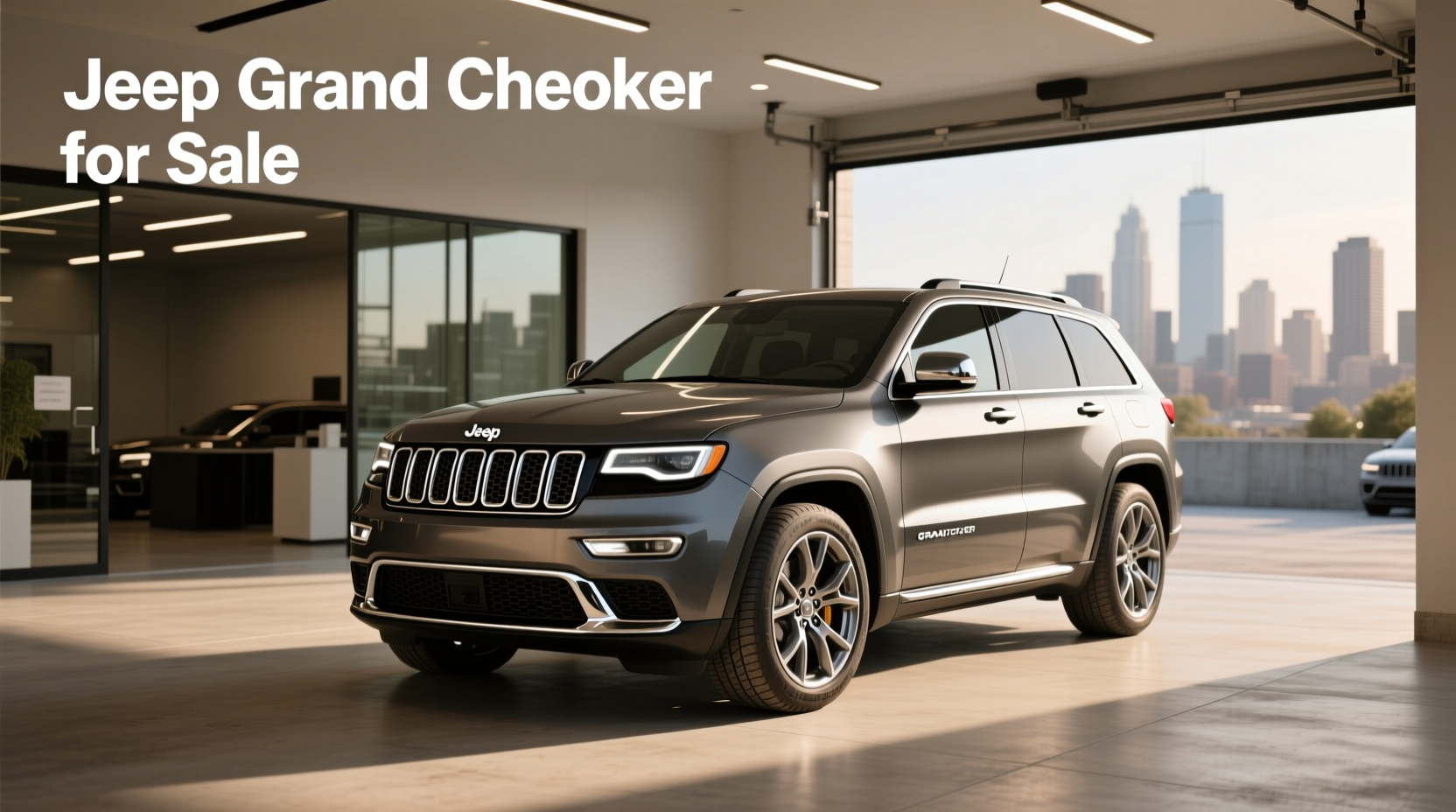
If you're searching for a Jeep Grand Cherokee for sale, especially in the 2025–2026 model years, it's essential to understand recent changes that directly impact your purchase decision. The most significant update is the introduction of the turbocharged 2.0L Hurricane four-cylinder engine in the 2026 model, delivering 324 horsepower—now standard on many trims. However, production of the plug-in hybrid (PHEV) 4xe versions has been suspended due to a manufacturing recall, making gas-only models the only available option as of late 2025 1. Whether you’re considering a new or used Grand Cherokee, this guide breaks down trim levels, pricing, reliability concerns, and what to verify before buying.
Understanding the 2026 Jeep Grand Cherokee Updates
The 2026 Jeep Grand Cherokee brings notable mechanical and design updates that set it apart from previous years. Most importantly, the new 2.0L Hurricane turbo-four engine replaces the long-standing 3.6L Pentastar V6 as the base powertrain across most trims 2. This change marks a shift toward efficiency without sacrificing performance, offering 324 hp and 332 lb-ft of torque—surpassing the output of the outgoing V6.
⚙️ Key 2026 Updates:
- New 2.0L Hurricane turbo I4 engine (324 hp)
- Gen IV 8-speed automatic transmission
- No chrome exterior trim (updated styling)
- Discontinuation of 4xe plug-in hybrid variants
- V6 still available on select trims; no V8 in standard Grand Cherokee
While the Hurricane engine improves fuel economy and responsiveness, some buyers may prefer the smoother power delivery of the V6. It’s important to note that the high-performance SRT and Trackhawk models are not part of the 2026 lineup at launch, limiting options for performance enthusiasts.
Trim Levels and Pricing: What’s Available?
🛒 When browsing a Jeep Grand Cherokee for sale, understanding the trim hierarchy helps avoid overpaying or missing key features. The 2026 model comes in several trims, each targeting different buyer priorities—from budget-friendly daily driving to luxury-focused comfort.
| Trim Level | Starting MSRP (2026) | Key Features | Engine Options |
|---|---|---|---|
| Laredo | $37,995 | 8.4" Uconnect, cloth seats, rearview camera | 2.0L Turbo I4 |
| Limited | $43,395 | Leatherette, dual-zone climate, LED lighting | 2.0L Turbo I4 or 3.6L V6 |
| Overland | $52,995 | Heated leather, panoramic sunroof, Quadra-Lift | 2.0L Turbo I4 or 3.6L V6 |
| Summit | $59,995 | Nappa leather, premium audio, advanced safety suite | 2.0L Turbo I4 or 3.6L V6 |
| Summit Reserve | $65,035 | Massaging front seats, head-up display, microfiber suede | 2.0L Turbo I4 or 3.6L V6 |
Pricing reflects a modest increase over 2025 models, but incentives such as owner loyalty bonuses ($1,500) and fleet discounts may help offset costs 3. Keep in mind that optional packages—such as the Trailer Tow Group ($1,495) or Advanced Pro Package ($2,995)—can significantly raise the final price.
New vs. Used: Which Makes More Sense?
📍 Deciding between a new or used Jeep Grand Cherokee for sale depends on your budget, desired tech, and tolerance for potential maintenance issues. Here’s how they compare:
New Models: Pros and Cons
✅ Pros:
- Latest technology and safety features (e.g., Uconnect 5, adaptive cruise control)
- Full factory warranty (3-year/36,000-mile basic, 5-year/60,000-mile powertrain)
- Access to current build configurations via Jeep’s online tool
- No prior wear or accident history
❗ Cons:
- Higher upfront cost and faster depreciation in first 2–3 years
- Limited availability of 4xe or V8 models due to discontinuation
- Fewer immediate discounts on 2026 models (early in model cycle)
Used Models: Pros and Cons
✅ Pros:
- Better value—2023–2024 models offer similar features at lower prices
- Availability of discontinued options like 4xe hybrids and V8 engines
- Potential savings through certified pre-owned (CPO) programs
❗ Cons:
- Risk of hidden mechanical issues (e.g., transmission problems, electrical glitches)
- No full factory warranty unless CPO-certified
- Some older infotainment systems lack wireless Apple CarPlay
For example, a 2023 Grand Cherokee L with the 5.7L V8 and 4xe hybrid system can still be found in the $50,000–$60,000 range, offering capabilities no longer available in 2026. However, verifying service history and obtaining a CARFAX report is critical when buying used 4.
Common Reliability Issues to Watch For
🔧 While the Grand Cherokee consistently ranks well in midsize SUV comparisons, certain model years have known issues. Understanding these helps avoid costly repairs down the road.
Problematic Model Years
Data from consumer reports and owner forums indicate that:
- 2011–2014: High incidence of transmission failures and electrical gremlins
- 2015–2017: Air suspension leaks, Uconnect system crashes
- 2021–2022: Random check engine lights, knock sensor faults
The 2025 and 2026 models benefit from updated software and hardware, reducing the frequency of infotainment-related complaints. However, early adopters of the Hurricane engine should monitor for potential turbocharger or oil consumption issues—a common concern with new forced-induction engines during break-in periods.
Maintenance Tips by Mileage
📌 Recommended service intervals:
- 80,000 miles: Transmission fluid flush, coolant replacement, transfer case/service differential lube
- 100,000 miles: Timing chain inspection (on V6 models), brake system overhaul
- Every 5 years: Replace battery and inspect air suspension components (if equipped)
Owners report average lifespans of 200,000+ miles with proper care, though real-world durability varies based on driving conditions and maintenance consistency.
Shopping Tips: How to Find the Best Deal
🛍️ Whether you're looking at dealerships or private sellers, follow these steps to make a smart purchase:
- Check Inventory Early: Use Jeep’s official inventory search to locate nearby 2026 models. Some dealers may have demo units or unclaimed orders available at slight discounts.
- Compare Incentives: Look for manufacturer rebates, lease deals, or trade-in bonuses. As of late 2025, Jeep offers up to $4,500 on select Grand Cherokee L models.
- Verify Build Date: A newer VIN doesn’t always mean a 2026 model year. Confirm the model year on the window sticker (Monroney label).
- Avoid Flood-Damaged Units: Run a VIN check using services like CARFAX or AutoCheck to rule out salvage titles or flood exposure.
- Test Drive Thoroughly: Pay attention to transmission shifts, noise from suspension, and responsiveness of driver-assist systems.
Online tools like Kelley Blue Book and Edmunds provide fair market value estimates based on location, trim, and mileage—use them to negotiate confidently.
Regional Differences and Availability
🌐 Supply and demand vary by region, affecting both availability and pricing. For instance:
- In colder states (e.g., Michigan, Minnesota), 4x4-equipped models are more common and often priced higher.
- Sun Belt regions (e.g., Arizona, Florida) see more Limited and Summit trims with sunroofs and cooling features.
- Rural areas may have fewer high-trim models, while urban dealerships stock more Overland and Summit Reserve units.
Also, export compliance means Canadian-spec Grand Cherokees sometimes enter the U.S. market with slightly different calibration or feature sets—always confirm specifications match U.S. standards.
Myths and Misconceptions About the Grand Cherokee
❌ Despite its popularity, several myths persist about the Grand Cherokee:
- Myth: "All Grand Cherokees come with third-row seating."
Fact: Only the stretched Grand Cherokee L offers a third row. The standard-wheelbase model seats five. - Myth: "The Trailhawk is being discontinued."
Fact: The Trailhawk remains available in 2026 but now uses the Hurricane engine instead of the V6. Off-road capability remains strong with Quadra-Drive II and electronic sway bar disconnect. - Myth: "Jeep stopped making all hybrids."
Fact: Only the 4xe PHEV version is paused. Mild hybrid (eTorque) systems remain on V6 models for improved low-end torque.
Final Checklist Before Buying
📋 Use this checklist when evaluating any Jeep Grand Cherokee for sale:
- Confirm model year and engine type (Hurricane I4 vs. V6 vs. discontinued 4xe)
- Inspect for rust, especially undercarriage and wheel wells (critical in snow-belt states)
- Review service records for timing of major fluid changes
- Test all electronic functions: seats, climate, infotainment, cameras
- Ensure active warranty coverage if purchasing CPO
- Get a pre-purchase inspection from an independent mechanic
Buying a Grand Cherokee should balance capability, comfort, and long-term ownership cost. With the 2026 refresh bringing meaningful updates, it’s a good time to buy—but only after careful research.
Frequently Asked Questions
🔍 Below are common questions from shoppers researching a Jeep Grand Cherokee for sale.
Can I still buy a Jeep Grand Cherokee 4xe?
No, as of October 2025, Jeep has removed the 4xe plug-in hybrid models from its website and halted production due to a manufacturing defect linked to fire risk. These models are not available for order, and dealers cannot deliver new 4xe units until further notice.
Is the 2026 Hurricane engine reliable?
The 2.0L Hurricane turbo engine is newly introduced and shows strong initial performance, but long-term reliability data isn’t yet available. Early feedback highlights good fuel economy and responsive power delivery. Monitor owner forums for emerging issues over the next 12–18 months.
What’s the difference between Grand Cherokee and Grand Cherokee L?
The Grand Cherokee L is a longer version with standard three-row seating (6 or 7 passengers). The standard Grand Cherokee has two rows and seats five. The L model is slightly less agile off-road due to increased length but offers greater family utility.
How much should I pay for a 2026 Grand Cherokee?
Start with the MSRP: $37,995 for Laredo. After incentives, expect to pay 5%–10% above invoice depending on demand. Avoid paying full sticker price. Use KBB or Edmunds True Market Value as negotiation benchmarks.
Does the Grand Cherokee hold its value well?
Yes, the Grand Cherokee retains value better than many competitors. According to Kelley Blue Book, it holds about 58% of its value after five years, which is above average for midsize SUVs. Higher trims and 4x4 models tend to depreciate slower.




 浙公网安备
33010002000092号
 浙B2-20120091-4