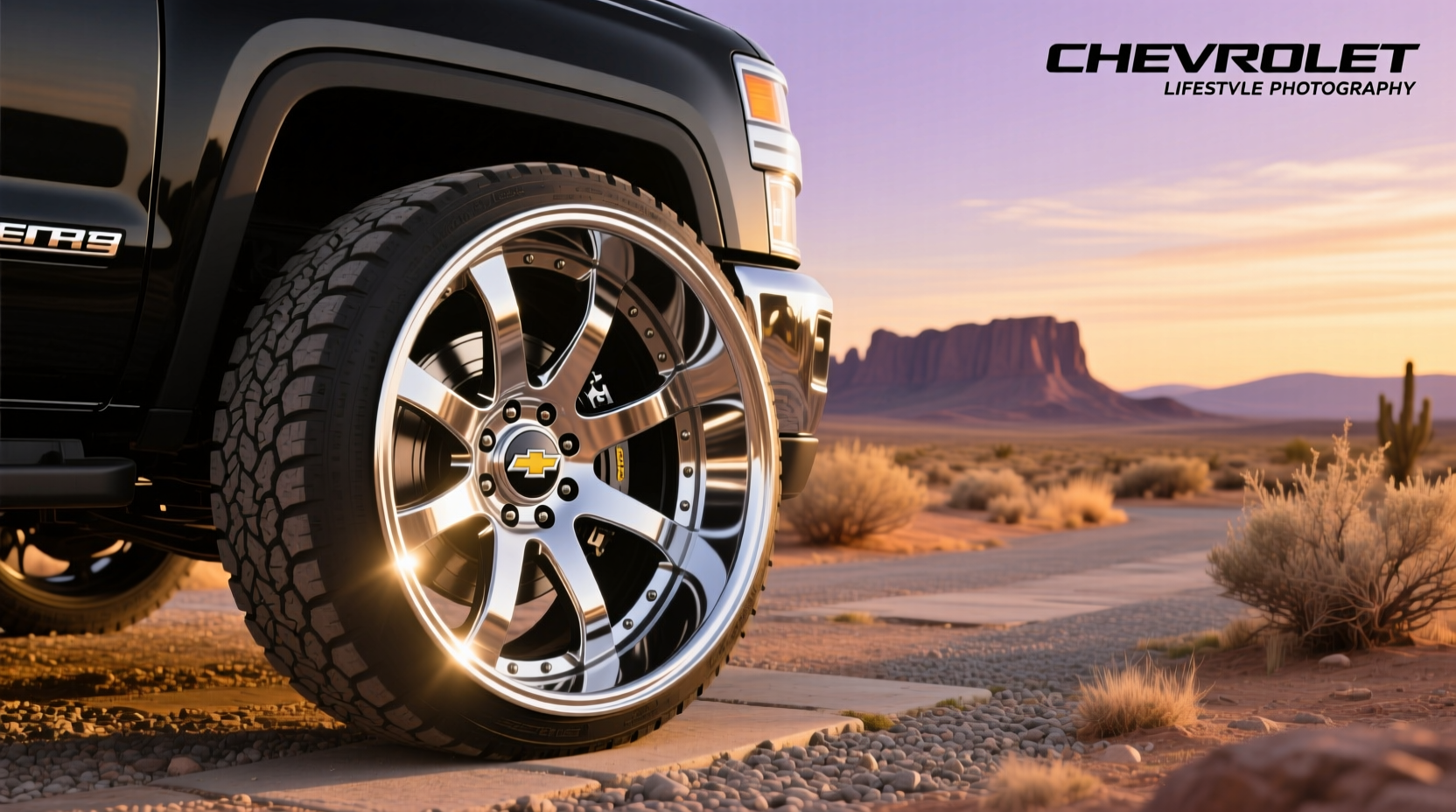
If you're driving a Chevrolet Silverado, Tahoe, Suburban, or GMC Sierra and searching for 28 inch rims 6 lug Chevy compatibility, the short answer is: yes — but only with careful consideration of bolt pattern, offset, hub bore, and suspension clearance. The most common 6-lug bolt pattern on full-size GM trucks from 1998 to present is 6x139.7mm (6x5.5 inches), which many aftermarket 28-inch wheels are designed to accommodate ✅. However, simply matching the bolt count isn’t enough. Installing such large rims requires evaluating tire height, wheel width, backspacing, lift kits, and potential rubbing issues, especially during turns or off-road use 🚚. This guide breaks down everything you need to know before upgrading to 28-inch wheels on your Chevy, helping you avoid costly mistakes and ensure safe, legal, and visually balanced results.
Understanding Bolt Patterns: Does 6-Lug Fit Your Chevy?
The term “6 lug” refers to the number of lug nuts or bolts used to secure the wheel to the hub. But not all 6-lug patterns are the same. For Chevrolet trucks and SUVs manufactured since the late 1990s — including the Silverado 1500, 2500HD, 3500HD, Tahoe, Yukon, and Suburban — the standard bolt pattern is 6x139.7mm, also expressed as 6x5.5 inches. This measurement describes a circle formed by the center of the six lug holes, with a diameter of 139.7 millimeters 🔍.
When shopping for 28-inch rims labeled as “6-lug,” always confirm that they specify 6x139.7mm or 6x5.5”. Some older or heavy-duty models may differ slightly, and certain competitors like Ford or Ram use different spacing (e.g., 6x135mm or 6x140mm), so cross-compatibility can be misleading ❗. Using an incorrect bolt pattern risks improper seating, vibration, and even wheel detachment at speed ⚠️.
To verify your vehicle’s bolt pattern:
- Check the owner’s manual under “Tire and Wheel Specifications”
- Measure manually using a bolt pattern gauge or ruler
- Look inside the driver’s side door jamb for factory placard details
- Consult online databases like Wheel-Size.com or Tires-easy.com 1
Why Choose 28-Inch Wheels? Pros and Cons
Upgrading to 28-inch rims is often driven by aesthetics, performance goals, or personalization. These oversized wheels create a bold stance, filling out fender wells and giving trucks a lifted, aggressive appearance ✨. They’re popular in urban styling, luxury customization (like VIP style), and show circuits. But there are trade-offs.
| Advantages | Drawbacks |
|---|---|
| Enhanced visual impact and curb appeal | Increased unsprung weight affects ride comfort |
| Larger brake clearance for high-performance setups | Higher risk of curb damage due to low-profile tires |
| Improved steering response (with proper setup) | Reduced fuel economy from added rotational mass |
| Customization options in finish and design | More expensive tires and replacements |
| Better fitment for wide-body or modified suspensions | Potential OBD-II speedometer inaccuracies |
It’s important to recognize that while 28-inch wheels look impressive, they shift the vehicle’s dynamics. Thinner sidewalls mean less cushioning over bumps, potholes, or uneven pavement — leading to a harsher ride quality. Additionally, heavier wheels increase strain on shocks, struts, and drivetrain components over time ⚙️.
Tire Sizing for 28-Inch Rims: What Fits?
A 28-inch wheel refers to the diameter of the rim itself. When combined with a tire, the total outer diameter becomes significantly larger than stock. To maintain accurate speedometer readings and transmission shifting behavior, it's best to keep the overall tire diameter within ±3% of the original equipment (OE) size 📊.
For example, a typical OE tire on a Chevy Silverado 1500 might be 265/70R17, which has an overall diameter of about 31.6 inches. A common 28-inch wheel setup could use a tire like 305/45R28, resulting in approximately 32.0 inches in total diameter — well within acceptable range.
Popular tire sizes for 28-inch rims include:
- 275/40R28 – Narrower fit, lower rolling resistance
- 305/45R28 – Balanced width for street and light off-road
- 335/40R28 – Wider stance, enhanced grip, but more prone to rubbing
Always pair tire selection with wheel width. A 28x10-inch rim works best with tires between 275mm and 305mm wide. Going too narrow or too wide increases wear and reduces handling stability 🛠️.
Offset and Backspacing: Critical Fitment Factors
Even if the bolt pattern matches, improper offset or backspacing can cause serious fitment problems. Offset is the distance from the wheel’s mounting surface to its centerline, measured in millimeters. Positive offset means the hub mounts toward the front of the wheel; negative offset pushes it outward.
Chevrolet trucks typically have moderate positive offset stock (around +18mm to +30mm). Aftermarket 28-inch wheels for these vehicles often come in offsets between -12mm to +20mm, depending on desired look and suspension mods.
Backspacing is the distance from the mounting surface to the rear edge of the wheel, usually measured in inches. It helps determine how far the wheel sits inside or outside the fender well.
Issues from incorrect offset/backspacing:
- Too much positive offset: Wheel tucks inward, risking contact with suspension components
- Too much negative offset: Wheel sticks out, increasing scrub radius and risk of fender rubbing
- Uneven load distribution: Can accelerate bearing wear and reduce control
For most lifted or leveled Chevys running 28-inch wheels, a backspacing of 4.5 to 5.5 inches is ideal. Always test-fit before final installation and check clearance at full lock and full compression.
Hub Bore and Centering: Avoiding Vibration
Another key specification is the hub bore — the hole in the center of the wheel that centers it on the axle hub. GM trucks generally have a hub bore of 78.1mm. If the wheel has a larger bore, it must use a hub-centric ring to align properly.
Using lug-centric wheels (where the lug nuts carry the load instead of the hub) can lead to vibrations, uneven wear, and loosening over time. Always choose hub-centric wheels when possible, or install precision-machined adapter rings to eliminate play ✅.
Do You Need a Lift Kit for 28-Inch Rims?
While not always mandatory, a lift or leveling kit is highly recommended — often essential — when installing 28-inch wheels on a stock-height Chevy. Without modification, large-diameter wheels and tires can rub against:
- Fender liners
- Upper control arms
- Suspension brackets
- Plastic splash guards
A leveling kit raises the front end by 1–3 inches, improving approach angle and creating space for taller assemblies. For full 28-inch setups with aggressive tread, a full lift kit (2–6 inches) may be necessary, especially if you plan to go off-road or want maximum tire clearance 🌍.
Additionally, consider:
- Trimming inner fender liners
- Installing adjustable control arms
- Replacing stock sway bars with aftermarket versions
- Re-gearing the differential if changing overall gear ratio significantly
Common Misconceptions About 28-Inch Wheels
Despite their popularity, several myths persist around oversized wheels:
- Misconception 1: “Bigger wheels always improve performance.”
Reality: Larger wheels add rotational mass, which can hurt acceleration and braking unless paired with upgraded brakes and suspension. - Misconception 2: “Any 6-lug rim will fit my Chevy.”
Reality: Bolt pattern must match exactly (6x139.7mm), and hub bore, offset, and width must also be compatible. - Misconception 3: “I can run any tire on a 28-inch rim.”
Reality: Tire bead width and sidewall stiffness must match the rim width. Mismatched combinations can fail under pressure. - Misconception 4: “Aftermarket wheels don’t affect safety.”
Reality: Poor-quality cast wheels or improper torque application can lead to cracks or failures.
Where to Buy 28-Inch 6-Lug Wheels for Chevy
Several reputable retailers offer 28-inch wheels compatible with 6x139.7 bolt patterns. Options include:
- Custom Offsets: Offers detailed fitment tools and brand variety with real-time shipping estimates 🚚
- BB Wheels: Known for broad inventory and financing options ⏱️
- Wheel Hero: Provides complete wheel and tire packages pre-mounted and balanced ⚡
- eBay Motors: Useful for finding used or rare designs, but verify seller ratings and condition carefully 👥
- Discounted Wheel Warehouse: Competitive pricing and return policies up to 180 days ✈️
When purchasing, ensure the product page clearly states:
- Bolt pattern: 6x139.7mm
- Hub bore: 78.1mm (or includes hub rings)
- Offset range: Suitable for your model year
- Load rating: Meets or exceeds OEM specs (usually 2,500+ lbs per wheel)
- Material: Forged aluminum preferred for strength-to-weight ratio
Maintenance and Safety Checks After Installation
Once installed, perform regular inspections to ensure long-term reliability:
- Re-torque lug nuts after first 50–100 miles of driving 🔧
- Inspect for signs of rubbing, especially after hitting bumps
- Monitor tire wear patterns — cupping or feathering indicates alignment issues
- Check for vibrations at highway speeds, which may signal imbalance or poor centering
- Verify TPMS functionality if sensors were reused or replaced
Consider getting a professional alignment and digital balancing to optimize performance and extend tire life 🧼.
Frequently Asked Questions (FAQ)
Below are common questions users have after researching 28-inch 6-lug wheels for Chevrolet trucks:
- ❓ Can I install 28-inch rims on a stock Chevy Silverado without a lift?
- It depends on tire size and wheel width. Some 28x10-inch wheels with low-profile tires (e.g., 305/45R28) may fit with minor trimming, but expect potential rubbing during sharp turns or full suspension compression. A leveling kit is strongly advised for reliable clearance.
- ❓ What is the correct bolt pattern for a 6-lug Chevy truck?
- The standard bolt pattern for most Chevrolet trucks and SUVs from 1998 onward is 6x139.7mm (also written as 6x5.5”). Always confirm this spec matches the wheel before purchase.
- ❓ Are 28-inch wheels bad for daily driving?
- They can be less comfortable due to reduced tire sidewall, making the ride stiffer over rough roads. However, with quality tires and proper inflation, they remain suitable for street use. Avoid potholes and curbs to prevent damage.
- ❓ Do bigger wheels affect gas mileage?
- Yes. Larger, heavier wheels increase rolling resistance and rotational mass, which typically lowers fuel efficiency by 1–3 mpg, depending on driving conditions and tire type.
- ❓ How do I know if a wheel is hub-centric or lug-centric?
- A hub-centric wheel has a center bore that precisely matches the vehicle’s hub diameter (78.1mm for Chevy). If the bore is larger, it relies on lug nuts for centering (lug-centric), which is less ideal. Use hub rings to convert lug-centric to hub-centric fitment.




 浙公网安备
33010002000092号
 浙B2-20120091-4