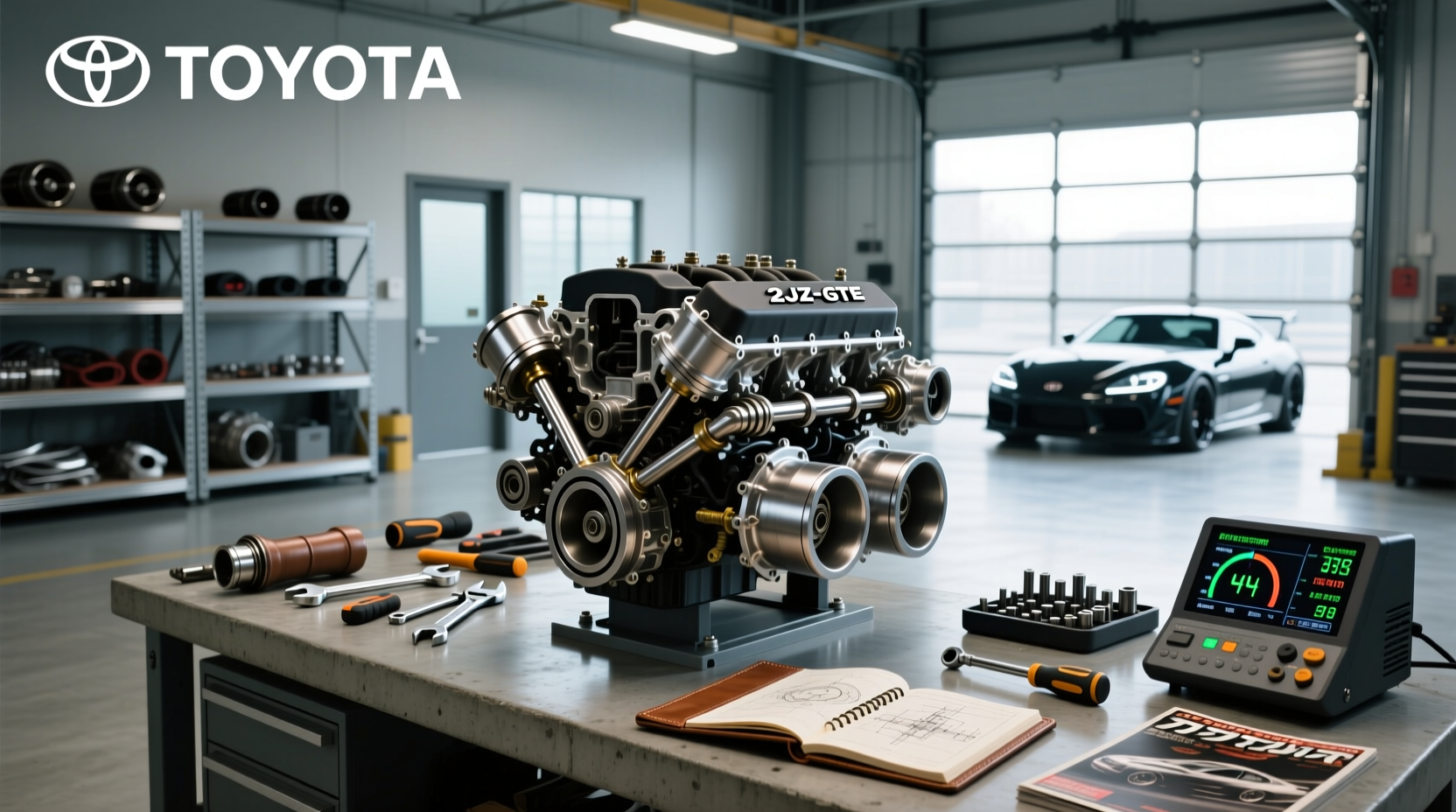
The Toyota 2JZ engine, particularly the naturally aspirated 2JZ-GE, is widely recognized for its exceptional durability, smooth power delivery, and legendary strong bottom-end design. Produced from 1991 to 2007, this 3.0L inline-six engine features a cast-iron block, aluminum DOHC head, and 24-valve configuration, making it a favorite among daily drivers and tuners alike ✅. Found in models like the Lexus IS300, GS300, and SC300, the 2JZ-GE delivers approximately 215–230 horsepower and remains highly sought after for engine swaps and performance builds due to its robust foundation ⚙️.
Understanding the 2JZ Engine Family
The Toyota JZ engine series replaced the aging M-series inline-six engines and marked a significant evolution in Toyota’s performance engineering. Introduced in the early 1990s, the JZ family includes several variants, but the most well-known are the 2JZ-GE (naturally aspirated) and the 2JZ-GTE (twin-turbocharged). Both share the same displacement of 2,997 cc (3.0L), bore and stroke of 86 mm × 86 mm (a perfect square design), and an inline-six layout that ensures excellent balance and reduced vibration 🌐.
While both engines belong to the same family, their intended use cases differ significantly. The 2JZ-GE was engineered for smoothness, fuel efficiency, and long-term reliability in luxury sedans and coupes. In contrast, the 2JZ-GTE, famously used in the fourth-generation Toyota Supra (A80), was built for high-output performance with twin turbochargers and reinforced internals 🔧.
2JZ-GE vs. 2JZ-GTE: Key Differences Explained
One of the most frequently asked questions surrounding the 2JZ platform is: what's the difference between the 2JZ-GE and 2JZ-GTE? Understanding these distinctions is crucial when selecting an engine for replacement, restoration, or modification.
| Feature | 2JZ-GE | 2JZ-GTE |
|---|---|---|
| Fuel System | Naturally Aspirated | Twin-Turbocharged |
| Horsepower (Stock) | 215–230 hp | 276–320 hp (JDM/USDM) |
| Torque (Stock) | 209–210 lb-ft | 315–318 lb-ft |
| Compression Ratio | 10:1 (non-VVTi), 10.5:1 (VVTi) | 8.5:1 |
| Block Construction | Cast Iron | Cast Iron (reinforced) |
| Head Material | Aluminum | Aluminum |
| VVT-i Technology | Yes (1997+ models) | Limited (only on 2nd gen GTE) |
| Common Applications | Lexus IS300, GS300, SC300, Toyota Aristo | Toyota Supra MKIV, Aristo V300 |
The most critical mechanical distinction lies in the internal components. The 2JZ-GTE uses stronger steel crankshafts, forged connecting rods, and lower-compression pistons designed to handle boost pressure. The 2JZ-GE, while still durable, comes with powdered metal connecting rods and higher compression, which makes it less ideal for forced induction without upgrades ❗.
Applications and Vehicle Fitment
The 2JZ-GE engine was primarily installed in Japanese domestic market (JDM) and North American luxury vehicles under the Lexus brand. Knowing which cars came with this engine helps buyers source clean donor vehicles or verify authenticity during purchases.
- Toyota Aristo (JZS147, 1991–1997): First application of the 2JZ-GE; later received VVT-i update.
- Lexus GS300 (JZS160, 1998–2005): Equipped with 2JZ-GE VVT-i version producing 220 hp.
- Lexus IS300 (JZS161, 2001–2005): Popular in the U.S.; known for longevity and ease of maintenance.
- Lexus SC300 (JZS161, 1998–2000): Rear-wheel-drive coupe with sporty appeal.
- Toyota Crown, Mark II, Chaser, Cresta (various chassis): Some JDM variants offered the 2JZ-GE as an option.
These platforms benefit from the engine’s refined idle, linear power curve, and proven reliability—often exceeding 250,000 miles with proper care ✈️. However, availability outside Japan depends heavily on import regulations and vehicle age restrictions in different countries 🌍.
Performance Potential and Tuning Considerations
While the 2JZ-GE horsepower output is modest at stock levels (~215–230 hp), its solid bottom end allows for moderate performance enhancements. Many enthusiasts ask: can you turbocharge a 2JZ-GE? The answer is yes—but with important caveats ⚠️.
Due to its higher compression ratio (typically 10:1 or 10.5:1 with VVT-i), adding forced induction requires careful planning:
- Lowering compression via aftermarket pistons is recommended before running significant boost.
- Upgrading to forged connecting rods prevents failure under load.
- A standalone ECU (e.g., Haltech, AEM, MoTeC) is essential for precise fuel and ignition control.
- Supporting modifications like upgraded fuel injectors, pump, intercooler, and exhaust are necessary for reliable operation.
With a full bottom-end rebuild, a turbocharged 2JZ-GE can reliably produce 500–600 wheel horsepower, rivaling the factory output of the 2JZ-GTE—but at a fraction of the cost if sourcing a non-turbo engine cheaply 🛒.
Reliability and Common Issues
The 2JZ-GE engine reliability is one of its standout features. Numerous real-world reports confirm these engines regularly surpass 250,000 miles with minimal issues when maintained properly. However, no engine is immune to wear and age-related problems.
Known Weaknesses and Maintenance Tips
- Intake Manifold Runner Control (IMRC) Actuator Failure: Causes rough idle or check engine light. Replacement or deletion kits are available.
- Valve Cover Gasket Leaks: Common on high-mileage units. Easy fix with basic tools.
- Oil Pan Gasket Seepage: Often due to improper torque or degraded sealant.
- VVT-i Solenoid Malfunction: Leads to poor performance or timing errors. Clean or replace solenoids periodically.
- Timing Chain Tensioner Wear: Rare but possible after 200k+ miles. Listen for rattling noises on cold start.
Regular oil changes using quality synthetic oil, timely spark plug replacements, and inspection of vacuum lines go a long way in preserving engine health 🧼. Unlike the GTE variant, the GE does not suffer from intercooler piping leaks or turbo actuator failures, reducing complexity and repair costs 👥.
Purchasing a Used 2JZ Engine: What to Look For
When searching for a 2JZ engine for sale, especially online, buyers must exercise caution. Platforms like eBay, JDM importers, and specialty shops offer various options—from complete long blocks to turnkey crate engines.
Key Evaluation Criteria
- Mileage and Service History: Prefer engines with documented maintenance records.
- Visual Inspection: Check for rust, oil leaks, corrosion, and missing parts.
- Compression Test Results: Request actual numbers; healthy readings should be within 10% across all cylinders.
- Leak-Down Test: More accurate than compression testing for assessing ring and valve seal integrity.
- Completeness: Determine whether accessories (alternator, intake manifold, sensors) are included.
Be wary of unusually low prices—some sellers may list damaged or incomplete engines. Always confirm compatibility with your target vehicle, including ECU, wiring harness, and mounting points 📍.
Engine Swaps: Is the 2JZ-GE a Good Candidate?
The 2JZ engine swap is one of the most popular choices in the automotive community, typically involving the GTE into lighter chassis like the Nissan 240SX or BMW E30. But what about using the 2JZ-GE instead?
Pros:
- Lower cost compared to GTE engines.
- Simpler emissions compliance in certain regions.
- Easier to maintain due to lack of turbo systems.
- Excellent base for custom turbo builds with rebuilt internals.
Cons:
- No factory turbo provisions—requires full custom fabrication.
- Higher compression limits safe boost levels without modifications.
- Less desirable for show-only builds where factory twin-turbos are prized.
For budget-conscious builders or those seeking a sleeper build, the 2JZ-GE offers a compelling alternative to the more expensive GTE. Integration requires adapter plates, custom mounts, and often a standalone engine management system, so thorough planning is essential ⏱️.
Aftermarket Support and Upgrade Pathways
A thriving ecosystem of aftermarket support exists for the entire 2JZ platform. Whether you're enhancing the 2JZ-GE intake, installing performance camshafts, or building a stroker motor, parts are readily available from reputable manufacturers.
Popular upgrade categories include:
- Performance Intake Manifolds: Replace restrictive stock units for improved airflow.
- Cold Air Intake Systems: Enhance breathing and throttle response.
- Header and Exhaust Upgrades: Reduce backpressure and increase power.
- Coil-on-Plug Conversions: Modernize ignition systems for better spark consistency.
- Turbo Kits for 2JZ-GE: Full bolt-on solutions now exist, though many remain semi-custom.
Companies like Powerhouse Racing, CT Engineering, and Turbo Smart offer comprehensive kits and technical guidance for advanced builds ✨. However, always verify fitment and local regulations before purchasing performance components.
Discontinuation and Legacy
Toyota discontinued the 2JZ engine line in 2007, replacing it with the more compact and efficient GR-series V6 engines. Despite being out of production for over 15 years, the 2JZ remains iconic due to its near-indestructible reputation and cultural presence through motorsports and media 📈.
The rise of social media content—such as TikTok videos explaining 2JZ-GE engine specs or YouTube deep dives into its engineering—has introduced the platform to a new generation of car enthusiasts 🔍. Its legacy endures not just in collector circles but also in grassroots racing, drifting, and DIY modification communities worldwide.
Frequently Asked Questions (FAQs)
- Is the 2JZ-GE a good engine? Yes, the 2JZ-GE is highly reliable, smooth, and durable, often lasting beyond 250,000 miles with regular maintenance. It’s ideal for daily driving and serves as a solid foundation for moderate performance upgrades.
- How much horsepower does a stock 2JZ-GE make? The non-VVTi version produces around 215–220 hp, while the later VVT-i variant generates up to 230 hp depending on model year and market.
- Can you turbocharge a 2JZ-GE engine? Yes, but it requires internal upgrades such as lower-compression pistons and forged rods to handle boost safely. Attempting to run high boost on stock internals risks catastrophic engine failure.
- Which cars have the 2JZ-GE engine? Common models include the Lexus IS300, GS300, SC300, and Toyota Aristo. It was also used in select JDM sedans like the Mark II and Crown.
- What’s the difference between 2JZ-GE and 2JZ-GTE? The GE is naturally aspirated with higher compression and weaker rods, suited for reliability. The GTE is twin-turbocharged with forged internals, designed for high-performance applications like the Supra MKIV.




 浙公网安备
33010002000092号
 浙B2-20120091-4