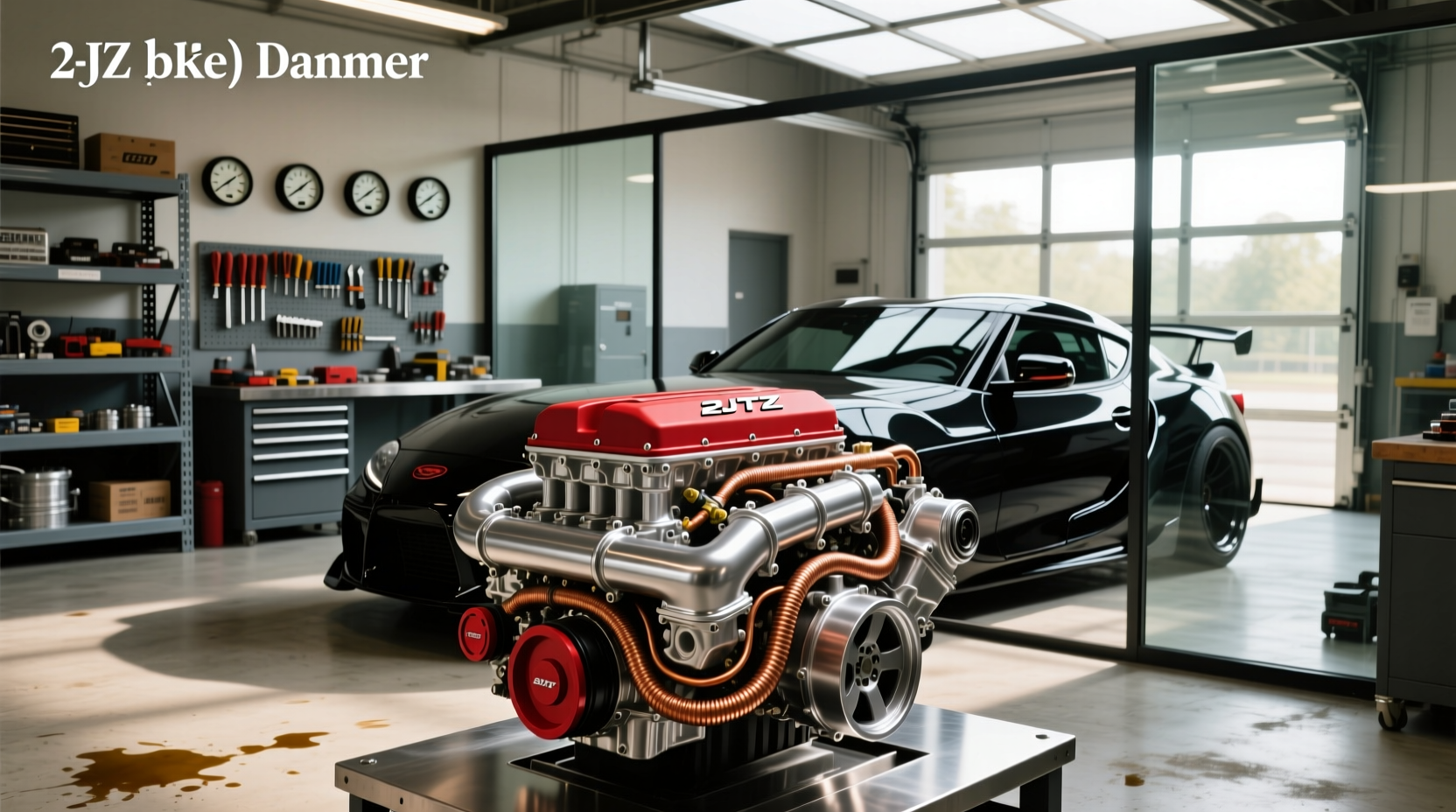
The Toyota 2JZ engine, particularly the twin-turbo 2JZ-GTE found in the MkIV Toyota Supra (A80), is widely regarded as one of the most robust and tunable inline-six engines ever mass-produced. 🏭 Known for its ability to reliably produce over 1,000 horsepower on stock internals under proper tuning and supporting modifications, the 2JZ engine in the Supra has become a cornerstone of performance tuning culture worldwide. ⚡ This deep dive explores the engineering behind its legendary status, compares its variants, outlines real-world applications, addresses common myths, and provides practical guidance for enthusiasts considering a 2JZ engine swap or rebuild.
What Is the 2JZ Engine?
The 2JZ is part of Toyota’s JZ engine family—an evolution of the earlier 1JZ—produced from 1991 to 2007. It's a 3.0-liter (2,997 cc) inline-six gasoline engine with dual overhead camshafts (DOHC) and four valves per cylinder. The engine was offered in two primary configurations: the naturally aspirated 2JZ-GE and the twin-turbocharged 2JZ-GTE. ✅ While both share the same basic architecture, it's the GTE version that gained global fame due to its use in the fourth-generation Supra.
Toyota designed the 2JZ with durability in mind, using a cast-iron block and forged internal components—including the crankshaft and connecting rods—which are key factors in its high-stress tolerance. Later models (from 1997 onward) also incorporated VVT-i (Variable Valve Timing - intelligent), improving low-end torque and fuel efficiency without compromising reliability.
2JZ Engine Variants: GE vs GTE
Understanding the differences between the 2JZ-GE and 2JZ-GTE is essential for anyone exploring engine swaps, restorations, or performance builds.
| Feature | 2JZ-GE | 2JZ-GTE |
|---|---|---|
| Fuel System | Sequential EFI | Sequential EFI |
| Aspiration | Naturally Aspirated | Twin-Turbocharged |
| Horsepower (Stock) | 220–230 hp | 320 hp (USDM), 315 hp (JDM) |
| Torque (Stock) | 210–220 lb-ft | 315–325 lb-ft |
| Compression Ratio | 10.0:1 | 8.5:1 |
| Internal Components | Casted crank, powdered metal rods | Forged crank, forged rods |
| VVT-i Availability | Yes (1996+) | Yes (1997+) |
| Common Applications | Lexus GS300, IS300, SC300 | Toyota Supra MKIV, Aristo V300 |
The 2JZ-GE, while reliable and smooth, lacks the forced induction and robust internals needed for serious power gains. In contrast, the 2JZ-GTE was engineered for sustained high-load operation, featuring two CT-12 turbochargers (sequential setup), an intercooler, oil squirters for piston cooling, and a closed-deck block design that enhances structural rigidity under boost.
Why the 2JZ-GTE in the Supra Is So Strong
The reputation of the 2JZ engine in the Supra stems not just from marketing but from proven mechanical resilience. 🔧 Several design choices contributed to its legendary strength:
- Cast-Iron Block: Unlike many modern aluminum blocks, the 2JZ uses a deep-skirt cast-iron block, providing exceptional stiffness and heat resistance.
- Forged Internals: Factory-installed forged crankshaft and connecting rods can withstand significantly higher cylinder pressures than cast equivalents.
- Oil Squirters: Small nozzles spray oil onto the underside of pistons, reducing thermal load and preventing detonation during extended high-RPM use.
- Low Stock Compression (8.5:1): Allows room for forced induction tuning without immediate risk of pre-ignition.
- Sequential Twin-Turbo System: Reduces lag compared to a single large turbo while still delivering strong top-end power.
These features allowed Toyota to safely rate the engine at 320 hp in the USDM market, though actual output was likely higher due to a gentleman’s agreement among Japanese manufacturers at the time. More importantly, these engineering choices created a platform that could handle massive power increases when supported by proper fueling, cooling, and engine management.
How Much Horsepower Can a 2JZ Handle?
A frequently asked question is: How much horsepower can a stock 2JZ-GTE produce? Based on extensive dyno testing and racing data, a well-maintained 2JZ-GTE with non-VVTi internals can reliably support 600–800 wheel horsepower (whp) on stock bottom-end components. ⚙️ Some builds have exceeded 1,000 whp on stock internals, but this often involves ideal conditions, conservative tuning, and carries increased risk of failure over time.
For sustained 1,000+ hp applications—such as drag racing or high-boost street/strip use—upgraded components like billet main caps, forged pistons, and upgraded head studs are strongly recommended. Companies like Manley, CP, and Tomei offer complete rotating assemblies rated for 2,000+ hp in extreme builds.
Notably, the factory head gasket and cylinder head bolts are also robust, contributing to the engine’s resistance to head lift under pressure. However, once boost levels exceed 25 psi consistently, upgrading to aftermarket head studs (e.g., ARP) becomes advisable.
Where Else Was the 2JZ Engine Used?
While the Supra made the 2JZ famous, it wasn't the only vehicle to feature this engine. Understanding alternative donor vehicles helps buyers source engines more affordably and avoid overpaying for Supra-specific units when unnecessary.
- Toyota Aristo (JZS147/V300): The Japanese domestic market sedan that originally debuted the 2JZ-GTE before the Supra adopted it. Mechanically identical to the Supra version.
- Lexus GS300 (JZS160): Equipped with the naturally aspirated 2JZ-GE; popular donor for NA-to-turbo swaps.
- Lexus IS300 (JCE10): Another 2JZ-GE application, commonly used in drift cars due to RWD layout and availability.
- Lexus SC300 (UZZ30): Grand tourer with 2JZ-GE; sought after for lightweight chassis and luxury features.
Because the Aristo and Supra versions of the 2JZ-GTE are mechanically equivalent, sourcing a JDM Aristo engine can be a cost-effective alternative to buying a Supra-sourced unit, especially outside Japan. However, verify ECU compatibility, harness configuration, and emissions equipment based on your region and intended use.
Common Myths About the 2JZ Engine
Despite its acclaim, several misconceptions persist about the 2JZ engine:
Myth 1: “The 2JZ is bulletproof.”
❌ Not entirely true. While extremely durable, the engine is not immune to damage from poor maintenance, aggressive tuning, or inadequate supporting mods. Running lean mixtures, improper timing, or insufficient oil flow can lead to catastrophic failure even in a stock setup.
Myth 2: “All 2JZ engines are the same.”
❌ False. There are significant differences between VVT-i and non-VVTi versions, as well as variations in ECU pinouts, intake manifolds, and accessory drives. Swapping between model years requires careful planning.
Myth 3: “You don’t need forged pistons for 800 hp.”
⚠️ Risky. While possible, exceeding 700–800 hp on stock pistons increases the likelihood of ring land failure, especially under high boost or nitrous use. For longevity, forged internals are preferred.
Myth 4: “The 2JZ is easy to tune.”
🔧 Partially true. The engine responds well to tuning, but managing sequential turbos, variable valve timing, and knock control requires expertise. Standalone ECUs like Haltech, MoTeC, or Link are often necessary for full control.
2JZ Engine Swaps: Popular Platforms and Challenges
The 2JZ is one of the most popular engines for swaps due to its compact size, rear-wheel-drive layout, and immense power potential. Some of the most common recipient vehicles include:
- S13/S14/S15 Nissan Silvia/240SX: Lightweight chassis ideal for drifting; requires custom mounts and wiring.
- MKIV Mustang: Offers strong rear axle and braking systems; popular in drag racing circles.
- Porsche 944/968: Mid-engine balance enhanced by the 2JZ’s linear power delivery.
- Subaru WRX STI: All-wheel-drive conversions gaining traction; complex but rewarding.
- Datsun 240Z/260Z/280Z: Classic looks meet modern power; frequent choice for resto-mod builds.
Key challenges in any 2JZ swap include transmission pairing (commonly using the R154 manual or W58), driveshaft length, cooling system integration, and ECU selection. Many builders opt for standalone engine management systems rather than relying on factory OBD1/OBD2 setups, which can be restrictive.
Cost Considerations: How Much Does a 2JZ Engine Cost?
Pricing varies widely depending on condition, configuration, and location. As of recent market trends:
- Used 2JZ-GE (non-turbo): $1,500–$2,500 USD
- Used 2JZ-GTE (non-VVTi): $5,000–$8,000 USD
- Used 2JZ-GTE (VVTi): $6,000–$9,000 USD
- Rebuilt long block: $6,000–$10,000 USD
- Turnkey built engine (800–1,200 hp): $20,000–$50,000+ USD
🛒 When purchasing, inspect for rust, oil leaks, compression numbers, and service history. Engines imported from Japan (JDM) are generally preferred due to lower mileage and cleaner environments, but ensure compliance with local import regulations. 💰 Be cautious of unusually low prices—they may indicate hidden issues like spun bearings or water damage.
Maintenance Tips for Longevity
To preserve the life of a 2JZ engine, especially in modified applications:
- Use high-quality synthetic oil: Recommended viscosity is 5W-30 or 10W-40 depending on climate and usage.
- Change oil every 3,000–5,000 miles: More frequent changes are advised under track or high-boost conditions.
- Inspect coolant system regularly: Prevent overheating, which can warp the head or compromise the head gasket.
- Monitor AFR and timing: Use a wideband O2 sensor and data logging to detect lean conditions early.
- Replace aging rubber components: Vacuum lines, intercooler hoses, and motor mounts degrade over time.
Is the 2JZ Still Relevant Today?
Even though production ended in the mid-2000s, the 2JZ remains highly relevant in motorsports and enthusiast communities. Its combination of simplicity, strength, and tuning flexibility makes it competitive against newer platforms. Modern turbo kits, fuel systems, and engine management solutions continue to push its limits beyond what Toyota engineers likely envisioned.
However, newer engines like the Toyota 2GR-FE, BMW S54, or Ford Coyote offer advantages in weight, efficiency, and emissions compliance. The decision to go with a 2JZ should consider project goals: raw power and legacy appeal favor the 2JZ, while daily drivability and emissions testing may point toward a more modern solution.
Conclusion
The 2JZ engine in the Toyota Supra represents a peak in analog-era performance engineering—a naturally balanced inline-six with overbuilt internals capable of extraordinary power outputs. Whether you're restoring a classic Supra, building a high-horsepower drag car, or planning an engine swap, understanding the strengths, limitations, and nuances of the 2JZ is critical for success. By separating fact from myth and making informed decisions about components, tuning, and maintenance, owners and builders can fully leverage what makes the 2JZ truly special.
Frequently Asked Questions
- What cars have a 2JZ engine?
- The 2JZ engine was used primarily in the Toyota Supra MKIV (A80), Toyota Aristo (JZS147/V300), Lexus GS300, IS300, and SC300. The twin-turbo 2JZ-GTE was exclusive to the Supra and Aristo models.
- Can a 2JZ engine last 300,000 miles?
- Yes, with proper maintenance, a naturally aspirated 2JZ-GE can reliably exceed 300,000 miles. Turbocharged 2JZ-GTE engines typically see shorter lifespans under high boost but can still reach 150,000–200,000 miles with care.
- Is the 2JZ a V6 engine?
- No, the 2JZ is an inline-six (straight-six) engine, not a V6. It has six cylinders arranged in a straight line, which contributes to its smooth operation and balance.
- Why did Toyota stop making the 2JZ engine?
- Toyota phased out the 2JZ in the mid-2000s due to shifting priorities toward fuel efficiency, emissions compliance, smaller displacement engines, and front-wheel-drive platform dominance. The Supra itself was discontinued in 2002, removing the primary application for the 2JZ-GTE.
- Can I swap a 2JZ into any car?
- Technically yes, but practicality depends on space, weight distribution, transmission compatibility, and legal regulations. Popular swap candidates include the S-chassis Nissans, older Porsches, and classic American muscle cars.




 浙公网安备
33010002000092号
 浙B2-20120091-4