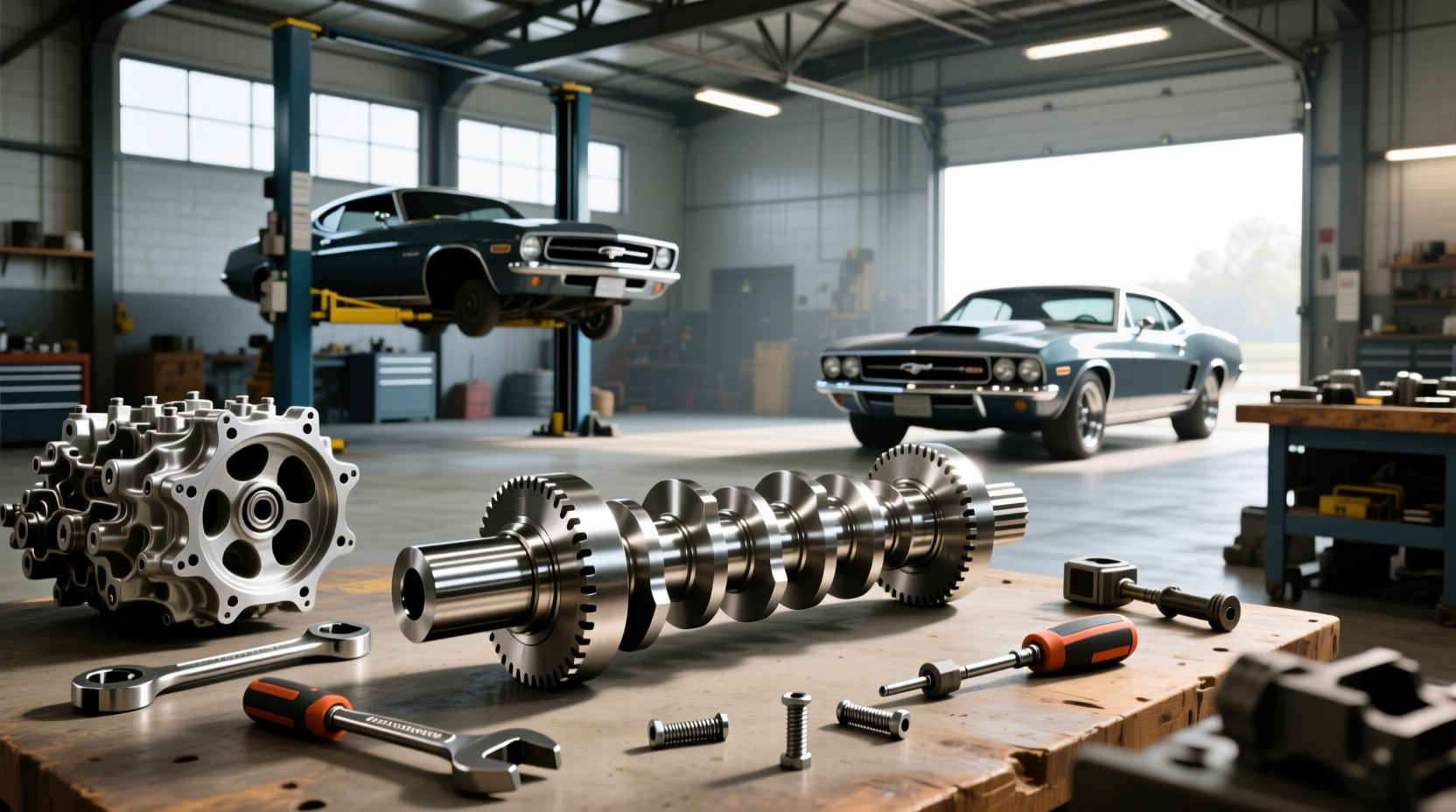
🛠️ If you're rebuilding a classic 350 Chevrolet small-block engine, selecting the right crankshaft kit 350 chevy is one of the most critical decisions you'll make. A complete crankshaft kit typically includes the crankshaft, bearings, seals, bolts, and sometimes alignment tools—everything needed to replace or upgrade the engine's core rotating assembly. The performance, durability, and smoothness of your rebuilt motor depend heavily on the quality and specifications of this kit. Whether restoring a vintage muscle car or building a high-output street engine, understanding the differences between cast, forged, and stroker crankshafts—and how they integrate into a full rebuild—is essential for long-term reliability and value.
What Is a Crankshaft Kit for a 350 Chevy?
A crankshaft kit 350 chevy is a bundled set of components designed to replace or enhance the factory crankshaft in a Chevrolet 350 cubic inch (5.7L) small-block V8 engine. This engine, introduced in 1967, has become one of the most popular and widely rebuilt powerplants in automotive history due to its robust design, availability of parts, and adaptability across applications—from trucks and vans to Camaros and Corvettes.
The core component of any such kit is the crankshaft itself—a forged or cast steel shaft that converts the linear motion of pistons into rotational force. But a true 'kit' goes beyond just the crank. It usually includes:
- ✅ Crankshaft (new or remanufactured)
- ✅ Main and rod bearing sets (often Clevite or similar OEM-grade)
- ✅ Front and rear main seals
- ✅ Harmonic balancer bolt or dampener hardware
- ✅ Main cap bolts (torque-to-yield or standard)
- ✅ Piston ring compressor (in some performance kits)
- ✅ Alignment sleeve or pilot tool (for clutch/flywheel setup)
Some vendors market "basic" kits with only the crank and bearings, while premium packages may include upgraded components like windage trays, lightened flywheels, or even balancing services. Knowing what’s included helps avoid unexpected costs during assembly.
Types of Crankshafts in 350 Chevy Kits
Not all crankshafts are created equal. When searching for a crankshaft kit for 350 chevy, three primary types dominate the market: cast iron, cast steel, and forged steel. Each offers different strengths, price points, and intended uses.
1. Cast Iron Crankshafts ⚙️
Found in stock production 350 engines from the 1970s through the early 1990s, these cranks are made by pouring molten iron into molds. They’re inexpensive and sufficient for low-RPM, daily-driven vehicles.
- Pros: Low cost, adequate for mild builds
- Cons: Brittle under stress, not suitable for forced induction or nitrous
- HP Limit: ~300–350 hp max safely
While usable in budget rebuilds, cast iron cranks are generally avoided in performance applications.
2. Cast Steel Crankshafts ✨
An upgrade over basic cast iron, cast steel cranks (like those from Scat or Eagle) use higher-grade alloys and improved heat treatment. These offer better fatigue resistance and are commonly found in mid-range performance kits.
- Pros: Stronger than cast iron, affordable ($250–$400 range)
- Cons: Still less durable than forged options under extreme loads
- Best For: Naturally aspirated street engines up to 450 hp
These are ideal for enthusiasts seeking reliability without breaking the bank.
3. Forged Steel Crankshafts 🔧
Forged cranks are machined from a solid billet of high-carbon steel (typically SAE 4340), then heat-treated for maximum strength. Brands like Callies, Lunati, and Scat Pro Comp specialize in these.
- Pros: Exceptional strength, handles high RPM, turbo/supercharged/nitrous setups
- Cons: Expensive ($800–$1,500+), requires precise balancing
- HP Capability: 600+ hp with proper supporting mods
If you're building a race engine or planning major power adders, a forged crankshaft is non-negotiable.
Stroker Crankshaft Kits: Increasing Displacement
One popular modification is using a stroker crankshaft—slightly longer stroke than the stock 3.48-inch—to increase engine displacement beyond 350 cubic inches (e.g., 383, 400, or even 427 ci). A 350 chevy stroker crankshaft kit often includes:
- • Longer-stroke crank (e.g., 3.75” or 4.00”)
- • Matching connecting rods
- • Custom-length pistons with correct compression height
- • Clearance-checked block (may require milling or grinding)
For example, a common 383 stroker uses a 3.75” stroke crank paired with 5.7” rods and dished pistons. This setup boosts torque significantly, especially at lower RPMs, making it ideal for street performance.
| Type | Material | Price Range | Horsepower Rating | Best Use Case |
|---|---|---|---|---|
| Stock Replacement | Cast Iron | $100–$200 | Up to 300 hp | Daily drivers, stock rebuilds |
| Performance Upgrade | Cast Steel | $250–$450 | 350–500 hp | Street performance, mild cam |
| Race/High-Output | Forged Steel (4340) | $800–$1,600 | 500–700+ hp | Track use, forced induction |
| Stroker Kit (e.g., 383) | Forged or Cast Steel | $1,200–$2,500 | 450–600+ hp | Torque-focused builds |
Compatibility Considerations for 350 Chevy Crank Kits
Before purchasing any crankshaft kit 350 chevy, verify compatibility with your specific engine variant. The 350 small block was produced for decades and used in numerous configurations. Key factors include:
1. Main Journal Size 🔍
Chevrolet 350 engines come with two main journal sizes:
- 2.45" (Small Journal): Found in early models (pre-1970)
- 2.65" (Large Journal): Standard from 1970 onward
Mismatching journals will prevent proper bearing fit and cause catastrophic failure. Always confirm your block’s bore and journal dimensions before ordering.
2. One-Piece vs. Two-Piece Rear Main Seal 🛠️
This is crucial for sealing and oil control:
- Two-Piece Seal: Used on blocks manufactured before ~1986
- One-Piece Seal: Introduced in later models; requires corresponding crank flange and seal housing
You cannot mix cranks and blocks with mismatched seal types without modifying the block or bellhousing—which can be costly and complex.
3. Balancing Requirements ✅
All rotating assemblies must be balanced. The 350 Chevy uses either:
- Internal Balance: Weight concentrated on the crank (older engines)
- External Balance: Weight on harmonic balancer and flexplate/flywheel (most post-1980 engines)
Using an externally balanced crank in an internally balanced engine (or vice versa) causes severe vibrations. Most aftermarket kits specify their balance type—double-check this matches your planned flywheel and damper.
Cost Breakdown: What Should You Expect to Pay?
Pricing for a crankshaft kit 350 chevy varies widely based on materials, brand, and completeness. Here's a realistic breakdown:
Entry-Level Kits ($150–$400) 🏭
Typically include a new cast or cast steel crank, basic bearings, and seals. Suitable for stock replacements where longevity matters more than performance. Sold by AutoZone, O'Reilly Auto Parts, and other retailers.
Mid-Tier Performance Kits ($400–$800) ⚡
Include forged or high-quality cast steel cranks, premium bearings (Clevite H-series), windage trays, and hardware. Brands like Scat, Eagle, and Lunati dominate this segment. Ideal for street rods and performance rebuilds.
Premium Race-Oriented Kits ($1,000–$2,500+) 🌐
Feature fully forged 4340 steel cranks, detailed balancing reports, lightweight components, and sometimes custom clearancing. Often sold through specialty shops like Summit Racing or JEGS. Best for dedicated track engines or high-horsepower builds.
Note: Labor for engine disassembly, machining, and reassembly typically adds $1,500–$3,000 if done professionally 1. Many DIY mechanics save significantly by doing the work themselves—but it requires precision tools and knowledge.
Where to Buy a Crankshaft Kit for 350 Chevy
Several reputable sources offer crankshaft kit 350 chevy options:
1. AutoZone & O'Reilly Auto Parts 📍
Carry basic replacement kits for stock engines. Good for quick fixes and OE-style rebuilds. Limited selection for performance upgrades.
2. Summit Racing & JEGS High Performance 🚚
Industry leaders in performance engine components. Offer extensive filters for journal size, seal type, material, and stroke length. Provide detailed specs and tech support. Free shipping over certain thresholds enhances value.
3. Specialty Manufacturers (e.g., Scat, Callies) 🌍
Direct-from-factory options allow customization. Some companies offer balancing services, custom strokes, or billet finishes. Lead times may be longer, but quality is top-tier.
Installation Tips and Common Mistakes
Installing a crankshaft kit isn’t just about bolting parts together—it demands precision. Here are key tips:
- Always degree the cam: After installing the crank, verify cam timing with a degree wheel, especially with aftermarket cams.
- Check end play: Use a dial indicator to measure crankshaft end float (should be 0.005"–0.010"). Adjust with thrust bearing shims if needed.
- Use assembly lube: Coat all bearing surfaces, journals, and bolt threads with high-quality assembly lubricant—not motor oil.
- Torque to spec: Follow manufacturer torque sequences and values. Over-tightening main caps can distort the block.
- Prime the oil system: Before first start, use a priming tool to circulate oil through the galleries and prevent dry startup damage.
Avoid these common errors:
- ❌ Mixing bearing brands or grades
- ❌ Reusing old main bolts (they’re often torque-to-yield)
- ❌ Forgetting to chamfer oil holes or deburr casting flash
- ❌ Skipping dynamic balancing when upgrading internals
Signs of a Failing Crankshaft or Poor Installation
Even the best crankshaft kit 350 chevy can fail if improperly installed or mismatched. Watch for these symptoms:
- ⚙️ Loud knocking from deep within the engine (especially under load)
- 📈 Oil pressure fluctuations or sudden drops
- 🔧 Excessive vibration at idle or cruising speeds
- 🧼 Metal particles in the oil filter or pan
- ❗ Engine seizure or inability to rotate by hand after assembly
If any of these occur shortly after rebuild, disassemble immediately to inspect for bearing wear, misalignment, or scoring on journals.
DIY vs. Professional Build: Which Is Right?
Deciding whether to install the kit yourself depends on experience, tools, and time:
- DIY Advantages: Cost savings, learning opportunity, full control over process
- Challenges: Requires engine stand, torque wrench, dial indicators, micrometers, and patience
- Professional Advantages: Guaranteed accuracy, access to machining (boring, decking, line honing), faster turnaround
- Downside: High labor cost, potential communication gaps
Many successful builders split the work—do assembly themselves after having the machine shop prep the block and balance the rotating assembly.
Environmental and Regional Factors
In regions with extreme temperatures or high humidity, consider:
- Using synthetic assembly lubes resistant to moisture
- Opting for nickel-plated bolts in marine environments
- Choosing sealed bearings if storage precedes startup
Additionally, emissions regulations in states like California may affect which modifications are legal—especially stroker kits that alter displacement.
Final Recommendations
Selecting the right crankshaft kit 350 chevy comes down to your goals:
- 📌 Stock restoration? Go with a cast steel or remanufactured OEM-style kit.
- 📌 Street performance? Choose a cast steel or entry-level forged crank with proper balance.
- 📌 High-horsepower or forced induction? Invest in a forged 4340 steel crankshaft from a trusted brand.
- 📌 Torque-focused build? Consider a stroker configuration with compatible rods and pistons.
Always verify compatibility, read product descriptions carefully, and consult technical support when in doubt. A well-chosen crankshaft kit ensures years of reliable service and lays the foundation for future upgrades.
Frequently Asked Questions
- Can I reuse my original crankshaft bearings?
- No. Bearings should always be replaced when installing a new or refurbished crankshaft. Used bearings lose their oil clearance and anti-friction coating, increasing the risk of premature failure.
- Do I need to resurface the block when replacing the crankshaft?
- Not necessarily. However, if there is scoring on the main saddles or uneven wear, a machine shop should perform a line hone to ensure proper alignment and bearing fit.
- What’s the difference between a 350 and a 383 crankshaft?
- The 383 uses a longer-stroke crankshaft (typically 3.75”) compared to the stock 350’s 3.48” stroke. It also requires shorter connecting rods or custom pistons to maintain proper deck height.
- Are one-piece rear main seal conversions worth it?
- Yes, for older engines prone to oil leaks. Converting to a one-piece seal improves reliability and reduces maintenance, though it requires block modification or replacement.
- How do I know if my crankshaft is forged or cast?
- Forged cranks often have parting lines along the center of counterweights, smoother grain structure, and are labeled as SAE 4340 or 5140 steel. Cast units show mold seams around the edges and are typically marked 'CTV' or similar.




 浙公网安备
33010002000092号
 浙B2-20120091-4