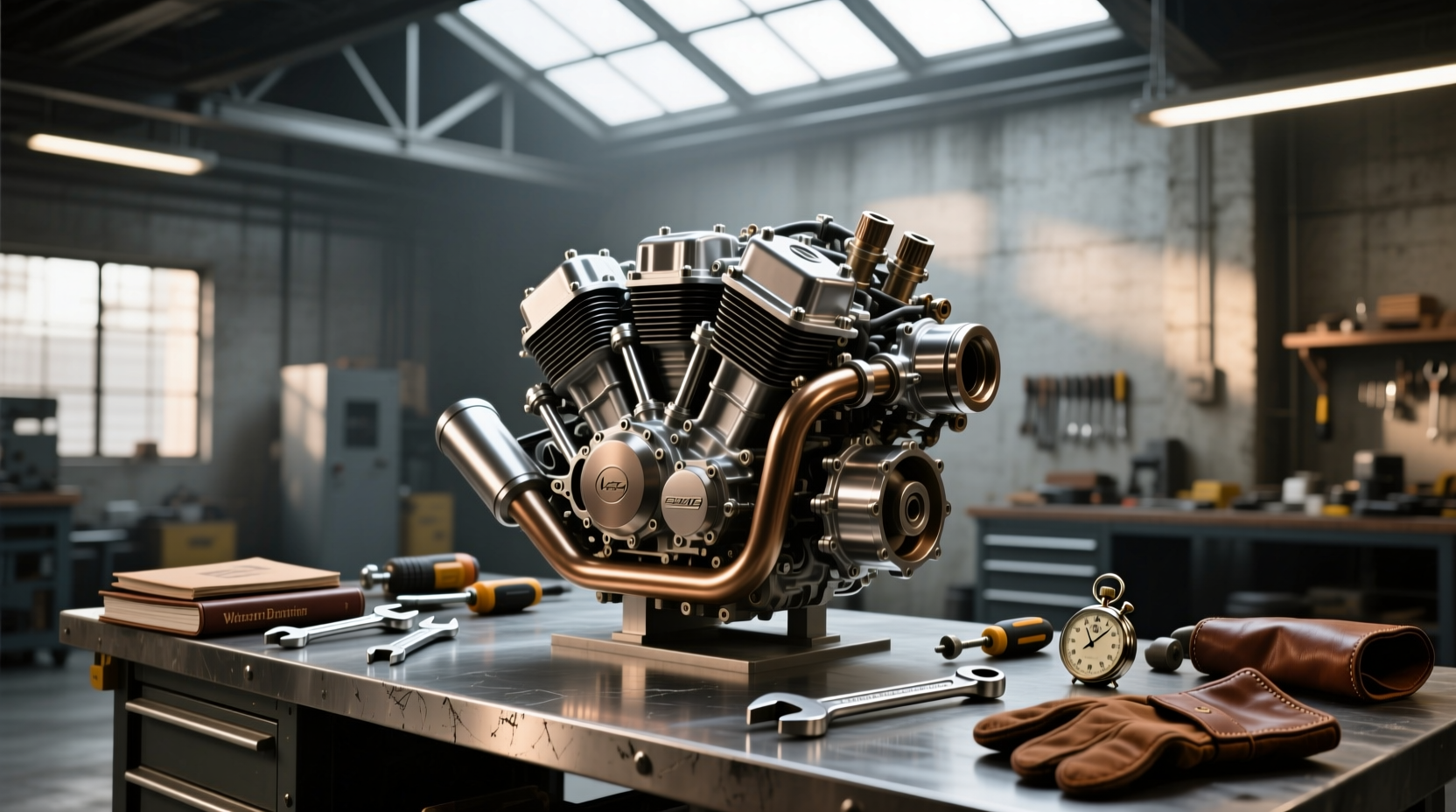
When searching for high-performance motorcycles, many riders come across the term 4 cylinder motorcycle engine, often referred to as an inline-four or I4 engine. This configuration is known for delivering smooth power delivery, high-revving capability, and strong top-end performance. But what exactly makes a 4 cylinder motorcycle engine different from V-twins, parallel twins, or single-cylinder designs? And why do manufacturers like Yamaha, Honda, and Kawasaki continue to use this layout in sport bikes and touring models? In this guide, we’ll break down everything you need to know about 4 cylinder engines in motorcycles — including how they work, their benefits and drawbacks, common applications, and how they compare with 2-valve and 4-valve variants.
Understanding the 4 Cylinder Motorcycle Engine Layout
The 4 cylinder motorcycle engine typically refers to an inline-four (I4) configuration, where all four cylinders are arranged in a straight line along a single crankshaft 1. This design has been a staple in performance-oriented motorcycles since the 1960s, most notably popularized by Honda’s CB750 in 1969, which set new standards for power, reliability, and engineering sophistication.
Compared to V4 or flat-four layouts (like those used by Moto Guzzi or certain BMW models), the inline-four is more compact in width than a V-engine but longer in length. Its balanced firing order and even power pulses contribute to smoother operation at high RPMs, making it ideal for sport bikes and supersport machines.
How Does a 4 Cylinder Engine Work?
Each of the four pistons connects to a shared crankshaft via connecting rods. As fuel combusts in each cylinder, it drives the piston downward, rotating the crankshaft. The engine operates on a four-stroke cycle: intake, compression, power, and exhaust. With precise valve timing controlled by camshafts (either SOHC or DOHC), air and fuel enter the combustion chamber, ignite, and expel exhaust gases efficiently.
In modern implementations, most 4 cylinder engines use double overhead camshafts (DOHC) and four valves per cylinder — two intake and two exhaust. This setup enhances airflow into and out of the combustion chamber, improving both power output and thermal efficiency ⚙️.
Inline-4 vs. Other Engine Configurations
To understand where the 4 cylinder motorcycle engine stands, it's essential to compare it with other common layouts:
| Engine Type | Power Delivery | RPM Range | Size & Weight | Common Use Cases |
|---|---|---|---|---|
| Inline-4 (I4) | High-revving, peaky | 10,000–16,000 RPM | Moderate width, longer | Sport bikes, race replicas |
| V-Twin | Torque-focused, low-end punch | 6,000–9,000 RPM | Wider, shorter | Cruisers, custom bikes |
| Parallel Twin | Balanced mid-range | 8,000–10,000 RPM | Compact | Adventure, standard bikes |
| Single Cylinder | Simple, vibration-prone | 7,000–10,000 RPM | Lightweight, narrow | Dirt bikes, small commuters |
| V4 | Smooth, powerful, compact | 12,000–15,000 RPM | Narrower than I4 | Racing, premium sport tourers |
As shown above, the inline-four engine excels in high-RPM performance, making it a favorite in racing and track-focused machines. However, its powerband tends to be less accessible at lower speeds compared to torque-heavy V-twins.
4 Valve Per Cylinder Design: Why It Matters
Many modern 4 cylinder motorcycle engines feature a four-valve per cylinder design — meaning 16 valves total for the entire engine. This configuration allows for better airflow due to increased valve surface area and optimized port shaping ✨.
Compared to older two-valve heads, four-valve systems improve:
- 🌬️ Airflow efficiency
- 🔥 Combustion completeness
- ⛽ Fuel economy
- 📉 Emissions output
- 🌡️ Heat dissipation
At peak RPM, valves can open and close over 100 times per second, demanding precision engineering and durable materials 2. While more complex than two-valve setups, the performance gains justify the added cost in high-performance applications.
SOHC vs. DOHC in 4 Cylinder Engines
Two primary camshaft configurations are used:
SOHC (Single Overhead Camshaft)
A single camshaft controls both intake and exhaust valves, usually via rocker arms. This design is simpler, lighter, and cheaper to manufacture. It’s often found in entry-level or mid-range inline-four engines where extreme performance isn’t the priority.
DOHC (Double Overhead Camshaft)
Dual camshafts — one for intake and one for exhaust — allow for more direct valve actuation, enabling higher RPM limits and finer tuning of valve timing. Most sport bikes with 4 cylinder engines use DOHC setups to maximize breathing and responsiveness ⚡.
While DOHC adds complexity and maintenance considerations, it supports advanced features like variable valve timing (VVT), which further optimizes performance across the rev range.
Performance Characteristics of Inline-Four Engines
The defining trait of a 4 cylinder motorcycle engine is its ability to produce high horsepower at elevated RPMs. Here’s how that translates in real-world riding:
Acceleration and Top Speed
Thanks to a broad powerband and strong top-end pull, inline-fours dominate on straightaways and racetracks. Bikes like the Honda CBR1000RR, Yamaha YZF-R1, and Kawasaki Ninja ZX-14R leverage these engines for blistering acceleration and high top speeds.
Throttle Response
Due to reliance on higher RPMs for peak power, throttle response at low speeds may feel subdued compared to torque-rich twins. Riders often need to downshift or keep the engine ‘on the pipe’ for optimal performance.
Vibration and Refinement
Inline-four engines are naturally balanced in primary and secondary forces, resulting in smooth operation. However, without proper balancing shafts (as seen in some earlier designs), high-RPM vibrations can occur. Modern versions typically include counterbalancers to ensure rider comfort during long rides.
Fuel Efficiency and Emissions
Despite their performance focus, many 4 cylinder engines achieve respectable fuel economy thanks to efficient combustion and electronic fuel injection. Four-valve heads also help reduce unburned hydrocarbons, aiding compliance with global emissions standards like Euro 5 and EPA Tier 3.
However, aggressive riding styles can significantly impact fuel consumption. Riders should expect 35–45 mpg under mixed conditions, depending on displacement and tuning.
Maintenance Considerations
While reliable, 4 cylinder engines require more meticulous upkeep than simpler designs:
- 🔧 Valve clearance checks every 6,000–12,000 miles
- 🧰 Timing chain or belt replacement intervals (varies by model)
- ⛽ Fuel system cleaning due to sensitivity to poor-quality fuel
- 🌡️ Cooling system maintenance (liquid-cooled units dominate this segment)
Because there are more moving parts, labor costs for major services tend to be higher. DIY mechanics should have access to proper tools and service manuals before attempting internal work.
Common Applications and Motorcycle Examples
The 4 cylinder engine is most commonly found in:
Sport Bikes
Models like the Suzuki GSX-R series, Triumph Daytona, and Aprilia RSV4 (a V4, not inline) showcase the performance potential of multi-cylinder layouts. These bikes prioritize speed, handling, and track readiness.
Naked and Streetfighters
Bikes such as the Yamaha MT-09 (though triple-cylinder) and Kawasaki Z1000 use detuned inline-four engines for aggressive street performance without full fairings.
Touring and Sport Touring
While larger tourers often use flat-six or boxer engines (e.g., BMW K1600), some models like the Honda ST1300 used an inline-four for a balance of power and compactness.
Pit Bikes and Miniatures
Even small pit bikes sometimes feature miniature 4 valve, single-cylinder engines derived from 4 stroke technology. Though not true 4-cylinder units, they borrow design principles from larger siblings 🔧.
Myths and Misconceptions About 4 Cylinder Engines
Several myths persist among riders. Let’s clarify them:
Myth: More Cylinders Always Mean More Power
❌ Not necessarily. A well-tuned twin or triple can outperform a poorly designed four in real-world conditions. Power depends on displacement, tuning, induction, and rider skill — not just cylinder count.
Myth: Inline-Fours Are Too Fragile for Off-Road
✅ True in practice. Their length and weight make them unsuitable for dirt bikes, where compactness and light weight matter most. You won’t find a production motocross bike with an inline-four.
Myth: All 4 Cylinder Engines Rev Above 15,000 RPM
❌ Only race-spec or high-performance variants reach those levels. Many production bikes redline between 11,000 and 13,000 RPM for durability and emissions reasons.
Shopping Tips: What to Look For
If you're considering a motorcycle with a 4 cylinder engine, keep these factors in mind:
- 📌 Displacement: Ranges from 600cc to over 1,400cc; match to your experience level
- 🛒 Used Market Condition: Check service history, especially valve adjustments and coolant leaks
- 📍 Local Climate: Liquid-cooled engines perform better in hot environments
- 🏭 Manufacturer Reputation: Brands like Honda and Yamaha are known for longevity
- 👥 Riding Style: Ensure the powerband suits your needs — avoid peaky engines if commuting
Also, verify whether the model uses chain, belt, or shaft drive, as this affects maintenance frequency and cost.
Future Trends and Evolution
With tightening emissions regulations and the rise of electric vehicles, the future of internal combustion engines — including the 4 cylinder motorcycle engine — is evolving. Some trends include:
- 🌐 Integration of ride-by-wire throttle systems
- 📊 Advanced traction control and wheelie mitigation
- 🔋 Hybrid assistance in select prototypes
- 🌍 Downsizing with turbocharging (rare in current production)
While electrification grows, the inline-four remains relevant in performance niches where instant torque isn’t the sole objective.
Frequently Asked Questions (FAQs)
- What is the difference between a 4 cylinder and a V4 motorcycle engine?
- A 4 cylinder (inline-four) arranges all cylinders in a straight line, while a V4 places them in a V formation. V4s are generally more compact and used in premium sport-touring or racing bikes like the Honda RC213V-S.
- Are 4 valve engines better than 2 valve engines in motorcycles?
- Yes, 4 valve engines typically offer better airflow, higher power output, improved fuel efficiency, and cooler running temperatures. However, 2 valve engines are simpler and may suit low-RPM cruising applications better.
- Why do some manufacturers still use 2 valve engines?
- Some brands, particularly in cruiser segments, use 2 valve engines because they deliver strong low-end torque, are easier to maintain, and meet production goals with fewer components.
- Can a 4 cylinder motorcycle engine be used for daily commuting?
- Yes, but riders should be aware of the power delivery characteristics. Inline-fours may feel less responsive at low RPMs, requiring more gear changes in city traffic.
- How often does a 4 cylinder motorcycle engine need servicing?
- Valve clearances should be checked every 6,000–12,000 miles. Oil changes are recommended every 3,000–5,000 miles for wet-clutch engines. Always follow the manufacturer’s maintenance schedule.




 浙公网安备
33010002000092号
 浙B2-20120091-4