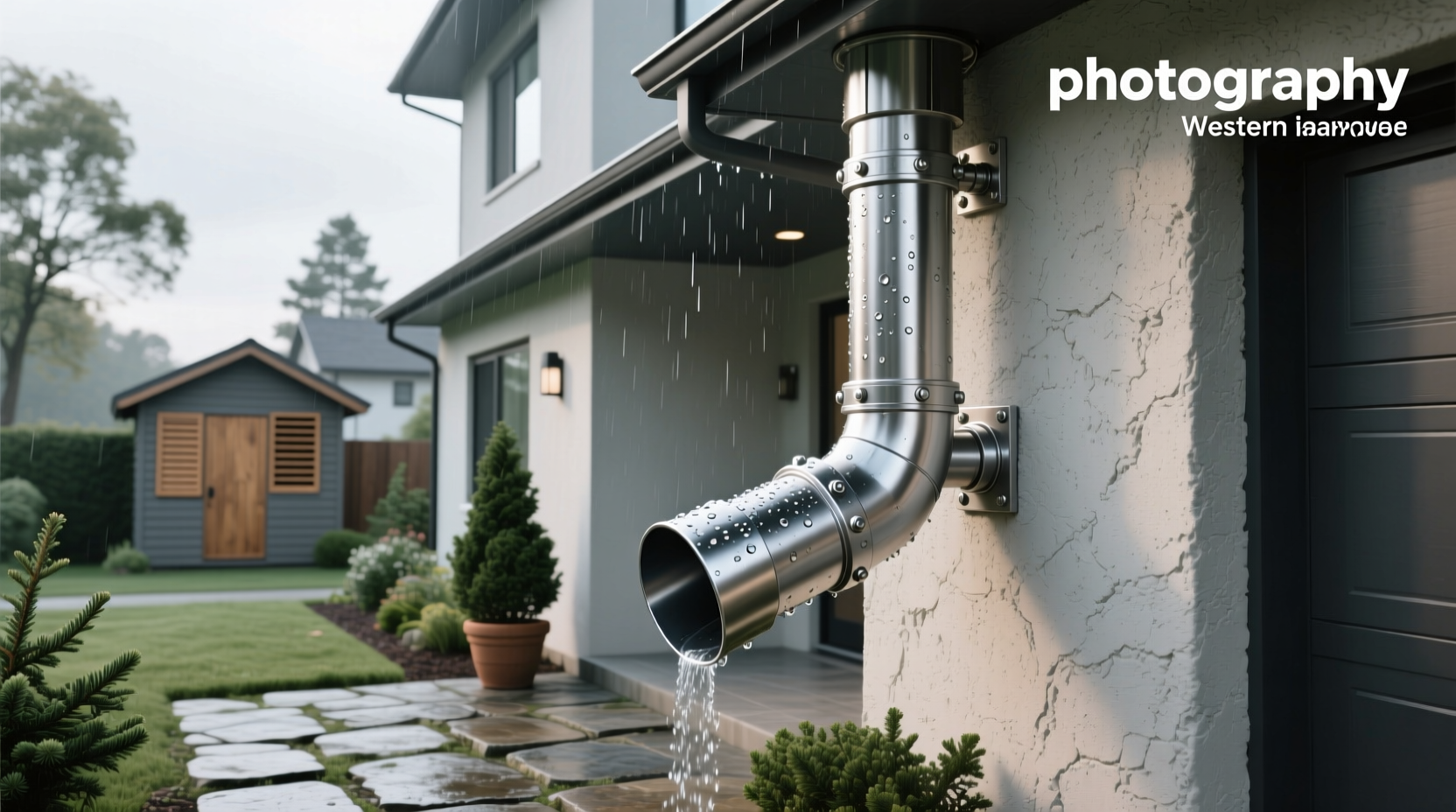
When installing or modifying a rainwater drainage system, one of the most frequently encountered challenges is navigating tight spaces or adjusting flow direction without compromising water efficiency. A 45 degree downpipe bend offers a practical solution by allowing a moderate redirection of water flow between vertical and horizontal planes—ideal for homes with limited clearance near walls, patios, or landscaping features. Unlike sharper 90-degree elbows, this fitting reduces turbulence and clogging risks while maintaining smooth runoff, making it a preferred choice in constrained architectural layouts ✅.
Understanding the Role of a 45° Downpipe Bend in Gutter Systems
The primary function of any downpipe bend is to redirect rainwater from a vertical downpipe to a horizontal drain or along a different plane of descent. The 45 degree downpipe bend serves as a middle-ground option between straight runs and sharp-angle turns. It's commonly used when the building design requires a gentle slope change—for example, routing water away from a foundation wall at an angle that avoids obstruction but still maintains gravitational flow ⚙️.
This type of bend is especially useful in retrofitting older homes where existing structures limit the placement of standard 90° fittings. Its angled design allows installers to work around windows, doors, or decorative elements without requiring major modifications to the gutter layout 🏠. In regions with high rainfall, minimizing abrupt directional changes helps reduce the risk of overflow during heavy storms, which makes the 45° option more hydraulically efficient than tighter bends in certain configurations.
Common Materials Used in 45° Downpipe Bends
Downpipe bends are manufactured from various materials, each offering distinct advantages depending on climate, aesthetics, and system longevity requirements:
- uPVC (Unplasticized Polyvinyl Chloride): Most widely used due to its affordability, corrosion resistance, and ease of installation 🛠️. Available in white or black finishes, uPVC bends are compatible with standard modular gutter systems across Europe and North America.
- Galvanized Steel: Offers greater durability and strength, often found in commercial buildings or industrial applications. Requires protective coatings to prevent rust over time, especially in coastal environments exposed to salt spray 🌊.
- Zinc-Coated or Natural Zinc Alloys: Increasingly popular for modern architectural designs due to their sleek appearance and self-healing oxide layer. These bends weather naturally, forming a patina that protects against further degradation 🔆.
- Cast Iron Effect (Polymer-Composite): Designed to mimic traditional cast iron aesthetics while being significantly lighter and easier to handle. Often chosen for heritage restorations or period-style homes where visual authenticity matters 👥.
Material selection should consider local weather patterns, expected lifespan, and compatibility with existing gutter components. Mixing incompatible materials—such as connecting aluminum gutters directly to copper downpipes—can lead to galvanic corrosion, shortening system life ❗.
Standard Sizes and Compatibility Considerations
While there's no universal size for a 45 degree downpipe bend, common diameters include:
- 68mm (2.7 inches) – Standard in many European residential systems
- 80mm (3.15 inches) – High-capacity variant for larger roofs or areas with heavy precipitation
- 3" (76.2mm) and 4" (101.6mm) – Predominant in North American construction
It’s crucial to match the bend diameter precisely with your downpipe size. Even a slight mismatch can create turbulence, leaks, or pooling at the joint. Always verify dimensions before purchase—some manufacturers label products using nominal sizes rather than actual internal diameters, leading to confusion during installation 📏.
| Size (mm) | Common Region | Typical Material | Max Roof Area Supported* |
|---|---|---|---|
| 68mm | UK, EU | uPVC, Zinc | ~80m² |
| 80mm | EU, Commercial | Zinc, Steel | ~120m² |
| 76mm (3") | USA, Canada | Aluminum, PVC | ~60m² |
| 102mm (4") | USA, Heavy-Duty | Steel, Copper | ~150m² |
*Estimated maximum catchment area under average rainfall conditions; consult engineering guidelines for precise calculations.
Installation Best Practices for 45° Downpipe Bends
Proper installation ensures long-term performance and prevents blockages or leakage. Follow these key steps when integrating a 45 degree downpipe bend into your system:
- Measure Clearance: Confirm sufficient space exists for the bend’s arc. A 45° elbow typically extends outward about 1.5 times the pipe radius—e.g., ~50mm for a 68mm pipe 📍.
- Dry Fit First: Assemble the section without adhesive or fasteners to test alignment and flow path. Adjust supports if necessary.
- Ensure Slope: Maintain a minimum gradient of 1:200 (0.5%) in horizontal sections after the bend to avoid stagnation.
- Secure Joints: Use solvent cement for uPVC, compression seals for metal, or rivets/clamps where required. Never rely solely on friction fit.
- Support Every 1.8m: Vertical and horizontal runs must be bracketed regularly to prevent sagging or stress on joints ⚡.
Avoid burying unlined plastic bends in soil or concrete without protection, as ground movement may crack the fitting over time. For underground transitions, use flexible rubber couplings or purpose-built inspection chambers instead.
When to Choose a 45° Over a 90° Bend
The decision between a 45 degree downpipe bend and a 90° alternative depends on several factors:
- Space Constraints: If the wall-to-drain distance is short but not zero, a 45° bend provides a smoother transition than a right-angle turn.
- Hydraulic Efficiency: Water flows more smoothly through gradual curves, reducing sediment buildup and splash-back risks.
- Aesthetic Integration: In visible locations, a shallow angle may blend better with landscaping or architectural lines.
- Future Maintenance Access: Sharp bends are more prone to trapping debris; gentler angles allow easier rod cleaning.
However, if a full redirection is needed—such as turning from vertical to fully horizontal discharge—a 90° offset bend or swan neck may be more appropriate despite increased turbulence risk.
DIY Modifications: Can You Make Your Own 45° Bend?
Some homeowners attempt to fabricate custom bends using off-the-shelf 90° elbows or straight pipes cut and reshaped manually 🔧. While technically possible, this approach carries significant drawbacks:
- Loss of structural integrity due to thinning material at cut points
- Inconsistent inner diameter causing flow restriction
- Difficulty achieving watertight seals without specialized tools
- Voiding manufacturer warranties on connected components
Tutorials seen online showing how to “make a 45 degree downspout elbow” by slicing and compressing standard pipes often result in suboptimal performance 1. Pre-molded factory-made bends are engineered for balanced wall thickness and smooth internal contours, ensuring predictable hydraulic behavior. Unless working with flexible corrugated liners or temporary setups, it’s strongly advised to use certified fittings.
Regional Differences in Design and Standards
Rainwater system standards vary by country, influencing the availability and specifications of 45 degree downpipe bends:
- United Kingdom & Ireland: BS EN 612 emphasizes material durability and impact resistance. Common sizes are 68mm and 80mm with metric-compatible brackets.
- Germany & Central Europe: DIN 1205 specifies dimensional tolerances and load testing. Zinc-coated steel dominates premium installations.
- North America: ASTM standards govern metallic components, while PVC fittings follow IPS (Iron Pipe Size). 3" and 4" round downspouts prevail.
- Australia & New Zealand: AS/NZS 3500 includes slope and capacity rules favoring larger diameters in cyclone-prone zones.
Imported components may not meet local code requirements. Always check municipal plumbing regulations before finalizing installations, particularly in flood-sensitive areas.
Common Misconceptions About Downpipe Angles
Several myths persist regarding downpipe bends that can mislead DIYers:
- Myth: Any elbow can be used interchangeably regardless of angle.
Fact: Flow dynamics differ significantly; improper angles increase head loss and erosion inside pipes. - Myth: All bends labeled “offset” provide the same redirection.
Fact: Offset distances vary—some are designed for lateral shifts without angular change. - Myth: Plastic bends degrade quickly in sunlight.
Fact: Modern uPVC contains UV stabilizers effective for 20+ years under normal exposure.
Alternatives to the Standard 45° Bend
If a standard 45 degree downpipe bend doesn’t suit your project, consider these alternatives:
- Adjustable Flex Connectors: Made from corrugated HDPE or rubber, these allow variable angles up to 90° and accommodate minor misalignments.
- Swan Neck Bends: Curved top-entry fittings that redirect flow laterally while remaining close to the wall surface.
- Inspection Tees with Side Outlet: Provide access for cleaning while enabling horizontal branching.
- Custom Fabricated Metal Elbows: Welded or spun aluminum/copper bends made to order for unique architectural needs.
Each alternative has trade-offs in cost, maintenance, and visual impact. Evaluate based on accessibility, expected lifespan, and compliance with local codes.
Maintenance Tips for Longevity
To extend the service life of your 45 degree downpipe bend, perform routine checks:
- Clear debris quarterly, especially after autumn leaf fall or storm events 🍂.
- Inspect joints annually for cracks, warping, or separation.
- Flush the system with water to detect slow drainage indicating partial blockage.
- Replace damaged sections promptly to avoid cascading failures.
In cold climates, ensure bends aren’t trapping moisture that could freeze and expand, potentially cracking brittle plastics during winter cycles ❄️.
Environmental and Sustainability Factors
Choosing sustainable materials contributes to eco-friendly building practices. Recycled uPVC content now reaches up to 60% in some product lines, reducing landfill burden 🌍. Zinc and aluminum fittings are highly recyclable and often contain post-consumer scrap. When replacing old systems, recycle metal components through certified processors rather than disposing of them as general waste.
Additionally, well-designed downpipe routing enables rainwater harvesting integration. A properly angled 45 degree downpipe bend can direct flow into storage tanks or permeable landscapes, supporting water conservation goals.
Frequently Asked Questions (FAQs)
- Can you connect a 45 degree downpipe bend to a 90° fitting?
- Yes, provided both fittings share the same diameter and material compatibility. Ensure proper sealing at the joint to prevent leaks.
- Is a 45° bend better than a 90° for preventing clogs?
- Generally yes—gentler angles reduce turbulence and debris accumulation, improving self-cleaning action during rainfall.
- How do I know if my downpipe needs a 45° or 90° bend?
- Assess the physical layout: if the pipe needs to shift direction slightly without going fully horizontal, choose 45°; for complete redirection, use 90°.
- Are 45 degree downpipe bends available in flexible versions?
- Yes, flexible rubber or HDPE connectors exist that allow adjustable angles, though they lack the rigidity of molded elbows.
- Do building codes regulate the use of 45° downpipe bends?
- Codes typically specify slope, capacity, and material standards but rarely restrict bend angles unless part of engineered drainage plans.




 浙公网安备
33010002000092号
 浙B2-20120091-4