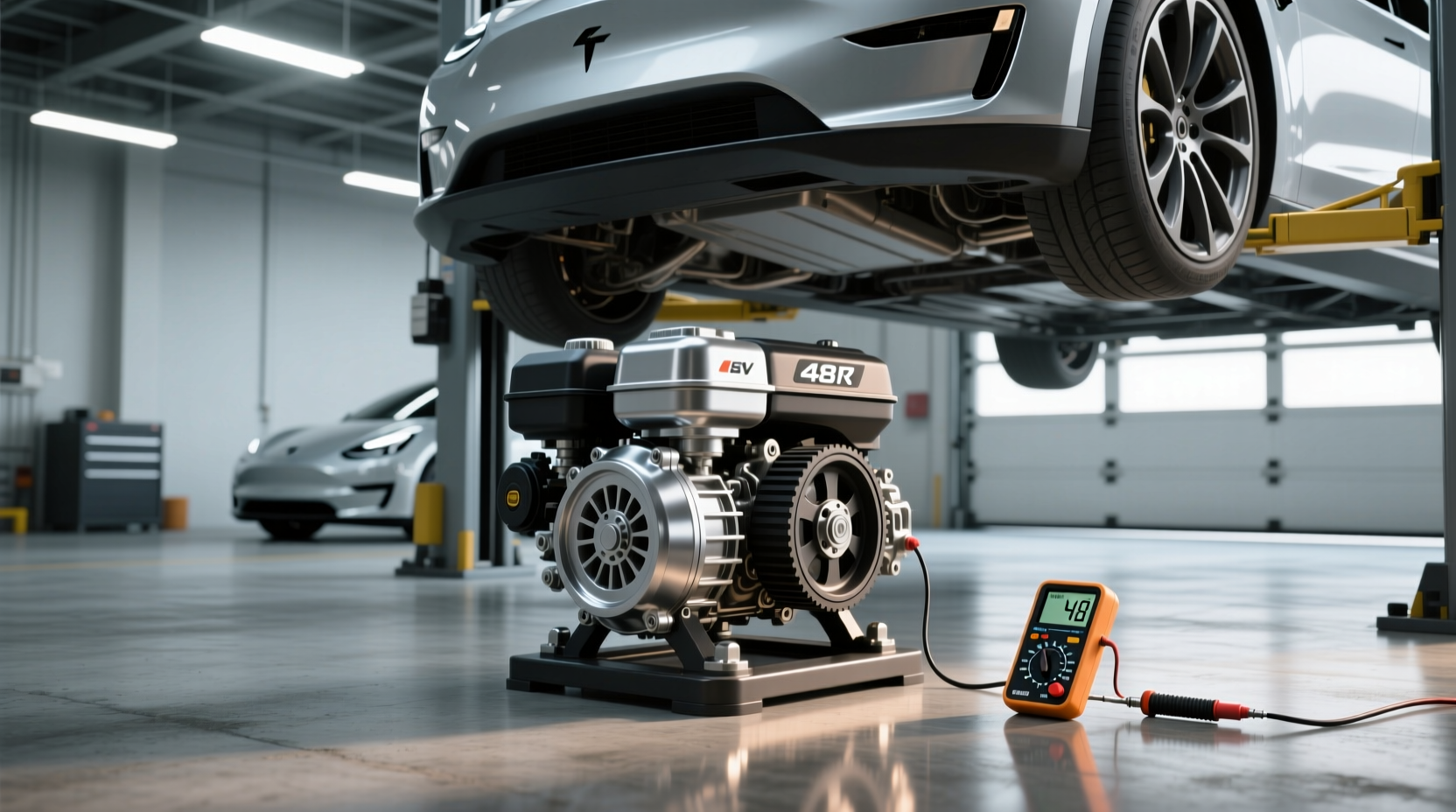
⚡ The 48V belt starter generator (BSG), also known as an integrated starter generator (iBSG), is a key component in modern mild hybrid electric vehicles (MHEVs) that enhances fuel efficiency, reduces emissions, and improves engine responsiveness. Unlike full hybrids, MHEVs use a 48-volt electrical system to support the internal combustion engine rather than power the vehicle independently. This technology has become increasingly common in vehicles from Jeep, Land Rover, BMW, and Ram, especially those equipped with eTorque or similar mild hybrid systems. Understanding how the 48V BSG works, its advantages, potential failure signs, and maintenance considerations helps drivers make informed decisions about vehicle care and long-term ownership costs.
What Is a 48V Belt Starter Generator?
A 48V belt starter generator is an electromechanical device mounted on the engine and driven by a serpentine belt. It replaces the traditional alternator and starter motor in many modern vehicles, serving dual functions: starting the engine and generating electricity to recharge the 48V battery. The BSG operates within a mild hybrid architecture, meaning it cannot propel the vehicle on electric power alone but assists the engine during acceleration, enables smoother start-stop functionality, and recovers energy during deceleration.
This system typically includes:
- A permanent magnet or induction motor/generator unit
- An integrated or external power inverter to manage DC-AC conversion
- A 48V lithium-ion battery pack (usually located under the hood or rear seat)
- Control software integrated with the engine management system
Manufacturers like Valeo, Vitesco Technologies, and Schaeffler produce these units for OEM applications1. These systems are often labeled under proprietary names such as eTorque (FCA/Stellantis), EQ Boost (Mercedes-Benz), or Mild Hybrid Drive (Land Rover).
How Does a 48V BSG System Work?
The operation of a 48V belt-driven starter generator revolves around four primary functions: engine cranking, energy generation, torque assist, and regenerative braking.
1. Engine Starting (Cranking Mode)
Instead of using a conventional 12V starter motor, the BSG uses power from the 48V battery to spin the engine via the drive belt. This allows for faster, quieter, and more precise engine restarts—especially during stop-start cycles at traffic lights or in heavy traffic.
2. Electricity Generation (Generator Mode)
Once the engine is running, the BSG switches to generator mode. It converts mechanical energy from the engine into electrical energy, which charges the 48V battery. This power supports auxiliary systems like air conditioning compressors, steering pumps, and onboard electronics without placing extra load on the engine.
3. Torque Assistance (Boost Mode)
During acceleration, the BSG can deliver additional torque—typically up to 30–50 Nm—for short durations. This reduces strain on the engine, lowers fuel consumption, and improves drivability, particularly in low-speed urban driving.
4. Regenerative Braking
When the driver lifts off the throttle or applies the brakes, the BSG acts as a generator, capturing kinetic energy that would otherwise be lost as heat. This energy is stored in the 48V battery for later use.
This seamless switching between modes is managed by the vehicle’s hybrid control module, which coordinates with the transmission, engine control unit (ECU), and battery management system (BMS).
Why Are Automakers Adopting 48V BSG Systems?
The shift toward 48V mild hybrid systems is primarily driven by tightening global emissions regulations and consumer demand for better fuel economy without the cost and complexity of full hybrid or plug-in hybrid systems.
✅ Cost-Effective Electrification: Compared to high-voltage hybrid systems (e.g., 200V+), 48V architecture requires less expensive components, lighter cabling, and no special safety shielding.✅ Fuel Efficiency Gains: Studies show that 48V BSG systems can reduce fuel consumption by 5–15%, depending on driving conditions and vehicle design 2.
✅ Emissions Reduction: Lower CO₂ output helps automakers meet regulatory standards like Euro 6d and U.S. CAFE requirements.
✅ Improved Driving Experience: Smoother starts, reduced turbo lag, and enhanced low-end torque contribute to a more refined ride.
✅ Backward Compatibility: The 48V system works alongside existing 12V networks, allowing gradual integration into current vehicle platforms.
Common Vehicles Using 48V Belt Starter Generators
Several mainstream and luxury models now feature 48V BSG systems. Notable examples include:
| Vehicle Make & Model | System Name | Engine Application | Year Range |
|---|---|---|---|
| Jeep Wrangler (JL), Grand Cherokee | eTorque | 3.6L V6, 5.7L V8 | 2018–present |
| Ram 1500 | eTorque | 3.6L V6, 5.7L V8 | 2019–present |
| Land Rover Defender, Range Rover | Mild Hybrid (MHEV) | Ingenium engines | 2020–present |
| BMW 3, 5, 7 Series | 48V Mild Hybrid | B58, S68 engines | 2020–present |
| Mercedes-Benz C, E, S-Class | EQ Boost | Inline-6 engines | 2017–present |
These implementations vary slightly in placement and cooling method—some use liquid-cooled BSGs, while others rely on hybrid (air/liquid) cooling for thermal management.
Advantages of 48V BSG Over Traditional 12V Systems
Moving from a 12V to a 48V electrical architecture brings several technical improvements:
- Higher Power Capacity: At the same current, 48V delivers four times the power of 12V, enabling more capable electric accessories.
- Reduced Electrical Losses: Higher voltage means lower current for the same power, reducing resistive losses in wiring.
- Better Energy Recovery: Regenerative braking is more effective due to higher storage capacity and faster charge acceptance.
- Enhanced Start-Stop Functionality: Faster, smoother restarts increase driver acceptance of automatic stop-start features.
- Support for Advanced Driver Aids: Powers radar, cameras, and adaptive suspension systems more efficiently.
Potential Issues and Failure Symptoms
While 48V BSG systems are designed for durability, they are not immune to problems. Common failure indicators include:
📌 Check Engine Light or Battery Warning: Often accompanied by codes like P064A (48V system performance) or U0151 (lost communication with BSG).📌 Engine Cranking Issues: Delayed or rough engine restarts despite a healthy 12V battery.
📌 Loud Whining or Grinding Noises: May indicate bearing wear or rotor imbalance in the BSG unit.
📌 Reduced Fuel Economy: If the BSG isn’t regenerating properly, fuel efficiency drops noticeably.
📌 Loss of Torque Assist: The vehicle feels less responsive during initial acceleration.
📌 Intermittent Electrical Failures: Due to unstable 48V supply affecting connected systems.
Failures can stem from:
- Worn internal bearings or brushes (in non-permanent magnet designs)
- Overheating due to inadequate cooling
- Moisture ingress or corrosion
- Faulty inverter or control module
- Voltage spikes damaging electronic components
Repair vs. Replacement: What You Need to Know
Unlike traditional alternators or starters, 48V BSG units are generally not user-serviceable. Most manufacturers recommend complete replacement if internal damage occurs.
🔧 Can You Repair a 48V BSG? In rare cases, specialized shops may offer rewinding or bearing replacement, but this is uncommon and not guaranteed to restore full functionality. Given the precision calibration and sealed construction, rebuilt units carry reliability risks.🛒 Replacement Cost: OEM parts typically range from $800 to $2,500, with labor adding $300–$600 depending on accessibility. Aftermarket or remanufactured options exist but vary in quality.
🔋 Battery Considerations: A failing 48V battery can mimic BSG issues. Always test the battery and DC-DC converter before replacing the BSG.
🛠️ Diagnostic Tools: Proper diagnosis requires scan tools capable of reading 48V system data (e.g., OEM-level scanners or advanced aftermarket tools like Autel MaxiCOM).
Maintenance Tips for Longevity
Although 48V BSG systems require no scheduled maintenance, certain practices help extend lifespan:
✅ Regular Oil Changes: Clean oil ensures proper lubrication of engine-mounted components, including the BSG’s drive belt and pulleys.✅ Inspect Serpentine Belt: Check for cracks, fraying, or glazing every 15,000 miles. A slipping belt reduces BSG efficiency.
✅ Avoid Short Trips: Frequent short drives prevent the 48V battery from fully charging, leading to sulfation and reduced capacity.
✅ Keep 12V Battery Healthy: The 12V system powers the control modules; a weak battery can disrupt hybrid operations.
✅ Monitor Warning Lights: Address hybrid system warnings promptly to prevent cascading failures.
Aftermarket and DIY Considerations
Some enthusiasts explore retrofitting 48V BSG systems into older vehicles or converting e-bikes, though feasibility varies.
⚠️ Retrofitting into Non-MHEV Cars: Requires extensive modifications including a 48V battery, inverter, control unit, and software integration. Not practical for most consumers.🚲 E-Bike Conversions: While 48V motors are common in e-bike kits, belt-driven starter generators are not suitable due to size, mounting, and control complexity.
🔌 Electric Motor Repurposing: Rewinding or modifying a BSG for other uses (e.g., wind generators) is technically possible but limited by design constraints and lack of documentation.
Environmental and Economic Impact
From an environmental standpoint, widespread adoption of 48V mild hybrids offers measurable benefits:
🌍 CO₂ Reduction: Estimates suggest fleet-wide implementation could cut average emissions by 8–10% compared to conventional ICE vehicles.📊 Total Cost of Ownership: While initial purchase price increases slightly (by ~$1,000–$1,500), fuel savings over time can offset this, especially for high-mileage drivers.
♻️ Recyclability: 48V lithium batteries are recyclable, though infrastructure is still developing in some regions.
Future Outlook of 48V Technology
Despite the rise of full electrification, 48V systems remain relevant. They serve as a bridge technology, offering meaningful efficiency gains without requiring charging infrastructure. Future developments may include:
• Integration with 48V electric superchargers• Use in commercial vehicles and light-duty trucks
• Enhanced energy recovery through predictive driving algorithms
• Standardization across brands to reduce costs
However, as EV adoption accelerates, automakers may phase out mild hybrids in favor of full battery-electric models in the long term.
Conclusion
The 48V belt starter generator represents a significant step in automotive electrification, balancing performance, efficiency, and cost. It plays a crucial role in modern mild hybrid vehicles by improving fuel economy, reducing emissions, and enhancing driving comfort. While repair and replacement can be costly, understanding how the system works and recognizing early warning signs empowers owners to maintain their vehicles effectively. As emissions standards evolve, 48V technology will continue to influence vehicle design—even as the industry moves toward full electrification.
Frequently Asked Questions
- ❓ Can a 48V belt starter generator fail suddenly?
- Yes, although gradual degradation is more common. Sudden failure can occur due to internal short circuits, severe overheating, or electronic control faults. However, most systems provide warning signs like reduced assist or dashboard alerts before complete failure.
- ❓ Is the 48V BSG the same as a traditional alternator?
- No. While both generate electricity, the BSG also starts the engine and provides torque assistance. It operates at higher power levels and integrates with hybrid control systems, unlike a standard alternator which only charges the 12V battery.
- ❓ Do I need special tools to diagnose a faulty 48V BSG?
- Yes. Basic OBD2 scanners may not access 48V system data. You’ll need a scan tool capable of communicating with the hybrid control module, often requiring OEM-level diagnostics or advanced aftermarket equipment.
- ❓ Can I jump-start a car with a 48V BSG system?
- Yes, but only using the 12V battery terminals. Never connect jumper cables directly to the 48V battery. Follow the manufacturer’s procedure—usually located under the hood or in the manual—to avoid damaging sensitive electronics.
- ❓ Are 48V BSG systems reliable over time?
- Generally yes. Designed for the lifespan of the vehicle (100,000+ miles), they have fewer moving parts than traditional starters. However, exposure to heat, moisture, and voltage fluctuations can affect longevity, especially in harsh climates.




 浙公网安备
33010002000092号
 浙B2-20120091-4