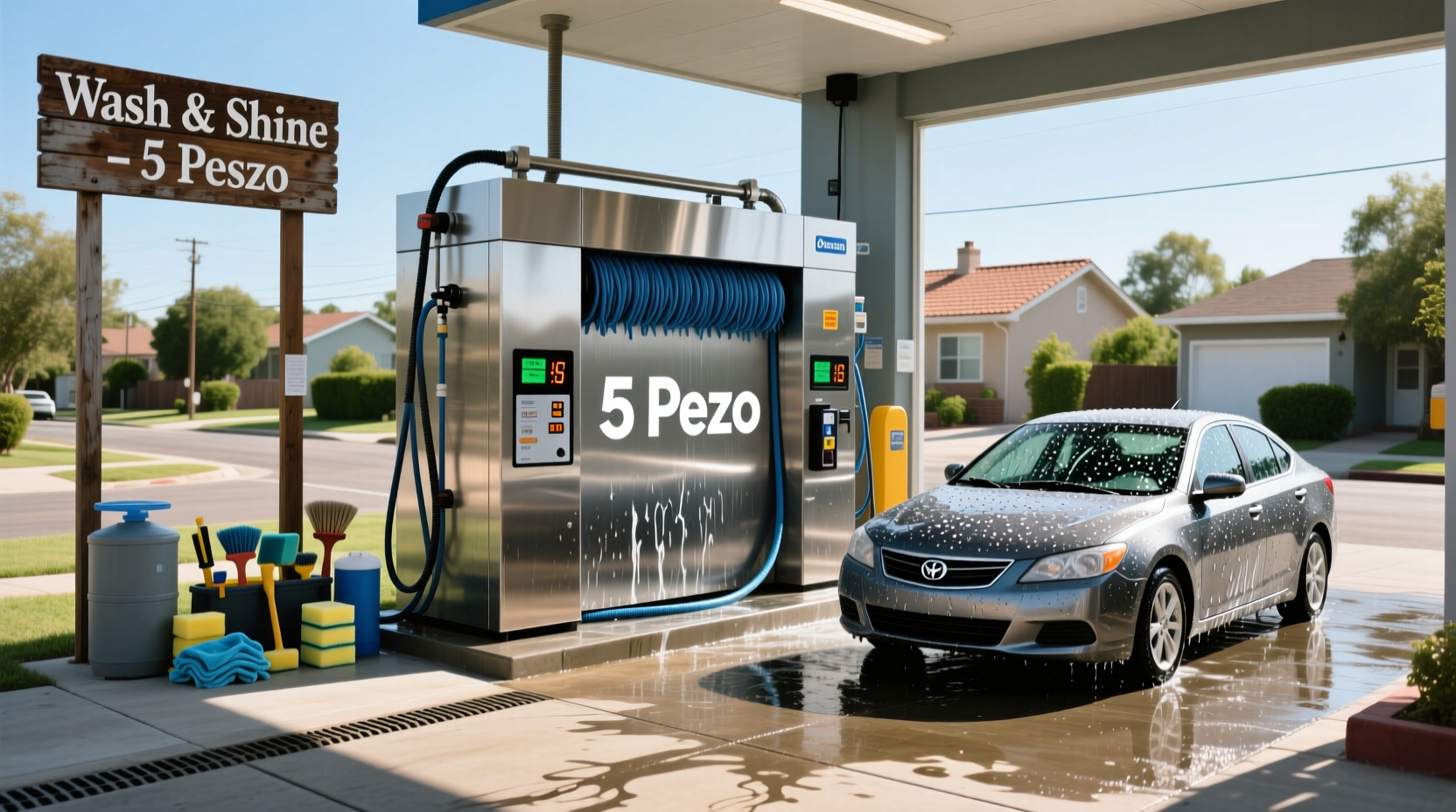
If you've seen videos or posts about a 5 peso car wash machine price in the Philippines, you're likely wondering: is it really possible to operate a car wash for just 5 pesos per use? And if so, what does that actually mean for equipment costs, profitability, and setup? The short answer is yes—consumers can pay as little as ₱5 for a timed self-service wash—but this refers to user fees, not the machine's purchase price. Behind that low cost lies a full automated or semi-automated system with significant upfront investment. This article breaks down exactly what a 5 peso car wash entails, how much the actual machines cost, what components are involved, and whether this model makes sense for entrepreneurs or vehicle owners looking to save.
Understanding the 5 Peso Car Wash Model
The term "5 peso car wash machine price" is often misunderstood. It doesn’t refer to the cost of buying the equipment—it describes the service fee charged to customers at certain self-service or automatic car wash stations in the Philippines 1. These setups allow drivers to pay ₱5 for two minutes of high-pressure water spray or ₱2 for one minute of soap application, typically found in urban areas like Manila.
This ultra-low-cost model has gained popularity through social media, especially on YouTube and Facebook, where creators showcase how affordable and accessible car cleaning has become 2. However, while users enjoy budget-friendly washing, the machines themselves are far from cheap. Understanding this distinction is key to avoiding confusion when researching prices online.
How the 5 Peso Self-Service System Works
🛒 User Experience: At these stations, customers pull up to a designated bay equipped with industrial-grade pressure nozzles, soap dispensers, and sometimes tire brushes. They insert coins or use mobile payments (e.g., GCash) into a control panel to activate timed cycles:
- 💧 ₱5 = 2 minutes of high-pressure rinse
- 🧼 ₱2 = 1 minute of foaming soap
- 🌀 No spot-free rinse or wax typically included
⏱️ The entire process is manual but uses commercial-grade equipment. There’s no conveyor belt or robotic arm—just powerful water jets controlled by time-based tokens. This keeps operational costs low and allows operators to scale without adding staff per station.
Actual Cost of Car Wash Machines in the Philippines
Now, let’s clarify the real automatic car wash machine price in the Philippine market—what someone would pay to install such a system.
🏭 Full touchless automatic car wash systems start around ₱800,000 to over ₱2 million, depending on features, brand origin (China vs. European), and installation complexity. More basic models include:
| Type of Machine | Average Price (PHP) | Key Features |
|---|---|---|
| Self-serve Pressure Station | ₱150,000 – ₱300,000 | Manual operation, coin/token-based timer, single nozzle |
| Semi-Automatic Tunnel Wash | ₱600,000 – ₱1.2M | Belt-driven, pre-soak, brush wash, dry cycle |
| Full Touchless Automatic | ₱1.5M – ₱2.5M+ | 360° rotating arms, undercarriage wash, sensor-guided |
| Mobile High-Pressure Washer | ₱40,000 – ₱120,000 | Portable, diesel/electric, used in pop-up services |
🔧 These prices usually include delivery and basic installation, especially for turnkey franchises like Speedy1 Carwash or CBK Carwash, which offer complete packages 3.
What’s Included in a Standard Setup?
⚙️ A typical self-service or automatic car wash station includes several core components:
- High-pressure pump: Generates 80–120 bar pressure; essential for removing mud and grime
- Water recycling system (optional): Reduces water consumption by up to 70%
- Coin/token acceptor or digital payment module: Enables ₱5 or ₱2 micro-payments
- Control panel with timer: Manages spray duration based on payment
- Nozzles and hoses: Durable, UV-resistant materials for outdoor use
- Drainage and oil separator: Required for environmental compliance
🌐 Some newer units integrate IoT connectivity, allowing remote monitoring of usage, maintenance alerts, and cashless transactions via QR codes—an emerging trend among modern operators.
Why Are User Fees So Low Despite High Equipment Costs?
📈 The economics rely on volume and automation. Operators amortize the initial investment over thousands of washes. For example:
- A machine costing ₱1.5 million can break even in 2–3 years with 100 cars washed daily at an average of ₱30 revenue per vehicle.
- Maintenance is minimal due to durable parts and scheduled servicing.
- Energy and water costs are offset by efficient pumps and optional recirculation systems.
👥 Labor costs are nearly eliminated since most systems require only periodic refills and cleaning, not constant supervision.
Regional Differences Across the Philippines
📍 Pricing and availability vary significantly between Metro Manila, Cebu, Davao, and provincial areas.
- Manila & Quezon City: Highest concentration of automated and self-serve stations; competitive pricing drives innovation.
- Cebu: Growing number of franchise-based touchless washes; moderate adoption of ₱5 models.
- Davao & Bacolod: Fewer automated options; more reliance on hand-wash bays or mobile units.
- Rural municipalities: Limited access due to infrastructure constraints (water pressure, drainage, power supply).
🚚 Delivery and installation logistics also affect final costs. Remote locations may incur additional fees unless bundled with franchise deals.
Common Misconceptions About the 5 Peso Model
❗ Several myths persist around this pricing model:
- Myth 1: “The machine itself costs only ₱5.” — False. As shown, equipment ranges from hundreds of thousands to millions of pesos.
- Myth 2: “It provides a full professional wash.” — Not quite. Most lack drying, waxing, or spot-free rinses.
- Myth 3: “Anyone can buy and install one easily.” — Requires permits, plumbing modifications, and electrical upgrades.
- Myth 4: “It uses very little water.” — While efficient, each wash uses 100–200 liters unless a reclamation system is installed.
Is a 5 Peso Car Wash Viable for Business Owners?
📊 For entrepreneurs, launching a car wash using the ₱5 model can be profitable, but only with careful planning.
✅ Pros:
- Low barrier to entry compared to full-service shops
- High customer appeal due to affordability
- Scalable through multiple units or franchising
- Can be combined with detailing add-ons (interior vacuum, tire shine)
❌ Cons:
- Requires reliable water source and proper drainage
- Initial capital outlay remains substantial
- Vandalism or misuse risks in unattended locations
- Regulatory requirements (environmental clearance, zoning)
📌 Success depends on location, foot traffic, and complementary services. Placing a unit near gas stations, malls, or transport hubs increases visibility and usage.
Alternatives to the 5 Peso Machine
🔄 Not every operator needs a full automated system. Here are other viable models:
- Hand-Wash Booths: Lower startup cost (₱50,000–₱150,000); employs workers directly.
- Mobile Car Wash Services: Use portable pressure washers (₱40,000–₱80,000); serve residential or office clients door-to-door.
- Hybrid Stations: Combine self-serve bays with attendant-assisted detailing.
- Franchise Models: Brands like Leisuwash 360 or Airwash 360 offer turnkey solutions with branding and support.
⚡ Each option balances automation, labor, and investment differently. Choose based on your budget, space, and target market.
How to Evaluate Equipment Before Buying
🔍 When shopping for a car wash machine—even if inspired by the 5 peso concept—focus on these factors:
- Pump Quality: Look for triplex plunger pumps with ceramic plungers; they last longer than axial types.
- Pressure & Flow Rate: Minimum 100 bar and 15 L/min for effective cleaning.
- Material Durability: Stainless steel frames resist rust in humid climates.
- Warranty & Service Network: Prefer suppliers offering local technical support.
- Payment Integration: Ensure compatibility with e-wallets like GCash or PayMaya.
- Environmental Compliance: Confirm oil-water separation and wastewater disposal plans.
📋 Always request a site assessment from the vendor. Improper water pressure or electrical supply can damage equipment prematurely.
Tips for Consumers Using 5 Peso Wash Stations
🧽 If you're a driver using these low-cost stations, here’s how to get the best results:
- Pre-rinse heavily soiled areas before applying soap.
- Use ₱2 for soap first, then ₱5 for rinse to maximize effectiveness.
- Bring your own microfiber cloth for drying windows and trim.
- Avoid using during peak rain seasons when water pressure may drop.
- Check for functional nozzles—some stations have broken sprayers.
✨ Pro tip: Combine the self-serve wash with a quick interior wipe-down at home for a near-professional clean at minimal cost.
Future Trends in Philippine Car Wash Technology
🚀 The industry is evolving rapidly. Emerging trends include:
- Solar-powered systems to reduce electricity costs
- AI-driven diagnostics for predictive maintenance
- App-based reservations and loyalty programs
- Eco-friendly biodegradable soaps to meet green standards
- Modular containerized units for easy deployment
🌐 As urban congestion increases and car ownership grows, demand for fast, affordable, and automated solutions will continue rising—making the 5 peso model just the beginning.
Conclusion: Separating Myth from Reality
The phrase "5 peso car wash machine price" reflects consumer pricing, not equipment cost. Real machines range from ₱150,000 for basic self-serve units to over ₱2 million for fully automatic systems. While users benefit from ultra-low-cost cleaning, investors must consider total setup costs, location viability, and long-term maintenance.
Whether you're a curious motorist or an aspiring entrepreneur, understanding the difference between service fee and machine price is crucial. The 5 peso model represents accessibility and innovation—but behind every quick wash is a complex, well-engineered system designed for efficiency and durability.
Frequently Asked Questions
- ❓ What does "5 peso car wash" actually mean?
- It refers to the user fee—customers pay ₱5 for two minutes of high-pressure water at self-service stations. It does not describe the cost of purchasing the machine.
- ❓ How much does a full automatic car wash machine cost in the Philippines?
- Prices range from ₱800,000 for semi-automatic systems to over ₱2 million for advanced touchless models with full automation and sensors.
- ❓ Can I install a self-serve car wash machine at home?
- Possibly, but standard residential water pressure and drainage may not support commercial-grade equipment. You’d need special plumbing and electrical work.
- ❓ Are there ongoing costs after installing a car wash machine?
- Yes, including water, electricity, detergent, routine maintenance, and occasional part replacements like seals or nozzles.
- ❓ Where can I find suppliers of car wash machines in the Philippines?
- Reputable suppliers include CBK Carwash, Leisuwash Philippines, and Steam Wash Machine PH. Many offer nationwide delivery and installation support.




 浙公网安备
33010002000092号
 浙B2-20120091-4