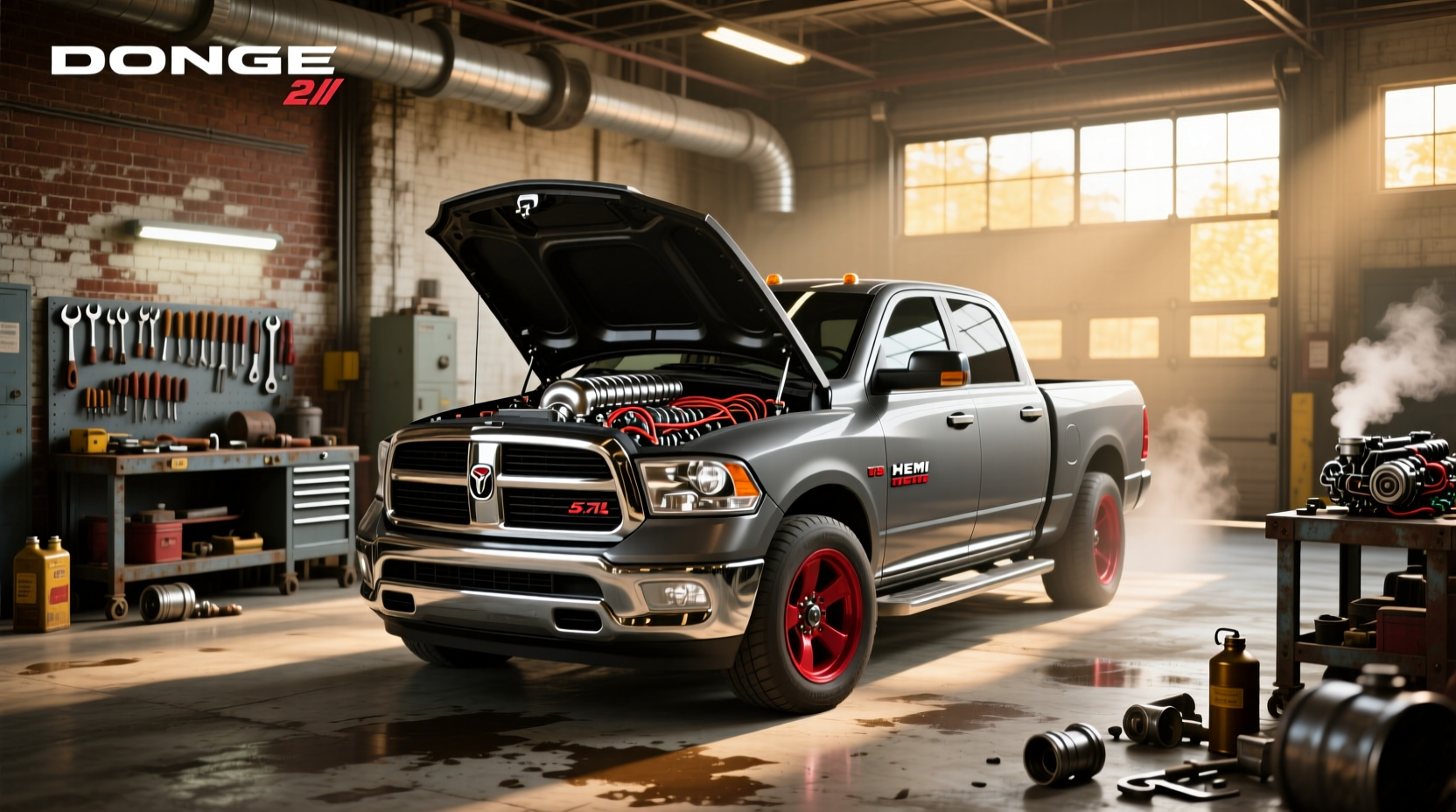
If you're researching the 5.7 hemi engine dodge ram 1500, you're likely evaluating whether this proven V8 powertrain is the right choice for your truck needs. The 5.7L HEMI® V8 has been a staple in the Ram 1500 lineup for years, known for its balance of towing capability, durability, and smooth performance. While newer engine options like the 3.0L Hurricane inline-six are emerging, the 5.7 HEMI remains a popular option—especially among buyers who value traditional V8 torque, engine longevity, and aftermarket support. This guide breaks down everything you need to know: power output, fuel efficiency, common issues, replacement costs, and how it stacks up against modern alternatives.
Overview of the 5.7L HEMI V8 in the Ram 1500
The 5.7L HEMI V8 engine has powered various generations of the Dodge Ram 1500 since its reintroduction in 2003. Over the years, it has evolved with technological upgrades such as variable valve timing (VVT), multi-displacement system (MDS), and eTorque mild hybrid assist (introduced in 2019). These enhancements improved both efficiency and responsiveness without sacrificing the engine’s core strengths: strong low-end torque and reliable performance under load.
In recent model years—including 2022 through 2025—the 5.7L HEMI remained available alongside newer engines like the 3.6L Pentastar V6 and the turbocharged 3.0L Hurricane1. However, starting with the 2026 model year, Ram reintroduced the 5.7 HEMI as an optional upgrade after temporarily shifting focus toward more efficient turbocharged six-cylinder engines2.
This resurgence reflects ongoing demand from truck owners who prioritize towing, engine familiarity, and long-term serviceability. The 2026 version of the 5.7 HEMI delivers 395 horsepower and 410 lb-ft of torque, figures that remain competitive despite being lower than the Hurricane High-Output’s 420 hp and 469 lb-ft3.
Performance and Towing Capabilities
One of the primary reasons drivers choose the 5.7 HEMI is its real-world towing performance. When properly equipped, a Ram 1500 with the 5.7L V8 can tow up to 12,750 pounds, depending on configuration, axle ratio, and trailer setup. This makes it suitable for hauling boats, campers, and small work trailers.
The engine’s broad torque curve provides confident acceleration when merging or passing on highways. Unlike turbocharged engines that rely on spool-up time, the naturally aspirated HEMI delivers immediate throttle response—a trait many drivers prefer, especially in stop-and-go traffic or hilly terrain.
| Engine | Horsepower | Torque (lb-ft) | Max Towing (lbs) | Fuel Type |
|---|---|---|---|---|
| 5.7L HEMI V8 | 395 | 410 | 12,750 | Gasoline |
| 3.0L Hurricane (Standard) | 420 | 469 | 11,550 | Gasoline |
| 3.0L Hurricane (High Output) | 445 | 545 | 13,150 | Gasoline |
| 3.6L Pentastar V6 w/ eTorque | 305 | 273 | 7,730 | Gasoline |
While the base Hurricane engine produces more peak torque than the 5.7 HEMI, its maximum towing capacity is slightly lower due to thermal management and cooling limitations in certain configurations. Only the High-Output Hurricane surpasses the HEMI in both power and towing. For users who don’t need extreme horsepower but want consistent, predictable pulling power, the 5.7 remains a compelling option.
Fuel Economy: What Real Drivers Report
Fuel efficiency is one area where the 5.7 HEMI faces criticism. Official EPA estimates list around 17 mpg city / 23 mpg highway for rear-wheel-drive models, and slightly less for four-wheel drive variants. However, real-world driving often results in lower numbers—especially in urban environments.
A detailed test by Getty's Garage found that a 2022 Ram 1500 with the 5.7L HEMI averaged just 21.9 mpg during mixed driving, with city consumption dipping into the mid-teens4. This gap between advertised and actual mileage highlights the importance of understanding how driving habits impact fuel use.
The inclusion of eTorque (a 48-volt mild hybrid system) helps improve start-stop functionality and provides minor torque assist during acceleration, which can reduce fuel use in stop-and-go conditions. Still, compared to the Hurricane engine—which benefits from turbocharging and advanced thermal efficiency—the 5.7 HEMI lags behind in overall efficiency.
Reliability and Common Issues
The 5.7 HEMI has earned a reputation for mechanical durability when maintained properly. Many examples exceed 200,000 miles with only routine servicing. However, several known issues should be monitored:
- Valve Seat Recession (Pre-2009 Models): Early versions used softer valve seat materials that could wear prematurely, especially when running low-octane fuel or E85 blends. Later revisions addressed this with hardened seats.
- Oil Consumption: Some 2014–2018 models experienced higher-than-normal oil usage due to piston ring design. Chrysler issued technical service bulletins (TSBs), and updated short blocks are available for repairs.
- MDS System Failures: The Multi-Displacement System shuts down cylinders under light load to save fuel. Over time, lifter failure or solenoid clogging can cause rough idle or check engine lights. Regular oil changes help prevent debris buildup.
- Exhaust Manifold Cracking: Thermal cycling can lead to cracks in cast iron manifolds, resulting in ticking noises or exhaust leaks. Aftermarket headers or upgraded manifolds offer longer-term solutions.
Despite these concerns, most problems arise only after significant mileage or neglect. With proper maintenance—including regular oil changes using recommended viscosity (typically 5W-20 or 5W-30), coolant flushes every 100,000 miles, and spark plug replacement at 100k intervals—the 5.7 HEMI remains a dependable engine.
Cost of Ownership and Replacement Options
When considering long-term ownership, repair and replacement costs matter. A factory-remanufactured 5.7L HEMI engine typically ranges from $3,000 to $5,000, depending on supplier and warranty terms. Used long blocks may cost as little as $2,500 but carry unknown histories. Brands like Xtreme Performance and Mopar Genuine Parts offer crate engines with warranties up to three years.
Labor for engine replacement usually adds $1,500–$2,500, depending on shop rates and complexity (e.g., whether transmission, radiator, or wiring harnesses require disassembly).
For comparison, here are current market price ranges:
- New OEM crate engine: $9,700–$10,300 (2026 model)
- Remanufactured long block: $4,500–$5,000
- Used engine (with ~100k miles): $2,400–$3,200
- DIY rebuild kit: $1,800–$2,600 (excluding labor)
Pricing varies significantly based on condition, warranty, and seller reputation. Buyers should verify core return policies, shipping fees, and compatibility with their specific VIN and model year.
Aftermarket Support and Modifications
The 5.7 HEMI enjoys robust aftermarket support, making it a favorite among enthusiasts. Common upgrades include:
- Cold air intakes (🔧) – Improve airflow and add slight power gains
- Performance tuners (⚙️) – Adjust fuel curves and timing for better throttle response
- Headers and cat-back exhausts (✨) – Enhance exhaust flow and deepen engine note
- Supercharger kits (⚡) – Can boost output to over 600 hp on modified builds
Unlike some newer turbocharged engines with complex emissions systems, the 5.7 HEMI responds well to bolt-on modifications. Its simple architecture and widespread parts availability make DIY projects accessible to skilled owners.
How It Compares to Newer Ram 1500 Engines
The decision to choose the 5.7 HEMI isn't just about nostalgia—it comes down to practical trade-offs versus newer powertrains.
The 3.0L Hurricane offers superior fuel economy and higher peak torque thanks to twin-turbocharging. It also features advanced cylinder deactivation and active cooling strategies. However, some drivers report lag in throttle response and greater complexity in servicing.
The 3.6L Pentastar V6 with eTorque is the base engine, offering adequate power for daily driving but limited towing capacity. It’s best suited for fleet operators or those prioritizing cost savings over performance.
In contrast, the 5.7 HEMI strikes a middle ground: not the most efficient, nor the most powerful, but highly predictable and durable. For users who plan to keep their truck beyond 150,000 miles, the HEMI’s proven track record gives peace of mind.
Is the 5.7 HEMI Right for You? Key Decision Factors
Choosing the 5.7 HEMI depends on your usage patterns and priorities. Consider the following scenarios:
You Should Choose the 5.7 HEMI If:
- You regularly tow heavy loads (over 8,000 lbs)
- You prefer linear power delivery without turbo lag
- You value engine longevity and ease of repair
- You plan to modify the truck for off-road or performance use
- You drive in high-altitude or hot climates where turbo engines may derate
You Might Prefer Another Engine If:
- Your primary use is city commuting or light payloads
- You prioritize fuel economy over raw power
- You want cutting-edge tech like cylinder deactivation and active noise cancellation
- You’re buying new and want maximum factory warranty coverage
- You live in a region with strict emissions regulations that favor turbocharged engines
Buying Tips: How to Evaluate a Used 5.7 HEMI Ram 1500
If you're purchasing a pre-owned Ram 1500 with the 5.7 HEMI, follow these steps to avoid costly surprises:
- Check Service Records (📝): Look for consistent oil changes, coolant flushes, and transmission servicing.
- Scan for Codes (🔍): Use an OBD2 scanner to check for stored codes related to MDS, misfires, or oil pressure.
- Inspect for Oil Leaks (🧼): Pay attention to valve cover gaskets, oil pan, and rear main seal.
- Test Drive with Load (🚚): Accelerate hard from 40 mph to feel for hesitation or shuddering during cylinder activation.
- Review Recall History (📌): Visit NHTSA.gov and enter the VIN to see open recalls.
Additionally, consider having a trusted mechanic perform a compression test and borescope inspection if the engine has over 120,000 miles.
Future Outlook and Availability
Although Ram initially signaled a move away from V8 engines in favor of turbocharged six-cylinders, customer feedback led to the return of the 5.7 HEMI for the 2026 model year2. This suggests that while electrification and efficiency are growing priorities, there remains a dedicated market segment for traditional gasoline V8s.
Going forward, the 5.7 HEMI may become a niche option rather than the default choice. As emission standards tighten and fuel prices fluctuate, automakers will continue balancing performance with sustainability. However, for now, the 5.7 HEMI remains available and supported—with full factory integration and warranty backing.
Frequently Asked Questions
- Is the 5.7 HEMI engine available in the 2026 Ram 1500?
- Yes, the 5.7L HEMI V8 returns as an available engine option for the 2026 Ram 1500, following strong consumer demand for V8 power and towing capability.
- How much does it cost to replace a 5.7 HEMI engine?
- A remanufactured 5.7 HEMI engine typically costs between $3,000 and $5,000, with additional labor costs of $1,500–$2,500 depending on the shop and location.
- Does the 5.7 HEMI have reliability issues?
- While generally reliable, common issues include MDS solenoid failures, oil consumption in certain model years, and exhaust manifold cracking. Regular maintenance minimizes these risks.
- Can the 5.7 HEMI tow 10,000 pounds?
- Yes, when properly equipped with the Heavy-Duty Tow Package, 4.10 axle ratio, and trailer brake controller, the 5.7 HEMI can tow up to 12,750 pounds—well above 10,000 lbs.
- What kind of gas does the 5.7 HEMI require?
- The 5.7 HEMI runs on regular unleaded gasoline (87 octane). Premium fuel is not required, though some owners report smoother operation with higher-octane fuel under heavy load.




 浙公网安备
33010002000092号
 浙B2-20120091-4