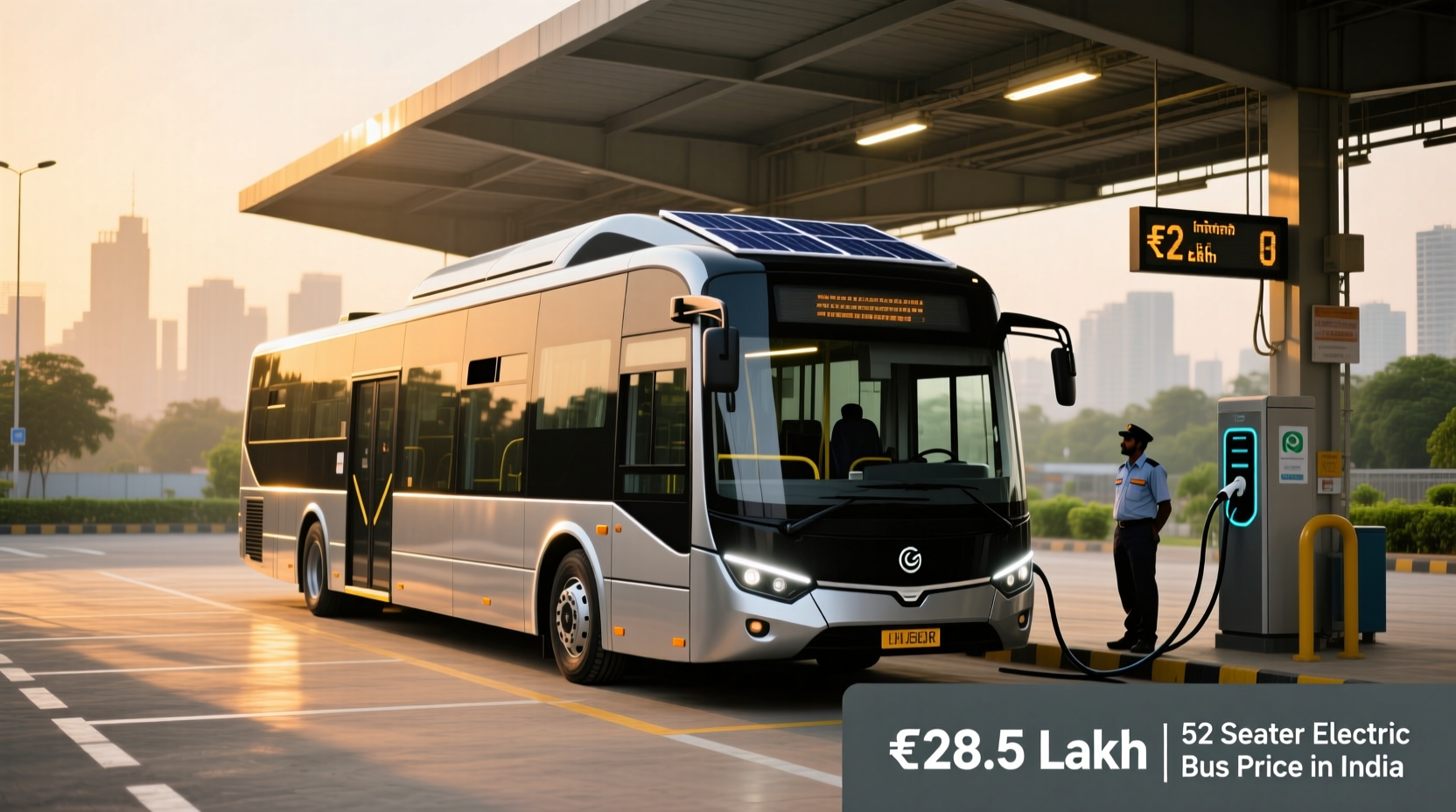
If you're searching for the 52 seater electric bus price in India, expect a range between ₹1.8 crore and ₹2.5 crore, depending on battery capacity, brand, build quality, and additional features like AC, smart systems, or wheelchair accessibility. This comprehensive guide breaks down every aspect influencing cost, performance, and long-term value—helping fleet operators, transport planners, and institutional buyers make informed decisions based on real-world data and market trends as of 2025.
Understanding the 52-Seater Electric Bus Market in India
The demand for large-capacity electric buses in India has surged due to government incentives under schemes like FAME-II (Faster Adoption and Manufacturing of Hybrid and Electric Vehicles), rising fuel costs, and increasing environmental awareness. The 52-seater configuration is particularly popular among state transport corporations (STUs), private intercity operators, educational institutions, and corporate campuses needing high-volume, zero-emission transit solutions.
Unlike smaller shuttle or sightseeing models (e.g., 14–25 seater variants found on platforms like IndiaMART or Aquila EV)1, full-size 52-seater electric buses are designed for longer routes, higher speeds, and durability under frequent use. These are not low-speed golf-style vehicles but road-legal, type-approved coaches meeting AIS-173 safety standards.
Current Price Range for 52-Seater Electric Buses (2025)
As of early 2025, the base price for a standard 52-seater electric bus in India typically falls within ₹1.8 crore to ₹2.5 crore (INR 18–25 million). However, final pricing depends heavily on several variables:
- 🔋 Battery Type & Capacity: Lithium iron phosphate (LFP) batteries dominate the market due to safety and longevity. A 350–400 kWh pack offers 250–300 km per charge and significantly affects cost.
- ⚙️ Motor Power: Ranges from 180 kW to 250 kW for sustained highway operation.
- ✨ Features: Air conditioning, GPS tracking, passenger USB ports, CCTV, digital signage, and push-back seats increase total cost.
- 🏭 Manufacturer Origin: Domestic brands such as Switch Mobility (formerly Optare), Tata Motors, and JBM Auto offer competitive pricing with local support, while imported chassis or technology can raise prices.
- 🚚 Customization Level: School buses may include safety rails and lower floors; luxury shuttles add reclining seats and Wi-Fi.
For example, the Tata Starbus EV 52-seater variant starts around ₹2.1 crore after subsidies, whereas premium configurations with extended range or dual charging options can exceed ₹2.4 crore2.
Key Factors Influencing Electric Bus Pricing
🔋 Battery Technology and Range
The single largest cost component—often 40–50% of the total vehicle price—is the battery pack. For a 52-seater bus, typical battery sizes range from 300 kWh to over 400 kWh. Higher energy density allows longer range but increases both upfront cost and replacement expense.
Most Indian operators aim for a daily operational range of 200–300 km. Charging infrastructure must align with this need. Fast-charging stations (DC 75kW or 150kW) can recharge up to 80% in 1.5–2 hours, while overnight depot charging at 22–44 kW is more common for fleets.
🏭 Manufacturer and Brand Options
Major players offering 50+ seater electric buses in India include:
| Brand | Model | Seating Capacity | Approx. Price (INR) | Range (km) |
|---|---|---|---|---|
| Tata Motors | Starbus EV Ultra | 52 | ₹2.1 Crore | 270 |
| Switch Mobility | Switch EiV 22 | 51–53 | ₹2.3 Crore | 300+ |
| JBM Auto | Olectra BYD eBuzz K9 Pro | 50 | ₹2.0 Crore | 350 |
| Ashok Leyland | Circuit EV | 52 | ₹2.2 Crore | 250 |
Note: Prices vary by state-level subsidies, order volume, and inclusion of charging equipment.
📌 Government Incentives and Subsidies
The Indian government provides substantial financial support through FAME-II and state-specific programs. Under FAME-II, eligible electric buses receive up to ₹1.5 crore per vehicle in demand incentives, reducing net acquisition cost significantly.
Additionally, states like Maharashtra, Karnataka, Gujarat, and Delhi offer top-up subsidies, free land for depots, and reduced electricity tariffs for charging stations. Operators should verify eligibility criteria with their respective STUs or urban mobility authorities before procurement.
🔧 Total Cost of Ownership (TCO) vs. Diesel Counterparts
While the initial investment is higher than diesel buses (~₹1.2–1.4 crore), electric buses offer lower operating costs:
- ⛽ Fuel Savings: Electricity costs ~₹1.5–2/km vs. ₹3.5–4.5/km for diesel.
- 🛠️ Maintenance: Fewer moving parts reduce service frequency and spare part needs.
- 📉 Depreciation: EVs depreciate slower due to policy support and growing resale interest.
Over a 12-year lifecycle, TCO analysis shows electric buses can be 20–30% cheaper than conventional counterparts, especially when factoring in carbon credits and green branding benefits.
Common Misconceptions About 52-Seater Electric Buses
❌ 'All Electric Buses Are the Same'
Not true. There's significant variation in battery chemistry, motor efficiency, thermal management systems, and software integration. Some manufacturers use air-cooled LFP packs prone to degradation in extreme heat; others use liquid cooling for better longevity.
❌ 'They Can't Operate Long Routes'
Modern 52-seaters with 350+ kWh batteries easily cover 250–300 km on a single charge—sufficient for most intra-city, suburban, and semi-intercity routes. With strategic fast-charging stops, even longer operations are feasible.
❌ 'Charging Infrastructure Is Too Expensive'
While setting up a depot with multiple chargers requires capital, many state agencies provide partial funding. Also, off-peak charging leverages cheaper night rates, improving economics.
How to Evaluate and Choose the Right 52-Seater Electric Bus
📋 Step 1: Define Your Operational Requirements
Ask:
- 📍 What is the average daily distance?
- ⏱️ How many trips per day?
- 🌡️ What are the temperature extremes in your region?
- 🧳 Will passengers carry luggage (important for school tours or airport transfers)?
✅ Step 2: Assess Build Quality and Safety Standards
Ensure the bus meets:
- AIS-173 certification for electric vehicle safety
- Certified crash-tested body structure
- Fire suppression systems in battery compartment
- IP67-rated battery enclosures
🌐 Step 3: Review After-Sales Support Network
Absence of nearby service centers can lead to downtime. Prioritize manufacturers with pan-India presence or tie-ups with third-party maintenance providers.
🔌 Step 4: Plan Charging Infrastructure Early
Work with local DISCOMs to assess grid connectivity. Consider solar-integrated charging if sustainability goals are a priority. Estimate power load requirements: one 75kW charger draws ~100A at 415V three-phase supply.
Regional Price Variations Across India
Pricing isn't uniform across states. Key differences arise due to:
- 📌 State Incentives: Tamil Nadu offers additional subsidies beyond FAME-II.
- 🚚 Logistics: Delivery charges add ₹1–2 lakh for remote areas.
- ⚡ Electricity Tariffs: Lower commercial rates in Gujarat improve ROI calculations.
- 👥 Local Assembly: Plants in Pune (Tata), Chennai (Switch), and Faridabad (JBM) reduce transportation costs.
For instance, a 52-seater might cost ₹2.05 crore in Mumbai but ₹2.15 crore in Guwahati due to freight and tax differentials.
Future Outlook: Will Prices Drop?
Yes. Industry experts project a 15–20% decline in electric bus prices by 2027 due to:
- 📈 Increased domestic battery production (e.g., Reliance, Ola Cell, Amara Raja)
- 🏭 Economies of scale from bulk orders by STUs
- 🔋 Advancements in solid-state battery tech (still in pilot phase)
However, near-term inflationary pressures on raw materials (lithium, nickel) could delay reductions.
Alternatives to Full 52-Seater Purchases
For organizations hesitant about upfront investment, alternatives exist:
👥 Bus Leasing or PaaS (Power-as-a-Service)
Companies like NueGo offer smart electric AC bus leasing with all-inclusive packages covering maintenance, insurance, and charging3. Monthly rentals start around ₹1.8–2.2 lakh per bus, making it viable for short-term contracts or seasonal demand spikes.
🚌 Smaller Configurations for Lower Volume Needs
If full capacity isn’t always needed, consider two 26-seater minibuses instead. They offer route flexibility, easier parking, and lower entry cost (~₹90–1.1 lakh each).
Frequently Asked Questions (FAQs)
What is the price of a 52-seater electric bus in India in 2025?
The price ranges from ₹1.8 crore to ₹2.5 crore, depending on brand, battery size, features, and location. After government subsidies, effective cost can drop by up to ₹1.5 crore.
How much does it cost to charge a 52-seater electric bus?
Assuming a 350 kWh battery and electricity rate of ₹8/kWh, full charge costs approximately ₹2,800, translating to ₹10–12 per km.
Are there subsidies available for buying electric buses in India?
Yes. Central FAME-II scheme offers up to ₹1.5 crore per bus. Many states provide additional incentives, including tax exemptions and free charging infrastructure support.
Can a 52-seater electric bus run air conditioning throughout the journey?
Yes, modern models are designed to operate HVAC systems without compromising range significantly. Efficient thermal management ensures consistent performance even in summer months.
Where can I test drive or see a 52-seater electric bus in person?
Larger cities like Bengaluru, Chennai, Mumbai, and Delhi have demo units available through dealerships or at transport expos. Contact manufacturers directly for site visits or virtual walkthroughs.




 浙公网安备
33010002000092号
 浙B2-20120091-4