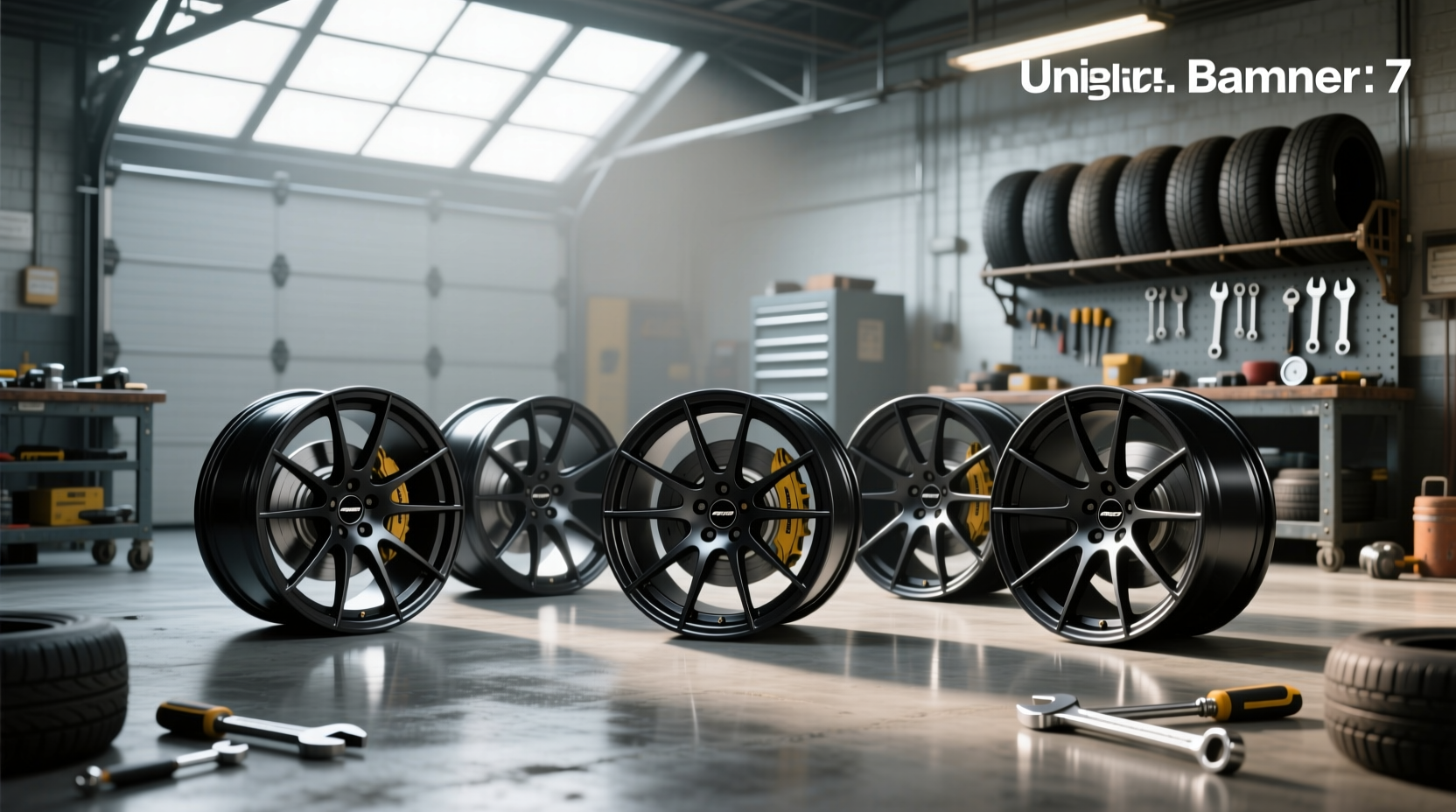
If you're searching for 5x139.7 rims, you're likely upgrading or replacing wheels on a full-size truck, SUV, or Jeep with this specific bolt pattern. The 5x139.7mm (also written as 5x5.5 inches) configuration is one of the most common in North American light-duty and heavy-duty pickup trucks. Knowing whether your vehicle uses this pattern—and understanding key specs like offset, centerbore, and diameter—is essential to ensure proper fitment, safety, and performance. This guide breaks down everything you need to know about 5x139.7 bolt pattern wheels, including compatible vehicles, measurement techniques, common misconceptions, and what to watch for when shopping.
What Does 5x139.7 Mean?
The term 5x139.7 refers to a wheel's bolt pattern, also known as the lug pattern. It consists of two components:
- 5: The number of lug holes (or studs) on the wheel.
- 139.7 mm: The diameter of the imaginary circle formed by the centers of the five lug holes, measured in millimeters.
This measurement is equivalent to 5x5.5 inches, since 139.7 mm equals exactly 5.5 inches. You'll often see both formats used interchangeably across retailers and manufacturers1.
🔧 Why it matters: Installing a wheel with an incorrect bolt pattern can lead to unsafe driving conditions, vibration, improper torque distribution, and even wheel detachment at speed. Always confirm your vehicle’s exact bolt pattern before purchasing new rims.
Which Vehicles Use the 5x139.7 Bolt Pattern?
The 5x139.7 bolt pattern is primarily associated with American-made trucks and SUVs. Below is a comprehensive list of common makes and models that use this configuration:
| Make | Model | Years |
|---|---|---|
| Dodge | Ram 1500, Ram 2500 (light-duty), Dakota | 1994–2023 |
| Chrysler | Aspen | 2007–2009 |
| Ford | Excursion, Expedition, F-150 (certain years) | 1997–2014 |
| Chevrolet | Tahoe, Suburban, Avalanche, Silverado 1500 | 1999–2013 |
| GMC | Yukon, Yukon XL, Sierra 1500 | 1999–2013 |
| Jeep | Grand Cherokee (WK/WK2), Wrangler (JK/JL with adapter) | 2005–present* |
| Nissan | Armada, Titan | 2004–2023 |
| Toyota | Tundra, Sequoia | 2000–2021 |
📍 Note: While many of these vehicles share the same bolt pattern, they may differ in other critical dimensions such as centerbore, offset, and hub-centric vs. lug-centric design. For example, some newer Jeeps require adapters or spacers to run 5x139.7 wheels originally designed for Dodge or Nissan platforms.
Is 5x139.7 the Same as 5x5.5?
✅ Yes, 5x139.7 mm is exactly equal to 5x5.5 inches. This is not a rounding approximation—it's a direct metric-to-imperial conversion (139.7 ÷ 25.4 = 5.5). Retailers and manufacturers use both terms depending on regional preferences or branding style.
📌 However, confusion arises because some websites list them separately, suggesting they are different. They are not. A wheel labeled 5x5.5" fits any vehicle requiring 5x139.7mm, provided all other specifications match.
Key Wheel Specifications Beyond Bolt Pattern
Beyond the bolt pattern, several other measurements determine whether a rim will fit your vehicle correctly and safely:
1. Center Bore (CB)
The center bore is the large hole in the back of the wheel that centers it over the hub of the axle. Most 5x139.7 wheels have a center bore of 78.1 mm, which matches the hub size on many Dodge Ram and Nissan Titan models.
⚙️ If the center bore is too small, the wheel won’t seat properly. If it’s larger, the wheel relies solely on the lug nuts for centering (lug-centric), which increases stress and vibration risk unless hub-centric rings are used.
2. Offset (ET)
Offset determines how far the mounting surface of the wheel sits from its true centerline. It’s measured in millimeters and can be positive (+), negative (–), or zero.
- Positive offset: Mounting surface is closer to the front (outside) of the wheel. Common on stock SUVs.
- Negative offset: Mounting surface is closer to the back (inside). Gives a wider stance; popular in off-road builds.
- Zero offset: Mounting surface aligns with the centerline.
For example, a 17x8 wheel with -12mm offset will sit further out than a 17x8 with +20mm offset, affecting clearance with fenders and suspension components.
3. Backspace
Backspace is the distance from the mounting surface to the inner edge of the wheel, measured in inches. It’s commonly used in aftermarket and racing circles.
📏 To convert between offset and backspace:
\\[ \\text{Backspace} = \\left(\\frac{\\text{Rim Width}}{2}\ight) + \\text{Offset} + \\text{Hub Depth Adjustment} \\]
Always verify backspace if you’re running wide tires or modified suspension.
4. Wheel Diameter & Width
Common sizes for 5x139.7 rims include:
- 15-inch: Often found on older trucks or work vehicles.
- 16-inch: Popular for OEM replacements and budget upgrades.
- 17-inch: Most common aftermarket size; balances cost, ride comfort, and appearance.
- 18–22 inch: Used in lifted trucks and custom builds.
Width typically ranges from 7 to 12 inches, depending on tire needs and fender clearance.
Steel vs. Alloy 5x139.7 Rims: What’s the Difference?
When choosing 5x139.7 wheels, you’ll encounter two main materials: steel and alloy (usually aluminum).
| Feature | Steel Rims | Alloy Rims |
|---|---|---|
| Durability | High impact resistance; bends rather than cracks | Strong but more brittle; prone to cracking under hard impacts |
| Weight | Heavier, increases unsprung mass | Lighter, improves fuel economy and handling |
| Cost | Generally cheaper | More expensive due to manufacturing process |
| Aesthetics | Basic look; often paired with hubcaps | Sleeker designs; available in machined, black, chrome finishes |
| Corrosion Resistance | Poor unless coated; rusts easily | Better resistance; especially with protective coatings |
| Use Case | Fleet vehicles, winter setups, work trucks | Show trucks, daily drivers, off-road enthusiasts |
🛒 Tip: Steel wheels are ideal for winter tires due to their durability and lower cost. Alloy wheels enhance curb appeal and performance but require more care in harsh climates.
How to Measure Your Current Bolt Pattern
If you’re unsure whether your vehicle uses a 5x139.7 bolt pattern, here’s how to measure it yourself:
For 5-Lug Patterns:
- Remove one wheel to access the hub.
- Measure from the center of one lug hole to the center of the second farthest hole (skipping one in between).
- If the measurement is 139.7 mm (5.5"), you have a 5x139.7 pattern.
🔍 Note: Do not measure across adjacent holes or from outer edge to outer edge—this leads to inaccurate results.
Can I Put 5x139.7 Wheels on a Vehicle with a Different Bolt Pattern?
❌ Generally, no. Attempting to adapt a wheel with a mismatched bolt pattern using bolt converters or adapters is risky and not recommended for primary drive wheels.
However, there are specialized lug-centric adapters that allow conversion (e.g., from 5x114.3 to 5x139.7), but they add complexity and potential failure points. These should only be used temporarily or on non-driven axles with proper engineering oversight.
Are OEM Replacement Rims Worth It?
OEM-style steel rims (like those labeled “factory replacement” or “remanufactured”) are often sold as affordable alternatives to dealership parts. They’re typically reverse-engineered to match original dimensions and finish.
✅ Pros:
- Lowers cost compared to dealer-priced OEM wheels.
- Ensures correct bolt pattern, centerbore, and offset.
- Often come with lifetime warranties against structural defects.
❗ Cautions:
- Quality varies by supplier—check reviews and certifications.
- May lack corrosion protection unless powder-coated.
- Not always made in the same country or factory as original equipment.
Tips for Buying 5x139.7 Rims Online
Shopping online offers variety and competitive pricing, but requires attention to detail:
- ✨ Verify all specs: Confirm bolt pattern, centerbore, offset, diameter, and finish before purchase.
- 🚚 Check shipping costs: Heavy steel wheels incur high freight fees; look for free shipping thresholds.
- ⏱️ Review return policies: Some sellers charge restocking fees or exclude wheels from returns.
- 🧰 Ask about hub-centric rings: If the wheel has a larger centerbore, request plastic or metal rings to ensure secure fitment.
- 🌐 Buy from reputable suppliers: Look for sites with detailed product filters, real customer photos, and responsive support.
Common Misconceptions About 5x139.7 Wheels
Despite being widely used, several myths persist:
Misconception 1: "All Full-Size Trucks Use 5x139.7"
No. While many do, Ford F-250 and heavier models use a 8-lug (8x170 or 8x165.1) pattern. Always double-check your specific model year.
Misconception 2: "Offset Doesn’t Matter for Stock Setups"
It does. Even slight deviations can cause rubbing, uneven wear, or affect steering geometry.
Misconception 3: "Any 5-Lug Wheel Can Be Adapted"
False. Adapters reduce strength and increase stress on fasteners. Not suitable for towing or high-load applications.
Where to Buy 5x139.7 Rims
You can find 5x139.7 wheels through various channels:
- 🏪 Local Tire Shops: Offer installation and balancing services; may carry limited styles.
- 🌐 Online Specialty Retailers: Sites like Discount Tire, Fitment Industries, and BB Wheels offer advanced filtering by bolt pattern, offset, and vehicle fitment.
- 🏭 Direct Manufacturers: Companies like Black Rock, US Wheel, and RTX produce durable steel options often sold through distributors.
- 👥 Marketplaces: eBay and similar platforms host individual sellers offering new, used, and remanufactured wheels—but inspect seller ratings and photos carefully.
Final Checklist Before Buying 5x139.7 Rims
Before finalizing your purchase, ask yourself:
- Does my vehicle actually use a 5x139.7 bolt pattern? (Confirm via owner’s manual or physical measurement.)
- What is the required centerbore size? (Typically 78.1 mm for Dodge/Nissan-based trucks.)
- What offset or backspace does my setup need? (Stock range is usually +15mm to +30mm.)
- Am I replacing just rims or buying a wheel-and-tire package?
- Do I need hub-centric rings or longer lug bolts?
- Will the new wheels clear brakes and suspension components?
Addressing these questions helps prevent costly mistakes and ensures a safe, smooth installation.
Frequently Asked Questions (FAQs)
- ❓ Can I use 5x139.7 rims on a Jeep Wrangler?
- Yes, but only with modifications. The JK and JL Wranglers use a 5x127 bolt pattern. You’ll need wheel adapters or a complete re-drilled hub setup to run 5x139.7 wheels safely.
- ❓ Are 5x139.7 and 5x114.3 the same?
- No. 5x114.3 is commonly used on Honda, Toyota, and some Ford models. The pitch circle diameter is smaller (114.3 mm vs. 139.7 mm), so they are not interchangeable without adapters.
- ❓ What is the standard centerbore for 5x139.7 wheels?
- The most common centerbore is 78.1 mm, matching Dodge Ram, Nissan Titan, and certain GM trucks. Always verify compatibility with your vehicle’s hub size.
- ❓ Can I mix steel and alloy wheels on the same vehicle?
- Technically yes, but not recommended. Differences in weight and flex can affect handling, braking, and ABS/torque vectoring systems. Use matching sets whenever possible.
- ❓ How tight should I torque 5x139.7 wheels?
- Most full-size trucks require 110–125 ft-lbs of torque. Always follow your vehicle manufacturer’s specification and use a calibrated torque wrench. Recheck after 50 miles of driving.




 浙公网安备
33010002000092号
 浙B2-20120091-4