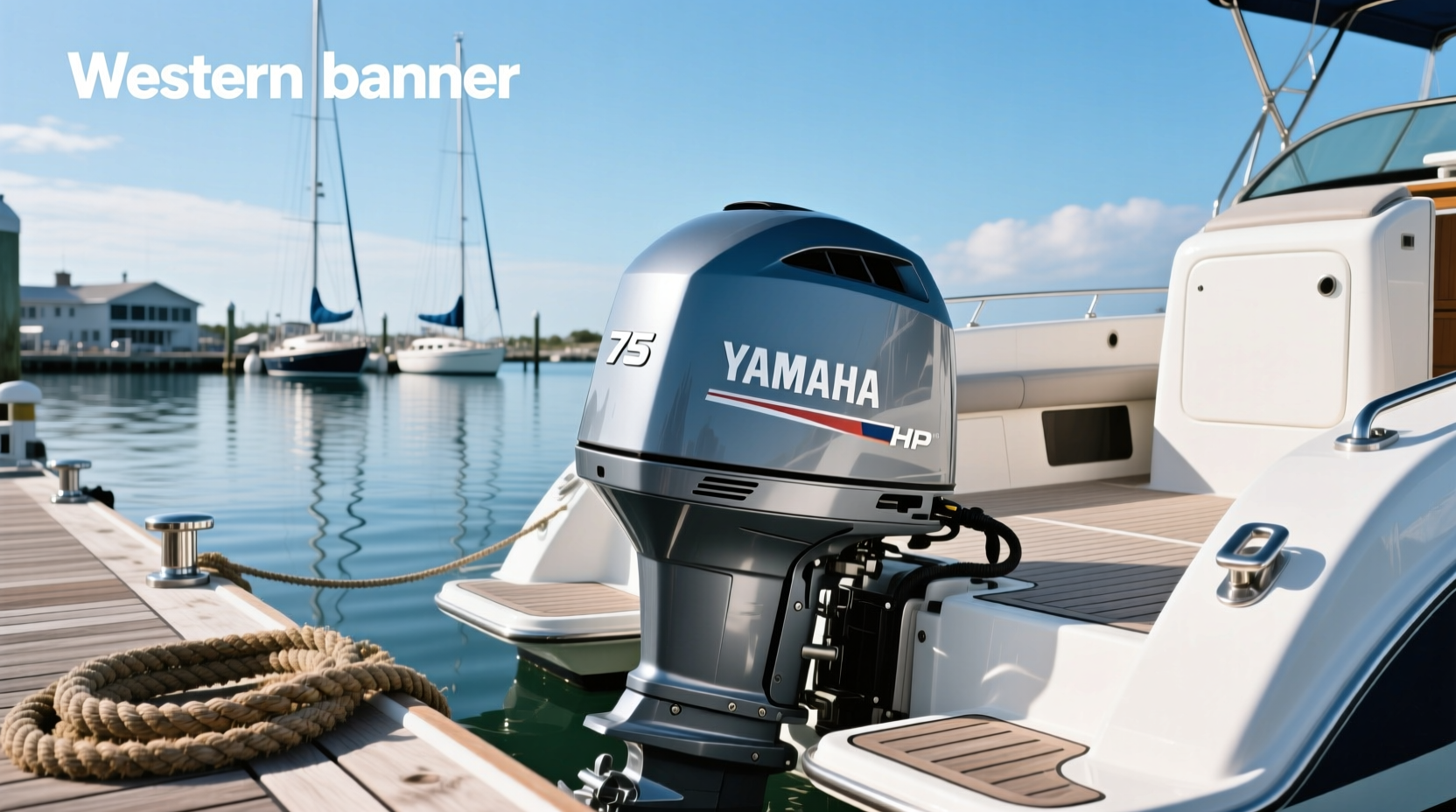
When searching for a reliable midrange outboard motor, many boat owners turn to the 75 hp Yamaha outboard, particularly the F75 and E75 models. Known for durability, fuel efficiency, and smooth operation, these engines are ideal for boats ranging from 18 to 24 feet, including center consoles, pontoons, and fishing skiffs. Whether you're comparing new vs. used, four-stroke vs. two-stroke, or evaluating shaft length and steering options, understanding the real-world performance and technical details of the Yamaha 75 horsepower outboard is essential for making an informed decision.
Understanding the Yamaha 75 HP Outboard Lineup
The current Yamaha 75 hp outboard engine is primarily represented by the F75 model, a four-stroke, inline-four engine with a 1.8-liter displacement. It's part of Yamaha’s midrange lineup, sharing core engineering with the F90 and F115, but tuned to deliver optimal torque and fuel economy at lower RPMs ⚙️. This makes it well-suited for moderate-duty applications such as coastal cruising, weekend fishing trips, and towing small watercraft.
In contrast, older Yamaha 75 hp 2-stroke models—like the E75B—were produced in the 1990s and early 2000s and featured lighter weight and simpler mechanics. While no longer in production, they still appear in the used market and are valued for their power-to-weight ratio and ease of maintenance.
Key Specifications: F75 Four-Stroke (Current Model)
| Feature | Specification |
|---|---|
| Engine Type | Four-stroke, SOHC, Inline-4 |
| Displacement | 1.8 L (1,832 cc) |
| Horsepower | 75 hp @ 5,000–6,000 rpm |
| Weight (L-model) | 353 lbs (160 kg) |
| Shaft Length | 20" (L) or 25" (XL) |
| Steering Options | Tiller or remote mechanical |
| Starting System | Electric start standard |
| Fuel Delivery | Electronic Fuel Injection (EFI) |
| Iso Certifications | ISO 8846 ignition protection available |
These specs make the F75 competitive among modern 75 hp engines, especially when compared to offerings from Mercury, Suzuki, and Honda. Its larger displacement gives it an edge in low-end torque, which translates to better hole-shot performance and mid-range acceleration ⚡.
Differences Between 2-Stroke and 4-Stroke 75 HP Yamahas
One of the most common points of confusion among buyers is whether to choose a vintage 75 hp Yamaha 2-stroke or invest in a newer four-stroke. Here's a breakdown of the trade-offs:
⚙️ Two-Stroke Models (e.g., E75B)
- Pros: Lighter (~300 lbs), simpler design, lower initial cost on used market, responsive throttle
- Cons: Higher fuel consumption, louder operation, increased emissions, harder to source parts
- Best For: Budget-conscious buyers, lightweight dinghies, auxiliary power on sailboats
⚙️ Four-Stroke Models (F75)
- Pros: Quieter, more fuel-efficient, lower emissions, smoother idle, longer service intervals
- Cons: Heavier, higher upfront cost, more complex internal components
- Best For: Family boats, fishing charters, rental fleets, eco-sensitive areas
While the two-stroke E75 was once popular for its compact power, modern environmental standards and user expectations have shifted strongly toward four-strokes ✅.
Performance: How Fast Does a 75 HP Yamaha Outboard Go?
A frequently asked question is: how fast does a 75 hp motor go? The answer depends heavily on boat type, weight, hull design, and load. However, general estimates based on real-world data are:
- Aluminum fishing boat (16–18'): 30–38 mph
- Pontoon (20–22'): 22–28 mph
- Fiberglass center console (19–21'): 35–42 mph
- Dinghy or tender (12–14'): 25–32 mph
The Yamaha F75 delivers strong mid-range thrust, allowing quicker planing than smaller engines. Users report that it performs reliably even under full load, making it suitable for watersports like tubing or wakeboarding at reduced speeds 🌐.
Weight Considerations and Mounting Compatibility
The dry weight of a 75 hp Yamaha outboard is approximately 353 lbs for the long (20") shaft version (F75LB). This is important when assessing transom strength and trim system compatibility. Overloading a transom can lead to structural damage or poor handling.
Boat manufacturers typically specify maximum engine weight and recommended horsepower ranges. Always verify your vessel’s capacity before installation. If replacing a lighter two-stroke, consider reinforcing mounting brackets or upgrading tilt systems 🧰.
Shaft Length: Standard vs. Long vs. Extra-Long
Yamaha offers the F75 in multiple shaft lengths:
- 20" (L): Standard transoms (15"–17" height)
- 25" (XL): Jackplate-equipped or raised transoms
Choosing the wrong shaft length can cause ventilation or cavitation. A rule of thumb: the anti-ventilation plate should sit level with the bottom of the hull when mounted correctly 🔍.
Steering Options: Tiller vs. Remote Mechanical
The Yamaha F75 is available in both tiller steer and remote mechanical configurations:
🛒 Tiller-Steer Model (F75TLR)
- Direct handlebar control
- Lower cost and simpler setup
- Ideal for small boats, tenders, and solo operators
- Limited reach; not suited for large cockpits
🔧 Remote-Mechanical Model (F75LB)
- Compatible with helm-mounted controls
- Better ergonomics for extended use
- Allows dual-engine setups
- Slightly higher maintenance due to cable linkages
For comfort and control, remote steering is preferred on boats over 18 feet. Tiller models remain popular for simplicity and reliability in basic applications.
Fuel Efficiency and Operating Costs
Fuel economy is a major factor in long-term ownership. The Yamaha F75 averages:
- 3.5–4.5 gallons per hour (gph) at cruising speed (3000–4000 rpm)
- 1.8–2.2 gph at idle or trolling speed
- Up to 5.0 gph under full throttle
This translates to roughly 5–7 miles per gallon depending on conditions. Compared to older two-strokes—which often consumed 6+ gph—the F75 offers significant savings over time, especially for frequent users ⛽.
Maintenance costs are also lower due to longer oil change intervals (every 100 hours or annually) and fewer tune-ups required. The engine uses a 10W-30 marine-rated oil and has easily accessible filters.
New vs. Used: What Should You Buy?
With new Yamaha F75 prices starting around $10,200–$11,700, many buyers explore the used market. Pre-owned models from 2005–2015 can be found between $3,000 and $6,000, depending on condition and hours.
✅ What to Check When Buying Used
- Hour Meter Reading: Under 300 hours is good for a 10-year-old engine
- Compression Test: Should be within 10% across all cylinders (typically 110–130 psi)
- Oil Condition: Milky oil indicates water intrusion
- Impeller: Replace if cracked or worn; cheap preventive measure
- Rigging & Cables: Look for fraying or stiffness in control lines
Older two-stroke E75s may lack documentation and have degraded seals. Verify availability of spare parts before purchase. Four-strokes generally hold value better and are easier to service today.
Common Issues and Reliability
The Yamaha F75 is widely regarded as reliable, but some known issues include:
- Vapor Lock in Hot Climates: EFI systems can suffer from fuel vaporization in prolonged heat. Installing a fuel cooler helps.
- Water in Fuel Separator: Check regularly, especially after refueling at marinas.
- Corrosion on Terminals: Use dielectric grease on electrical connections near saltwater.
- Thermostat Failures: Can cause overheating; replace every 300 hours in harsh environments.
Regular flushing, winterization, and professional servicing every 100 hours significantly extend engine life 🔧.
Environmental and Regulatory Compliance
All current Yamaha outboards meet EPA and IMO emission standards. The F75 is certified for use in sensitive ecosystems, including California and the Great Lakes. Older two-strokes may not comply with local regulations in certain regions, particularly where carbureted engines are restricted ❗.
If operating in protected waters, confirm your engine meets CARB or EU Stage II requirements. Non-compliant motors may face fines or usage bans.
How It Compares to Competitors
While the 75 hp Yamaha outboard stands out for refinement, it's worth comparing to alternatives:
| Model | Weight | Fuel System | Key Advantage |
|---|---|---|---|
| Yamaha F75 | 353 lbs | EFI | Torque-rich, durable |
| Suzuki DF70A | 343 lbs | EFI | Lighter, quieter |
| Mercury 75 ELPT | 357 lbs | Carbureted | Lower price point |
| Honda BF75 | 352 lbs | EFI | Smooth idle, premium build |
Yamaha’s engine leads in low-end power, while Suzuki and Honda emphasize quietness and weight savings. Mercury remains one of the few still offering carbureted 75 hp models, appealing to budget-focused buyers.
Installation and Rigging Tips
Proper installation ensures optimal performance and safety:
- Transom Angle: Must be vertical; shim if necessary
- Mounting Bolts: Use marine-grade stainless steel (Grade 316)
- Fuel Line: Use UL-listed marine hose, not automotive
- Grounding: Bond engine to vessel’s grounding system to prevent galvanic corrosion
- Trim Tabs: Recommended for heavier boats to balance bow rise
If unsure, consult a certified marine technician. Misalignment can cause vibration, poor steering, or premature wear.
Real-World User Feedback and Owner Insights
Based on forums like r/boating and The Hull Truth, owners praise the F75 for:
- Reliable cold starts
- Solid low-speed maneuverability
- Good dealer support network
Criticisms include:
- Heavier than some competitors
- Limited digital integration (no CANbus on base models)
- Premium pricing compared to entry-level brands
Many recommend pairing it with Yamaha’s Digital Electric Shift (DES) system for smoother shifting in high-use scenarios.
Where to Buy and Pricing Trends
New F75 engines are sold through authorized dealers such as Doss Marine, RJ Nautical, and Boat Specialists. Prices vary by region and included accessories. Expect to pay:
- $10,200–$11,700 for base remote-mechanical model
- + $800–$1,500 for optional features (digital controls, jackplate kits)
Dealers often bundle propellers, rigging, and installation. Always request a written quote and verify warranty terms (typically 3 years for new engines).
Maintenance Schedule Overview
To maximize longevity, follow this routine:
| Interval | Maintenance Task |
|---|---|
| Every 25 hrs or 6 mos | Inspect gear oil, flush cooling system |
| Every 50 hrs or 1 yr | Replace spark plugs, check fuel filter |
| Every 100 hrs or 2 yrs | Change engine oil, replace impeller |
| Every 300 hrs | Replace thermostat, inspect wiring harness |
Keep a logbook to track service history—this improves resale value and helps diagnose issues early 📋.
Frequently Asked Questions
- ❓ How much does a 75 hp Yamaha outboard weigh?
- The Yamaha F75 four-stroke weighs approximately 353 lbs (160 kg) for the 20-inch shaft model. Two-stroke E75 variants are lighter, around 300 lbs.
- ❓ Is the Yamaha F75 a four-cylinder engine?
- Yes, the F75 features a 1.8L inline-four configuration, providing smooth power delivery and strong mid-range torque compared to twin-cylinder designs.
- ❓ Can I use a 75 hp Yamaha on a 20-foot boat?
- Yes, provided the boat’s recommended horsepower range includes 75 hp. It’s commonly used on 18–22 foot vessels, especially aluminum and fiberglass hulls.
- ❓ What size propeller should I use on a Yamaha 75 HP?
- Typical propeller sizes range from 11" to 14" pitch, depending on boat weight and desired performance. Aluminum props (e.g., 13.25" x 13P) are standard; stainless steel offers better efficiency.
- ❓ Does the Yamaha F75 have electric start?
- Yes, all F75 models come with standard electric start. Pull-start options are not available on current four-stroke versions.




 浙公网安备
33010002000092号
 浙B2-20120091-4