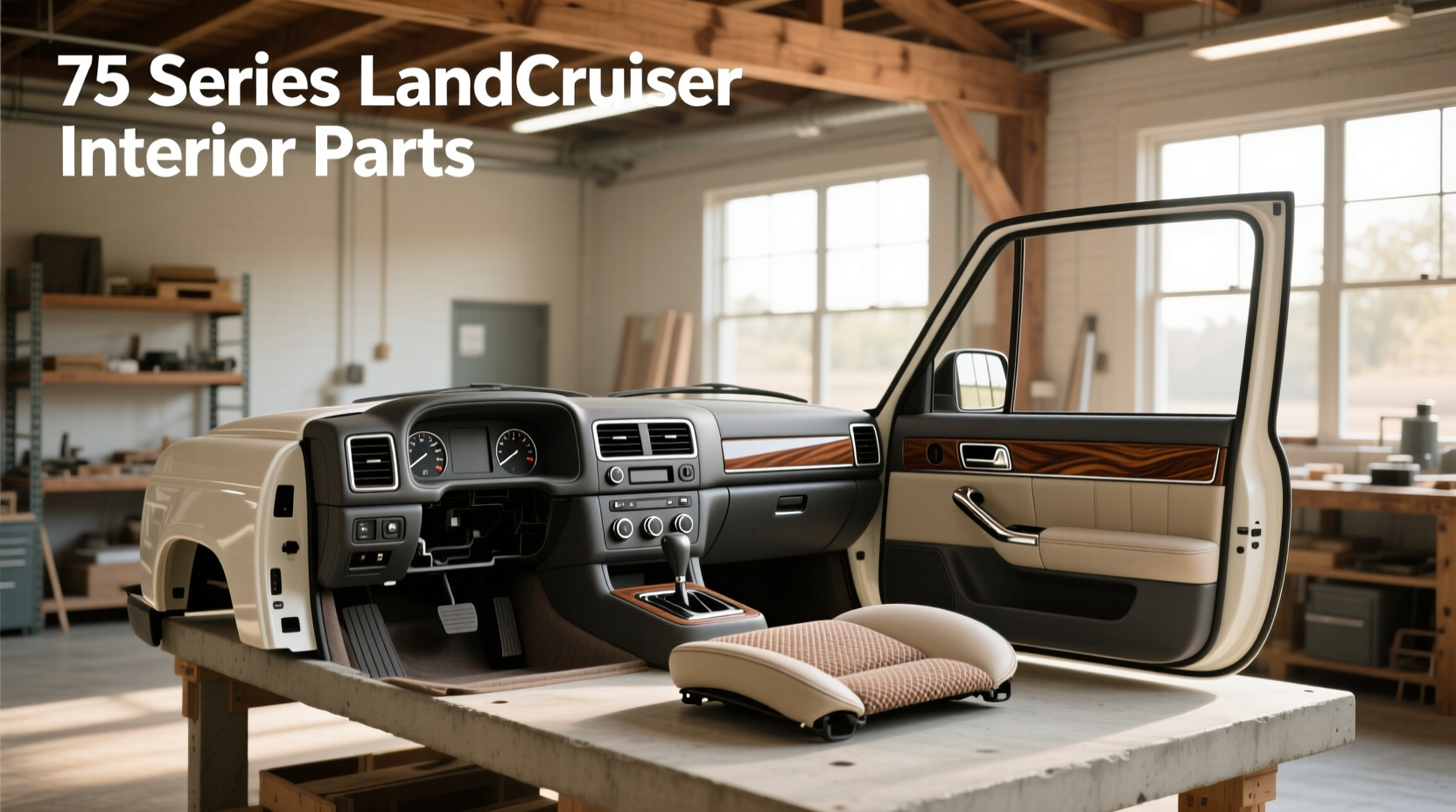
If you're searching for 75 series landcruiser interior parts, you're likely restoring, upgrading, or repairing a rugged workhorse known for durability in remote conditions. The Toyota LandCruiser 75 Series—produced from November 1984 to August 1999—includes models like the FJ75, HZJ75, BJ75, and LJ70, each with subtle variations in interior design depending on market, engine type, and configuration1. Knowing which interior components are interchangeable across these variants is essential for sourcing correct fittings without costly mistakes. This guide breaks down every major interior part category, compatibility considerations, common failure points, aftermarket availability, and practical installation tips tailored to real-world owners.
Understanding the 75 Series LandCruiser Platform
The 75 Series sits within Toyota’s broader 70 Series family, sharing many chassis and body components but differing primarily in wheelbase and intended use. Unlike the shorter 73 Series or passenger-focused 76/78 variants, the 75 Series was engineered as a long-wheelbase utility vehicle—often used as troop carriers, ambulance platforms, or heavy-duty cargo haulers. As such, its interior layout prioritizes function over comfort, featuring flat floors, minimal sound insulation, and modular seating arrangements.
Interior configurations varied significantly by region: Australian-delivered HZJ75s came with more robust HVAC systems and sun visors; African-market FJ75s often had simplified switchgear and vinyl flooring; Middle Eastern versions sometimes included dual heater units due to extreme climate demands. These differences mean that while some interior parts are universally compatible, others require careful cross-referencing of VIN data or production dates before purchase.
Dashboards & Instrument Panels: Core Components
The dashboard (or instrument panel) in the 75 Series evolved slightly over its 15-year production run. Early models (1984–1990) featured analog gauges with chrome bezels and basic warning lights, while later builds (post-1990) introduced improved ergonomics, better rubber sealing around switches, and updated circuit boards.
When replacing a 75 series landcruiser dashboard, verify whether your model uses:
- A mechanical speedometer cable vs. electronic sender unit
- Analog fuel/temp gauge cluster vs. digital readouts (rare)
- Left-hand drive (LHD) vs. right-hand drive (RHD) mounting brackets
Aftermarket suppliers offer both OEM-replica dash inserts and modernized digital clusters that retain factory fitment2. Some upgraded units include integrated voltmeters, oil pressure displays, or ambient temperature sensors—useful for off-grid operations. However, ensure any new cluster matches your vehicle’s electrical system voltage (typically 24V in military-spec models).
| Component | OEM Part Range | Common Aftermarket Brands | Compatibility Notes |
|---|---|---|---|
| Instrument Cluster | 83100-60010 to 83100-60040 | RetroGauge, AutoMeter, Nengun OEM | Verify sender type; 24V models need isolated grounds |
| Dash Trim Panel | 63101-60010 | Land Cruiser Parts, Trundles Automotive | Fits all petrol/diesel variants; color-matched options available |
| Heater Control Panel | 87100-60020 | Genuine Toyota, I LOVE CRUISER | Late models have additional defrost settings |
Seats & Seat Mounting Systems
One of the most frequently replaced interior items is the seating assembly. The 75 Series typically came with three-row bench seating—first row bucket or split bench, second and third rows as fold-down benches. Materials ranged from durable cloth to vinyl-upholstered foam cores designed for hot climates.
Over time, seat springs weaken, foam degrades, and fabric tears—especially in vehicles exposed to UV light or high humidity. Replacements fall into three categories:
- OEM Recreations: Exact replicas using original patterns and materials; ideal for restorations.
- Aftermarket Performance Seats: Include bolstered side support, breathable mesh, or waterproof coatings.
- Military/Industrial Grade: Found in surplus markets; built for longevity under harsh conditions.
When selecting 75 series landcruiser seats, confirm:
- Floor mounting bolt pattern (standardized across 70/75/79 series)
- Seat track length (longer tracks allow greater adjustment)
- Compatibility with factory seat belts (anchor positions vary)
Some owners retrofit 79 Series high-back seats for added comfort during long drives. While physically mountable, this may require modifying headrest cutouts in the rear parcel shelf.
Door Panels & Interior Trim
Interior door trims on the 75 Series are prone to cracking due to plastic aging and repeated handle use. Replacement panels are widely available in ABS plastic or fiberglass-reinforced composites. Options include:
- Standard black textured finish
- Woodgrain or carbon-fiber aesthetic overlays
- Water-resistant backing for humid environments
🔧 Installation Tip: Always inspect the internal window regulator mechanism when removing door cards. Corrosion in the scissor arms or rail guides can cause binding—even with new panels installed.
Other trim pieces include:
- Pillar covers (A, B, C-pillars)
- Floor mats (rubber vs. carpeted)
- Vanity mirror assemblies (passenger side only on base models)
- Sun visor brackets
🛒 Note: Many sellers list parts as 'fits 70 Series'—but always double-check if they specify compatibility with the extended 75 Series frame, particularly near the rear cargo area where curvature differs.
Electrical & Switchgear Upgrades
The stock electrical system in the 75 Series uses sealed toggle switches and relays rated for industrial environments. Over decades, these can develop contact resistance or fail entirely. Common replacements include:
- Headlight dimmer switches
- Fan speed controllers (for heater blower motor)
- Window lift motors and switches
- Cigarette lighter/power port modules
⚙️ Modern upgrades often involve adding auxiliary switches near the center console for winches, driving lights, or fridges. When doing so, avoid tapping into existing harnesses unless using fused relay kits. Unregulated power draws can overload the factory wiring loom.
🌐 For those integrating GPS or communication gear, consider installing a secondary fuse block behind the glovebox. This maintains OEM integrity while supporting added electronics.
Climate Control & Ventilation Systems
Given the 75 Series’ global deployment—from Arctic zones to equatorial deserts—HVAC performance varies widely. Base models may lack air conditioning altogether, relying instead on passive ventilation via roof vents and windshield louvers.
Upgrading the system involves several key decisions:
- Retain original heater core + add evaporator kit?
- Use compact scroll compressors vs. traditional swashplate types?
- Route ducting through firewall without compromising structural rigidity?
🏭 Some specialist shops offer complete A/C conversion kits designed specifically for non-A/C 75 Series trucks. These typically include R134a-compatible condensers, custom brackets for 1HZ or 2F engines, and redesigned glovebox housings to accommodate expanded ductwork.
Storage & Utility Additions
Due to sparse factory storage, many owners install aftermarket organizers. Popular solutions include:
- Center console lockboxes (bolt into transmission tunnel)
- Overhead dome light pods with USB ports
- Under-seat drawers for tool stowage
- Rear cargo management nets or tie-down rails
📌 Critical Fitment Note: Measure clearance between seat backs and rear bulkhead before installing fixed consoles. On ambulances or troop carriers, medical equipment mounts may occupy this space.
New vs. Used vs. Aftermarket: What's Best?
When sourcing interior parts for 75 series landcruiser, buyers face three main paths:
| Option | Pros | Cons | Best For |
|---|---|---|---|
| New OEM | Exact match, warranty-backed | Limited availability; high cost | Restoration projects |
| Used Original | Affordable; authentic patina | Wear unknown; possible hidden damage | Budget repairs |
| Aftermarket | Modern features; wider selection | Fitment inconsistencies possible | Functional upgrades |
✅ Recommendation: Use OEM for safety-critical items (seat belts, airbags if equipped). Choose aftermarket for convenience features (lighting, switches). Inspect used parts thoroughly for rodent damage or water intrusion—common in stored vehicles.
Where to Source Reliable Interior Parts
Genuine Toyota parts can be sourced through Japanese exporters like Nengun Performance or Amayama, who pull directly from JDM auctions and dealer networks3. These suppliers provide traceable part numbers and compatibility filters by chassis code (e.g., HZJ75-WKDSEV).
For aftermarket options, reputable specialists include:
- The Cruiser Store (Australia)
- All Four x 4 Spares
- Nova 4x4
- Trundles Automotive
🚢 Shipping costs and import duties vary significantly. Buyers in North America should expect 4–8 week delivery times from Oceania-based vendors. Always confirm whether pricing includes customs clearance.
DIY Installation Tips and Tools Needed
Most interior disassembly tasks require only basic hand tools:
- Trim removal tool set 🧰
- Socket wrench (10mm, 12mm, 14mm)
- Phillips #2 screwdriver
- Flashlight or headlamp 🔍
⏱️ Average job times:
- Door panel removal/reinstall: 30 minutes per side
- Dashboard swap: 3–5 hours (including wiring checks)
- Seat replacement: 20 minutes per unit
❗ Warning: Disconnect the battery before working near airbag circuits—even older models may retain residual charge in SRS modules.
Common Misconceptions About 75 Series Interiors
Several myths persist among enthusiasts:
- "All 70 Series interiors are identical": False. The 75 Series has unique rear seat mounts and longer door skins.
- "You can’t install power windows": Not true. Retrofit kits exist, though reinforcement may be needed.
- "Only diesel models got upgraded HVAC": Incorrect. Market-specific trims matter more than engine type.
Maintenance Tips to Extend Interior Life
To preserve interior components:
- Apply UV-protectant spray to dash surfaces monthly 🌍
- Vacuum floor mats weekly to prevent abrasive grit buildup
- Test window regulators every 6 months to catch early motor wear
- Lubricate seat slide rails annually with silicone grease
🧼 In tropical regions, mildew-resistant treatments on fabric help prevent odor and deterioration. Avoid ammonia-based cleaners on plastic—they accelerate hazing.
Conclusion: Making Smart Choices for Your 75 Series
Selecting the right interior parts for the 75 series landcruiser requires balancing authenticity, functionality, and budget. Whether restoring a vintage FJ75 or upgrading an HZJ75 for expedition use, understanding model-specific nuances ensures proper fitment and long-term reliability. Prioritize verified compatibility, inspect used components carefully, and leverage trusted suppliers with clear return policies. With thoughtful planning, even 30+ year-old interiors can perform reliably in today’s demanding environments.
Frequently Asked Questions
- Can I use 79 Series interior parts in my 75 Series LandCruiser?
- Many parts are interchangeable, especially seats and switchgear. However, check rear cargo area dimensions and pillar shapes—some 79 Series trim pieces won't align with the 75 Series body lines.
- Are digital instrument clusters available for the 75 Series?
- Yes, several aftermarket providers offer hybrid digital-analog clusters that retain factory sizing while adding real-time engine data displays. Ensure voltage compatibility (12V vs 24V) before purchase.
- How do I identify genuine Toyota interior parts?
- Look for stamped part numbers matching OEM catalogs, packaging with Toyota branding, and procurement through authorized channels like Nengun or Amayama.
- What causes dashboard cracks in the 75 Series?
- UV exposure, thermal cycling, and age-related polymer degradation are primary factors. Installing a sun shield when parked helps reduce stress on plastic components.
- Is it worth restoring original interior trim?
- For collector-grade vehicles, yes. For daily drivers or expedition rigs, durable aftermarket alternatives often provide better value and longevity.




 浙公网安备
33010002000092号
 浙B2-20120091-4