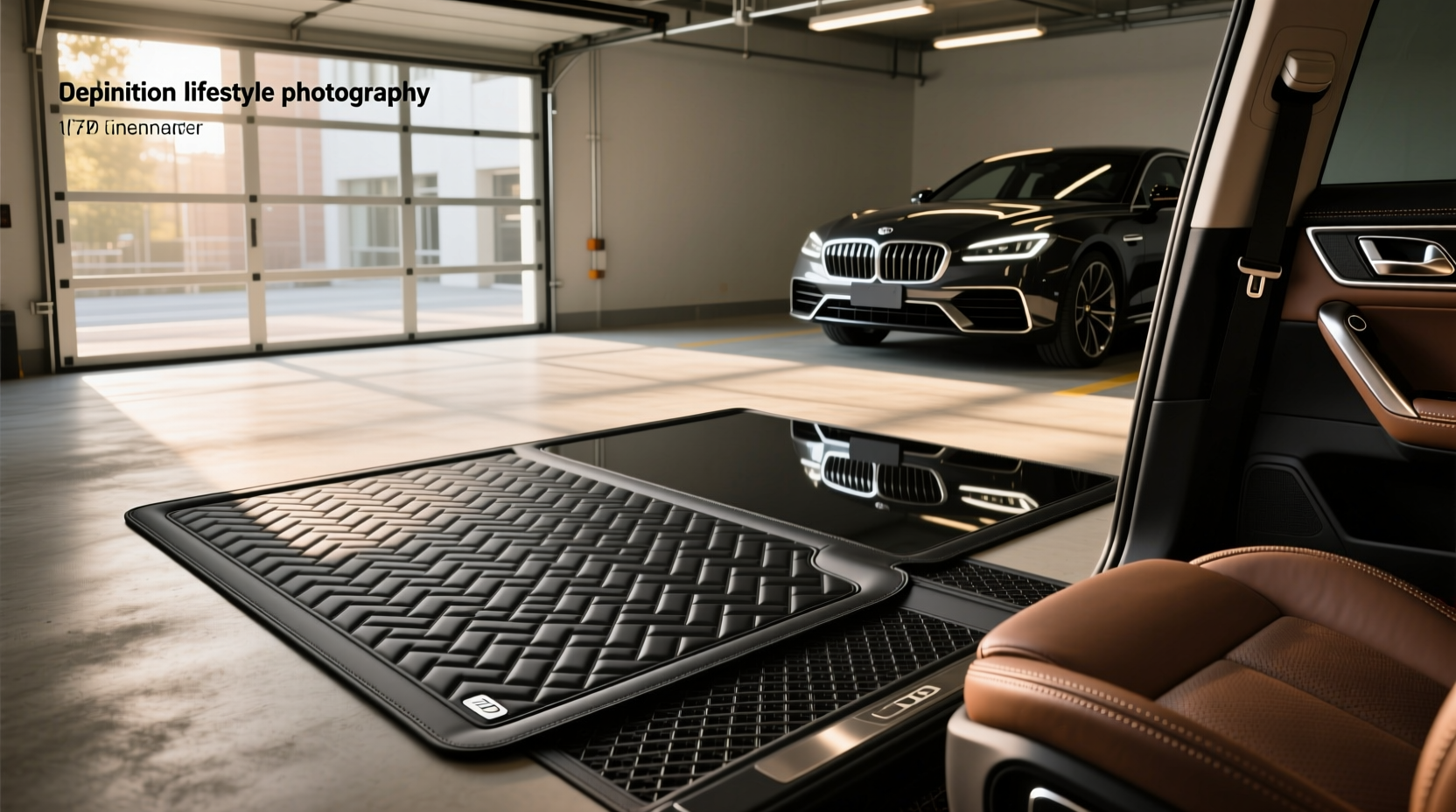
When searching for superior interior protection, many drivers come across the term 7D mat for car—a next-generation floor mat designed to provide complete coverage, deep sidewalls, and advanced resistance to water, mud, and wear. Unlike traditional flat or 2D/3D mats, 7D mats offer multi-layered construction with raised edges that act like trays, preventing spills from seeping into your vehicle’s carpet. This article breaks down everything you need to know: what defines a 7D car mat, how it differs from PVC or rubber alternatives, why fit precision matters, and which factors determine long-term value over price alone.
Understanding What a 7D Mat for Car Really Means
The term “7D” does not refer to seven dimensions in a scientific sense but rather denotes an evolution in design complexity and protective capability compared to earlier models such as 2D, 3D, or 4D floor mats. A 7D mat for car typically features:
- Deep-lipped walls (up to 2–3 cm) that form a tray-like barrier around the footwell
- Multi-layered composite material, often combining rubber base, foam cushioning, and a textured top layer
- Laser-measured patterns tailored to specific car makes and models \li> Anti-slip backing with anchor points or nibs to prevent shifting
- Waterproof, stain-resistant surface that can be wiped clean easily
These characteristics make 7D mats ideal for all-weather use, especially in regions with heavy rainfall, snow, or dusty conditions. They are increasingly popular among SUV owners, fleet operators, and families with children or pets who face frequent spills and tracked-in debris.
How 7D Mats Compare to Other Types: 2D, 3D, 4D, and PVC
To understand the real advantages of a 7D car mat, it helps to compare them directly with other common options available on the market today.
| Matt Type | Material | Fit Style | Edge Height | Cleaning Ease | Durability |
|---|---|---|---|---|---|
| 2D Flat Mat | Rubber or vinyl | Universal | Flat (0 cm) | Easy | Moderate |
| 3D Pre-Cut | PVC or TPE | Semi-custom | ~1 cm | Moderate | Good |
| 4D Molded | Thermoplastic Elastomer (TPE) | Vehicle-specific | ~1.5 cm | Very easy | High |
| 7D Composite | Multi-layer rubber + foam + fabric | Fully custom-fit | Up to 3 cm | Very easy | Very high |
| Transparent PVC | Polyvinyl chloride | Universal | Flat or low | Easy | Low to moderate |
As shown above, while transparent PVC car mats (often priced under ₹1,000) offer basic protection and visibility, they lack structural rigidity and edge containment. These universal-fit mats may shift during driving and do not conform precisely to floor contours, leaving gaps where liquids can leak. In contrast, true 7D mats are engineered using CAD scanning of original equipment manufacturer (OEM) floor plans, ensuring full coverage including seat brackets, pedals, and transmission tunnels.
Materials Used in 7D Car Floor Mats: What to Look For
The performance of a 7D mat for car largely depends on the materials used in its construction. Here's a breakdown of the most common components:
1. Base Layer – High-Density Rubber or TPE
This bottom layer provides grip and prevents sliding. It should feature anti-skid nibs or cleats that interlock with factory carpet textures. Thermoplastic elastomers (TPE) are preferred over standard rubber due to their flexibility, odor resistance, and recyclability.
2. Middle Layer – Foam Padding or Reinforced Mesh
Some premium 7D mats include a shock-absorbing foam core that enhances comfort when stepping in and out of the vehicle. This also reduces noise transmission from road vibrations.
3. Top Surface – Textured Polymer or Fabric Coating
The visible layer must resist stains, fading, and abrasion. Many brands use micro-textured surfaces that hide dirt better than smooth finishes. Some incorporate non-woven polyester overlays bonded to the base for added luxury feel without sacrificing cleanability.
Avoid Low-Quality PVC Blends
While some sellers label generic clear mats as “7D,” authentic versions avoid pure PVC due to its tendency to crack in cold weather and emit strong chemical odors. Always check product descriptions for material specifics—look for terms like “non-toxic TPE,” “odorless rubber,” or “automotive-grade composite.”
Custom Fit vs Universal: Why Precision Matters
One of the defining features of a genuine 7D mat for car is its exact fit. There are two main approaches to achieving this:
- Make-and-model specific (custom-fit): Designed using digital scans of actual vehicle interiors. These mats align perfectly with floor humps, pedal positions, and door sills. ✅ Best choice for maximum protection.
- Universal size with trimming guides: Intended to fit a range of vehicles but require manual cutting. ❗ Risk of improper alignment if cut incorrectly; voids warranty in some cases.
For example, a 7D mat set made specifically for a Toyota Innova Crysta will contour around the center console protrusion and accommodate the second-row seat rails, whereas a universal version might leave exposed areas near the gear shifter.
Installation and Retention Systems: Keeping Mats Secure
No matter how well-designed a floor mat is, it must stay securely in place to function properly. Look for these retention mechanisms:
- Factory hook compatibility: Many modern cars have built-in retaining clips under the front carpets. Genuine 7D mats include molded holes or loops that snap onto these anchors.
- Non-slip backing patterns: Diamond-grid or pyramid-shaped studs increase friction between the mat and carpet.
- Weighted edges: Heavier gauge materials help reduce movement caused by foot traffic.
⚠️ Safety Note: Poorly secured floor mats can interfere with pedal operation—a known cause of unintended acceleration incidents. The National Highway Traffic Safety Administration (NHTSA) has issued guidelines advising against using thick, unsecured mats near accelerator pedals 1.
Climate and Usage Considerations
Your local environment plays a major role in determining whether a 7D car mat is worth the investment.
In Wet or Snowy Climates
If you live in areas with monsoon rains, coastal humidity, or winter snowfall, 7D mats excel at trapping moisture before it soaks into insulation layers beneath the carpet. Their deep walls contain melted ice and slush effectively, reducing mold risk and preserving cabin air quality.
In Dusty or Off-Road Conditions
For rural roads or desert environments, fine sand and grit can accumulate rapidly. A 7D mat acts as a removable filter, allowing you to shake off debris outside the vehicle instead of vacuuming daily.
For Families and Pet Owners
Kids often spill drinks, drop snacks, or track in wet shoes. Pets bring in mud, fur, and paw wax residues. A fully enclosed 7D mat simplifies cleanup—just lift, rinse, and reinstall.
Pricing and Value: What You’re Actually Paying For
On platforms like Amazon.in or boodmo, prices for so-called “7D” mats vary widely—from ₹899 to over ₹5,000 per set. But cost doesn’t always reflect quality. Here’s how to assess value:
- Budget Tier (Under ₹1,500): Often mislabeled PVC or thin rubber mats with minimal sidewall height. May claim “universal 7D” but lack true dimensional depth or custom fit.
- Mid-Range (₹1,500–₹3,000): Typically includes TPE-based mats with moderate lip height (~1.5–2 cm). May offer semi-custom fits for popular Indian models like Hyundai Creta or Maruti Suzuki Brezza.
- Premium (Over ₹3,000): True laser-cut, multi-layered 7D systems with full vehicle coverage, anti-odor treatment, and OEM-level precision. Brands like ExactMats fall into this category, though independent verification of claims is recommended.
🛒 Buying Tip: Don’t rely solely on product titles. Search for “vehicle-specific 7D TPE floor mat” plus your car model to filter out misleading listings.
Common Misconceptions About 7D Car Mats
Despite growing popularity, several myths persist about what 7D means and what these mats can do:
- Myth #1: More 'D' = Better Protection
There is no standardized rating system for “D” levels. Some sellers use “5D,” “6D,” or “7D” purely as marketing terms without meaningful differences in structure. Focus on actual edge height, material thickness, and fit accuracy instead. - Myth #2: All Clear Mats Are 7D
Transparent PVC mats are frequently advertised as “7D” despite being flat and universally sized. Transparency does not equate to dimensionality or protection level. - Myth #3: 7D Mats Never Need Replacement
Even high-quality mats degrade over time. UV exposure, extreme temperatures, and repeated washing can break down binders and cause delamination after 3–5 years.
Maintenance Tips for Longevity
To get the most life out of your 7D mat for car, follow these care practices:
- Remove and shake weekly: Prevents dust buildup in corners.
- Wipe with damp cloth monthly: Use mild soap if needed; avoid harsh solvents. \li> Rinse thoroughly after heavy exposure: Especially after salt, sand, or muddy conditions.
- Air dry completely before reinstalling: Trapped moisture promotes bacterial growth.
- Inspect retention clips regularly: Ensure factory anchors are intact and functioning.
Where to Buy Authentic 7D Floor Mats
Given the prevalence of mislabeled products, purchasing decisions should prioritize transparency and specificity. Reliable sources include:
- Manufacturer-direct websites that list compatible models and provide installation videos
- Authorized auto accessory dealers affiliated with car brands (e.g., Maruti Suzuki-certified parts suppliers)
- Specialty online stores focusing exclusively on floor protection with detailed specs
📍 Local Availability: In India, cities like Delhi, Mumbai, and Bangalore have workshops offering custom fitting services. Check local listings for “car interior customization” or “laser-cut floor mats” to find certified installers.
Final Checklist Before Purchase
Before buying a 7D mat, verify the following:
- ✅ Is it designed for your exact car make, model, and year?
- ✅ Does it include retention hooks compatible with factory anchors?
- ✅ What is the actual sidewall height (in centimeters)?
- ✅ Are materials specified (e.g., TPE, non-PVC, odor-free)?
- ✅ Can you return it if the fit is inaccurate?
By focusing on verified features rather than buzzwords, you’ll avoid overspending on inferior imitations and gain lasting protection for your vehicle’s interior.
Frequently Asked Questions (FAQs)
Q: Can I use a 7D car mat in any vehicle?
A: Only if it’s specifically designed for your car’s floor layout. Universal-fit versions may not cover critical areas like pedal zones safely.
Q: Are 7D mats waterproof?
A: Yes, most are fully waterproof due to sealed edges and non-porous surfaces. However, prolonged submersion should be avoided.
Q: Do 7D floor mats affect airbag deployment?
A: Properly installed, model-specific 7D mats do not interfere with side or curtain airbags. Never modify or fold mats to force fitment.
Q: How do I clean a 7D car floor mat?
A: Remove the mat, rinse with water, wipe with mild detergent, then let it air dry completely before reinstalling.
Q: Is a 7D mat better than a 4D mat?
A: Not necessarily. While 7D implies deeper walls and more layers, real-world performance depends more on accurate fit and material quality than the number prefix.




 浙公网安备
33010002000092号
 浙B2-20120091-4