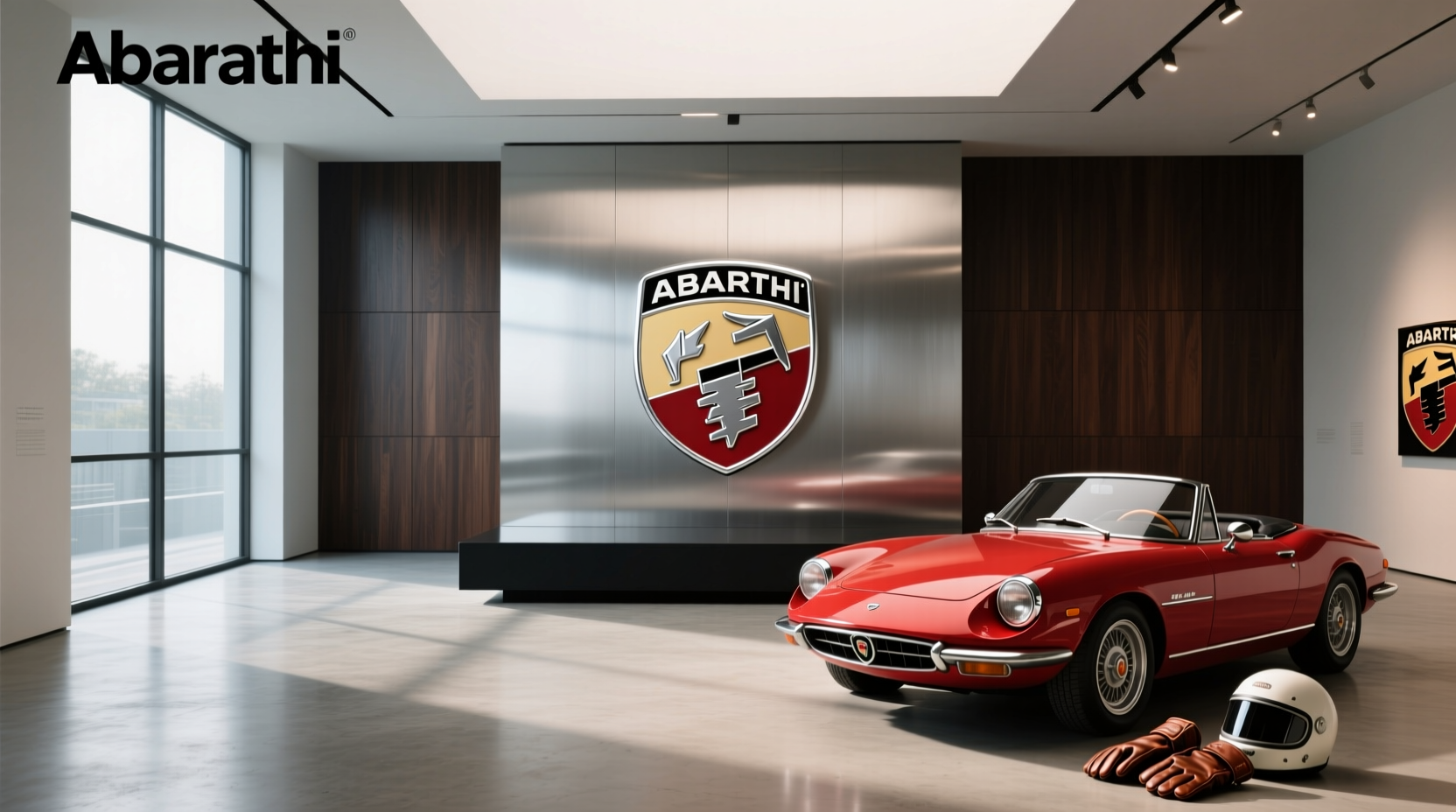
The Abarth logo is one of the most distinctive emblems in the automotive world—a bold red shield with a striking black scorpion at its center. But what does the Abarth logo mean, and why is a scorpion used as its central symbol? 🦂 This design isn’t just for show; it reflects the legacy of Carlo Abarth, the brand’s founder, and embodies the spirit of speed, aggression, and Italian performance engineering that has defined Abarth since 1949 ✅.
Why Is the Abarth Logo a Scorpion?
The choice of the scorpion in the Abarth emblem traces back directly to the personal history of Carlo Abarth, the Italo-Austrian engineer and entrepreneur who founded Abarth & C. S.p.A. in Bologna, Italy, in 1949. Born Karl Albert, he adopted the name “Carlo Abarth” later in life, but his astrological sign—Scorpio—played a pivotal role in shaping the brand’s visual identity ⭐.
According to widely accepted accounts, Carlo Abarth was born under the zodiac sign Scorpio (October 24 – November 22). The scorpion, being the symbolic animal of this sign, became a natural motif for his new company. However, the meaning goes beyond astrology. In many cultures, the scorpion represents precision, danger, resilience, and a quick strike—all qualities that align perfectly with high-performance vehicles designed for competition ⚙️.
Moreover, the scorpion’s sting metaphorically mirrors how an Abarth-tuned car behaves on the road: small in size, but capable of delivering a powerful, aggressive performance that surprises larger rivals. This symbolism resonates strongly with enthusiasts who value agility, responsiveness, and track-ready dynamics over raw bulk or luxury appointments 🔧.
Design Elements of the Abarth Logo
The current Abarth logo consists of several key visual components, each contributing to its bold and memorable appearance:
- Red Shield Background (Italian Racing Red): The red field evokes Italy’s long tradition in motorsport. Known as Rosso Corsa, this shade has been associated with Italian racing machines for decades, including Alfa Romeo, Ferrari, and Maserati. Using this color immediately positions Abarth within that elite lineage of performance marques 🏁.
- Black Scorpion Centerpiece: Rendered in sharp, stylized form, the scorpion dominates the shield. Its raised tail suggests readiness to strike—an apt representation of the car’s responsive handling and turbocharged punch ⚡. \li> White Trim and Outline: Provides contrast and clarity, ensuring the logo remains legible even at small sizes or high speeds (such as on race livery).
- "Abarth" Text in Bold White Letters: Positioned below the scorpion, the brand name reinforces recognition and completes the emblem’s assertive look.
This combination creates a logo that is instantly recognizable, especially among fans of compact hot hatches like the Abarth 500, 595, and 695 series. Unlike more subdued manufacturer badges, the Abarth emblem makes a statement: this is not a family sedan—it’s a street-legal racer with attitude ✨.
Historical Evolution of the Abarth Badge
While the core elements have remained consistent, the Abarth logo has undergone subtle refinements over the decades:
| Era | Design Features | Context |
|---|---|---|
| 1949–1970s | Hand-drawn scorpion on circular or shield-shaped background; often in black and white or metallic finishes | Used primarily on race cars and tuning kits; limited standardization due to niche production scale |
| 1980s–1990s | More standardized vector-style scorpion; introduced on Fiat-Abarth collaborations like the Uno Turbo i.e. | Reflects growing integration with Fiat Group while maintaining independent branding |
| 2000s–Present | Modern digital rendering with high-contrast colors; appears on mass-produced models like 500 Abarth and 124 Spider Abarth | Aligned with global marketing strategy; optimized for digital platforms and merchandise |
Despite these updates, the fundamental symbolism—the red shield and the scorpion—has never changed. Even during periods when Abarth was inactive as a standalone brand (such as between 1986 and 2007), the logo retained cult status among collectors and tuners, preserving its cultural relevance.
Is the Abarth Logo Trademarked?
Yes, the Abarth logo is a registered trademark owned by Stellantis Europe, the subsidiary of Stellantis N.V. that oversees several European automotive brands, including Fiat, Lancia, and Opel. As such, unauthorized use of the scorpion emblem on commercial products, replicas, or modified vehicles can lead to legal action ❗.
However, fan-made apparel, decals, or non-commercial tributes generally fall into a gray area, provided they don’t imply official endorsement or confuse consumers about product origin. For example, selling t-shirts with the Abarth logo without licensing would likely violate intellectual property laws, whereas displaying it on a personal project car typically does not raise issues 📌.
Where Can You See the Abarth Logo Today?
The Abarth badge appears across multiple touchpoints, both physical and digital:
- On Vehicles: Most prominently found on the grille, wheels, rear hatch, and seats of Abarth-badged models such as the 595, 695, and 124 Spider Abarth.
- In Motorsports: Used on rally and circuit race liveries, particularly in one-make series like the TCR International Series where Abarth has participated.
- Merchandise: Official gear—including apparel, model cars, and accessories—features the logo prominently via licensed retailers.
- Digital Platforms: From the official Abarth website1 to social media profiles, the logo serves as the primary brand identifier.
Interestingly, some owners choose to modify or customize the logo placement—for instance, adding illuminated badges or chrome trims. While aesthetically appealing, such modifications should avoid altering the official design in ways that could misrepresent the vehicle’s authenticity 🔍.
Common Misconceptions About the Abarth Emblem
Despite its fame, there are persistent myths surrounding the meaning of the Abarth logo:
- Myth: The scorpion represents death or danger.
Reality: While scorpions are often associated with venom, in this context, the creature symbolizes focused energy, tenacity, and competitive spirit—not menace. - Myth: Abarth is part of Ferrari.
Reality: Though both are Italian performance brands, Abarth and Ferrari have separate origins. Abarth is currently under Stellantis; Ferrari operates independently. They share no corporate ownership. - Myth: The red shield comes from the Italian flag.
Reality: The red is specifically Rosso Corsa, used historically in motorsport, not the national tricolor. Confusion arises because both include red, but the meanings differ. - Myth: All Fiats with the scorpion are rare collectibles.
Reality: While early Abarth-tuned Fiats (e.g., 1960s Abarth Simca) are valuable, modern 500 Abarths are relatively common. Rarity depends on model year, trim level, and production numbers.
How the Abarth Logo Influences Brand Perception
Logos play a crucial role in shaping consumer expectations. The Abarth emblem sets a clear tone before the engine even starts: this is a car built for driving enjoyment first, comfort second. That perception influences buyer decisions, especially among younger drivers or enthusiasts seeking an affordable entry into performance motoring.
Compared to other hot hatch badges—like Volkswagen’s GTI or Honda’s Type R—the Abarth logo stands out for its mythological weight and emotional resonance. It doesn’t rely solely on letters or abstract shapes; instead, it uses a living creature to convey character. This storytelling aspect enhances memorability and loyalty among owners 👥.
Additionally, the logo helps differentiate Abarth models from their base Fiat counterparts. For example, the Fiat 500 and Abarth 500 may share the same platform, but the presence of the scorpion badge signals upgraded suspension, exhaust, aerodynamics, and power output. In markets where visual cues matter, the logo acts as a shorthand for enhanced capability ✅.
Can You Customize the Abarth Logo on Your Car?
Yes, many owners personalize the Abarth badge through aftermarket options:
- Illuminated emblems for night visibility
- Chrome or carbon fiber overlays
- Smaller-sized decals for window or wheel center caps
- 3D-printed replacement grilles featuring integrated scorpion motifs
That said, purists often caution against excessive modification. Altering the official shape, color, or proportions of the logo may dilute brand authenticity and reduce resale appeal. If preserving value is important, sticking to factory-approved accessories—or reversible changes—is recommended 🛠️.
Regional Variations and Legal Considerations
There are no officially recognized regional variations of the Abarth logo. Whether sold in Europe, North America, or Asia, the badge maintains the same design standards set by Stellantis. However, local regulations may affect how and where the logo is displayed.
For instance:
- In the U.S., federal safety standards require certain reflectivity and height clearances for rear badges.
- In the EU, CE marking rules apply to any replacement parts bearing the logo.
- In countries with strict anti-counterfeiting laws (e.g., Japan, Australia), importing unlicensed Abarth-branded items may result in seizure.
Before installing third-party badges or modifying existing ones, verify compliance with local transportation authorities. When in doubt, consult an authorized dealer or legal expert familiar with automotive IP law 🌐.
Collectibility and Cultural Impact of the Abarth Badge
Beyond function, the Abarth logo holds cultural significance. Vintage Abarth race posters, original patches, and factory manuals featuring the early scorpion design are sought after by collectors. Reproductions exist, but authentic pieces—especially those linked to historic victories—can command high prices at auction.
The emblem has also appeared in popular culture, including films, video games (e.g., *Gran Turismo*, *Forza Motorsport*), and automotive art. Its strong visual identity makes it ideal for graphic reproduction, further cementing its place in motoring folklore 🎮.
Frequently Asked Questions (FAQ)
- Why is the Abarth logo a scorpion?
- The scorpion symbolizes founder Carlo Abarth’s zodiac sign (Scorpio) and represents speed, precision, and aggressive performance—qualities central to the brand’s identity.
- Is Abarth related to Fiat?
- Yes. Abarth operates as a performance division under Stellantis, sharing platforms and engineering with Fiat. Many Abarth models, like the 500 Abarth, are based on Fiat designs but feature significant upgrades.
- Can I use the Abarth logo for my project car?
- You can display the logo on a personal vehicle for non-commercial purposes. However, using it for resale, merchandise, or branding without permission violates trademark law.
- Does every Abarth car have the scorpion badge?
- Yes, all factory-produced Abarth vehicles come with the official scorpion logo on the exterior and interior as a mark of authenticity.
- Has the Abarth logo changed over time?
- The core design—red shield with black scorpion—has remained consistent since 1949. Minor updates have improved clarity and adaptability for digital use, but the symbolism remains unchanged.




 浙公网安备
33010002000092号
 浙B2-20120091-4