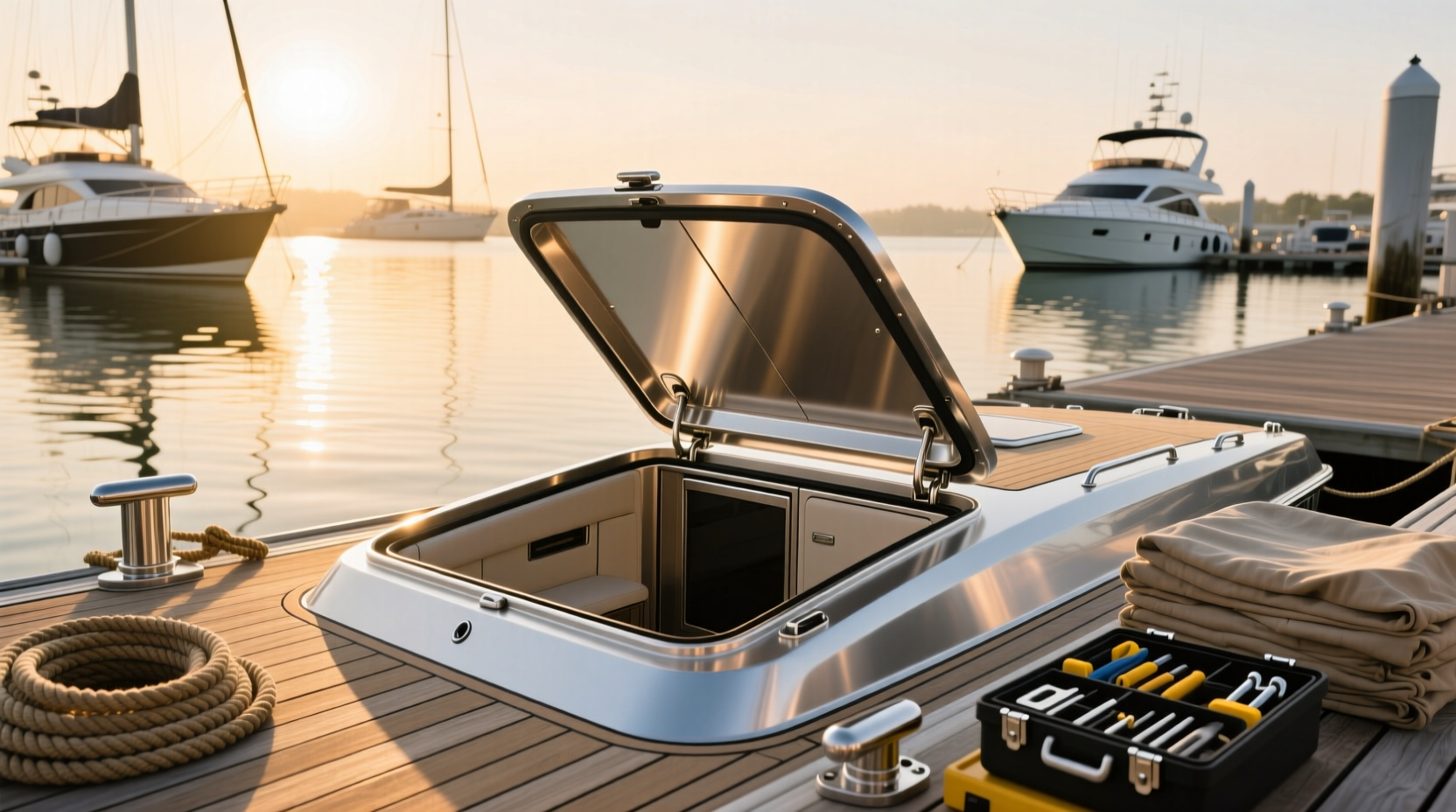
When it comes to protecting onboard storage compartments from water intrusion while maintaining structural integrity, aluminum boat hatches are a top choice among marine builders and boat owners. Designed for durability in harsh saltwater environments, these access points offer superior corrosion resistance, lightweight construction, and long-term reliability compared to plastic or composite alternatives. Whether you're upgrading an existing vessel or building one from scratch, understanding the key differences between flush-mount, raised, slam, and cam-action hatches—along with proper sealing mechanisms and material grades—is essential for making an informed decision that ensures dry interiors and safe operation under real-world conditions 🛠️.
Why Aluminum Is Preferred for Marine Hatches
Marine environments present constant challenges: UV exposure, salt spray, temperature fluctuations, and mechanical stress. In this context, the choice of hatch material significantly impacts longevity and performance. Aluminum stands out due to its favorable strength-to-weight ratio, natural oxide layer that resists rust, and compatibility with marine-grade coatings and gaskets ✅.
Unlike steel, which can corrode rapidly without protection, or ABS plastic, which may become brittle over time, aluminum maintains dimensional stability and structural rigidity. Most high-performance aluminum hatches use alloys such as 5052 or 6061-T6, known for excellent weldability, fatigue resistance, and seawater tolerance 1. These alloys are often anodized or powder-coated to further enhance surface protection.
Types of Aluminum Boat Hatches
Not all hatches serve the same purpose. The design depends on location, frequency of access, required weatherproofing, and load-bearing needs. Below are the most common types found in recreational and commercial vessels:
Flush-Mount Hatches
These sit level with the deck surface, minimizing tripping hazards and improving aesthetics. They’re ideal for walkable areas like cabin tops or fishing decks. A well-designed flush hatch features a recessed frame with a compression seal and multi-point latching system to prevent leakage during heavy seas.
One concern with flush designs is debris accumulation around the gasket. Regular cleaning and inspection are necessary to maintain watertight integrity. Some models include drip rails or weep holes to redirect moisture away from the seal zone.
Raised Hatches
Elevated above the deck, these provide better clearance for internal components and improved drainage. Raised hatches are commonly used over engine rooms or bilge access points where frequent maintenance is expected.
Their height helps shed water more effectively than flush versions, but they can create snag points on lines or gear. For safety-conscious builds, designers often opt for low-profile lids or protective guards.
Slam Hatches
Designed for quick closure, slam hatches rely on spring-loaded clips or magnetic seals that engage automatically when the lid is dropped into place. While convenient, not all slam hatches are fully watertight under pressure. Users should verify IP (Ingress Protection) ratings or ABYC standards compliance before relying on them in offshore conditions.
True marine-grade slam hatches incorporate robust gaskets and positive locking mechanisms beyond simple magnets. Look for models with stainless steel hardware and UV-resistant seals to avoid premature failure.
Cam-Action and Dog-Clamp Hatches
These offer the highest level of security and sealing force. By rotating a handle or lever, cam-action systems compress the lid evenly against a rubber or neoprene gasket. Dog-clamp variants use opposing bolts ('dogs') tightened manually to achieve uniform pressure across large openings.
Commonly found on commercial fishing boats or workboats, these hatches excel in extreme environments. However, they require more effort to open and close, making them less suitable for casual day boaters seeking convenience.
Key Features That Define Performance
Beyond appearance and mounting style, several functional elements determine whether an aluminum hatch will perform reliably over time:
- Gasket Material: EPDM (ethylene propylene diene monomer) rubber is preferred for its ozone and UV resistance. Avoid cheap sponge rubber that hardens or cracks within a few seasons.
- Latch Mechanism: Stainless steel components resist galvanic corrosion. Multi-point latches distribute pressure evenly, reducing warping risks.
- Frame Design: Integrated flanges or bonding surfaces improve installation strength. Some custom hatches come pre-assembled with gaskets and hinges for drop-in replacement.
- Hinge Type: Continuous piano hinges reduce stress concentration and prevent lid sagging. Removable pins allow easy servicing.
Installation Best Practices
Even the best aluminum hatch will fail if improperly installed. Here’s how to ensure a secure, leak-free fit:
- Measure Twice, Cut Once: Verify cutout dimensions match the hatch specifications exactly. Use templates provided by manufacturers whenever possible.
- Sealant Selection: Apply marine-grade polysulfide or polyurethane sealant (e.g., 3M 5200 Fast Cure) between the hull/deck and hatch flange. Do not rely solely on gaskets for waterproofing.
- Fastener Choice: Use stainless steel screws with oversized washers to prevent pull-through. Consider backing plates in thin fiberglass decks.
- Alignment Check: Ensure the lid closes smoothly without binding. Misalignment leads to uneven pressure and eventual leaks.
- Drip Edge Integration: Install the hatch so water flows away from the opening. Internal channels or external lips help divert runoff.
For retrofit installations, inspect surrounding structures for rot, delamination, or corrosion before proceeding. Reinforce weak areas with epoxy-saturated fiberglass cloth if needed.
Common Problems and How to Avoid Them
Despite their durability, aluminum hatches can develop issues over time. Awareness of potential pitfalls helps extend service life:
Galvanic Corrosion
When dissimilar metals (like aluminum and stainless steel) connect in a conductive environment (seawater), electrochemical reactions cause pitting. Prevent this by isolating metal parts with non-conductive sleeves, washers, or dielectric grease. Installing sacrificial zinc anodes nearby also reduces risk 2.
Gasket Degradation
Exposure to fuel vapors, solvents, or prolonged sunlight breaks down rubber compounds. Inspect gaskets annually and replace at first sign of cracking or flattening. Store spare gaskets indoors when not in use.
Lid Warping
Poorly supported large hatches may warp under load, breaking the seal. Choose frames with internal stiffeners or limit span width according to engineering guidelines.
Improper Ventilation
Enclosed spaces accessed via hatches (e.g., battery boxes, fuel lockers) need airflow to prevent condensation buildup or explosive gas accumulation. Incorporate vented grilles or check valves where appropriate.
Buying Considerations: What to Look For
With numerous options available—from budget replacements to OEM-spec commercial units—how do you choose?
| Feature | Budget Option | Mid-Range | Premium/Commercial |
|---|---|---|---|
| Material Grade | Unknown alloy | 5052-H32 | 6061-T6 or Almag-35 |
| Sealing Method | Sponge rubber | EPDM gasket | Dual-seal + compression latch |
| Latch System | Single-point plastic | Stainless steel cam | Multi-dog clamp |
| Warranty | 6 months | 1–2 years | 5+ years |
| Price Range | Under $75 | $75–$200 | $200+ |
While lower-cost hatches may suffice for protected freshwater applications, offshore or coastal users should invest in higher-spec models. Prioritize certified products meeting ABYC H-14 (Watertight Integrity) or ISO 11812 standards.
Custom vs. Off-the-Shelf Hatches
Standard sizes (e.g., 10" x 14", 13" x 24") cover many needs, but custom-cut hatches solve unique layout challenges. Fabricators can produce units matching irregular shapes, specific thicknesses, or integrated features like viewing ports or ventilation ducts.
Custom builds typically cost more and take longer to deliver but offer better fit and finish. If replacing multiple hatches, consider having them made as a matched set for consistent appearance and operation.
Maintenance Tips for Longevity
Regular care keeps aluminum hatches functioning optimally:
- Clean with mild soap and fresh water after each saltwater outing 🧼.
- Lubricate hinges and latches quarterly with marine-grade grease.
- Check fastener tightness every six months; retorque as needed.
- Inspect gaskets during seasonal haul-outs.
- Avoid abrasive cleaners that damage anodized finishes.
Store boats with hatches slightly open (using a wooden spacer) to prevent vacuum lock and promote air circulation in enclosed spaces.
Environmental and Regulatory Factors
In some regions, hatch placement and watertightness affect vessel certification. Commercial operators must comply with U.S. Coast Guard or equivalent maritime authority rules regarding access point security and buoyancy calculations. Recreational craft built to NMMA certification standards also require tested hatch performance.
Additionally, recyclability matters: aluminum is highly recyclable, making it an environmentally responsible option compared to thermoplastics that end up in landfills.
Alternatives to Aluminum Hatches
Though aluminum dominates the mid-to-high-end market, other materials exist:
- Fiberglass-Reinforced Plastic (FRP): Molded to match hull contours, lightweight, but prone to UV degradation and impact cracking.
- Acrylic or Polycarbonate Panels: Used in transparent hatches for lighting purposes. Scratch easily unless coated.
- Stainless Steel: Extremely durable but heavier and more expensive than aluminum. Risk of crevice corrosion in stagnant seawater.
Each alternative has niche uses, but none combine the balance of weight, strength, and corrosion resistance offered by marine-grade aluminum.
Conclusion: Making the Right Choice
Selecting the right aluminum boat hatch involves balancing cost, environment, usage frequency, and installation requirements. Focus on verified material specs, sealing quality, and ease of maintenance rather than brand names or price alone. Always confirm compatibility with your vessel's structure and operational demands.
Frequently Asked Questions
- Can aluminum boat hatches be repaired if damaged?
- Yes, minor dents or scratches can often be polished out. Gaskets and latches are replaceable. Severe warping or corrosion may require full replacement.
- Are all aluminum hatches watertight?
- No. Only hatches specifically designed with compression seals and proper latching mechanisms are truly watertight. Check product specifications for IP ratings or ABYC compliance.
- How do I measure for a replacement hatch?
- Measure the internal cutout size (length and width), depth of the opening, and thickness of the deck. Compare with manufacturer templates before ordering.
- Can I install an aluminum hatch myself?
- Yes, with basic tools and marine adhesives. Follow manufacturer instructions carefully, especially regarding sealant application and fastener torque.
- Do aluminum hatches require grounding?
- They don’t require electrical grounding, but bonding to the vessel’s lightning protection system may be recommended in certain installations.




 浙公网安备
33010002000092号
 浙B2-20120091-4