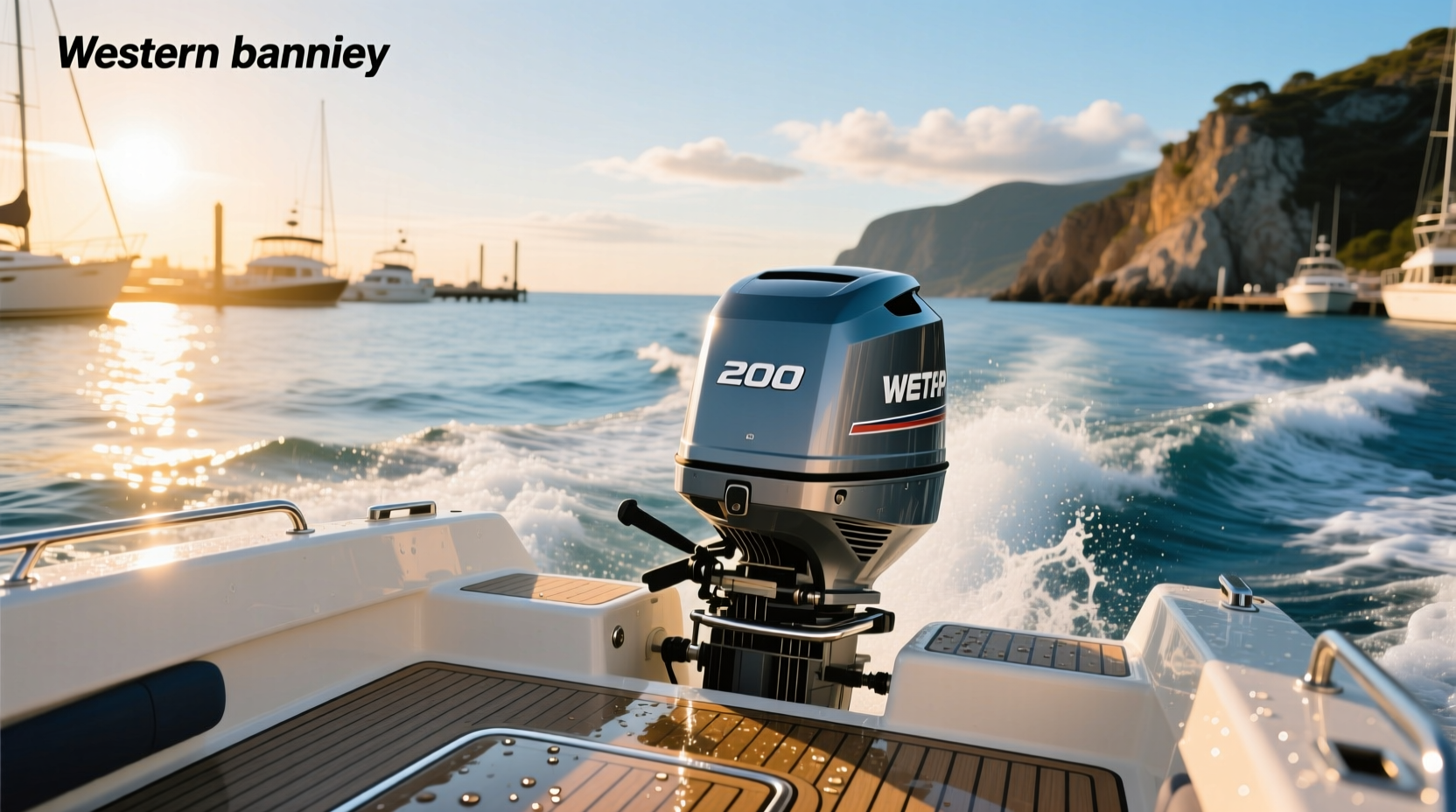
When searching for the best 200 hp outboard motor, buyers must balance power, reliability, fuel economy, and value. Models from Yamaha, Mercury, Honda, and Tohatsu dominate this segment, offering four-stroke engines with digital throttle control, lightweight designs, and advanced diagnostics. The ideal choice depends on boat type, usage frequency, saltwater vs. freshwater operation, and budget—typically ranging from $10,000 to over $24,000. This guide breaks down key factors like weight, shaft length, alternator output, and long-term maintenance to help you make an informed decision without overspending or over-powering your vessel.
Why a 200 HP Outboard Motor? Understanding Power Needs
A 200 horsepower outboard strikes a balance between performance and practicality for mid-sized boats (typically 19–26 feet). It provides enough thrust for planing quickly, handling rough water, and supporting electronics-heavy setups without excessive fuel consumption. Unlike smaller motors, a 200 hp unit can maintain speed under load—critical when carrying passengers, gear, or fishing equipment.
⚙️ Key applications include:
- Bass and offshore fishing boats
- Center consoles and dual-console cruisers
- Crossover vessels used for both recreation and towing
- Boats operating in coastal or river delta environments
However, more power isn’t always better. Overpowering a small hull leads to instability, increased wear, and safety risks. Conversely, underpowering causes strain on the engine, poor acceleration, and higher long-term maintenance costs. Matching engine output to your boat’s specifications is essential.
Top Brands Offering 200 HP Outboards
Four major manufacturers lead the 200 hp outboard market: Yamaha, Mercury Marine, Honda, and Tohatsu. Each brings distinct engineering philosophies, durability claims, and technology features.
Yamaha F200 & V MAX SHO Series
Yamaha offers multiple 200 hp variants, including the inline-four F200 and the V6 VF200 V MAX SHO. The F200 uses a compact 2.8L I-4 design known for light weight (~470 lbs) and high torque at low RPMs, making it ideal for lighter boats1. The V MAX SHO version delivers sharper acceleration and improved top-end performance thanks to its larger 4.2L displacement.
✨ Notable features:
- Digital Electronic Controls (DEC) option for precise shifting
- Integrated steering system reduces parts count
- Excellent corrosion protection for saltwater use
- High-reliability reputation among commercial users
Downsides include higher initial cost (often $22,000+) and slightly lower fuel efficiency compared to Mercury’s Pro XS in wide-open throttle conditions.
Mercury 200HP FourStroke & Pro XS
Mercury's standard 200HP FourStroke and performance-oriented Pro XS 200 are popular among anglers and recreational boaters. The Pro XS model emphasizes responsiveness with optimized intake tuning, stiffer mounts, and enhanced cooling systems.
⚡ Performance highlights:
- 85-amp alternator (1071 watts), one of the highest in class
- Digital Throttle and Shift (DTS) available
- Lightweight composite cowlings reduce overall mass
- SmartCraft compatibility for real-time diagnostics
Pricing varies significantly—refurbished or clearance units may be found under $15,000, while new Pro XS models exceed $20,000. Some users report sensitivity to fuel quality, especially in older batches, though recent firmware updates have addressed many issues.
Honda BF200
Honda’s BF200 stands out for simplicity and proven mechanical reliability. It uses a naturally aspirated 3.6L inline-four engine without forced induction, contributing to smooth power delivery and reduced complexity.
🔧 Advantages:
- Lower vibration due to balanced crankshaft design
- iST (Intelligent Shift and Throttle) system improves shift feel
- Fuel-efficient across cruising speeds (reported 3–4 mpg at 30 knots)
- Known for longevity with proper maintenance
Limitations include heavier dry weight (~537 lbs), which affects trim and handling on lighter boats, and fewer high-tech integrations compared to competitors. However, for operators prioritizing dependability over flashiness, Honda remains a strong contender.
Tohatsu BFT200D
Tohatsu’s BFT200D is less common but notable as a cost-effective alternative. Built with a 3.6L V6 engine, it shares engineering roots with Nissan marine engines and targets budget-conscious buyers seeking full-size power.
🛒 Value proposition:
- Often priced $3,000–$5,000 below premium brands
- Narrow V-angle improves fit in tight transom spaces
- Good service network through authorized dealers
While not marketed aggressively in North America, the BFT200D has earned respect for durability in commercial fishing operations. However, resale value and parts availability lag behind Yamaha and Mercury.
Key Technical Factors When Choosing a 200 HP Motor
Selecting the best motor involves more than brand preference. These technical aspects directly impact performance, safety, and ownership cost.
Shaft Length: 20" vs. 25"
The most common shaft lengths are 20 inches (short) and 25 inches (long/LX). Choosing incorrectly can cause ventilation, loss of control, or propeller damage.
- ✅ Use 20": Transom height ~20" (standard boats)
- ✅ Use 25": Jack plates, raised transoms, or tunnel hulls
Installing a short shaft on a deep transom risks cavitation during turns. A long shaft on a shallow transom increases drag and stress on mounting hardware.
Weight Distribution and Boat Balance
Motor weight affects bow rise during acceleration and overall stability. Lighter motors (like Yamaha’s F200 at ~470 lbs) improve handling on smaller hulls. Heavier units (Honda BF200 at ~537 lbs) may require repositioning batteries or adding trim tabs.
📌 Rule of thumb: For every 50 lbs added aft, expect slight bow lift reduction and slower planing times.
Alternator Output (Amps/Watts)
Modern boats run GPS, sonar, livewells, lights, and radios—all drawing power. A weak alternator drains batteries fast.
| Brand/Model | Alternator Output | Suitable For |
|---|---|---|
| Mercury Pro XS 200 | 85A / 1071W | High-electronics loads |
| Yamaha F200 | 60A / 720W | Moderate electronics |
| Honda BF200 | 50A / 600W | Basic navigation systems |
| Tohatsu BFT200D | 60A / 720W | Mid-level accessory support |
If running twin GPS units, radar, and trolling motors, prioritize 80+ amps.
Fuel Efficiency Across Speed Ranges
Fuel burn varies widely based on throttle position and hull design. Real-world data shows:
- Idle to 20 knots: All models average 3–5 mpg
- 25–35 knots (cruising): Mercury leads with ~3.8 mpg
- Wide open throttle (WOT): Yamaha F200 averages 1.8 mpg; Honda ~2.0 mpg
Efficiency gains come from direct fuel injection (DFI), variable valve timing (VVT), and cylinder deactivation tech—though none in this class currently offer cylinder cutoff.
Price Range and Value Considerations
Prices for new 200 hp outboards range from ~$10,300 (clearance Honda) to over $26,000 (top-tier Yamaha DEC models). Used units appear between $7,000–$15,000 depending on age and hours.
📍 Breakdown by tier:
- Budget Tier ($10K–$14K): Refurbished Mercury, older Honda, Tohatsu
- Mid-Tier ($15K–$19K): Standard Mercury FourStroke, base Yamaha F200
- Premium Tier ($20K+): Yamaha V MAX SHO, Mercury Pro XS, DEC-equipped models
⚠️ Watch for:
- Hidden costs: Rigging kits ($1,500–$3,000), installation fees, winterization
- Dealer markup on digital controls (DTS/DEC adds $1,000–$2,500)
- Limited-time discounts (e.g., 10–25% off via seasonal promotions)
New buyers should budget $2,000–$4,000 above MSRP for complete setup.
Common Misconceptions About 200 HP Motors
Several myths persist that mislead first-time upgraders.
Myth 1: More HP = Faster Boat
❌ Not necessarily. Top speed depends on hull shape, weight, and propeller selection. Adding 50 hp to an already well-matched boat yields diminishing returns. A 200 hp motor on a heavy pontoon may only reach 30 mph, while the same motor on a lightweight center console hits 50+ mph.
Myth 2: Four-Stroke Motors Are Always Slower Than Two-Strokes
❌ Outdated. Modern four-strokes match or exceed two-stroke performance in torque and throttle response. They also produce less noise and emissions, with better fuel economy.
Myth 3: All 200 HP Motors Are Interchangeable
❌ Horsepower ratings don’t tell the whole story. Torque curves, RPM ranges, and powerband width differ. For example, Honda’s peak torque arrives earlier than Mercury’s, affecting hole-shot performance.
Maintenance and Longevity Tips
All 200 hp outboards require regular upkeep. Saltwater use demands extra attention.
Recommended Service Intervals
- Every 100 hours or annually: Oil and filter change
- Every 200 hours: Spark plugs, gear lube, fuel filter
- Every 300 hours: Valve clearance check (Honda/Yamaha)
- After every saltwater use: Flush with fresh water
🧼 Best practices:
- Use manufacturer-specified oil (e.g., Yamalube, Mercury Premium)
- Inspect anodes quarterly; replace if >50% eroded
- Store with full fuel tank and stabilizer
- Check electrical connections annually for corrosion
Real-World User Feedback and Reliability Trends
Based on owner forums, dealer surveys, and third-party reviews:
- Yamaha F200 owners report minimal issues beyond 1,000 hours
- Mercury Pro XS praised for crisp shifting but criticized for sensor glitches
- Honda BF200 noted for quiet operation and consistent starts
- Tohatsu BFT200D users highlight affordability but note limited software tools
🔧 Common problems across brands:
- Water in fuel separator (especially ethanol-blended gasoline)
- Corroded electrical connectors in humid climates
- Trim motor failures after 5+ years of salt exposure
No brand is immune to occasional manufacturing defects, but all offer multi-year warranties (typically 3 years).
How to Test and Compare Before Buying
Before committing, follow these steps:
- ✅ Verify transom compatibility (size, material, tilt limit)
- ✅ Match engine weight to boat capacity
- ✅ Test-run different models back-to-back if possible
- ✅ Ask about local service support and loaner policies
- ✅ Review recall history via manufacturer websites
Many dealers allow demo runs. Pay attention to idle smoothness, throttle response, and noise levels at cruising speed.
Frequently Asked Questions
- How fast will a boat go with a 200 hp outboard?
- Speed depends on boat weight and design. A 21-foot center console may reach 45–55 mph, while a heavier cruiser might max out at 30–35 mph.
- What is the lightest 200 hp outboard motor?
- The Yamaha F200 weighs approximately 470 lbs (213 kg), making it the lightest production 200 hp four-stroke available.
- Can I run a 200 hp motor on a small jon boat?
- Technically yes, but it's unsafe and impractical. Small hulls lack structural strength and stability for such power, risking capsizing or loss of control.
- Do 200 hp outboards need break-in periods?
- Yes. Most manufacturers recommend 10–20 hours of varied throttle use before sustained full-throttle operation to seat piston rings and condition internal components.
- Which 200 hp outboard has the best fuel economy?
- Mercury’s Pro XS 200 typically achieves the best fuel efficiency at cruising speeds (around 3.8 mpg), followed closely by Honda and Yamaha models.




 浙公网安备
33010002000092号
 浙B2-20120091-4