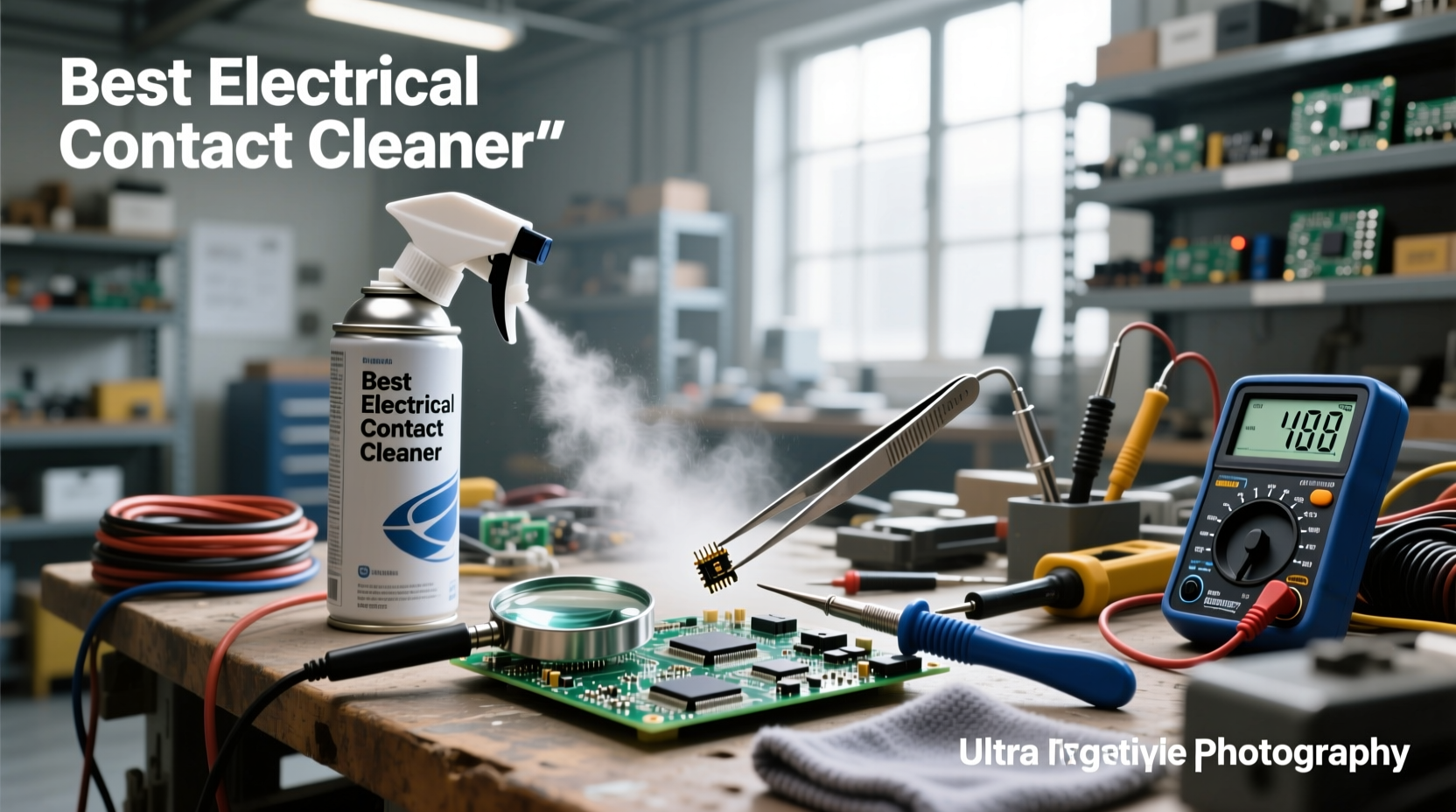
When searching for the best electrical contact cleaner, users often need a fast-drying, non-conductive solution that effectively removes oxidation, dirt, and grease from sensitive electrical components without damaging plastics or leaving residue. The right product can restore performance in connectors, switches, relays, and circuit boards—common issues in automotive systems, home electronics, and industrial machinery. This guide breaks down what makes a contact cleaner effective, compares key formulations like aerosol sprays versus brush-applied solutions, and helps you avoid common mistakes such as using improper solvents on delicate circuits.
Why Use an Electrical Contact Cleaner?
Electrical connections degrade over time due to environmental exposure. Moisture, dust, temperature fluctuations, and chemical residues lead to oxidation and corrosion on metal contacts ⚡. These contaminants increase electrical resistance, which can cause intermittent failures, signal loss, overheating, or complete system shutdowns. An effective electrical contact cleaner spray dissolves these impurities while being safe for surrounding materials like rubber insulation and plastic housings.
Unlike general-purpose cleaners or household solvents, specialized contact cleaners are designed to be electrically non-conductive, fast-evaporating, and residue-free. They penetrate tight spaces and crevices where grime accumulates, making them ideal for cleaning battery terminals, ignition systems, sensor connectors, and printed circuit boards (PCBs).
How Do Electrical Contact Cleaners Work?
These cleaners typically contain volatile solvents such as heptane, isopropyl alcohol (IPA), or hydrofluoroether (HFE) blends that dissolve oils, flux residues, and conductive particles. Some advanced formulas include additives that provide temporary anti-corrosion protection after drying ✨.
- Solvent Action: Breaks down organic and inorganic contaminants on contact surfaces.
- Fast Drying: Evaporates quickly without requiring wiping, reducing downtime.
- No Residue: Leaves no film behind that could attract new debris or interfere with conductivity.
- Non-Conductive: Safe for live circuits when used correctly (though de-energizing is always recommended).
The effectiveness depends not just on chemical composition but also on delivery method—most popular options come in aerosol cans with precision nozzles 🔧.
Common Applications Across Industries
Different environments demand different performance characteristics. Here’s how usage varies by sector:
Automotive Use 🚗
In vehicles, electrical gremlins often stem from corroded connectors in engine bays, undercarriage sensors, or interior switchgear. Road salt, humidity, and vibration accelerate wear. A high-quality automotive electrical contact cleaner must withstand exposure to oils, brake fluid, and fuel vapors.
Typical targets:
- O2 sensor connectors
- Fuel injector harnesses
- Ignition coils and spark plug boots
- Door lock actuators and window switches
Electronics Repair & Maintenance 💻
For technicians working on audio equipment, computers, or industrial control panels, maintaining clean PCB traces and socket contacts is essential. Flux residue from soldering, dust buildup, and finger oils can create leakage paths or poor connections.
Key considerations:
- Use low-residue or zero-residue formulas near microelectronics.
- Avoid chlorinated solvents unless specified—they may damage certain polymers.
- Prefer HFE-based cleaners for RoHS compliance and environmental safety.
Industrial and Marine Environments 🏭
Heavy-duty operations face extreme conditions: high humidity, saltwater exposure, and wide thermal cycles. In marine settings, galvanic corrosion between dissimilar metals is a major concern. Industrial automation systems rely on reliable signal transmission across hundreds of nodes.
Cleaners used here should:
- Penetrate deeply into multi-pin connectors
- Resist recontamination post-cleaning
- Be compatible with conformal coatings
Types of Electrical Contact Cleaners
Not all contact cleaners are created equal. Understanding the differences helps match the right product to your task.
Aerosol Sprays (Compressed Air Format) 🌬️
The most common form, offering deep penetration via narrow straw attachments. Ideal for hard-to-reach areas.
Pros:
- High pressure reaches inside connectors
- Quick application
- Wide availability
Cons:
- Potential overspray onto unintended surfaces
- VOC emissions; require ventilation
- Not refillable—environmental impact
Brush-Applied Solutions 🖌️
Liquid cleaners applied with a small brush allow precise targeting. Often sold in bottles with integrated brushes.
Pros:
- No propellant needed
- Better control for delicate work
- Reusable container
Cons:
- Slower process
- Limited reach into recessed areas
- Risk of pooling if over-applied
Wipes and Pads 🧼
Pregenerated solvent wipes offer convenience for field service or routine maintenance.
Pros:
- No spraying required
- Portability
- Reduced waste compared to full cans
Cons:
- Less aggressive cleaning power
- Limited surface area per wipe
- May leave lint
Key Features to Look For
When evaluating options, focus on measurable properties rather than brand names.
Residue-Free Formula ✅
A true contact cleaner should evaporate completely. Any leftover film can trap moisture or act as an insulator. Check product data sheets for terms like “non-oily,” “non-filming,” or “volatile-only.”
Plastic and Rubber Compatibility 🛡️
Many connectors contain elastomers or thermoplastics vulnerable to swelling or cracking. Always verify compatibility with common materials like PVC, silicone, EPDM, and polycarbonate. Manufacturers usually list this in technical specifications.
Dielectric Strength ⚙️
This measures resistance to electrical breakdown. Higher dielectric strength means safer use near energized components. Look for values above 30 kV/mm for demanding applications.
Drying Time ⏱️
Faster evaporation reduces downtime. Most quality sprays dry within 1–3 minutes at room temperature. Humid environments may extend this.
Environmental and Safety Considerations 🌍
Volatile organic compounds (VOCs) contribute to air pollution. Some regions regulate their use indoors or in enclosed spaces. Prefer low-VOC or zero-VOC alternatives when possible. Also check flash point—non-flammable options are safer around sparks or heat sources.
Popular Brands and Formulations Compared
While specific product recommendations depend on local availability, several brands consistently appear in professional toolkits across Australia and North America.
| Brand/Product | Form | Residue-Free | Plastic Safe | Primary Solvent | Typical Use Case |
|---|---|---|---|---|---|
| WD-40 Specialist Contact Cleaner | Aerosol | Yes | Most plastics | Hydrocarbon blend | General automotive |
| CRC CO Contact Cleaner | Aerosol | Yes | Test first | Heptane-based | Industrial electronics |
| MG Chemicals Super Contact Cleaner | Aerosol/Liquid | Yes | Yes | HFE-7100 | Sensitive PCBs |
| DeoxIT D5 | Spray/Brush | Yes | Yes | Proprietary | Oxidation restoration |
| Kleanium Contact Kleen | Aerosol | Yes | Yes | Alcohol-based | General maintenance |
Note: Always consult the Safety Data Sheet (SDS) before use 1. Performance claims vary based on test methods and real-world conditions.
Misconceptions About Electrical Contact Cleaners
Several myths persist among DIYers and even professionals.
Myth 1: WD-40 Multi-Use Is a Contact Cleaner ❌
Despite its popularity, standard WD-40 contains oils that leave a conductive residue. While it displaces water, it's not suitable for cleaning live electrical contacts. However, WD-40 Specialist Contact Cleaner is a different product formulated specifically for electronics.
Myth 2: Isopropyl Alcohol Works Just as Well 🔍
99% IPA removes some contaminants but lacks surfactants found in dedicated cleaners. It also leaves behind trace moisture unless fully dried, potentially causing short circuits. High-purity IPA is acceptable in emergencies but not optimal.
Myth 3: All Contact Cleaners Are Non-Flammable 🔥
Many are flammable during application. Only products labeled “non-flammable” meet OSHA/NFPA standards. Always read labels carefully and work in well-ventilated areas.
Myth 4: You Can Clean Live Circuits Safely ⚠️
While some cleaners claim compatibility with energized equipment, arcing risks remain. De-energize whenever possible. If live cleaning is unavoidable, use only certified products and follow strict safety protocols.
How to Use Electrical Contact Cleaner Properly
Even the best product fails if misused. Follow these steps:
- Disconnect Power: Turn off and unplug the device or circuit.
- Inspect Components: Check for physical damage before cleaning.
- Shake Can (if aerosol): Ensure proper mixing.
- Apply Evenly: Spray or brush liberally onto contacts, allowing solvent to flow through.
- Allow to Dry: Wait 2–5 minutes for full evaporation.
- Reassemble and Test: Reconnect and verify functionality.
Avoid excessive force or abrasive tools that might scratch contact plating.
Storage and Shelf Life
Contact cleaners degrade over time, especially if containers are left open or stored improperly. Aerosols may clog nozzles; liquids can lose volatility. Store upright in a cool, dry place away from direct sunlight. Most have shelf lives of 2–5 years from manufacture date.
Regional Availability and Retail Options
In Australia, popular retailers include Jaycar Electronics, Supercheap Auto, Bunnings Warehouse, and Mitre 10. Products like SCA Electrical Contact & Parts Cleaner and Nulon Pro-Strength ECC400 are regionally available and widely used 2.
In North America, CRC, MG Chemicals, and DeoxIT dominate the market through distributors like Grainger and Newark. Always compare SDS documents across regions, as formulations may differ due to regulatory requirements.
When Not to Use Electrical Contact Cleaner
Certain situations call for alternative approaches:
- Severely Corroded Terminals: Mechanical abrasion (e.g., wire brushing) may be needed first.
- Inside Sealed Units: Avoid introducing liquid into non-serviceable enclosures.
- On Battery Electrolyte Spills: Neutralize acid with baking soda before cleaning.
- With Unknown Plastic Compatibility: Test on inconspicuous area first.
Final Selection Tips
To choose the best electrical contact cleaner for your needs:
- Define the application: automotive, electronic, industrial?
- Check material compatibility with housing components.
- Prioritize residue-free, fast-drying formulas.
- Consider environmental regulations and workplace safety.
- Verify availability and cost-effectiveness for recurring use.
There is no single “best” option for every scenario. Instead, match the cleaner’s properties to your specific use case.
Frequently Asked Questions
- Can I use electrical contact cleaner on car battery terminals?
- Yes, provided the cleaner is residue-free and plastic-safe. Disconnect the battery first, clean the terminals, and let dry before reconnecting.
- Is electrical contact cleaner the same as degreaser?
- No. While both remove oils, degreasers often leave films or are too aggressive for electronics. Contact cleaners are formulated to be non-conductive and non-corrosive.
- How often should I clean electrical contacts?
- Preventively every 6–12 months in harsh environments; otherwise, only when symptoms like flickering lights or intermittent signals occur.
- Can contact cleaner fix oxidized connectors?
- Yes, mild oxidation is removable with proper solvents. Heavily corroded contacts may require replacement.
- Do I need to lubricate after cleaning?
- Only if specified. Some cleaners include light lubricants; others require separate dielectric grease for long-term protection.




 浙公网安备
33010002000092号
 浙B2-20120091-4