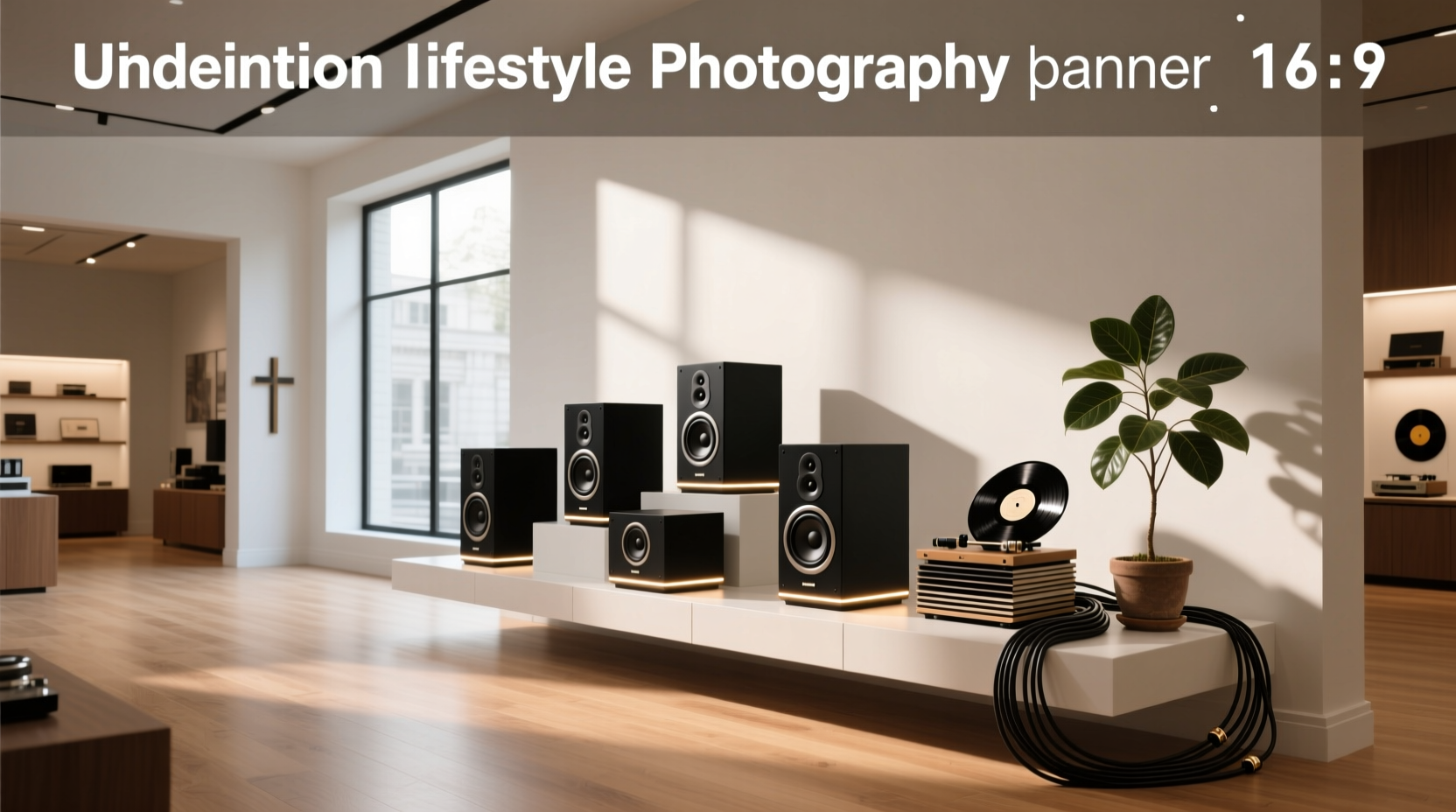
When searching for mid range speakers for sale, understanding their role in your audio system is essential. These speakers handle frequencies between approximately 300 Hz and 5 kHz—where most vocals, guitars, horns, and melodic instruments reside—filling the gap between subwoofers and tweeters for balanced, natural sound reproduction 🌐. Whether you're upgrading a car audio system or building a home theater, selecting the right mid-range speaker involves more than just price; it requires evaluating frequency response, sensitivity, impedance, size, and compatibility with your amplifier or receiver ✅.
Why Mid-Range Speakers Matter in Audio Systems
Mid-range speakers are often overlooked in favor of flashy subwoofers or high-pitched tweeters, but they play a critical role in delivering clarity and realism. Human voices and most musical instruments fall within the mid-frequency band, so poor midrange performance can make music sound flat, muddy, or unnatural ❗. Full-range speakers attempt to cover all frequencies, but they often compromise on detail in the mid-band due to physical limitations. Dedicated mid-range drivers, especially in multi-way systems (like 3-way speakers), allow each component to specialize, resulting in cleaner separation and improved fidelity 🔍.
In professional audio setups, studio monitors frequently use separate mid-drivers to ensure accurate mixing and mastering. Similarly, in-car audio environments—where noise, cabin acoustics, and speaker placement vary widely—a quality mid-range speaker can significantly enhance listening experience by bringing forward vocal presence and instrument definition ⚙️.
Understanding Key Specifications When Buying Mid-Range Speakers
To make an informed decision when browsing mid range speakers for sale, focus on these core technical parameters:
Frequency Response Range
The ideal operating range for a mid-range speaker typically spans from 300 Hz to 5,000 Hz, though some extend lower into mid-bass (down to 200 Hz) or higher toward upper mids (up to 6 kHz). A narrower, well-tuned range usually indicates better control and reduced distortion compared to broader, less focused designs 📊.
Sensitivity (Efficiency)
Measured in decibels (dB), sensitivity tells you how loud a speaker plays with 1 watt of power at 1 meter distance. Look for values between 85 dB and 92 dB. Higher sensitivity means the speaker works efficiently with lower-powered amplifiers, which is particularly important in factory-replacement car audio applications where head unit output may be limited ⚡.
Power Handling (RMS vs. Peak)
RMS (Root Mean Square) rating reflects continuous power handling, while peak refers to short bursts. Always prioritize RMS ratings—for example, a 250W RMS speaker can handle sustained input better than one rated only by peak power. Overdriving underpowered speakers leads to clipping and damage over time. Match this value closely with your amplifier’s output per channel to avoid mismatch issues 🔧.
Impedance (Ohms)
Most mid-range speakers come in 4-ohm or 8-ohm variants. Car audio systems typically support 4-ohm loads for higher power delivery, whereas home audio gear often expects 8 ohms. Using a lower impedance than your amp supports can cause overheating or shutdowns. Always verify compatibility before purchase 🏭.
Size and Mounting Depth
Common sizes include 4", 5.25", 6.5", and 6" x 9". The size affects both bass extension and installation fit. Larger cones move more air and reproduce deeper notes, but may not fit flush in factory door panels without modification. Shallow-mount models are designed for tight spaces, making them ideal for modern vehicles with complex inner door structures 📍.
| Speaker Size | Typical Use Case | Frequency Sweet Spot | Installation Notes |
|---|---|---|---|
| 4" | Dash or narrow locations | 800 Hz – 5 kHz | Easy retrofit; limited bass |
| 5.25" | Factory replacements | 500 Hz – 4.5 kHz | Balanced size/performance |
| 6.5" | Universal car/home use | 300 Hz – 5 kHz | Best blend of output & fit |
| 6" x 9" | Rear deck fill | 200 Hz – 4 kHz | Good mid-bass overlap |
Mono vs. Component Mid-Range Systems: Which Should You Choose?
Mid-range speakers are available as coaxial (integrated tweeter/mid-driver) or component (separate mid-driver + external tweeter). Each has pros and cons depending on budget, space, and desired sound quality.
Coaxial (Full-Range Coaxial) Speakers
- Pros: Affordable, easy to install, direct factory replacement ✅
- Cons: Less precise imaging, tweeter position fixed relative to mid-cone
- Best For: Budget-conscious buyers, simple upgrades, rear seat zones
Component Mid-Range Setups
- Pros: Superior staging, customizable crossover networks, dedicated midrange driver placement ✨
- Cons: Higher cost, complex wiring, require custom mounting solutions
- Best For: Front stage imaging, audiophiles, competition-grade builds
For optimal results, many enthusiasts pair standalone mid-range drivers with crossovers that filter out extreme lows and highs, protecting the speaker and improving clarity. Passive crossovers are common in aftermarket kits, while active systems use electronic filters before amplification for greater precision ⏱️.
Car vs. Home Audio: Are Mid-Range Speakers Interchangeable?
While the physics of sound reproduction remain consistent, mid-range speakers designed for cars differ from those built for home use in several key ways:
Environmental Durability
Car audio mid-range units must withstand temperature swings, moisture, UV exposure, and vibration. They often feature marine-grade materials like rubber surrounds and sealed baskets. Home speakers, unless specified for outdoor use, lack such protection and degrade faster if used in vehicles 🚗.
Impedance & Amplification
Automotive systems run on 12V DC and typically drive 4-ohm speakers to maximize power. Home receivers expect 8-ohm loads and deliver cleaner signal at lower current. Substituting one for the other risks inefficient performance or equipment stress 🔌.
Enclosure Design
Home mid-range drivers often require specific enclosures (sealed, ported, transmission line) to perform correctly. In contrast, car doors act as semi-enclosed cavities, altering resonance behavior. Some mid-range speakers are tuned specifically for free-air or infinite baffle environments found in automobiles 📌.
If considering repurposing home speakers in a car (or vice versa), always check voltage compatibility, enclosure needs, and environmental resilience first.
Pricing Tiers: What You Get at Different Budget Levels
Mid-range speakers for sale span multiple price brackets, each offering different levels of build quality, materials, and engineering sophistication.
Under $45: Entry-Level Options
These budget-friendly options work well as temporary fixes or basic replacements. Expect paper cones, basic foam surrounds, and minimal crossover components. Brands like Rockville or Pyle offer functional products here, but longevity and detail suffer under prolonged use 🛒.
$45–$80: Balanced Performance
This sweet spot includes robust mid-range drivers from reputable manufacturers such as PRV Audio, DS18, and CT Sounds. Features may include polypropylene cones, neodymium magnets, and improved suspension systems. Many offer 200W+ RMS handling and clean midrange output suitable for daily driving 🎯.
$80–$150: High-Fidelity Builds
At this level, expect advanced materials like aluminum, silk-dome hybrids, or bamboo-composite diaphragms. Crossovers become more refined, and off-axis response improves. Ideal for listeners who value vocal clarity and nuanced instrument reproduction 👥.
Over $150: Premium & Pro-Audio Grade
Found in brands like Audiofrog or B&C, these units are engineered for accuracy and durability. Used in recording studios and high-end installations, they feature precision tooling, rigid baskets, and linear excursion capabilities. While excellent, they demand proper integration and amplification to realize benefits ⭐.
Common Mistakes to Avoid When Buying Mid-Range Speakers
Even experienced shoppers can misstep when choosing mid range speakers for sale. Here are frequent pitfalls and how to avoid them:
Mistake #1: Prioritizing Peak Power Over RMS
Marketing often highlights peak wattage, which can be double or triple the RMS value. Relying on peak numbers leads to mismatched amplifiers and distorted sound. Always compare RMS ratings across models.
Mistake #2: Ignoring Crossover Compatibility
A standalone mid-range driver requires filtering to block low bass and high treble. Without proper crossover integration, the speaker may receive signals outside its safe range, leading to mechanical failure or poor tone.
Mistake #3: Assuming Bigger Is Always Better
Larger speakers produce more output but may not fit cleanly or integrate well acoustically. A poorly mounted 8-inch mid-range will rattle and distort, negating any theoretical advantage over a properly installed 6.5-inch unit.
Mistake #4: Skipping Real-World Testing
Spec sheets don’t tell the whole story. Whenever possible, listen to demo units or read verified user reviews focusing on vocal clarity, fatigue during long sessions, and real-world durability.
How to Verify Authentic Deals Among Mid-Range Speakers for Sale
With so many listings online, distinguishing genuine value from misleading offers is crucial. Watch for these red flags:
- Unrealistic discounts: A “$200 speaker” marked down to $30 likely inflates original pricing or uses inferior components.
- Vague specifications: Missing RMS power, frequency curves, or material details suggest low transparency.
- No return policy or warranty: Reputable sellers provide at least 30-day returns and manufacturer-backed warranties 🚚.
- Stock photos only: Real vendors often include actual product images, packaging shots, or test videos.
Check seller reputation via independent forums or review platforms. Stores like Parts Express or Crutchfield have long-standing credibility in the audio community 1.
Future-Proofing Your Purchase: Trends in Mid-Range Speaker Design
Modern advancements are enhancing mid-range speaker performance through new materials and design philosophies:
- Neodymium magnets: Lighter and stronger than traditional ferrite, allowing compact designs with high efficiency.
- Composite cones: Blends like mica-filled polypropylene reduce resonance and improve stiffness-to-mass ratio.
- Waveguides and phase plugs: Improve dispersion and reduce distortion at high volumes.
- Smart integration: Some pro-audio mid-drivers now interface with DSP systems for automatic room/space calibration.
While not essential for every buyer, awareness of these trends helps identify forward-thinking products worth considering for long-term use.
Frequently Asked Questions (FAQs)
- What is a mid-range speaker used for?
- A mid-range speaker reproduces middle frequencies (typically 300 Hz – 5 kHz), where most vocals and melodic instruments occur. It ensures clear, detailed sound that full-range speakers often struggle to deliver accurately.
- Can I use full-range speakers instead of mid-range drivers?
- You can, but full-range speakers sacrifice specialization. They attempt to cover bass, mids, and treble, often leading to compromised clarity in the vocal range. For critical listening, dedicated mid-range drivers in a multi-way system are superior.
- What size mid-range speaker is best for car audio?
- 6.5-inch speakers offer the best balance of fit, output, and frequency response for most vehicles. However, 4-inch and 5.25-inch models work well in space-constrained areas like dashboards or front pillars.
- Do mid-range speakers need an amplifier?
- They perform best with dedicated amplification, especially in component systems. While they can run off a head unit, adding an amp improves dynamics, reduces strain, and allows proper crossover filtering.
- How do I know if a mid-range speaker is compatible with my system?
- Check three factors: impedance match (usually 4 ohms for car audio), power handling (RMS within amplifier output range), and physical dimensions (mounting depth and cutout diameter).




 浙公网安备
33010002000092号
 浙B2-20120091-4