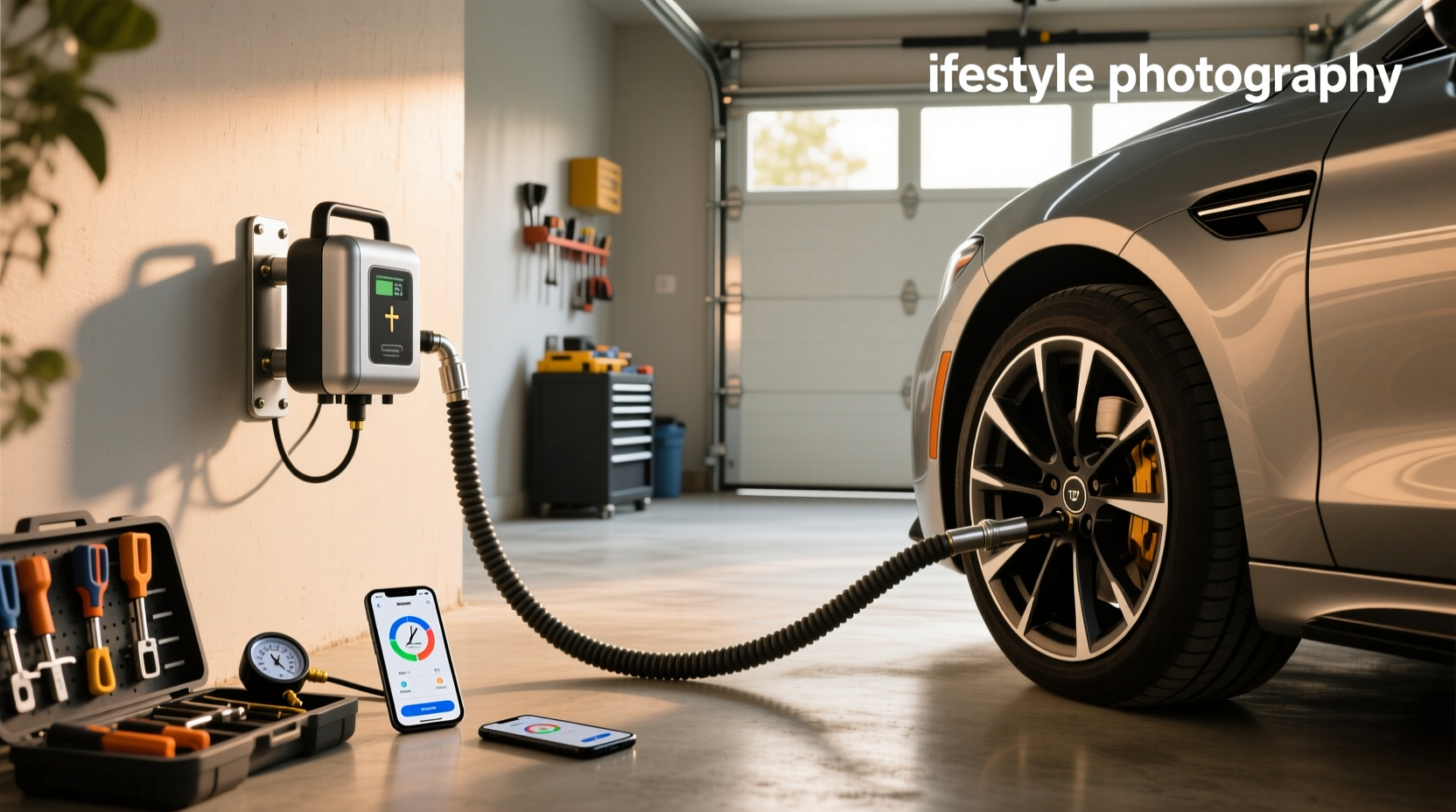
Choosing the right portable car tyre inflator can make a critical difference when maintaining safe driving conditions, especially during long trips or in emergencies. A reliable inflator ensures your tyres stay at optimal pressure, improving fuel efficiency, handling, and safety1. But with so many models offering digital displays, auto-shutoff, LED lights, and dual power sources (12V DC and USB), it’s easy to feel overwhelmed. This guide breaks down everything you need to know before buying—covering performance metrics like inflation speed and accuracy, battery life for cordless units, durability, ease of use, and compatibility across vehicles from cars to bikes and SUVs.
Why Accurate Tyre Pressure Matters
Underinflated tyres are a leading cause of reduced vehicle control, increased stopping distances, and higher risk of blowouts2. According to the U.S. Department of Energy, nearly 50% of drivers operate vehicles with at least one significantly underinflated tyre. While modern TPMS (Tyre Pressure Monitoring Systems) alert drivers to major drops, they don’t correct them. That’s where a portable air compressor for car tyres becomes essential—not just convenient, but a proactive safety tool.
Types of Portable Tyre Inflators
Not all inflators work the same way. Understanding the types available helps match the device to your usage patterns.
12V DC In-Car Inflators ⚡
These plug into your vehicle’s cigarette lighter socket and run on the car’s electrical system. They’re typically more powerful than battery-powered versions and can inflate a standard passenger car tyre from 20 psi to 32 psi in about 3–5 minutes depending on compressor strength.
- Pros: Continuous power supply, consistent performance, often lower cost
- Cons: Requires engine running; limited mobility if outlet isn’t accessible; cable length may restrict positioning
Best for: Drivers who want reliability without worrying about battery charge levels.
Cordless Battery-Powered Inflators 🔋
Equipped with built-in lithium-ion batteries (e.g., 2000mAh to 25000mAh), these offer true portability. Many double as power banks for charging phones or other devices.
- Pros: Use anywhere—even without starting the car; compact design; often include digital screens and preset PSI settings
- Cons: Limited runtime per charge; slower refills after full depletion; performance degrades as battery drains
Ideal for: Urban commuters, EV owners (no 12V accessory socket always active), and those needing multi-use tools.
Mains-Powered Home Units 🏠
Designed for garage use, these connect to standard wall outlets (110V/230V). They tend to be bulkier but deliver high airflow for quick inflation.
- Pros: Fastest inflation speeds; no reliance on car systems or internal batteries
- Cons: Not suitable for roadside use; less common in ‘portable’ categories
Suitable for: Regular home maintenance, not emergency scenarios.
Key Features to Evaluate Before Buying
When comparing options, focus on measurable performance rather than marketing claims. Here's what actually impacts usability:
Inflation Speed and Power Output ⏱️
The time it takes to fill a tyre depends on motor power (measured in watts or amps), hose diameter, and airflow rate (CFM – cubic feet per minute). However, most consumer-grade inflators don't list CFM. Instead, look for real-world test data showing how long it takes to inflate a typical sedan tyre from 20 psi to 35 psi.
- Average time for 12V models: 3–6 minutes
- Battery-powered units: 4–8 minutes (varies with charge level)
Faster isn’t always better—some ultra-fast pumps generate excessive heat and shut down prematurely due to thermal protection.
Pressure Accuracy and Auto-Shutoff ✅
Digital inflators with pre-set PSI allow you to input desired pressure and let the unit stop automatically when reached. This prevents overinflation—but only if the sensor is accurate.
Testing shows that some budget models deviate by ±5 psi from actual pressure3. Always verify readings against a standalone calibrated gauge.
- Recommended: Models with recalibration function or known brand consistency
- Red flag: No manual override or inability to bypass auto-stop for topping off
Battery Life and Charging Time 🔧
For cordless models, check how many tyres can be inflated on a single charge. High-capacity units claim up to 5–6 car tyres, but real-world results vary based on starting pressure and ambient temperature.
- Charging time: 2–4 hours via USB-C is standard
- Lifespan: Lithium batteries degrade after ~500 cycles; store partially charged if unused for months
Tip: Avoid leaving the unit plugged in overnight once fully charged to extend battery longevity.
Nozzles, Hoses, and Accessories 📎
Look for multiple nozzle tips for different applications:
- Schrader valve (standard car/bike)
- Presta valve (road bikes)
- Ball needle and inflatable adapter
A minimum hose length of 24 inches allows easier access to rear tyres. Swivel connectors reduce strain and kinking.
Build Quality and Portability 📍
Weight matters if carrying in glovebox or trunk. Most handheld units range from 1.5 to 3 lbs. Check for:
- Rubberized grips for wet conditions
- Dust/water resistance rating (IPX4 or higher preferred)
- Integrated storage for cords and nozzles
Common Misconceptions About Portable Inflators
Despite growing popularity, several myths persist:
Myth: All Digital Displays Are Accurate
Reality: Digital readouts improve convenience but aren’t inherently precise. Independent tests show discrepancies between displayed and actual pressures, especially in cheaper units. Always cross-check with an external gauge.
Myth: Smaller Inflators Can’t Handle Car Tyres
Truth: Compact doesn’t mean ineffective. Some palm-sized inflators successfully fill passenger car tyres, though they take longer and may require cooling breaks. Suitable for minor top-offs, not full flat repairs.
Myth: Auto-Shutoff Eliminates Need for Monitoring
Caution: Thermal cutoffs or inaccurate sensors can cause premature shutdown. Never assume the job is done until you manually confirm pressure.
Performance Testing Insights from Real Users
Community forums and independent reviewers highlight practical concerns beyond specs. On Reddit threads like r/CarTalkUK and r/AskUK, users report:
- Halfords-branded inflators perceived as overpriced compared to online alternatives
- Units failing after 6–12 months of occasional use, suggesting poor motor durability
- Noise levels making outdoor use disruptive
Project Farm’s comparative video testing found significant variation in both speed and sustained operation under load4. Some stopped mid-inflation due to overheating, while others maintained output throughout.
What Should I Look for When Buying?
Use this checklist to evaluate any model:
| Feature | Why It Matters | Recommended Spec |
|---|---|---|
| Max Pressure | Must exceed your vehicle’s max cold pressure (usually 50–60 psi) | ≥ 100 psi |
| Power Source | Determines where and how long you can use it | 12V + USB rechargeable hybrid |
| Inflation Time (Car Tyre) | Affects usability in urgent situations | < 6 minutes from 20→35 psi |
| Auto Shut-Off | Prevents overinflation but must be accurate | With adjustable tolerance ±2 psi |
| Battery Capacity | Impacts number of uses between charges | ≥ 10,000 mAh for cordless |
| Nozzle Types | Versatility for non-car uses | At least 4 (car, bike, ball, mattress) |
| LED Light | Helpful for night or low-light use | Bright, forward-facing |
Regional Differences and Compatibility Issues
Voltage standards differ globally:
- North America: 12V DC (cigarette lighter), 110–120V AC
- Europe/UK: 12V DC, 230V AC
If purchasing internationally, ensure the inflator supports local voltages. Dual-voltage models (100–240V AC) are ideal for travelers.
Also consider tyre valve type. Most are Schrader valves (same as bikes in US/Canada), but some European performance cars use Dunlop valves, which require an adapter.
When NOT to Rely on a Portable Inflator
While useful, these devices have limitations:
- Severe punctures: If air escapes faster than the pump can supply, inflation won’t help.
- Low temperatures: Cold reduces battery efficiency and increases required pressure, slowing inflation.
- Spare tyre replacement: Don’t delay changing a damaged tyre just because you can temporarily inflate it.
They are best used for maintenance top-offs and minor leaks—not as substitutes for proper repair.
Tips for Long-Term Maintenance
To extend lifespan:
- Store in a cool, dry place away from direct sunlight
- Recharge battery every 3 months even if unused
- Clean dust from intake vents regularly
- Check hose for cracks or leaks before each use
- Keep firmware updated (if applicable)
Top Brands and Market Trends in 2026
Based on recent reviews and product launches, brands like Ring, Noco, Agaro, and Ferrex dominate regional markets:
- Ring Ultrainflate 20: Praised for thoughtful design and value (Auto Express, 2026)
- NOCO AL5: Known for compact size and integration with smart gauges
- Agaro TI2157: Offers dual power (12V & 230V) and bright display
- Ferrex 12V: Budget-friendly option with solid build
Emerging trends include app connectivity for logging pressure history and solar charging capability for off-grid use.
Final Recommendations
A digital portable car tyre inflator with auto-shutoff and dual power support offers the best balance of convenience, accuracy, and reliability. Prioritize verified performance over flashy features. Test new units upon arrival and compare readings with a trusted pressure gauge. Remember: no inflator replaces regular tyre inspections and professional servicing.
Frequently Asked Questions
- Can a small portable tyre inflator fill a completely flat car tyre?
- Yes, most 12V and high-capacity battery-powered inflators can refill a standard passenger car tyre from zero, though it may take 5–8 minutes and cause the unit to heat up. Ensure the tyre bead is still sealed to the rim; otherwise, no amount of pumping will hold air.
- Do portable tyre inflators work on SUVs and trucks?
- It depends on the tyre size and required pressure. Larger tyres (e.g., LT265/70R17) need more volume and pressure (up to 80 psi). Standard inflators max out around 150 psi but may struggle with airflow. Check manufacturer specs for duty cycle and recommended vehicle types.
- How often should I check my car’s tyre pressure?
- At least once a month and before long trips. Tyres naturally lose about 1 psi per month. Temperature changes also affect pressure—check when tyres are cold for accurate readings.
- Is a tyre inflator the same as a compressor?
- Yes, in common usage. Technically, a compressor generates compressed air, while an inflator delivers it. But portable ‘tyre inflators’ contain small compressors, so the terms are used interchangeably.
- Can I leave a portable inflator plugged in my car long-term?
- For 12V plug-in models, yes—but only if the car is off and ignition is in accessory mode or the socket remains powered. Otherwise, it could drain the battery. Cordless units should be stored inside to avoid extreme temperatures.




 浙公网安备
33010002000092号
 浙B2-20120091-4