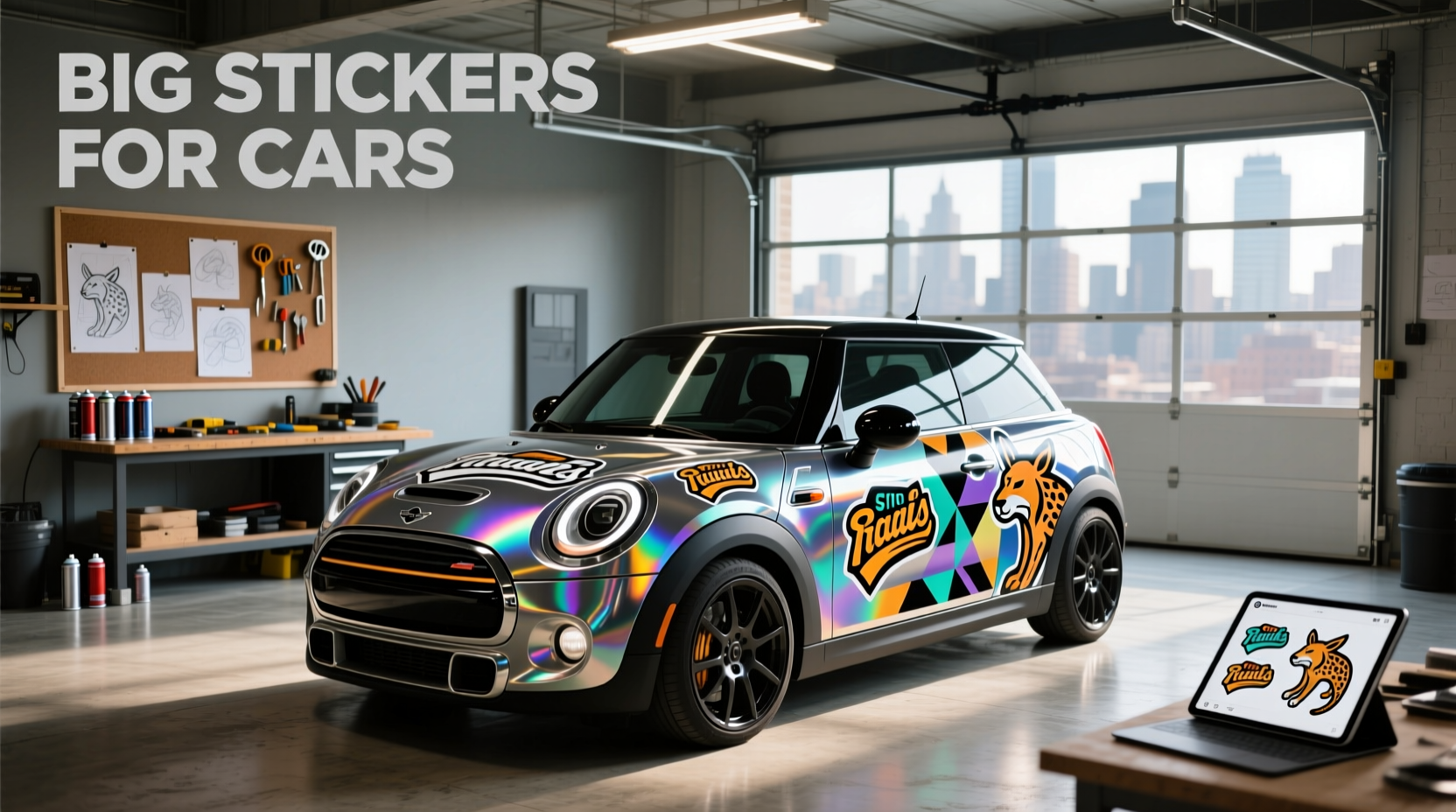
When searching for big stickers for cars, many drivers are looking to enhance visibility, personalize their vehicle, or improve nighttime safety. These large-format decals—often applied to windows, bumpers, or side panels—can serve both decorative and functional roles, especially when made from glow-in-the-dark, reflective, or LED-integrated materials ✨. Understanding the differences between adhesive types, durability factors, and legal restrictions is essential before making a decision ⚠️.
Why People Use Large Vehicle Stickers
Large car stickers fulfill several purposes beyond simple decoration. Many users turn to oversized decals to increase visibility during low-light conditions, particularly on trucks, vans, and fleet vehicles 🌙. Others use them for branding, such as small businesses promoting services directly on company cars or delivery vehicles 👥. In some cases, big stickers help identify special statuses—like “Baby on Board” or emergency responder tags—which can alert other drivers to exercise caution.
One growing trend involves glow-in-the-dark window stickers that absorb ambient light during the day and emit a soft luminescence at night 🔆. These are often marketed under terms like 'night glow panel' or 'EL glow sign' and are popular in JDM (Japanese Domestic Market) car culture. While they don’t replace proper lighting systems, they add a layer of visual distinction that can be useful in parking lots or dimly lit areas.
Different Types of Big Car Stickers
Not all large automotive stickers are created equal. The performance and longevity depend heavily on the material, application method, and environmental exposure. Below is a breakdown of common categories:
1. Vinyl Decals (Most Common)
Vinyl is the standard material for most exterior vehicle graphics due to its flexibility, UV resistance, and ease of installation 🛠️. High-quality vinyl can last 5–7 years without fading, even under direct sunlight. There are two main subtypes:
- Cast vinyl: More durable, ideal for curved surfaces and long-term use.
- Calendered vinyl: Less expensive but may degrade faster, best for short-term applications.
For big stickers covering large surface areas—such as rear windows or full-side door panels—professional-grade cast vinyl ensures better adhesion and weather resistance.
2. Reflective Stickers
These contain microprismatic layers that reflect headlight beams back toward the source, increasing nighttime conspicuity 🚘. They’re frequently used by municipal fleets, school buses, and emergency vehicles. Some regulatory standards (like DOT-C2 or ASTM D4956) define minimum reflectivity levels for certain applications. If you're considering reflective big stickers for personal vehicle safety, look for those labeled as 'engineer-grade' or 'high-intensity' for optimal results.
3. Glow-in-the-Dark (Photoluminescent) Stickers
Unlike reflective materials, these actually emit light after being charged by natural or artificial sources ☀️. Made from strontium aluminate-based pigments embedded in vinyl or acrylic, they typically glow for several hours post-exposure. Their brightness diminishes over time, so placement near headlights or interior dome lights helps maintain charge. Note: these do not generate power; they require prior exposure to light to function.
| Type | Best For | Lifespan | Visibility Conditions |
|---|---|---|---|
| Vinyl Decals | Branding, customization | 5–7 years | Daytime & lit environments |
| Reflective | Safety, compliance | 7+ years | Night (with headlights) |
| Glow-in-the-Dark | Decorative, low-light ID | 3–5 years | Darkness (after charging) |
| Magnetic | Temporary signage | 1–2 years | All (removable) |
4. Magnetic Stickers
These are non-permanent options ideal for rental vehicles or temporary promotions 🧲. They stick to metal surfaces without adhesive, reducing risk of paint damage. However, they tend to flap at high speeds and aren't suitable for long-term outdoor use. Also, modern vehicles with aluminum or composite body panels won’t support magnetic attachment.
Where to Place Large Stickers Safely
Location matters—not just for aesthetics, but for legality and driver safety 📍. Placing large decals on critical viewing areas can violate traffic regulations in many jurisdictions. Here’s a guide:
- Front windshield: Generally prohibited if obstructing the driver’s line of sight. Small compliance labels (e.g., inspection stickers) are usually allowed in corners.
- Rear windshield: Permitted in most places, provided defogger lines and rearview mirrors remain unobstructed.
- Side windows: Often restricted, especially if tinted or if the sticker covers more than 30% of the glass area.
- Body panels and bumpers: Typically unrestricted, making them ideal for large logos or designs.
Always check local motor vehicle codes before installing any large sticker near driver visibility zones. Violations can result in fines or failed inspections.
How to Install Big Stickers Without Bubbles or Damage
Applying a large decal requires more precision than smaller ones. Air pockets, misalignment, or trapped moisture can ruin the finish and shorten lifespan 💧. Follow these steps for professional results:
- Clean the surface thoroughly: Use isopropyl alcohol to remove wax, grease, and dust. Let dry completely.
- Measure and mark placement: Use tape or a level to align the sticker correctly before peeling backing.
- Use transfer tape (for large decals): This prevents stretching and allows repositioning during application.
- Apply slowly with squeegee: Start from the center and work outward to push air toward edges.
- Allow curing time: Wait 48–72 hours before washing the vehicle to ensure full adhesion.
Avoid applying in extreme temperatures—below 50°F (10°C) or above 90°F (32°C)—as this affects adhesive bonding ⚠️.
Legal and Safety Considerations
While personalizing your car is generally allowed, there are limits. Some big stickers may raise legal concerns depending on design, location, or message content. For example:
- Obscuring license plates: Any sticker that covers or reflects over the plate number can lead to citations.
- Distracting or offensive imagery: Graphics that could provoke other drivers might fall under “careless driving” clauses in some regions.
- Resembling emergency vehicles: Using blue or red flashing-style decals may be restricted to prevent impersonation.
In commercial contexts, oversized branding stickers must comply with local signage ordinances, especially if operating across state lines or in urban zones.
Custom vs. Pre-Made Large Stickers
Buyers face a choice between off-the-shelf designs and custom-printed options. Each has trade-offs:
Pre-Made Stickers
- ✅ Lower cost and immediate availability
- ✅ Tested durability and standardized sizing
- ❌ Limited uniqueness; may not fit specific contours
Custom-Big Stickers
- ✅ Tailored to brand, name, or unique design
- ✅ Can be cut to exact dimensions for seamless integration
- ❌ Higher price; longer lead time
- ❌ Quality depends on printer and file resolution
If going custom, provide vector artwork (AI, EPS, or SVG format) for crisp edges and scalability. Low-resolution images will appear pixelated when enlarged.
Common Misconceptions About Big Car Stickers
Several myths persist about large vehicle decals. Clarifying these helps buyers make informed choices:
Myth 1: All Glow Stickers Work Like Neon Lights
Reality: Photoluminescent stickers need prior exposure to light and fade gradually. They don’t stay bright all night unless repeatedly recharged.
Myth 2: Bigger Stickers Mean Better Visibility
Reality: Size alone doesn’t guarantee recognition. Color contrast, reflectivity, and placement play bigger roles in actual visibility.
Myth 3: Once Applied, They Last Forever
Reality: Even premium vinyl degrades over time due to UV exposure, temperature swings, and chemical cleaners. Expect replacement every 5–7 years under normal conditions.
Maintenance Tips for Longevity
To extend the life of big stickers, follow basic care practices:
- Wash gently with mild soap and soft cloth—avoid pressure washers near edges.
- Don’t use abrasive polishes or wax directly on the decal surface.
- Inspect periodically for lifting corners; reseal with clear adhesive sealant if needed.
- Keep covered or garaged when possible to reduce sun exposure.
Alternatives to Traditional Stickers
For those hesitant about permanent adhesives, consider these alternatives:
- Car wraps: Full or partial film coverings that offer greater design flexibility and protection for original paint.
- Paint protection film (PPF) with embedded graphics: A newer option combining protection and style.
- Digital displays: Emerging tech allows programmable LED panels for dynamic messaging (still niche and costly).
Environmental and Disposal Concerns
Vinyl-based stickers are not biodegradable and contribute to plastic waste when removed 🌍. Some manufacturers now offer recyclable or PVC-free alternatives, though availability is limited. When removing old decals, avoid burning or landfill dumping if possible. Check with local recycling centers for disposal guidelines.
Cost Range and Value Assessment
Pricing varies widely based on size, material, and customization level:
- Small pre-cut reflective stickers: $5–$15
- Medium-sized glow decals: $20–$40
- Custom full-window vinyl graphics: $100+
Higher cost doesn’t always mean better quality. Evaluate based on material specs, warranty (if any), and user reviews rather than price alone.
Final Checklist Before Buying
Before purchasing a big sticker for your car, ask yourself:
- Does it comply with local visibility and obstruction laws?
- Is the material suited for outdoor, long-term exposure?
- Have I confirmed the correct size and placement?
- Am I using high-resolution artwork (for custom orders)?
- Will it interfere with sensors, cameras, or antennas?
Frequently Asked Questions
- Can glow-in-the-dark car stickers work without charging?
- No, photoluminescent stickers require exposure to light (sunlight or artificial) to activate their glow. Without prior charging, they won’t emit visible light in darkness.
- Are large vinyl stickers damaging to car paint?
- Generally no—if applied and removed properly. Prolonged exposure may cause slight fading underneath, but the adhesive itself doesn’t harm factory paint. Avoid removal in cold weather to prevent peeling.
- Do magnetic stickers affect modern car electronics?
- No credible evidence shows magnetic car stickers interfere with onboard electronics like GPS or sensors. However, strong magnets placed near key fobs or dashboards should be avoided.
- How do I remove a large sticker without residue?
- Use a heat gun or hair dryer to soften the adhesive, then slowly peel while applying rubbing alcohol or citrus-based remover to lift leftover glue.
- Can I wash my car immediately after applying a big sticker?
- No. Wait at least 48–72 hours to allow the adhesive to fully cure. Water intrusion during early stages can compromise bonding and cause lifting.




 浙公网安备
33010002000092号
 浙B2-20120091-4