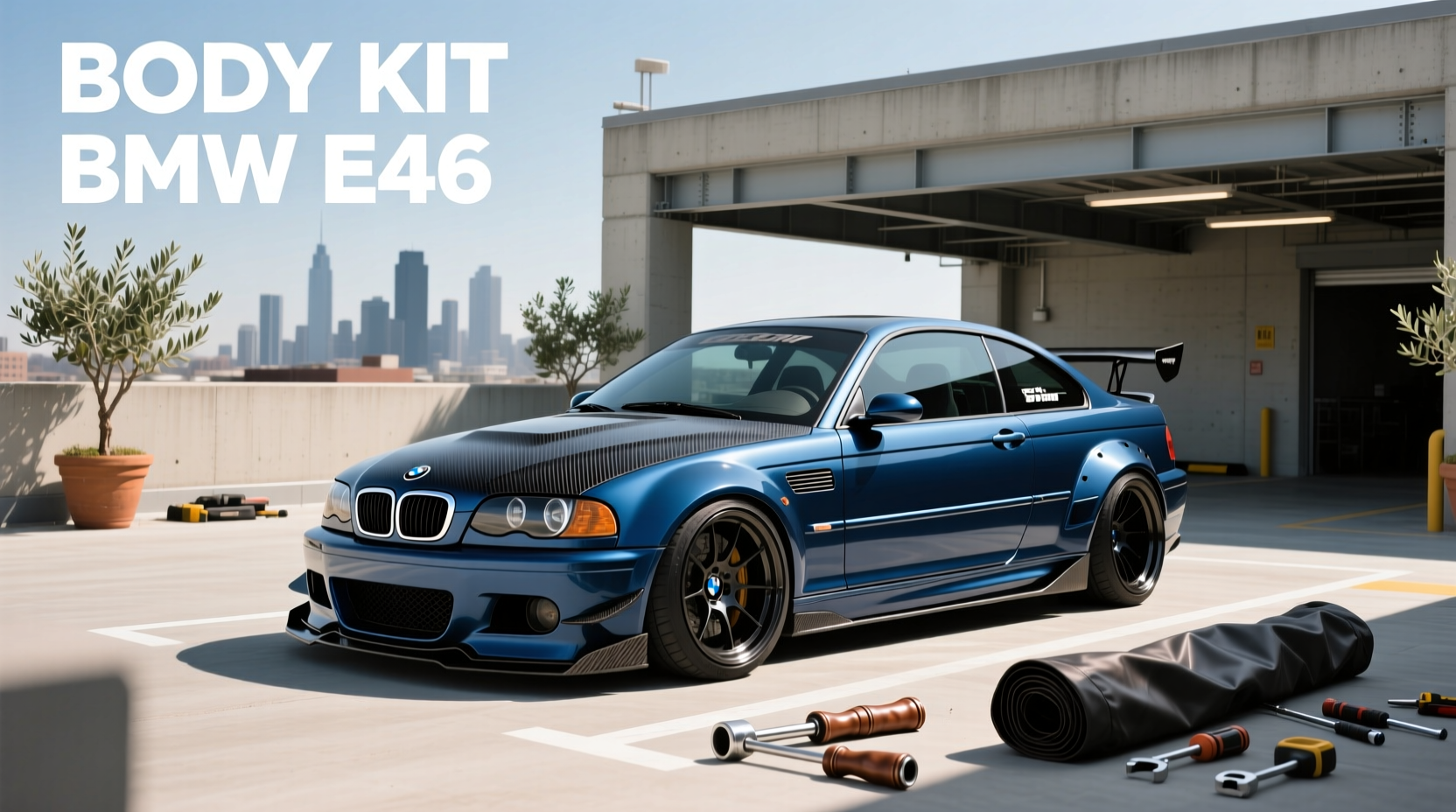
Choosing the right body kit for BMW E46 can dramatically enhance your car’s appearance and driving presence. Whether you're restoring a classic E46 3 Series or modifying it for stance and aggression, understanding the differences in design, fitment, materials, and compatibility is essential. Not all kits are created equal—some are designed for pre-facelift models (1998–2000), while others fit post-facelift versions (2001–2006). Misalignment with bumper styles, fog light placements, or trunk contours can lead to costly mistakes. This guide breaks down everything you need to know before buying a body kit for your E46, including real-world fitment challenges, material durability comparisons, and installation best practices.
Understanding the BMW E46 Platform and Body Kit Compatibility
The BMW E46 generation of the 3 Series was produced from 1998 to 2006 and includes multiple body styles: sedan (E46/4), coupe (E46/2), convertible (E46/C), and wagon (Touring, E46/3). Each variant has subtle but critical differences in dimensions and mounting points that affect how a body kit fits. For example, the front bumper on a pre-LCI (pre-2001) sedan differs significantly from the LCI (facelift) model, particularly around the grille and fog light housings ✅.
When searching for a BMW E46 M3-style body kit, it's crucial to verify whether the kit is intended for:
- Pre-facelift (1998–2000)
- Post-facelift/LCI (2001–2006)
- Sedan vs. coupe vs. touring
- Standard 325i/330i vs. M3 wide fenders
Many aftermarket kits mimic the aggressive lines of the factory E46 M3, which features flared fenders and a deeper front lip. However, installing an M3-style kit on a non-M3 E46 requires careful attention to wheel clearance and suspension setup. Some kits include widened quarter panels, while others rely on stretched tires and lowered suspension to achieve the desired look without structural modification 🔧.
Types of Body Kits: Full vs. Partial, Material Differences
Not all body kits are full wraparounds. Understanding the types available helps narrow down options based on budget, goals, and technical skill level.
Full Body Kits vs. Individual Components
A complete body kit for BMW E46 typically includes:
- Front bumper with integrated splitter or lip
- Rear bumper with diffuser or exhaust cutouts
- Side skirts (rocker panels)
- Trunk spoiler or rear lip
- Hood (optional)
- Fender flares (on M3-style kits)
Partial kits may only include one or two components—such as just a front lip or side skirts—which allows for staged upgrades but risks style mismatch if not carefully coordinated. A full kit ensures visual harmony across all four corners 🌐.
Common Materials Used in E46 Body Kits
The choice of material impacts durability, weight, paint adhesion, and cost. The most common options are:
| Material | Pros | Cons | Best For |
|---|---|---|---|
| ABS Plastic | Factory-like rigidity, easy to paint, heat-resistant | Higher cost, less flexible in impact | Show cars, long-term builds |
| PU (Polyurethane) | Flexible, impact-resistant, affordable | Potential warping over time, harder to paint | Daily drivers, mild climates |
| Fiberglass | Lightweight, low cost, widely available | Brittle, prone to cracking, poor UV resistance | Budget projects, temporary styling |
| Carbon Fiber (real or faux) | Premium look, lightweight, high strength | Very expensive, complex repair | Show/street performance builds |
For daily-driven E46s, ABS or PU are often recommended due to their resilience against road debris and temperature changes. Fiberglass may yellow or crack under prolonged sun exposure unless properly sealed 🛠️.
Popular Body Kit Styles for the E46
The E46’s timeless design lends itself well to various aesthetic directions. Below are the most sought-after styles found in the aftermarket.
M3 Replica / M-Tech Style
This is the most popular BMW E46 body kit type. It replicates the factory M3’s wider fenders, deeper front air dam, and quad-exhaust-ready rear bumper. These kits give a track-inspired look without requiring major chassis modifications. However, true fitment depends on matching the correct submodel year and avoiding kits made for F30 or G20 generations by mistake ❗.
AC Schnitzer or OEM+ Design
OEM+ (Original Equipment Manufacturer Plus) kits aim to enhance the factory look subtly. Brands like AC Schnitzer offer aerodynamic kits that integrate cleanly with stock bumpers or replace them with slightly more aggressive versions. These are ideal for owners who want improved aesthetics without drawing attention ⚙️.
Widebody Conversions
For extreme stance enthusiasts, full widebody kits extend the fenders by several inches, allowing for wider wheels and tires. These require welding or bolt-on extensions and often involve suspension and alignment adjustments. They’re not plug-and-play and should be installed by professionals. Examples include Rocket Bunny or Liberty Walk-inspired kits adapted for E46 platforms ✨.
Front Lip Only or Aero Add-Ons
If you’re not ready for a full kit, many vendors sell individual lips, splitters, or diffusers. These can be added later but must match the contour of your existing bumper. Universal fit lips often require trimming and dry-fitting before installation 🔍.
Where to Buy a Body Kit for BMW E46: Online Marketplaces & Risks
Several online sources offer body kits, each with trade-offs in pricing, authenticity, and support.
Alibaba.com and Global Suppliers
Platforms like Alibaba list hundreds of body kits for BMW E46 from manufacturers in China, Turkey, and Eastern Europe. While prices can be attractive (often $300–$800 for full kits), buyers face risks such as:
- Inaccurate product photos
- Poor mold accuracy leading to gaps
- No return policy or warranty
- Long shipping times (4–8 weeks)
To reduce risk, look for suppliers with:
- Real customer photos (not stock images)
- Clear fitment notes specifying model years
- Response time under 24 hours
- Trade assurance protection
Specialty Retailers and Regional Vendors
Websites like CARiD, Zero Offset, and Royal Body Kits specialize in European vehicles and often provide detailed fitment guides. Though prices may be higher ($1,000–$2,500), these vendors typically offer:
- Verified compatibility databases
- Installation support
- Better quality control
- Faster shipping within regions
Some even offer test-fit programs or exchange policies if parts don’t align correctly 🚚.
Installation: DIY vs. Professional Help
Installing a body kit isn't just about bolting on new parts. It involves precise alignment, potential drilling, and sometimes minor modifications to inner fenders or mounting brackets.
What You’ll Need for Installation
- Basic hand tools (sockets, wrenches, trim removal tools)
- Double-sided tape and automotive adhesive
- Drill (if modifying for new holes)
- Helping hands (second person recommended)
- Patience and time (6–12 hours for full kit)
Most kits use a combination of factory screw locations and additional clips or adhesive. Poorly applied adhesive can lead to peeling at high speeds ⚡.
Why Professional Installation Is Often Worth It
Even experienced DIYers may struggle with achieving perfect panel gaps. A professional shop will have:
- Jigs or templates for alignment
- Experience with E46-specific quirks
- Access to filler and sanding tools if minor adjustments are needed
- Paint-matching services
Cost varies by region but expect $500–$1,200 in labor alone. However, this avoids warped plastics, wind noise, or misaligned lips that ruin the aesthetic 👥.
Painting and Finishing: Don’t Skip This Step
Raw fiberglass or unpainted plastic stands out badly against factory paint. Even slight color mismatches are obvious in sunlight. Always have your body kit painted before installation.
Options include:
- Base color match (least expensive)
- Color sanded and clear coated (professional finish)
- Matte, satin, or wrapped finishes (custom looks)
Never install unpainted parts expecting touch-up spray to suffice—it won’t blend properly. Factory paint fades over time, so a fresh coat on new parts will appear brighter unless matched precisely 🎨.
Common Mistakes to Avoid When Buying an E46 Body Kit
Many owners regret purchases due to preventable errors. Here are the top pitfalls:
Mistake #1: Ignoring Model Year Variants
Pre-LCI and post-LCI E46s have different headlight shapes, bumper mounts, and hood lines. A kit made for a 2003 325i might not fit a 1999 model. Always confirm compatibility with your VIN or production date 📌.
Mistake #2: Assuming All ‘M3 Style’ Kits Are Equal
Some kits only mimic the front bumper, while others include full fender flares. Check product descriptions carefully. True M3 replication requires both widened arches and matching rear quarters.
Mistake #3: Overlooking Suspension Clearance
Aggressive lips and side skirts can scrape on speed bumps or driveways. If you’re not running a lowered suspension, consider moderate profiles instead of race-inspired designs 🛣️.
Mistake #4: Skipping Dry-Fitting
Always dry-fit every component before final installation. This reveals gaps, misalignments, or missing hardware early. Never glue or permanently mount a part until you’ve confirmed fitment ✅.
Maintenance and Long-Term Care
Once installed, body kits require regular care:
- Wash gently—avoid pressure washers near seams
- Inspect adhesive monthly for lifting edges
- Re-tighten bolts every 6 months (plastics expand/contract)
- Touch up stone chips immediately to prevent moisture ingress
Fiberglass kits especially benefit from wax coatings to protect against UV degradation. For carbon fiber, use dedicated ceramic coatings to preserve clarity and depth 🧼.
Legal and Insurance Considerations
In some countries, modified bumpers or protruding lips may not meet road safety regulations. In Germany, for instance, any alteration affecting crash absorption must be TÜV-certified. Similarly, in the U.S., states like California have strict emissions and safety equipment rules that could classify certain kits as non-compliant ❗.
Before installing, check local laws regarding:
- Ground clearance minimums
- Protrusion limits from vehicle outline
- Headlight/winker visibility requirements
Also inform your insurer about modifications. Some policies exclude coverage for aftermarket parts unless declared upfront 💼.
FAQs About BMW E46 Body Kits
- Can I install a body kit on my BMW E46 without lowering the suspension?
- Yes, but aggressive kits with deep front lips may scrape on steep driveways or speed bumps. Moderate kits or those with removable lips are better suited for stock-height vehicles.
- Do all BMW E46 body kits require painting?
- Almost all do. Factory paint ages, so unpainted kits will contrast visibly. Painting ensures a seamless, factory-original appearance.
- Are M3-style body kits compatible with non-M3 E46 models?
- Yes, but they often require wider wheels and tires to fill the fenders properly. Some kits include fender flares; others need rolled or pulled fenders for fitment.
- How much does a full E46 body kit installation cost?
- Parts range from $500–$2,500 depending on material and brand. Professional installation and painting add $800–$2,000, bringing total average cost to $1,500–$4,000.
- Can I mix and match body kit components from different brands?
- Possible, but risky. Design language, gap tolerances, and mounting points vary. Mismatched parts can create uneven lines or functional issues like trapped water.




 浙公网安备
33010002000092号
 浙B2-20120091-4