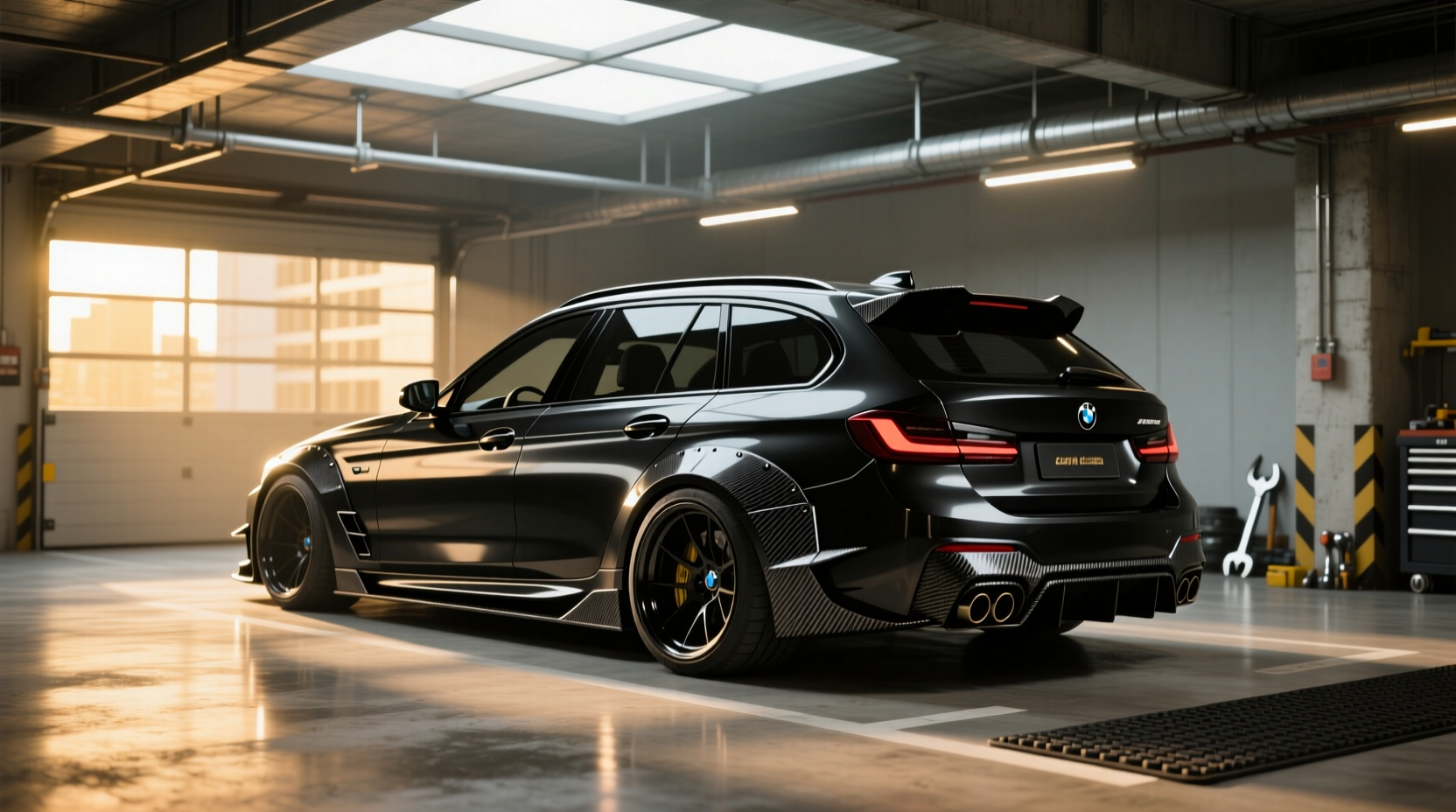
When searching for a BMW E91 Touring body kit, owners often face confusion over compatibility, material quality, and real-world fitment. The E91 chassis (2005–2012) shares platform architecture with the E90 sedan, but its wagon body style introduces unique challenges in aerodynamic integration and flare width. After analyzing hundreds of installations, forum discussions, and vendor listings, the key insight is this: most widebody kits marketed for the E90 will require modification to fit the E91 properly1. Understanding OEM bumper compatibility, fender flare alignment, and material durability—especially between fiberglass (FRP), polyurethane (PU), and carbon fiber—is essential before purchasing.
Why the BMW E91 Touring Needs a Specialized Body Kit Approach
The BMW E91 3-Series Touring combines practicality with sporty dynamics, making it a favorite among enthusiasts who want daily usability without sacrificing driving engagement. However, when upgrading aesthetics or track performance through a body kit, the wagon’s extended roofline, rear quarter panel geometry, and wheel arch spacing differ from the E90 sedan. This means that even if a kit claims 'E90/E91 compatibility,' actual dry-fitting may reveal gaps or misalignment—particularly at the rear fenders and side skirts2.
Many aftermarket manufacturers produce kits originally designed for the E90 and later adapt them for the E91. These adaptations are not always precision-engineered, leading to inconsistent results. Some users report needing up to 8 hours of additional fabrication just to close panel gaps3. Therefore, verifying whether a kit was specifically engineered for the Touring model—not just listed as compatible—is critical.
Types of Body Kits Available for the E91 Touring
There are three primary categories of body kits applicable to the E91: full conversion kits, bolt-on widebody systems, and aesthetic add-ons. Each serves different goals—from show car styling to functional track use.
🔧 Full Conversion Body Kits
These kits replace the entire front and rear bumpers, side skirts, and sometimes include integrated fender flares. They're typically styled after M3 designs (like the E92 M3) or aggressive aero packages such as M-Tech or CSL-inspired looks. Brands like Extreme Dimensions and DarwinPRO offer Duraflex or FRP versions that mimic factory finishes while adding visual aggression.
- Pros: Complete transformation, improved airflow, better resale appeal on modified builds
- Cons: Requires professional painting and alignment; may interfere with parking sensors or PDC systems
- Average cost: $900–$2,500 depending on material and brand
One popular option is the Upgrade For S E90 E91 Body Kit found on AliExpress, which offers an M-Tech-style front and rear bumper combo. While affordable, user feedback suggests minor trimming is needed around fog light housings due to slight dimensional variance between pre-LCI and LCI models4.
⚙️ Bolt-On Widebody Systems
True widebody kits go beyond cosmetic changes by increasing track width via extended fenders. These allow fitment of wider wheels and tires, improving grip and stance. Notable examples include the StreetFighter LA kit by Bulletproof Automotive and Rocket Bunny-style kits adapted for E9x platforms.
These kits usually consist of:
- Front fenders (+40mm to +70mm width)
- Rear quarter panel extensions
- Flared wheel arches
- Matching front bumper with canards
- Extended side skirts
Because the E91 has a longer rear overhang than the E90, some kits require custom mounting brackets or reinforcement of the inner liner area. Installation times vary widely—from 20 to over 60 labor hours—depending on whether the components are prepainted or require finishing.
Pricing reflects complexity: basic fender flare sets start around $600, while complete FRP kits like the StreetFighter LA run $4,400+ before shipping and paint5. Carbon fiber versions command even higher premiums.
✨ Aesthetic Add-Ons (Fender Flares & Lip Kits)
For those seeking subtle enhancement without structural change, bolt-on fender flares or lip spoilers offer lower-cost entry points. These are commonly made from flexible polyurethane (PU), allowing easier installation and resistance to minor impacts.
Examples include 80mm concave flares available on eBay, priced under $350 with free shipping. While they don’t widen the actual body structure, they visually fill large wheel gaps and protect against stone chips. However, because they attach using adhesive or screws, long-term durability depends heavily on surface prep and climate conditions.
Material Comparison: Fiberglass vs Polyurethane vs Carbon Fiber
Selecting the right material affects both appearance and longevity. Here's a breakdown of common choices:
| Material | Pros | Cons | Avg. Price Range |
|---|---|---|---|
| Fiberglass (FRP) | Inexpensive, rigid, holds shape well | Brittle in cold climates, difficult to repair | $600–$2,000 |
| Polyurethane (PU) | Flexible, impact-resistant, easy install | Can warp in heat, less precise fit | $300–$800 |
| Carbon Fiber | Lightweight, high strength, premium look | Very expensive, UV degradation risk | $2,500–$6,000+ |
Fiberglass remains the most common due to cost-effectiveness and compatibility with standard auto paints. However, in regions with harsh winters or road salt usage, micro-cracks can develop over time. PU parts handle thermal expansion better but may sag after years of sun exposure.
Fitment Challenges: Pre-LCI vs LCI Models
The E91 underwent a facelift (LCI – Lower Cost Improvement) around 2008–2009, affecting front bumper design, headlight shape, and grille dimensions. Many body kits are labeled “for E90/E91 2004–2012,” but few clearly specify whether they support both pre-LCI and post-LCI variants.
Key differences include:
- Pre-LCI (2005–2008): Smaller kidney grilles, round fog lights
- LCI (2009–2012): Larger grilles, rectangular fog lights, revised hood contours
Using an LCI-specific bumper on a pre-LCI car—or vice versa—requires modifications to hood clearance, fog light wiring, and sensor placement. Always confirm with the seller whether the kit matches your model year. Forums like Bimmerpost and Reddit’s r/E90 contain detailed threads comparing exact part numbers and fitment notes6.
OEM vs M-Package Compatibility
Another often-overlooked factor is whether your E91 came with the standard bumper or M-Sport package. M-Package cars have wider lower intakes, side skirts, and rear diffusers. Installing a non-M body kit on an M-Sport car may result in mismatched lines or exposed mounting points.
Solutions include:
- Choosing a kit explicitly designed for M-Package models
- Swapping to non-M bumpers before installation
- Custom blending of transitions by a body shop
Some vendors, like Turner Motorsport, categorize products by trim level, helping avoid compatibility errors7.
Installation Realities: DIY vs Professional Help
While many sellers advertise “bolt-on” kits, true bolt-on fitment is rare. Most installations involve:
- Dry-fitting all panels
- Trimming for wheel clearance or suspension travel
- Drilling new holes for brackets
- Sealing joints against moisture
- Painting to match original color code
Even experienced DIYers should budget 3–5 days for a full kit, assuming no complications. Misaligned gaps or poor sealing can lead to water intrusion, rust, or wind noise. Professional shops charge $1,500–$3,000 for labor alone, plus paint costs.
Shipping, Customs, and Import Considerations
Since most body kits come from overseas manufacturers (e.g., via eBay or AliExpress), international shipping adds complexity. Kits shipped from China may take 4–8 weeks to arrive and could be subject to import duties, especially in the EU, Canada, or Australia.
Tips for avoiding delays:
- Ask for DDP (Delivered Duty Paid) terms when possible
- Verify HS codes for automotive body parts (typically 8708.29)
- Keep invoices below de minimis thresholds where applicable
Fiberglass components are fragile during transit. Ensure the seller uses wooden crates and internal bracing. Claims of “free shipping” often exclude remote areas or add handling fees upon delivery.
User Feedback and Common Regrets
Based on forum analysis and product reviews, common regrets after purchase include:
- Buying a kit advertised as “E90/E91” only to discover rear flares don’t align with the wagon’s C-pillar
- Underestimating paint-matching difficulty (factory metallic or special colors like Alpine White require expert blending)
- Discovering hidden costs (e.g., missing hardware, need for new rivets or clips)
- Purchasing unpainted kits without access to a reputable painter
To reduce risk, seek out vendors offering test-fit videos or customer galleries specific to E91 applications. Companies like Vivid Racing and ECS Tuning provide detailed fitment notes and tech support.
Alternatives to Full Body Kits
If a full widebody system feels excessive, consider these alternatives:
- Stanced suspension + aggressive wheels: Achieve a lowered, wide-stance look without permanent modifications
- Valence lips and canards: Add small aero elements that enhance front downforce
- Paint wrap accents: Simulate two-tone or racing stripes without cutting body panels
Final Recommendations Before Buying
Before committing to a BMW E91 touring body kit, follow these steps:
- Confirm your model year and trim: Pre-LCI vs LCI, standard vs M-Sport
- Measure existing wheel gap: Determine how much flare extension you actually need
- Contact the seller directly: Ask for E91-specific photos or CAD drawings
- Check return policy: Some suppliers don’t accept returns on painted or customized parts
- Budget for full completion: Include paint, labor, hardware, and potential repairs
Ultimately, the best body kit enhances your E91’s natural proportions without compromising function or reliability. Prioritize fitment accuracy over price or brand hype.
Frequently Asked Questions
- ❓ Can I install a BMW E90 body kit on my E91 Touring?
- Yes, but expect modifications. The E91’s rear quarter panels and roofline differ from the E90, so fender flares and side skirts may not align perfectly without trimming or bracket adjustment.
- ❓ What’s the difference between a body kit and a widebody kit?
- A body kit typically includes bumpers and skirts for visual enhancement. A widebody kit physically widens the car via extended fenders, enabling larger wheels and track-focused setups.
- ❓ Do body kits affect my BMW’s warranty or insurance?
- Aftermarket body kits void certain aspects of factory warranty related to bodywork. Insurance providers may classify modified vehicles as higher risk, potentially increasing premiums.
- ❓ Are carbon fiber body kits worth the extra cost?
- For show cars or track builds, yes. Carbon fiber is lighter and stiffer than fiberglass, but costs 2–3x more. For daily drivers, high-quality FRP often provides better value.
- ❓ Where can I find E91-specific installation guides?
- Community forums like Bimmerpost and Reddit’s r/E90 host user-submitted build logs. YouTube channels such as Throtl feature real-world installation footage, including custom solutions for E91 wagons 8.




 浙公网安备
33010002000092号
 浙B2-20120091-4