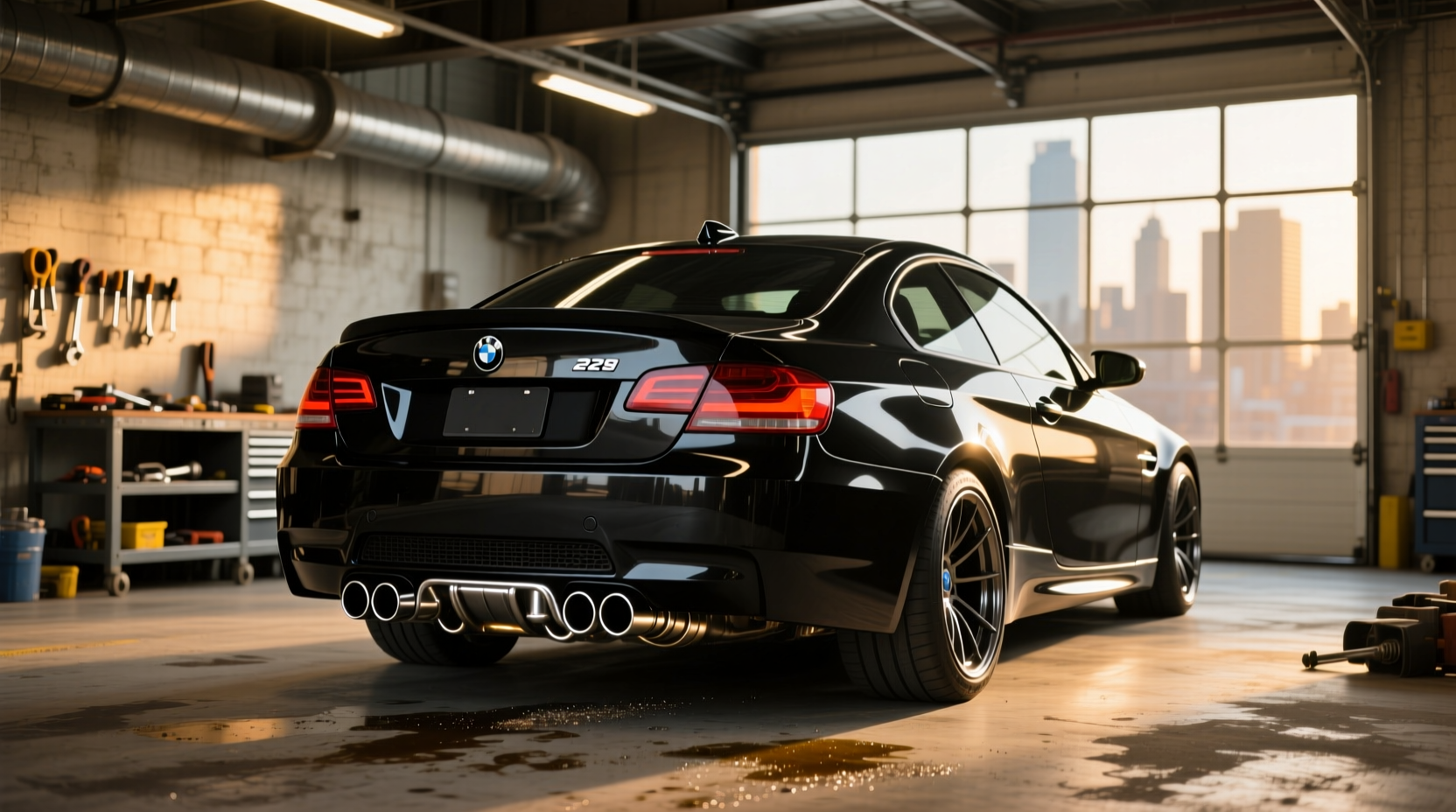
If you're wondering how to upgrade the exhaust on a BMW E92 325i, this guide delivers actionable answers. Unlike the high-revving V8 M3 models, the E92 325i uses the N52 or N53 inline-six engine, which means exhaust upgrades must balance refinement, cabin comfort, and moderate performance gains. After reviewing dozens of installations, user feedback, and product specs from manufacturers like Supersprint, Borla, and Akrapovič, we’ve identified key considerations: axle-back vs cat-back systems, valved vs non-valved setups, material durability (stainless steel vs titanium), drone reduction techniques, and compatibility with factory tuning. This article breaks down every decision point so you can make an informed choice without overspending or compromising daily drivability.
Understanding the BMW E92 325i Engine and Exhaust Architecture
The BMW E92 325i was produced from 2006 to 2013 and primarily came equipped with either the naturally aspirated 3.0L N52B30 or later N53B30 engine. These engines are known for smooth power delivery and quiet operation—qualities that influence exhaust upgrade goals. Unlike performance-focused variants like the E92 M3, the 325i doesn’t produce aggressive factory exhaust notes, making aftermarket modifications more about enhancing character than increasing horsepower significantly.
⚙️ The stock exhaust system is a dual-exit setup with mid-mounted catalytic converters and a center resonator designed to minimize interior noise. Because emissions regulations were tightening during its production run, especially in Europe and North America, OEM designs prioritized low drone and clean emissions over sporty tone. This creates an opportunity for owners seeking a deeper, more engaging sound without triggering check engine lights or failing emissions tests.
🔧 When upgrading, it's essential to understand the layout: the exhaust begins at the manifold, flows through downpipes (which include pre-cat sensors), into a midpipe with secondary cats, then through a rear muffler before exiting via twin tips. Most upgrades focus on the section behind the catalytic converters—commonly referred to as the 'cat-back' or 'axle-back' system. Choosing between these depends on budget, desired sound level, and local legal requirements.
Types of Exhaust Systems Compatible with the E92 325i
Not all exhausts are created equal, and selecting the right type involves trade-offs between cost, weight, sound, and longevity. Below are the most common configurations found in the aftermarket space:
Cat-Back Exhaust Systems ✅
A cat-back system replaces everything from the outlet of the main catalytic converter back to the tailpipes. This includes the midpipe, resonator, muffler, and exhaust tips. It’s the most popular upgrade path because it avoids tampering with emissions equipment while still allowing noticeable improvements in sound and minor flow gains.
🛒 Brands such as Borla, R44 Performance, and Cobra Sport offer bolt-on cat-back systems specifically engineered for the E92 chassis. These typically use mandrel-bent tubing to maintain consistent diameter and reduce turbulence. Gains in horsepower are modest—usually around 5–8 hp at the wheels—but the primary benefit is auditory enhancement.
Axle-Back Exhaust Systems 🔧
An axle-back system only replaces the final section of the exhaust—the muffler and tip assembly—located behind the rear axle. This is the least invasive and most affordable option, often costing under $600. While changes in sound are subtler than with a full cat-back, many users report improved bass response and reduced flatness compared to stock.
📍 Turner Motorsport offers a well-reviewed titanium valve-controlled axle-back for the E9x platform, including the 325i. The advantage here is adjustable sound: valves open under acceleration for a sportier note, and close during cruising to preserve cabin quietness. However, fitment should be verified since some axle-backs designed for the M3 may not align perfectly due to differences in hanger placement or bumper cutouts.
Valved vs Non-Valved Exhausts ⚙️
One of the biggest decisions is whether to go with a valved system. Valved exhausts use electronically controlled butterfly valves to modulate exhaust flow based on driving conditions. They’re ideal for drivers who want versatility: a refined tone during city commutes and a throatier growl when pushing the engine.
⚡ The Milltek V2 valved exhaust, though originally marketed for the E9x M3, has been adapted by enthusiasts for use on the 325i with minor tuning adjustments. A major benefit is the ability to eliminate drone—a constant humming noise felt inside the cabin at highway speeds. However, added complexity means more potential failure points: solenoids can fail, vacuum lines may crack, and integration with the car’s OBD-II system sometimes requires coding via tools like INPA or BimmerLink.
Material Choices: Stainless Steel vs Titanium ✨
The material used in construction affects weight, corrosion resistance, sound quality, and price. Let’s compare the two most prevalent options:
| Feature | Stainless Steel | Titanium |
|---|---|---|
| Weight | Moderate (~25–30 lbs) | Lightweight (~15–18 lbs) |
| Cost | $800–$1,500 | $2,500–$4,000+ |
| Sound Profile | Warm, metallic resonance | Brighter, higher-frequency tone |
| Corrosion Resistance | High (if T304 grade) | Exceptional |
| Lifespan | 8–12 years typical | 15+ years |
🏭 Stainless steel remains the standard for most buyers. High-quality systems use T304 stainless, which resists rust far better than cheaper aluminized steel. For most climates, this provides excellent durability without breaking the bank.
🌍 Titanium systems, like those from Akrapovič or Valvetronic Designs, appeal to purists and track-day drivers. Their extreme lightness reduces rear unsprung mass slightly, improving handling responsiveness. But unless you’re tracking the car regularly or prioritize exotic materials, titanium is hard to justify purely on performance grounds. Its sonic character is also distinct—some describe it as 'sharper' or even 'tinny' compared to the mellower tones of stainless.
Performance Impact: Do Exhaust Upgrades Increase Power?
Many assume that installing a performance exhaust automatically increases horsepower. In reality, gains on a stock E92 325i are minimal unless paired with other modifications.
📊 Dyno tests conducted by independent tuners show average wheel-horsepower increases of just 4–7 hp with a cat-back system alone 1. That’s because the stock exhaust already has relatively free-flowing design; removing restrictions yields diminishing returns. Significant power gains require upstream modifications: high-flow downpipes (post-O2 sensor), intake upgrades, and ECU remapping.
❗ If your goal is measurable performance improvement rather than sound enhancement, consider combining your exhaust upgrade with a cold air intake and tune. Even then, expect no more than 10–15 additional horsepower on a naturally aspirated N52/N53 engine without forced induction.
Fuel Economy and Emissions Considerations 🌐
A common misconception is that freer-flowing exhausts improve fuel efficiency. In practice, results vary. Some drivers report slight improvements (~1–2 mpg) under steady highway conditions, but others see no change or even decreased economy due to increased throttle sensitivity encouraging more aggressive driving.
🔍 Importantly, any modification that removes or disables catalytic converters is illegal in most U.S. states and EU countries. Always ensure your chosen system retains all factory emission controls unless you're building a dedicated off-road vehicle. Look for CARB-EVO or EO-numbered certifications if purchasing in California or similar regulated markets.
Installation Process and DIY Feasibility ⏱️
Most cat-back and axle-back systems are designed as bolt-on replacements using existing hangers and flanges. With basic hand tools and a lift or jack stands, a competent DIYer can complete installation in 2–4 hours.
🧰 Key steps include:
- Safely lifting the vehicle and securing it on stands
- Removing heat shields and disassembling the old exhaust from the midpipe onward
- Dry-fitting the new system to check alignment
- Tightening bolts to manufacturer torque specs (typically 25–30 ft-lbs)
- Reinstalling heat shielding and testing for leaks
⚠️ Challenges arise when dealing with seized bolts, especially near the catalytic converter junction. Applying penetrating oil 24 hours prior helps. Also, mismatched hanger positions between brands can cause stress on welds over time. Always inspect suspension movement clearance after installation.
Top-Rated Exhaust Options for the E92 325i (Non-M Models) 📈
While many products are marketed for the E9x M3, compatibility with the 325i varies. Here are three widely compatible and well-reviewed options:
1. Borla Cat-Back Exhaust – Touring Model 🚚
Known for its deep, muscle-car-like rumble without excessive volume, the Borla Touring system uses patented straight-through flow technology. It produces minimal drone and passes strict noise ordinances in urban areas. Constructed from aerospace-grade T304 stainless steel, it comes with a million-mile warranty.
2. Supersprint F1 Race Lightweight System ✈️
Though originally developed for racing applications, Supersprint offers a street-tuned version suitable for daily-driven 325is. The X-pipe design balances scavenging efficiency and sound symmetry. Users praise its subtle aggression—loud enough to turn heads but not disturb neighbors.
3. Cobra Sport Valved Axle-Back 🔗
Made in Sheffield, UK, Cobra Sport’s valved system allows driver-selectable sound modes via remote control or automatic throttle-based activation. It’s one of the few axle-backs offering true variable valve control at a mid-range price point.
Avoiding Common Mistakes When Buying an E92 325i Exhaust ❗
Many buyers regret their purchase due to overlooked details. Here are frequent pitfalls:
- Buying M3-specific parts without verifying fitment: M3 models have wider bumpers and different exhaust routing. Installing an M3-only system on a 325i can lead to misaligned tips or rubbing.
- Ignoring drone frequency: Some systems resonate at 2,800–3,200 RPM, exactly where the N52 cruises on highways. Research owner forums for real-world reports before buying.
- Choosing overly aggressive tips: Large-diameter tips (>4”) look imposing but can amplify wind noise and don’t suit the 325i’s understated aesthetic.
- Skipping professional tuning after major changes: While rare, changing backpressure significantly may require adaptation in DME settings to prevent lean codes.
Sound Profiles and Realistic Expectations ✅
YouTube videos often exaggerate exhaust sounds using close-mic recordings or post-processing. To gauge actual cabin experience, seek out long-form driving reviews filmed from inside the car.
📌 Generally:
- Stainless steel cat-backs add moderate bass and crispness on throttle lift-off
- Valved systems offer flexibility but require maintenance
- Titanium tends to emphasize higher frequencies, which some find less pleasing on six-cylinder engines
No exhaust will transform the 325i into an M3 sonically. The V8’s burble comes from displacement and firing order—not just the exhaust system. Set realistic expectations: aim for refinement, not radical transformation.
Maintenance and Long-Term Ownership Tips 🧼
To extend exhaust life:
- Wash the undercarriage regularly, especially in winter climates with road salt
- Inspect hangers and gaskets annually for wear
- For valved systems, cycle the valves monthly to prevent sticking
- Avoid prolonged idling, which accelerates internal corrosion
FAQs About BMW E92 325i Exhaust Upgrades
- Can I install an M3 exhaust on my E92 325i?
- No, not directly. The E92 M3 has a wider rear diffuser and different exhaust routing. Attempting to fit an M3 system will likely result in misalignment or damage.
- Will upgrading my exhaust void my BMW warranty?
- If your vehicle is still under manufacturer warranty, any modification could potentially affect coverage, particularly for powertrain components. Check with your dealer before installing.
- Do I need a tune after installing a cat-back exhaust?
- Generally, no. Since the change occurs downstream of all sensors and catalysts, the ECU doesn’t require recalibration for basic cat-back or axle-back systems.
- What causes exhaust drone in the E92 325i?
- Drone occurs when exhaust pulses resonate at frequencies transmitted into the cabin, usually between 2,800–3,200 RPM. Poorly tuned resonators or straight-through mufflers increase risk.
- Are titanium exhausts worth the extra cost?
- Only if you value extreme weight savings, exotic materials, or track use. For daily drivers, high-grade stainless steel offers better value and warmer sound characteristics.




 浙公网安备
33010002000092号
 浙B2-20120091-4