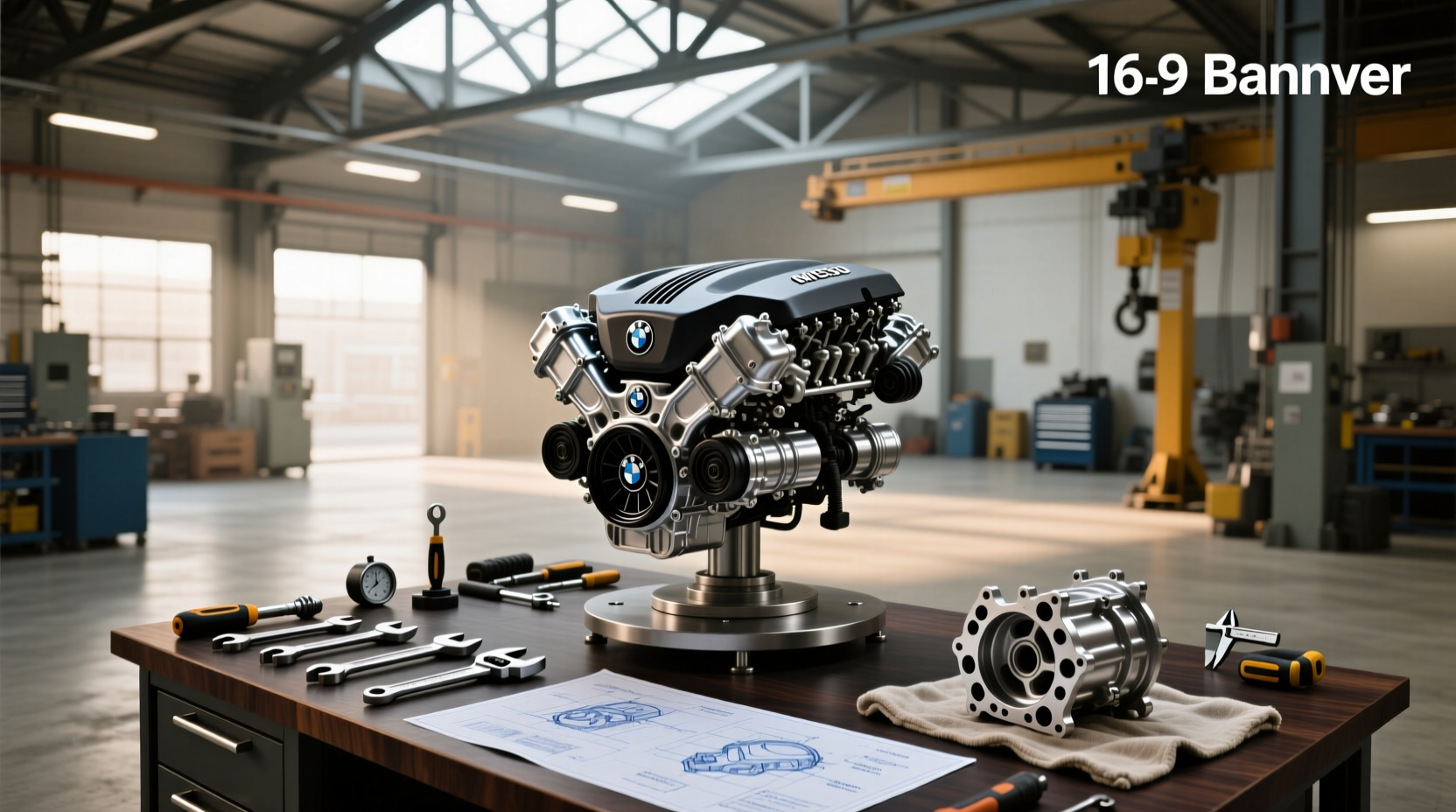
If you're researching BMW engines to avoid, you're likely considering buying a used BMW or planning an engine replacement. Knowing which powertrains have recurring mechanical flaws can save thousands in repairs. While BMW is renowned for performance and engineering, certain models—like the N54, N63, and early B48—have well-documented weaknesses such as high-pressure fuel pump failures, timing chain wear, and carbon buildup. This guide breaks down the most problematic BMW engines, explains why they fail, and helps you make informed decisions whether you’re purchasing a complete engine, evaluating a used car, or weighing repair vs. replacement options.
Why Some BMW Engines Are More Problematic Than Others
Bayerische Motoren Werke (BMW) has long been synonymous with driving dynamics and innovation. However, like all manufacturers, not every engine series achieved long-term reliability. Over the years, BMW’s pursuit of performance, efficiency, and emissions compliance led to complex designs that sometimes compromised durability. Factors such as turbocharging, direct injection, variable valve timing, and compact packaging introduced new stress points.
The shift from naturally aspirated to turbocharged engines marked a turning point. While modern BMWs deliver impressive power and fuel economy, some models sacrificed longevity. Enthusiasts and mechanics alike frequently cite specific engines—particularly those produced between 2006 and 2015—as being more prone to expensive failures. Understanding these patterns helps buyers and owners anticipate issues before they become costly surprises.
BWM Engine Generations: Evolution and Reliability Trends
To evaluate which BMW engines to avoid, it's essential to understand the evolution of their powertrain design. Here's a breakdown of major engine families by era:
- N-Series (2000–2015): The transition from M-series to N-designation brought electronic throttle control, Valvetronic, and increased complexity.
- B-Series (2015–present): Modular turbocharged engines designed for global use across multiple models.
- S-Series (M Division): High-performance variants often based on production engines but tuned for track-level output.
- M-Series (Legacy): Older naturally aspirated engines known for robustness and simplicity.
Reliability tends to decrease as complexity increases. For example, the N52—a naturally aspirated inline-6—is widely regarded as one of BMW’s most reliable engines, while its turbocharged successor, the N54, though powerful, introduced several failure-prone components.
Top BMW Engines to Avoid (With Failure Analysis)
N54 Twin-Turbo Inline-6 (2006–2016)
Found in the E90/E92/E93 335i and 135i models, the N54 was BMW’s first mass-produced twin-turbo gasoline engine. It delivered exhilarating performance—300+ horsepower in stock form—but came with significant reliability concerns.
Common Problems:
- High-Pressure Fuel Pump (HPFP) failure: Often fails around 60,000–80,000 miles, causing misfires and no-start conditions 1.
- Timing chain and guides wear: Premature stretching or guide breakage can lead to catastrophic engine damage.
- Intercooler piping leaks: Cracking under boost reduces performance.
- Wastegate rattle: Common sign of turbo actuator wear.
While many N54 engines survive beyond 100,000 miles with proper maintenance, neglecting oil changes or running low-quality fuel accelerates wear. Rebuilt N54 engines are available through suppliers like Engine World and 365 Engines, but potential buyers should verify service history thoroughly.
N63 Twin-Turbo V8 (2008–present)
The N63 powers larger BMWs like the 550i, 650i, 750i, and X5 M. Initially plagued by serious defects, this engine underwent multiple revisions.
First Generation (N63, pre-2012):
- Catastrophic rod bearing failure due to oil starvation.
- Poor thermal management leading to detonation.
- Fuel injector cracking and leaking.
- Excessive oil consumption.
These issues were severe enough that BMW extended warranties on some models. Later versions—dubbed N63TU (Technical Update) and N63B44O1—improved cooling, upgraded bearings, and revised engine management. However, even updated models require strict maintenance schedules. Used N63 engines listed on platforms like Autoline.info or BE FORWARD often lack service records, increasing risk.
N20 Turbo Inline-4 (2011–2016)
Introduced as a fuel-efficient alternative to the N52, the N20 powered entry-level 3 Series and X1 models. Despite good mileage figures, it developed a poor reputation.
Key Issues:
- Timing chain tensioner and guide failure: Can result in chain slap and valve-to-piston contact.
- Carbon buildup on intake valves: Due to direct injection without port cleaning.
- Turbocharger wastegate failure: Causes boost leaks and reduced power.
- Water pump and thermostat integration: Electric units prone to failure.
The N20 was discontinued early and replaced by the B48, partly due to reliability complaints. Many owners report major repairs before 80,000 miles. When sourcing a used N20 engine from vendors like Power Engines or Orbi Motors, ensure it includes updated timing components.
B48 Turbo Inline-4 (2015–present)
The B48 is now BMW’s most widely used engine, found in everything from the 330i to the X7. While generally more refined than the N20, early versions still show vulnerabilities.
Known Weaknesses:
- Valve cover and gasket leaks: Common at 60,000+ miles.
- Oil filter housing gasket failure: Leads to oil seepage and potential sensor damage.
- Intermediate shaft bearing wear: Less common than in older M54 engines but still possible.
- Carbon buildup: Similar to N20, requires periodic walnut blasting.
Later B48 iterations (post-2019) have addressed some sealing issues. Still, buyers should inspect for signs of oil leaks and review maintenance logs. Complete B48 engines, such as the OEM G20/G42 long block advertised on eBay, may offer peace of mind if mileage is low and provenance clear.
S65 Naturally Aspirated V8 (2007–2013)
Used exclusively in the E92 M3, the S65 is a high-revving 4.0L V8 praised for its responsiveness. Unlike turbocharged engines, it avoids forced induction complexities—but introduces others.
Notable Concerns:
- Rod bearing wear: Especially under aggressive driving or delayed oil changes.
- Throttle actuator motor failure: Causes limp mode and erratic idle.
- Expensive maintenance: Timing chain job requires partial engine disassembly.
While not inherently flawed, the S65 demands meticulous upkeep. Track-driven examples often need rebuilds by 80,000 miles. Reconditioned S65 engines from specialists like CarBahn may be worth the investment for M3 enthusiasts.
Engines That Are Generally Reliable (Safe Alternatives)
Not all BMW engines are problematic. Several models stand out for durability and lower ownership costs:
N52 Inline-6 (2004–2015)
One of BMW’s last naturally aspirated six-cylinder engines, the N52 is celebrated for smoothness and longevity. With regular maintenance, it commonly exceeds 200,000 miles. Found in E60 525i, E90 325i, and Z4 models, it lacks direct injection and turbochargers, reducing failure points.
M54 Inline-6 (2000–2006)
Predecessor to the N52, the M54 shares similar reliability. Some versions suffer from vanos solenoid issues, but these are minor compared to later turbo engines. Known for strong build quality and tuning potential.
B58 Turbo Inline-6 (2015–present)
The successor to the N55, the B58 powers current-gen M340i, X3 M40i, and Toyota Supra. It features a closed-deck block, improved cooling, and better materials. Early reports indicate strong reliability, especially when maintained properly.
| Engine | Years | Common Applications | Reliability Rating | Major Concerns |
|---|---|---|---|---|
| N54 | 2006–2016 | 335i, 135i | ⚠️ Moderate–Poor | HPFP, timing chain |
| N63 | 2008–present | 550i, X5 M | ⚠️ Poor (early), Fair (late) | Rod bearings, oiling |
| N20 | 2011–2016 | 328i, X1 | ⚠️ Poor | Timing chain, carbon |
| B48 | 2015–present | 330i, X3 | ✅ Fair–Good | Seal leaks, carbon |
| N52 | 2004–2015 | 325i, 525i | ✅ Excellent | None major |
| B58 | 2015–present | M340i, Supra | ✅ Good (early data) | Minimal |
How to Evaluate a Used BMW Engine Purchase
Whether you're sourcing a replacement engine or buying a used BMW, inspection and verification are critical. Here’s how to reduce risk:
1. Check Service History (If Available)
A complete record of oil changes, coolant flushes, and timing component replacements significantly increases confidence. Engines with documented maintenance are less likely to hide internal wear.
2. Ask About Known Updates
Some engines received factory service bulletins or recall campaigns. For example, later N63 engines include revised bearings and piston coatings. Confirm whether updates were applied.
3. Inspect for Leaks and Damage
Visible oil leaks, corrosion, or impact marks suggest poor storage or prior issues. Request photos of all angles, including undercarriage and electrical connectors.
4. Verify Mileage and Usage
Low-mileage engines aren’t always better. An engine stored improperly for years may have dry seals or sludge buildup. Conversely, high-mileage engines with consistent care can be solid.
5. Understand Warranty Terms
Reputable suppliers like Patriot Engines and 365 Engines offer warranties on remanufactured units. Read terms carefully—some exclude labor or require registration within days of delivery.
When to Replace vs. Repair a BMW Engine
Facing a major engine issue? Consider these factors:
- Cost Comparison: A full engine replacement can range from $3,500 to $8,000 depending on model and labor rates. If repair costs exceed 50% of replacement value, consider swapping.
- Vehicle Age and Value: Installing a $6,000 engine into a $12,000 car may not make financial sense unless sentimental value is high.
- Frequency of Past Repairs: If the car has had repeated issues, it may signal broader systemic wear beyond the engine.
- Availability of Parts: Older engines like the M54 are easier and cheaper to fix than newer, integrated systems like the B48.
Where to Buy Replacement BMW Engines
Several reputable sources offer used, rebuilt, and remanufactured BMW engines:
- Engine World: U.S.-based supplier with inventory of used and tested engines 2.
- BE FORWARD: Japanese exporter offering low-mileage imported engines with global shipping.
- Patriot Engines: Specializes in remanufactured units with nationwide warranty coverage.
- CarBahn: Focuses on performance-oriented rebuilds, including S55 and N55 swaps.
Always confirm compatibility using your VIN and consult a mechanic before purchase.
Preventive Maintenance Tips to Extend BMW Engine Life
Even potentially problematic engines can last longer with disciplined care:
- Use OEM-spec oil (typically LL-01 or LL-17 FE) and change every 7,500 miles or annually.
- Replace spark plugs and filters on schedule.
- Perform intake cleaning (walnut blasting) every 50,000 miles on direct-injection engines.
- Monitor for warning lights—especially oil pressure and check engine—and address promptly.
- Warm up the engine before hard driving, especially in cold climates.
Conclusion: Making Informed Decisions About BMW Engines
Knowing which BMW engines to avoid isn't about dismissing the brand—it's about making smarter ownership choices. Engines like the N54, N63, and N20 offer compelling performance but come with higher risks. Meanwhile, models like the N52 and B58 represent safer bets for long-term reliability.
When shopping for a used BMW or replacement engine, prioritize transparency, maintenance history, and expert evaluation. Use resources like owner forums, technical service bulletins, and professional diagnostics to validate condition. By understanding the strengths and weaknesses of each engine family, you can enjoy BMW’s legendary driving experience without unexpected repair bills.
Frequently Asked Questions
- Which BMW engine is the most reliable?
- The N52 inline-6 is widely considered the most reliable BMW engine due to its simple, naturally aspirated design and proven longevity.
- What is the worst BMW engine to own?
- The early N63 twin-turbo V8 (pre-2012) is often cited as the worst due to rod bearing failures and overheating issues.
- Can I replace a problematic BMW engine with a different model?
- Yes, engine swaps like installing an N52 or B58 into older chassis are possible but require expertise, wiring modifications, and emissions compliance checks.
- How much does a used BMW engine cost?
- Prices vary by model and condition, ranging from $1,400 for older units to over $6,000 for late-model turbo engines.
- Is it worth rebuilding a failed BMW engine?
- It depends on the vehicle's value and extent of damage. For high-mileage cars, a remanufactured long block may be more cost-effective than a full rebuild.




 浙公网安备
33010002000092号
 浙B2-20120091-4