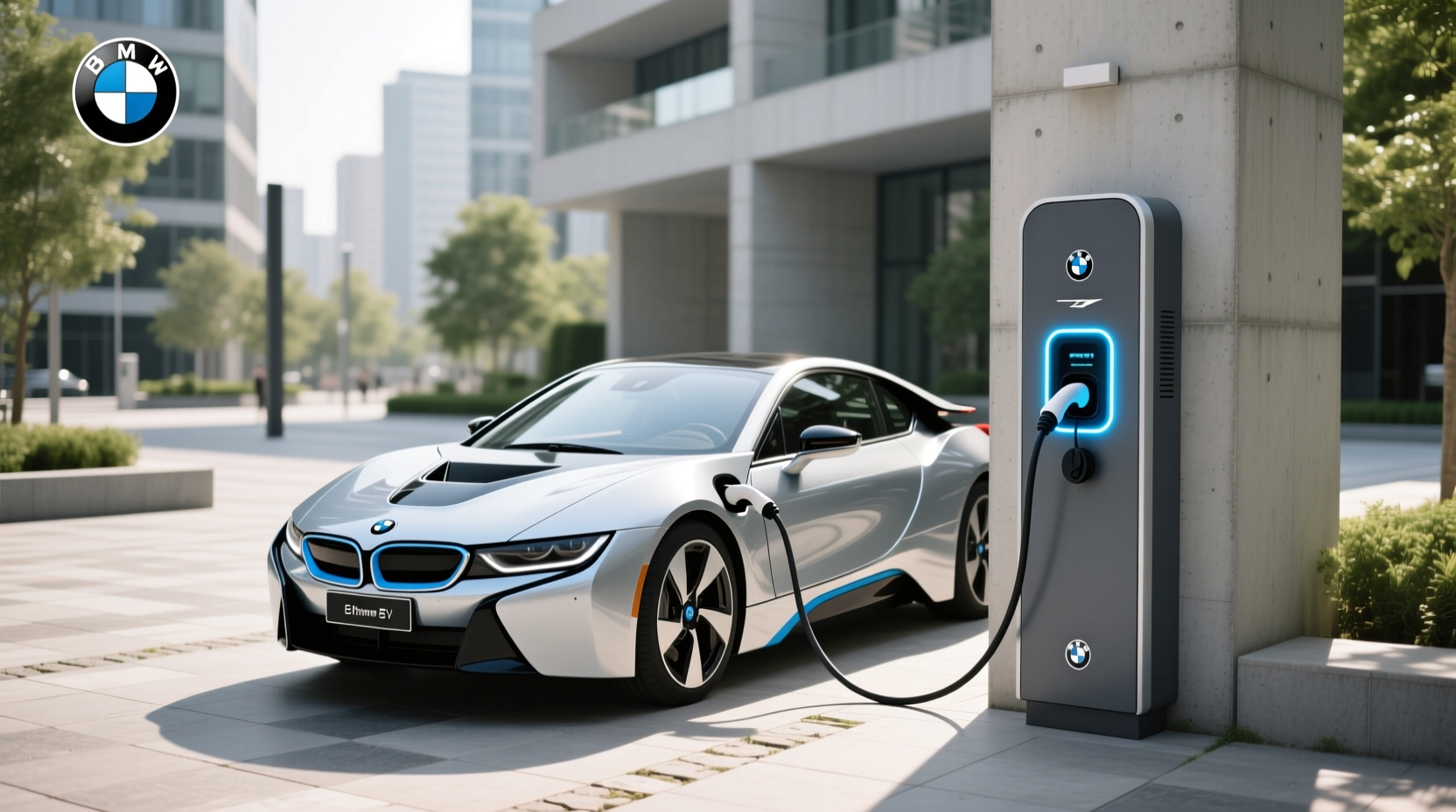
Choosing the right EV charger for BMW vehicles is essential for maximizing charging speed, convenience, and long-term reliability. Whether you own a BMW i3, i4, i5, i7, or plug-in hybrid like the 330e or X5 xDrive45e, understanding your home charging options—especially BMW Wallbox models—can significantly improve your daily driving experience ⚡. This guide breaks down everything you need to know about BMW-compatible EV chargers, including technical specs, installation requirements, cost considerations, and compatibility across models and regions.
Why Home Charging Matters for BMW EV Owners
For most electric vehicle owners, including those with BMWs, the majority of charging happens at home 🏠. Level 1 charging (using a standard 120V outlet) is slow—often adding only 3–5 miles of range per hour—which makes it impractical for regular use. A dedicated home EV charger for BMW ensures faster, safer, and more efficient charging, especially overnight.
BMW recommends installing a Level 2 charger (208–240V) to get optimal performance. These systems typically deliver between 9 and 22 kW, depending on the model and electrical setup, allowing full charges in as little as 3–6 hours for many BMW EVs.
Built-in vs. Aftermarket: What Charger Does a BMW Use?
All modern BMW electric and plug-in hybrid vehicles come with an onboard charger that converts AC power from the grid into DC power to charge the battery. However, the car does not include a wall-mounted charging station by default. Instead, BMW offers its own branded chargers—primarily under the BMW Wallbox line—and also supports third-party EVSE (Electric Vehicle Supply Equipment).
The key question users often ask is: Does my BMW require a special charger? The answer is no. BMW uses the standard J1772 connector in North America and Type 2 (Mennekes) in Europe and other markets, meaning any compliant Level 2 charger will work.
Built-in Charging Cable Limitations
Most new BMW EVs come with a portable charging cable (sometimes called a Flexible Fast Charger), which can be plugged into a standard NEMA 5-15 outlet (Level 1) or a NEMA 6-20/14-50 outlet (Level 2). While convenient for emergencies or travel, these cables are slower than hardwired wallboxes and lack smart features like scheduling, load balancing, or energy monitoring ⚙️.
BMW Wallbox Generations: Gen 3 vs Gen 4
BMW has released several versions of its official Wallbox charger. Understanding the differences helps avoid overspending or missing out on useful features.
BMW Wallbox Gen 3
- Power Output: 7.4 kW to 11 kW (single-phase)
- Connector Type: Type 2 (Mennekes) in EU; J1772 in US
- Smart Features: Wi-Fi connectivity, remote updates, basic app control
- Design: Compact, wall-mounted unit with integrated cable storage
This model was widely used in Europe and available through dealerships. It supports RFID access cards and integrates with the BMW Charging app for usage tracking ✅.
BMW Wallbox Plus Gen 4 (Latest Model)
- Power Output: Up to 22 kW (three-phase capable)
- Voltage: 208–240V single-phase or 400V three-phase
- Smart Capabilities: Enhanced Wi-Fi and Bluetooth, solar integration support, dynamic load balancing
- Installation: Hardwired only; no plug-in option
- Compatibility: Works with all BMW EVs and PHEVs post-2016
The Gen 4 unit represents a significant upgrade, particularly for homes with three-phase power (common in Europe). In single-phase setups (standard in the US), it still delivers up to 11 kW, comparable to many competitors 🛒.
| Feature | Wallbox Gen 3 | Wallbox Gen 4 |
|---|---|---|
| Max Power (Single-Phase) | 11 kW | 11 kW |
| Max Power (Three-Phase) | N/A | 22 kW |
| Connectivity | Wi-Fi | Wi-Fi + Bluetooth |
| Solar Integration | No | Yes |
| Load Balancing | Basic | Advanced (multi-unit) |
| Installation Type | Plug-in or Hardwired | Hardwired Only |
Do You Need a BMW-Specific Charger?
No—you do not have to buy a BMW-branded Wallbox. Any UL-listed Level 2 EV charger with a J1772 (North America) or Type 2 (Europe) connector will work safely with your BMW 🔍. Popular alternatives include brands like ChargePoint, Wallbox (by Wallbox Chargers S.L.), Emporia, Siemens, and Enel X.
However, choosing a BMW Wallbox may offer advantages:
- Seamless App Integration: Direct pairing with the My BMW app allows for remote start/stop, charging history, and firmware updates.
- Design Consistency: Matches BMW’s aesthetic language and can be seen as premium home equipment.
- Dealer Support: Some dealers offer bundled installation services when purchasing a new EV.
That said, third-party options often provide better value, more advanced energy management, or lower prices—for example, some units offer built-in solar optimization or time-of-use scheduling without requiring additional hardware.
Charger Power Levels Explained: 7.4 kW vs 11 kW vs 22 kW
Understanding power output is crucial when selecting a charger. Here's what each level means in real-world terms:
7.4 kW Chargers
Typical of older or entry-level units. Adds roughly 25–30 miles of range per hour. Suitable for smaller batteries (like the i3) or occasional users. Often limited to 32A on 240V circuits.
11 kW Chargers
Common in North America due to typical household electrical capacity. Delivers about 37 miles of range per hour. Ideal for daily drivers with moderate commutes (under 100 miles/day).
22 kW Chargers
Requires three-phase power (400V), which is standard in commercial buildings and many European homes but rare in US residential areas. Can fully charge a BMW i4 in under 4 hours. Not practical unless your home already has three-phase service.
📌 Note: Your vehicle’s onboard charger limits maximum intake. For example, the BMW iX and i4 support up to 11 kW AC charging, so even if you install a 22 kW Wallbox Gen 4, you won’t exceed 11 kW on single-phase power.
Installation Process and Requirements
Installing a BMW EV charger at home involves both hardware and electrical considerations. Here’s what you need:
Electrical Panel Capacity
A dedicated 40-amp circuit is recommended for Level 2 charging. This requires sufficient amperage headroom in your main service panel (typically 100A or higher). If your panel is full or outdated, a subpanel or upgrade may be needed 🔧.
Circuit Type
In the US, most installations use a NEMA 6-50 or NEMA 14-50 outlet (for plug-in chargers), or direct hardwiring (required for Gen 4 Wallbox). Hardwired connections are generally safer and neater but require professional installation.
Licensed Electrician
All EV charger installations should be performed by a licensed electrician familiar with local codes and utility requirements. Permits and inspections may be required depending on jurisdiction.
Indoor vs Outdoor Installation
BWM Wallboxes are rated for outdoor use (IP55 protection), so mounting on a garage wall or exterior house wall is fine. Ensure the location is accessible, protected from direct water spray, and within cable reach of your parking spot.
Cost Breakdown: How Much Is a BMW Charger?
Pricing varies significantly by region and model:
- BMW Wallbox Gen 3: $700–$900 (discontinued in many markets)
- BMW Wallbox Plus Gen 4: $1,200–$1,500 USD
- Professional Installation: $500–$1,500+, depending on wiring distance and panel upgrades
Some countries offer rebates or tax incentives. In the US, the federal EV charger tax credit covers 30% of equipment and installation costs, up to $1,000 📈. Check programs like the IRS Clean Vehicle Credit or state-specific incentives (e.g., California’s CVRP).
Using the BMW Charging App and Smart Features
The My BMW app enables smart charging functions when paired with a compatible Wallbox:
- Schedule charging during off-peak hours
- Monitor energy consumption
- Set departure times with preconditioning
- Enable guest access via QR code or RFID card
These features help reduce electricity costs and integrate with renewable energy sources. For example, you can program the charger to run only when solar panels are producing excess power.
Can I Charge My BMW at a Tesla Supercharger?
Not directly. Tesla Superchargers use a proprietary connector and network authentication system. However, Tesla has opened some V3 Superchargers to non-Tesla EVs in North America using an adapter. As of now, BMW vehicles are not officially supported on this program.
For public fast charging, BMW EVs rely on CCS (Combined Charging System) ports, compatible with networks like Electrify America, Ionity, and EVgo. DC fast charging speeds vary by model—from 120 kW on the i3 to 205 kW on the i4 M50.
Common Misconceptions About BMW EV Chargers
- Misconception: You must use a BMW Wallbox to maintain warranty.
Fact: Using a third-party charger does not void your BMW warranty, as long as it meets safety standards. - Misconception: Higher kW always means faster charging.
Fact: Charging speed depends on both the charger and the vehicle’s onboard converter. Installing a 22 kW charger in a home with single-phase power yields no benefit over an 11 kW unit for most BMWs. - Misconception: All BMWs can use 22 kW AC charging.
Fact: Only certain models with three-phase capability (mainly in Europe) can accept 22 kW input. Most US-market BMWs max out at 11 kW.
Tips for Choosing the Right EV Charger for Your BMW
- Evaluate Your Daily Driving Needs: If you drive less than 40 miles/day, even a 7.4 kW charger may suffice.
- Check Your Electrical Service: Confirm whether your home supports 240V circuits and has space in the breaker panel.
- Consider Future-Proofing: If you plan to add solar or a second EV, choose a charger with load balancing or expandable capabilities.
- Compare Smart Features: Look for Wi-Fi, app control, energy tracking, and integration with home energy systems.
- Review Local Incentives: Many utilities offer rebates for EV charger installation—don’t miss out on savings.
Regional Differences in BMW Charger Availability
Availability and naming conventions differ globally:
- Thailand: BMW Wallbox sold through authorized partners like WALLBOX.in.th and Millennium Auto. Prices listed around THB 49,900 (~$1,350) for Gen 4 units.
- Germany/EU: Three-phase power is common, making 22 kW Wallboxes practical. BMW often bundles chargers with new EV purchases.
- United States: Single-phase dominance limits high-power AC charging. Most buyers opt for 9.6–11 kW units regardless of brand.
Maintenance and Troubleshooting
BWM Wallboxes require minimal maintenance. Regular checks include:
- Inspecting the cable for cracks or wear
- Ensuring the charging port on the car is clean and dry
- Updating firmware via the app when prompted
Common issues and fixes:
- Charger not starting: Check circuit breaker, ensure vehicle is unlocked and in park mode.
- Slow charging: Verify power supply and rule out simultaneous high-draw appliances.
- App connection failure: Restart router, re-pair device via Bluetooth.
Final Recommendations
While the BMW Wallbox Gen 4 is a high-quality, well-integrated solution, it’s not the only—or necessarily the best—option for every driver. Evaluate your actual charging needs, electrical infrastructure, and budget before deciding. For most US homeowners, a reliable third-party 11 kW Level 2 charger with smart features may offer equal performance at a lower total cost.
Always consult a certified electrician before installation, and verify eligibility for local incentives to reduce upfront expenses.
Frequently Asked Questions
- What kind of charger does a BMW use?
- BWM electric vehicles use a CCS combo port for DC fast charging and a Type 2 (EU) or J1772 (US) inlet for AC charging. Any standard Level 2 EVSE works with BMWs.
- How much is a BMW EV charger?
- The BMW Wallbox Plus Gen 4 costs between $1,200 and $1,500. Installation typically adds $500–$1,500 depending on home electrical setup.
- Can I charge my BMW at a Tesla supercharger?
- No, Tesla Superchargers are not compatible with BMW EVs, even with adapters. BMW uses the CCS standard for fast charging.
- Is the BMW Wallbox worth it?
- It depends. If seamless app integration and design matter, yes. Otherwise, third-party chargers often offer better features or lower prices.
- Can I install a BMW Wallbox myself?
- The Gen 4 model requires hardwiring and must be installed by a licensed electrician. DIY installation is not recommended or permitted under most building codes.




 浙公网安备
33010002000092号
 浙B2-20120091-4