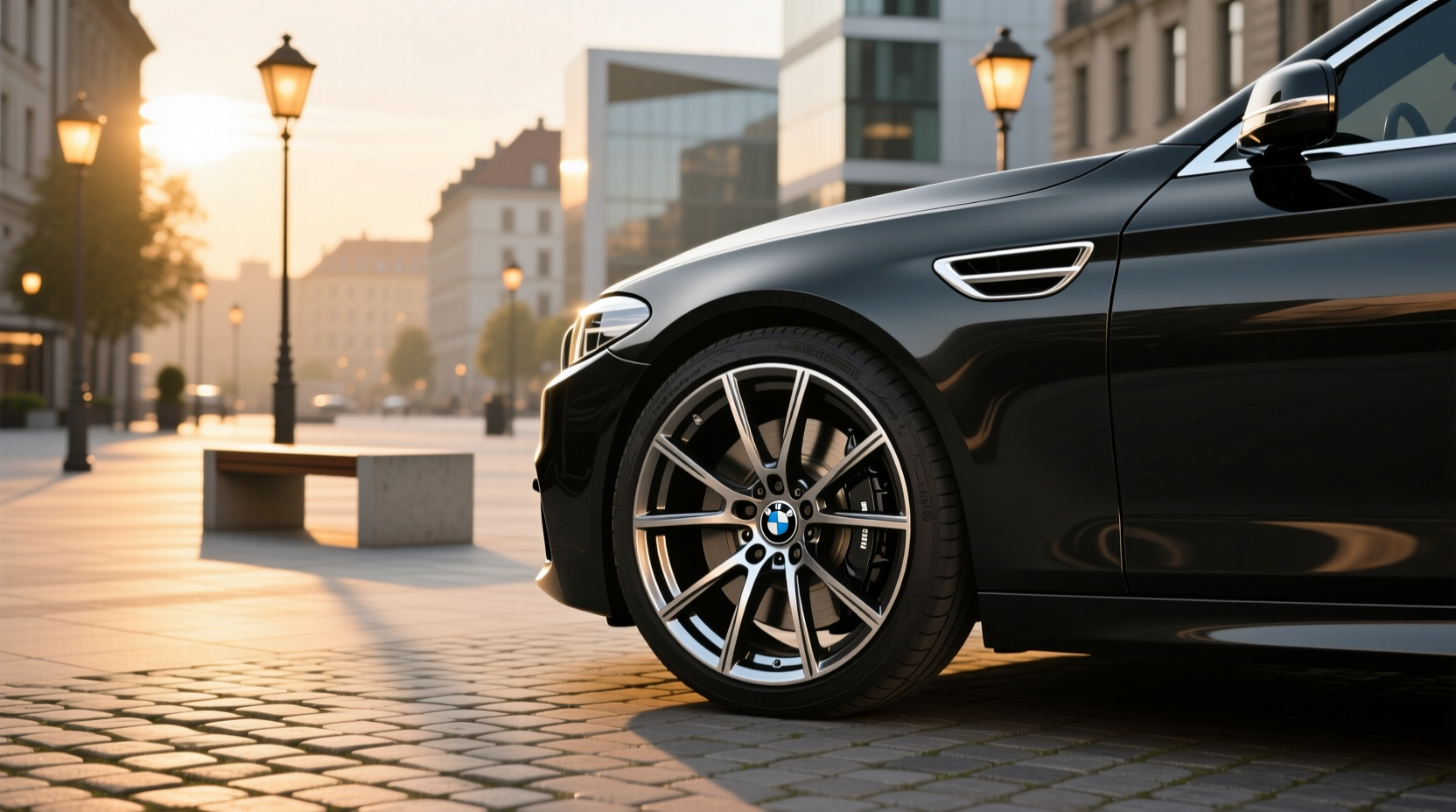
If you're searching for BMW F10 wheels 19, the most critical details you need are bolt pattern (5x120), center bore (72.6mm), and proper offset (ET33–ET44 depending on model). Choosing the right 19-inch wheels for your F10 5 Series ensures optimal handling, prevents rubbing, and maintains factory aesthetics. This guide breaks down OEM specs, aftermarket compatibility, staggered vs. square setups, hub-centric requirements, and common fitment mistakes to avoid—so you can confidently upgrade or replace your wheels without costly errors.
Understanding BMW F10 Wheel Specifications
The BMW F10 5 Series (produced from 2010 to 2017) was offered with multiple wheel options depending on trim, drivetrain, and optional packages like the M Sport. When upgrading or replacing wheels, especially with a 19-inch diameter, understanding the technical specifications is essential to ensure safe and proper fitment.
Bolt Pattern: 5x120 is Standard
All F10 models use a 5x120 bolt pattern, meaning five lug nuts spaced 120mm apart on a circle. This is consistent across all variants including the 528i, 535i, 550i, and even the high-performance M5 (F10 M5 with S63 engine). Aftermarket wheels must match this exact bolt pattern to be compatible.1
Center Bore: 72.6mm Hub Bore
The center bore—the hole in the middle of the wheel that fits over the hub—is 72.6mm on all F10 models. This makes the wheels hub-centric, meaning they center on the hub rather than relying solely on lug torque. Using wheels with a larger bore requires hub-centric rings to prevent vibration at speed. Never rely on lug-centric mounting for daily driving.
Offset (ET): Ranges from ET33 to ET44
Wheel offset determines how far the wheel sits in relation to the fender. For the F10:
- Non-M, standard suspension: Front: 8.5J x 19 with ET33; Rear: 9.0J x 19 with ET44
- M5 (F10 M5): Typically uses wider wheels with lower offset—e.g., 9.5J front ET27, 10.5J rear ET25
- M Sport Package: Often came with Style 351 wheels: 8.5Jx19 ET33 front, 9.0Jx19 ET44 rear
Using incorrect offset can lead to inner suspension contact, fender rubbing, or improper load distribution on wheel bearings.
Width and Diameter: 19-Inch Options Explained
While 18-inch wheels were common on base models, 19-inch wheels were typically part of the M Sport package or higher trims like the 550i and M5. The most popular OEM 19-inch setups include:
- Style 351 (M Sport): 8.5x19 ET33 (front), 9.0x19 ET44 (rear)
- Style 405 (M5): 9.5x19 ET27 (front), 10.5x19 ET25 (rear)
- Style 448: Gloss black twin-spoke, staggered fitment
Aftermarket 19-inch wheels often replicate these dimensions but may offer lighter weights or different finishes like matte black, bronze, or machined face.
OEM vs Aftermarket 19-Inch Wheels: Pros and Cons
When considering BMW F10 19-inch wheel replacements, owners typically choose between OEM used wheels and new aftermarket options. Each has trade-offs in cost, durability, weight, and appearance.
OEM Wheels: Factory Precision, Limited Selection
OEM wheels are original equipment manufactured by suppliers like Borbet, Ronal, or BBS. They are designed specifically for the F10’s suspension and load requirements.
Advantages:
- Guaranteed fitment and balance
- Match factory finish and design
- Often cheaper than premium aftermarket
- No need for adapters or spacers
Disadvantages:
- Limited availability in used market
- Heavier than forged aftermarket wheels
- Vulnerable to curb rash and cracking if damaged
Popular OEM styles include 351, 405, and 448—all available in 19-inch sizes.
Aftermarket Wheels: Customization and Performance
Brands like Apex, VMR, Alzor, and Riviera offer flow-formed or forged 19-inch wheels tailored for the F10 platform.
Advantages:
- Lighter weight improves acceleration and ride comfort
- Wider range of finishes and designs
- Better strength-to-weight ratio (especially forged)
- Available in custom offsets and widths
Disadvantages:
- Higher price point, especially for forged wheels
- Potential fitment issues if specs aren’t verified
- Some brands lack long-term durability data
For example, the APEX ARC-8 19x9.5 ET22 is a popular choice for track-focused builds but requires careful clearance checks due to its aggressive offset.
Staggered vs Square Wheel Setup: Which Is Right for Your F10?
One major decision when choosing 19-inch wheels is whether to run a staggered (different front/rear widths) or square (same size all around) setup.
Staggered Fitment: Common on M5 and M Sport
The factory M5 and M Sport trims often use staggered wheels:
- Front: 19x8.5 or 19x9.5
- Rear: 19x9.5 or 19x10.5
Benefits:
- Improved rear traction, especially on RWD models
- Aggressive stance
- Enhanced visual balance
Drawbacks:
- Tires cannot be rotated front-to-back
- Increased understeer potential
- More expensive to replace tires
Square Setup: Simplicity and Flexibility
A square setup uses identical wheels and tires on all four corners—commonly 19x8.5 ET33 all around.
Benefits:
- Full tire rotation capability extends tread life
- Easier and cheaper tire replacement
- Balanced handling characteristics
Drawbacks:
- Less aggressive look
- Potentially less rear grip on high-power models
Many owners convert their M5 to a square setup for better track usability and tire management.
Common Fitment Mistakes to Avoid
Selecting 19-inch wheels for the F10 seems straightforward, but several pitfalls can lead to safety risks or poor performance.
Mistake #1: Ignoring Hub-Centric Rings
Even if the bolt pattern matches, wheels with a bore larger than 72.6mm must use hub-centric rings. Without them, the wheel centers on the lugs, increasing stress and causing vibrations. Always verify hub bore compatibility before purchase.
Mistake #2: Wrong Offset Leading to Rubbing
Installing wheels with too low an offset (e.g., ET20) can cause outer fender rubbing, especially during turns or over bumps. Conversely, too high an offset (e.g., ET50) can interfere with suspension components. Stick within ±5mm of OEM unless modifying suspension.
Mistake #3: Overlooking Tire Size Compatibility
Wheel width affects ideal tire size. For example:
- 8.5-inch wide wheel: Best with 245/40R19 tire
- 9.5-inch wide wheel: Matches 275/35R19
- 10.5-inch wide wheel: Requires 285/30R19 or wider
Mismatched tire widths can affect speedometer accuracy, traction control behavior, and fuel economy.
Mistake #4: Skipping Load and Speed Ratings
Replacement wheels and tires must meet or exceed factory load and speed ratings. The F10 typically requires Y-rated tires (up to 186 mph) and a load index of at least 96 (1,565 lbs per tire). Never downgrade for aesthetic reasons.
Winter Wheel Setup: Should You Use 19-Inch?
While some owners keep 19-inch wheels year-round, using smaller diameters (17” or 18”) for winter is generally recommended.
Why smaller wheels are better in winter:
- Thicker sidewalls absorb road impacts from potholes
- Improved snow traction with taller tire profile
- Lower risk of wheel damage from icy roads
- Better ride quality on uneven surfaces
However, if you prefer to use 19-inch wheels in winter:
- Ensure tires are dedicated winter/snow rated (e.g., Michelin X-Ice)
- Use steel or durable alloy wheels to reduce cost of damage
- Avoid ultra-low-profile tires (e.g., 30-series) in harsh climates
Where to Buy BMW F10 19-Inch Wheels
OEM and aftermarket 19-inch wheels are available through various channels, each with pros and cons.
Used OEM Wheels: eBay and Forums
Websites like eBay and enthusiast forums (e.g., Bimmerpost) offer genuine BMW wheels at lower prices. However, inspect for:
- Cracks or structural damage
- Hub bearing wear
- Finish degradation (curb rash, peeling paint)
Always request detailed photos and confirm fitment specs before buying.
Specialty Retailers: Turner Motorsport, ECS Tuning
Reputable vendors like Turner Motorsport and ECS Tuning carry both OEM and aftermarket wheels with fitment guides and customer support. They often provide:
- Free shipping over certain amounts
- Fitment verification tools
- Return policies
These sites are reliable for new wheels and bundles (wheel + tire packages).
Direct From Manufacturer: Apex, Riviera
Companies like Apex Wheels manufacture performance-oriented flow-formed and forged wheels directly for the F10 platform. Benefits include:
- Lightweight construction
- Custom color and finish options
- Track-proven durability
Prices are higher, but long-term value justifies cost for performance drivers.
How to Verify Wheel Compatibility Before Buying
To ensure any 19-inch wheel fits your F10, follow this checklist:
- Confirm bolt pattern: Must be 5x120
- Check center bore: 72.6mm or use hub rings
- Verify offset: Match OEM spec or stay within safe range
- Measure clearance: Account for suspension travel and steering angle
- Review tire size: Ensure proper aspect ratio and width
- Inspect load rating: Meets or exceeds factory standards
You can also use online fitment calculators or consult fitment databases like those on BimmerWorld or BMWStyleWheels.com.
Performance Impact of 19-Inch Wheels
Changing wheel size affects more than looks—it influences ride, handling, and efficiency.
Ride Comfort
Larger wheels with low-profile tires (e.g., 35-series or lower) transmit more road shock. If ride quality is a priority, consider staying with 18-inch wheels for daily driving or opting for a 19-inch wheel with a slightly taller sidewall.
Fuel Efficiency
Heavier wheels increase unsprung mass, reducing fuel economy and throttle response. Lightweight forged or flow-formed alloys help mitigate this effect.
Handling and Braking
Properly fitted 19-inch wheels improve turn-in response and cornering stability. However, excessive width or weight can overload suspension components and reduce braking performance.
| OEM Wheel Style | Size (Front/Rear) | Offset (ET) | Vehicle Fitment |
|---|---|---|---|
| Style 351 | 8.5x19 / 9.0x19 | 33 / 44 | F10 535i, 550i, M Sport |
| Style 405 | 9.5x19 / 10.5x19 | 27 / 25 | F10 M5 |
| Style 448 | 8.5x19 / 9.5x19 | 33 / 40 | F10 xDrive models |
| Style 381 | 8.5x19 (all around) | 33 | Base 528i with option |
FAQs About BMW F10 19-Inch Wheels
Can I put 19-inch wheels from an M5 on a non-M F10?
Yes, but only if you account for offset and width differences. M5 wheels (e.g., 9.5x19 ET27 front) will sit farther out than standard F10 wheels (8.5x19 ET33). This may cause fender rubbing, especially with stock suspension. Use spacers or rolled fenders only if necessary and properly engineered.
Are 19-inch wheels standard on all BMW F10 trims?
No. Base models like the 528i typically came with 17-inch or 18-inch wheels. 19-inch wheels were optional on higher trims (535i, 550i) or included with the M Sport package.
Do I need new tires when changing 19-inch wheels?
Not necessarily—if the new wheels have the same diameter, width, and offset, you may be able to reuse existing tires. However, always inspect tire condition, age, and tread depth. Mounting on different rims should be done by a professional.
Can I use hub-centric rings with aftermarket wheels?
Yes, as long as the rings are precisely machined to 72.6mm outer diameter and match the wheel’s bore size. Poor-quality rings can become loose and cause imbalance. Always use metal or high-grade plastic rings—not adhesive types.
What’s the lightest 19-inch wheel option for the F10?
Forged wheels like the APEX SM-10RE or ARC-8 series weigh as little as 16.5–18 lbs per wheel, significantly lighter than OEM cast wheels (around 24–27 lbs). Reduced unsprung mass improves ride and handling.




 浙公网安备
33010002000092号
 浙B2-20120091-4